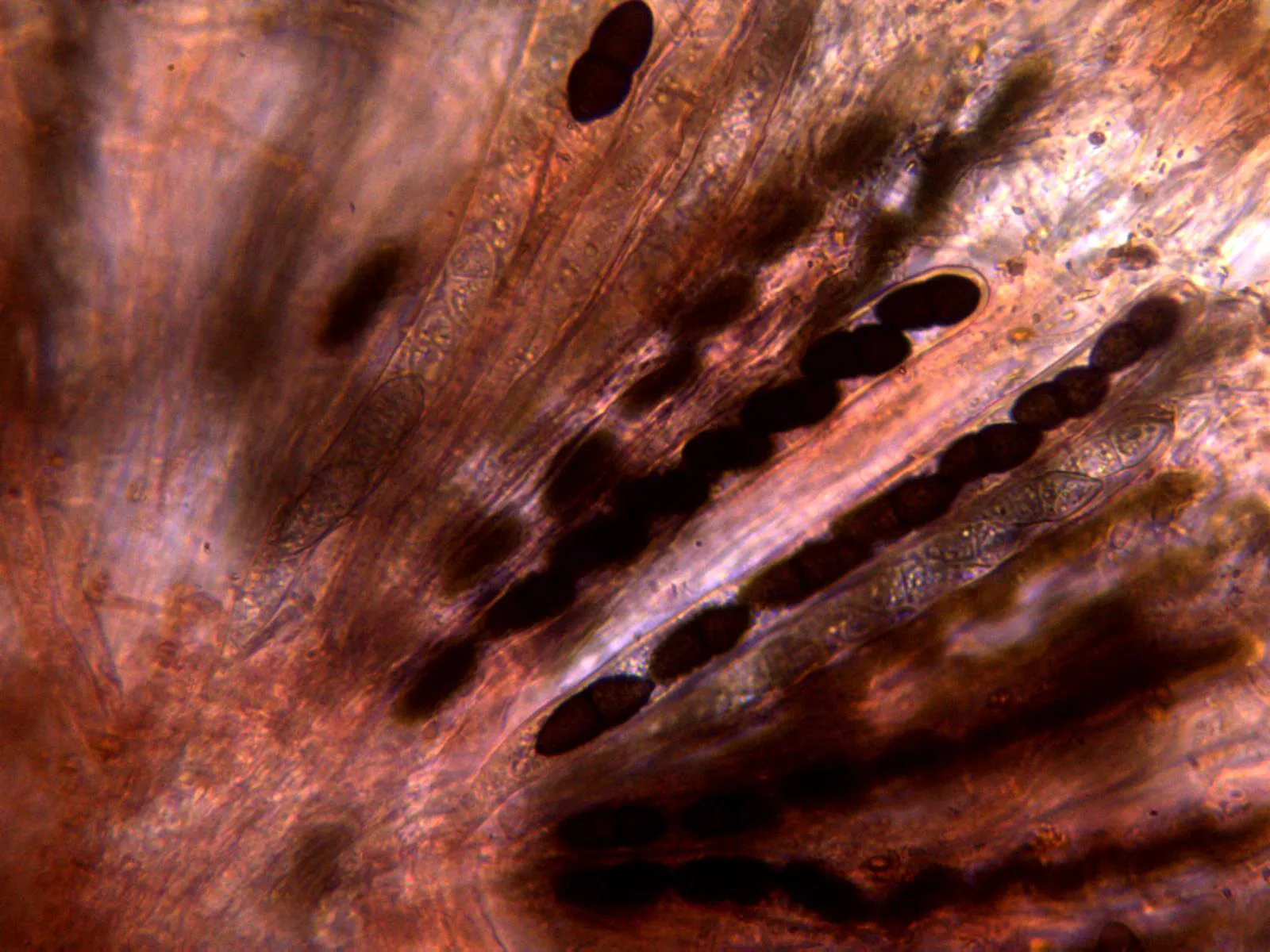
Rhytidhysteron hysterinum
(Dufour) Samuels & E.Müll.
Study description
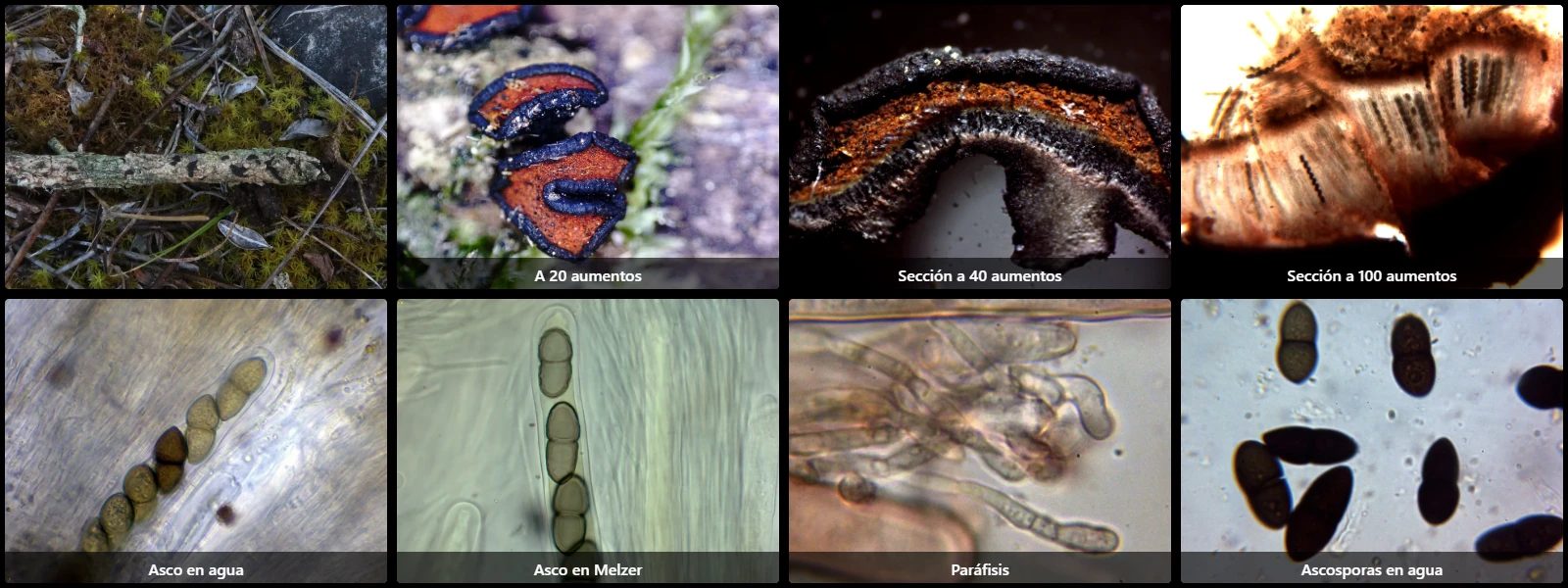
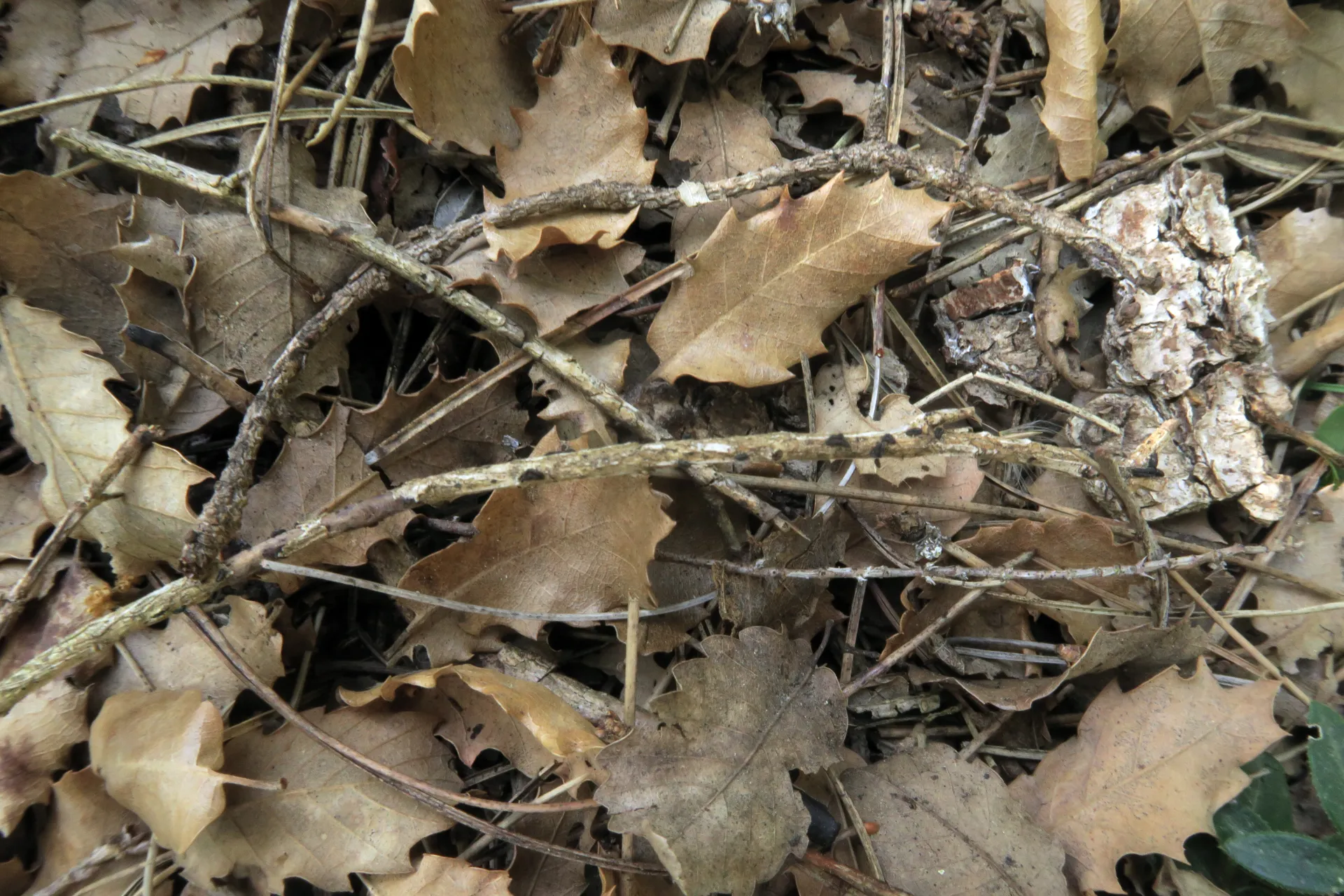
A fungus found on decaying twigs or small branches of boxwood (Buxus sempervirens) on the ground, with elongated apothecia (hysterothecia) resembling coffee beans, 2 to 2.5 mm long, opaque black and carbonaceous in appearance, opening longitudinally in moist conditions to reveal their hymenium of a striking reddish-orange color in order to release spores.
Asci cylindrical, eight-spored, bitunicate, 170 to 200 µm long, 12 to 14 µm wide, with uniseriate spore arrangement inside the ascus (in a single row one behind another), and inamyloid in Melzer's reagent.
Paraphyses filamentous, hyaline, septate, 1.5 to 2.5 µm wide, with apical enlargements of 2.5 to 4 µm, profusely branched at the apex, containing matter that darkens noticeably in Melzer's reagent, and projecting considerably above the asci.
Ascospores ellipsoidal to fusiform, smooth, thick-walled, two-celled with a central septum, constricted at the septum, dark brown under the microscope, 21 to 28 µm long, 10 to 14 µm wide, with granular content of small guttules inside.
Herbarium material available: JTP2528/25.
Geographic references
Map generated from global occurrence data from GBIF. GBIF.
Study measurements
Values in Microns (µm)Macroscopic gallery
Microscopic gallery