Rhodotus palmatus
(Bull.) Maire
Study description
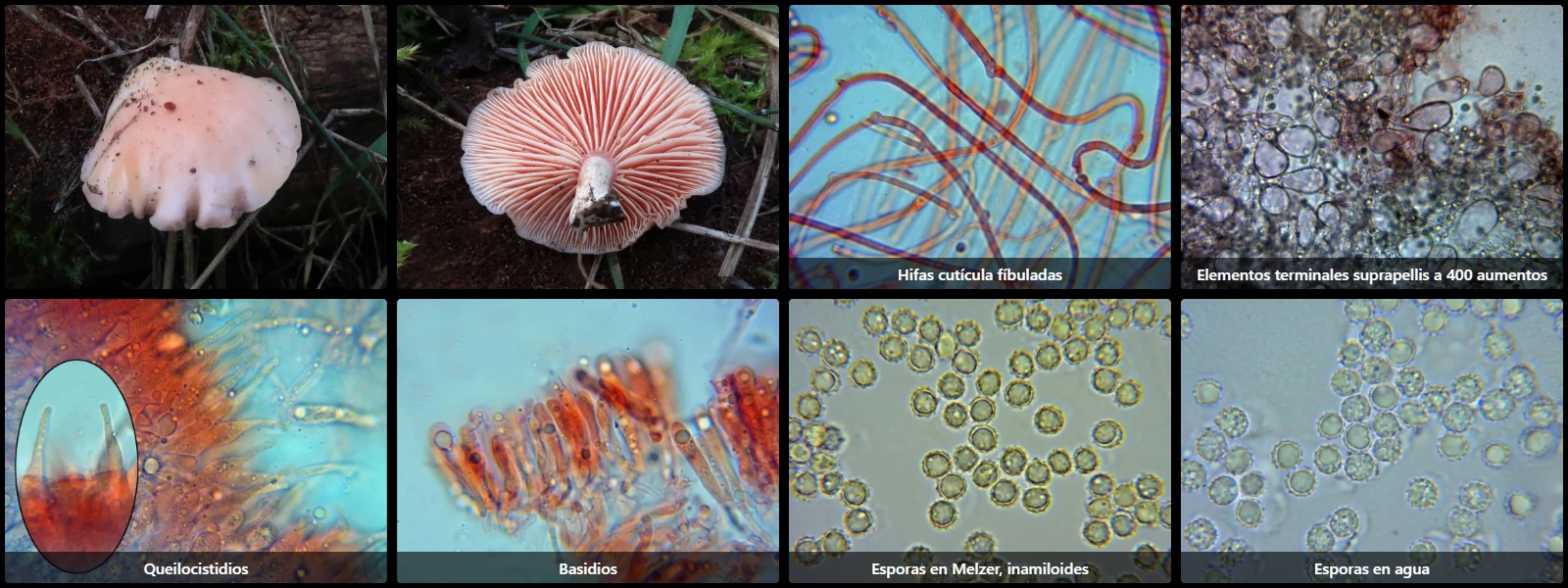
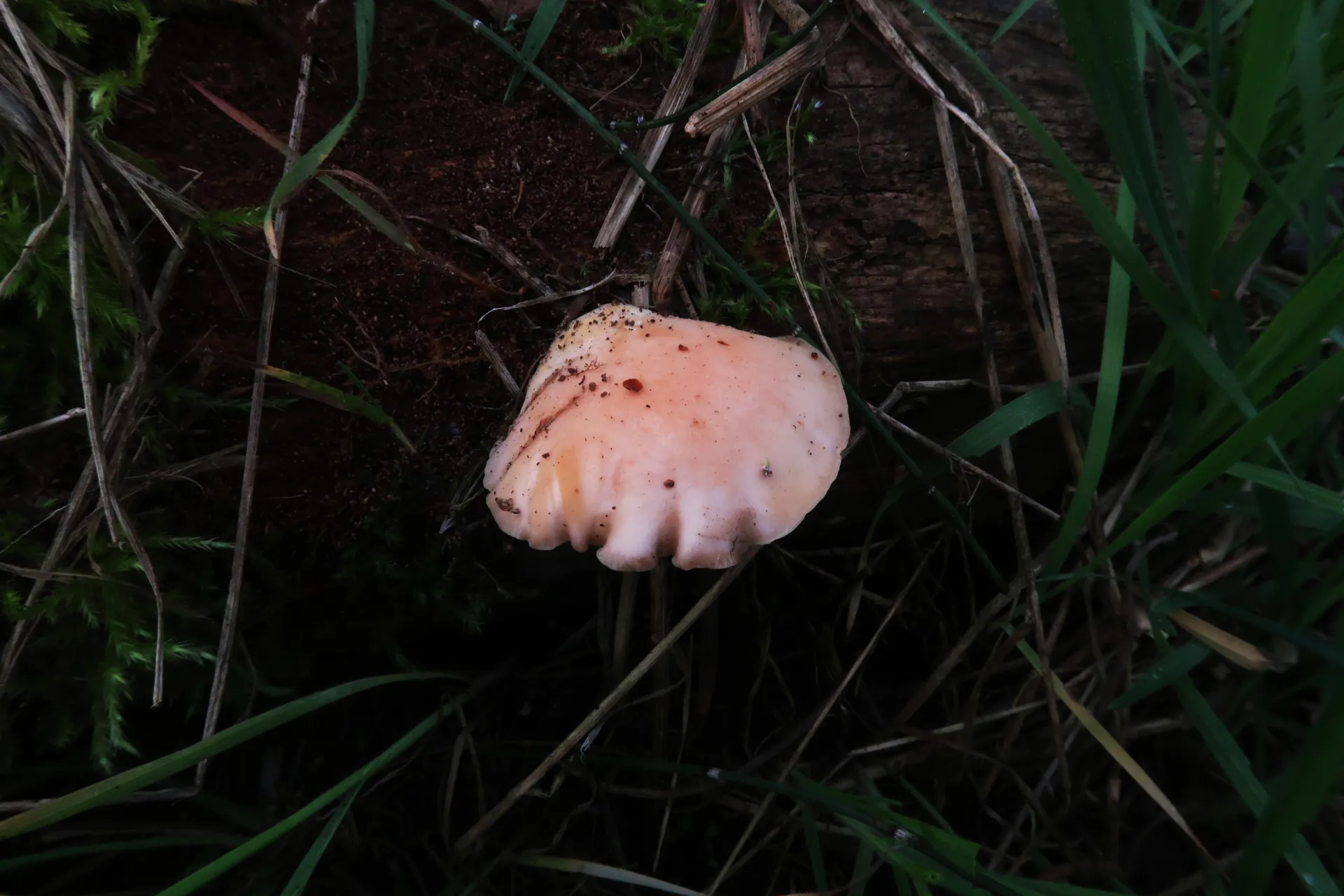
An uncommon fungus with a preference for elm wood (Ulmus), though not exclusive to it, with a convex to applanate pileus 3 to 9 cm in diameter, rugose orange surface with pinkish tints; adnate lamellae, white to pinkish from sporulation; a cylindrical stipe paler than the pileus; fungal odor and indistinct, perhaps slightly bitter taste.
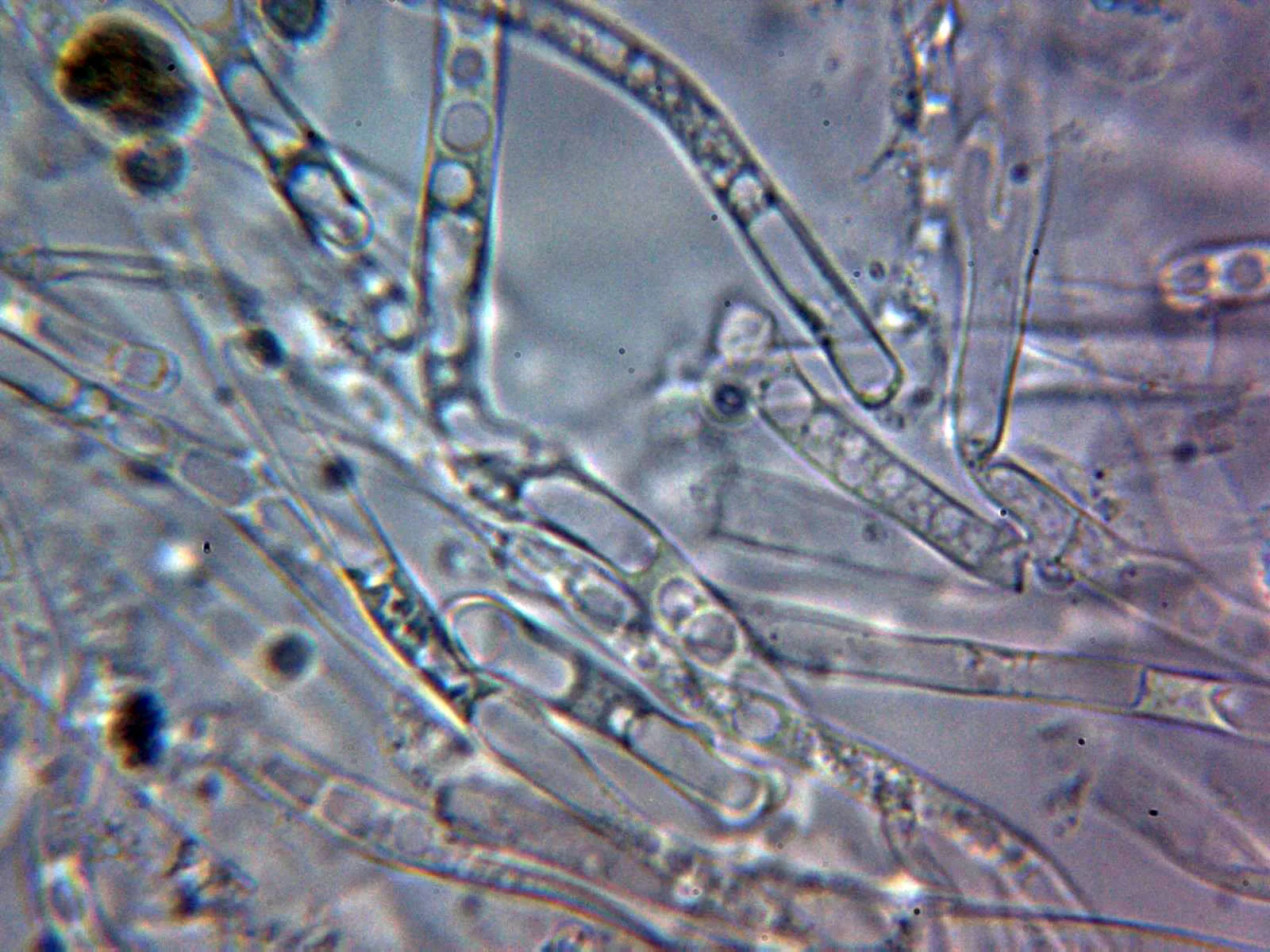
Cuticle formed by slender hyphae separated by gelification, 2 to 3 µm wide, branched, densely interwoven, septate with clamp connections, bearing abundant terminal elements on the surface resembling subglobose, clavate, pyriform, irregular cystidia, 25 to 60 µm long and 10 to 18 µm wide.
Cheilocystidia abundant, fusiform to lageniform, 35 to 60 µm long and 7 to 10 µm wide.
Pleurocystidia absent.
Basidia subclavate, 30 to 40 µm long, 6 to 8 µm wide, with basal clamp connections and four-spored.
Spores subglobose, hyaline, verrucose or spinulose, 5 to 7 µm long, 4.5 to 7 µm wide, with an apiculus at one end, containing a large oil droplet inside, and inamyloid in Melzer's reagent.
Geographic references
Map generated from global occurrence data from GBIF. GBIF.
Study measurements
Values in Microns (µm)Macroscopic gallery
Microscopic gallery