Rhodocollybia prolixa
(Fr.) Antonín & Noordel.
Study description
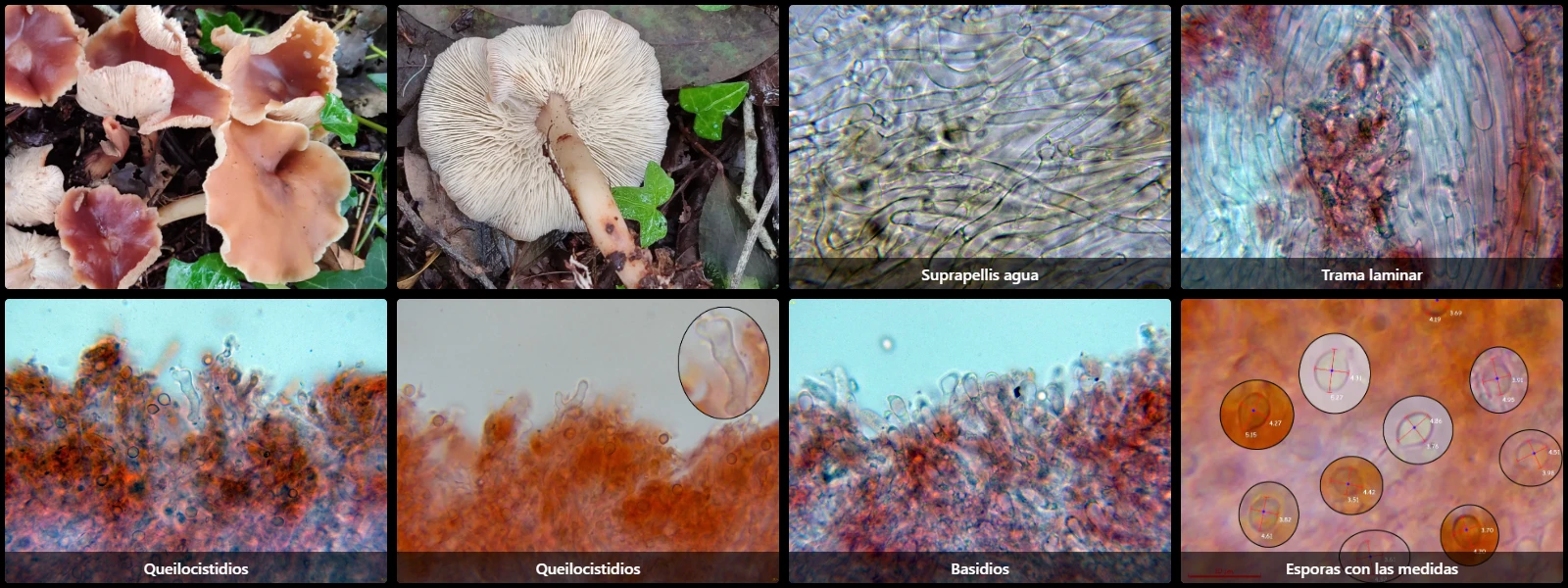
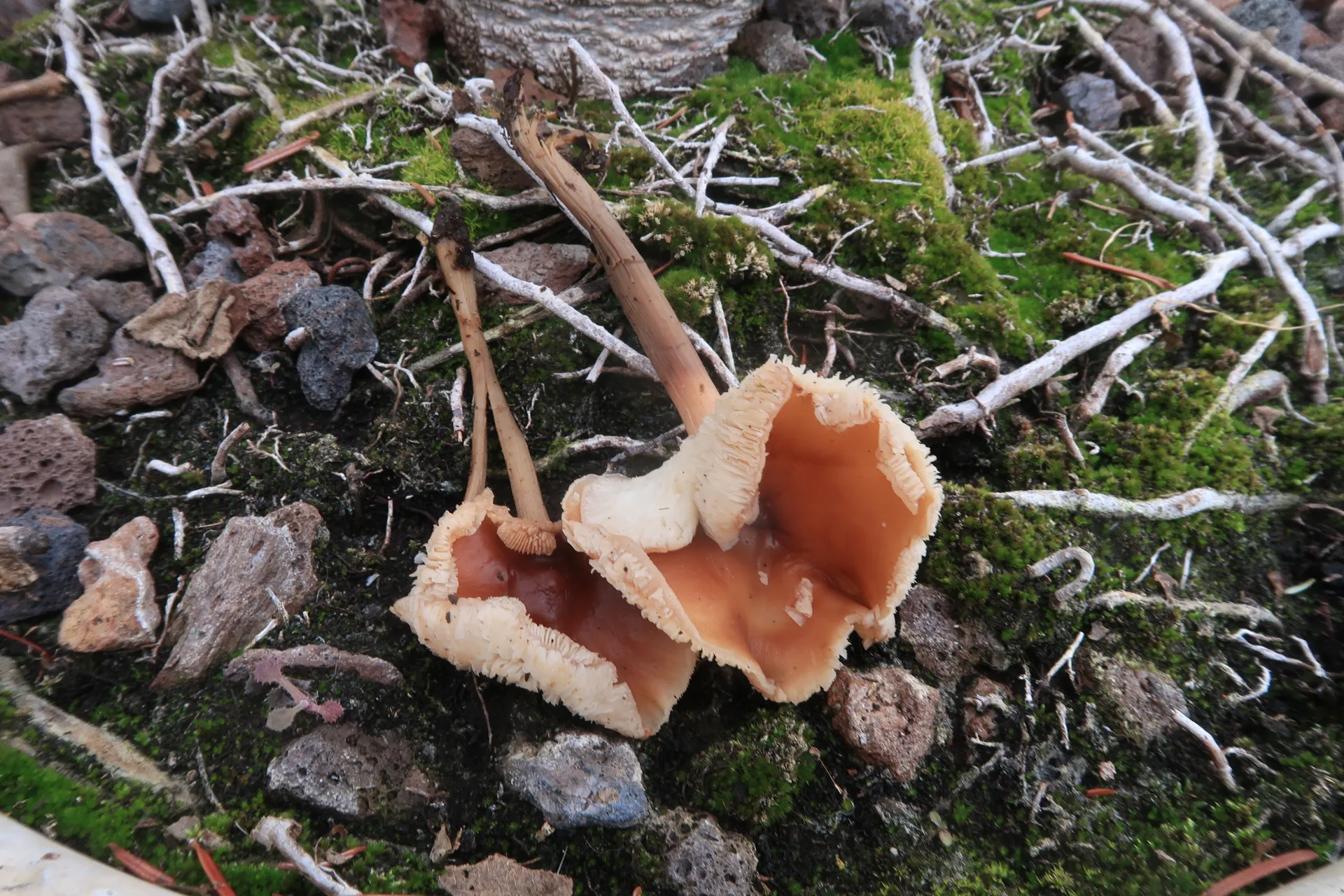
On wood or buried decaying debris, preferably of conifers, with a convex to applanate and wavy pileus 3 to 7 cm in diameter, reddish brown; adnate lamellae, white to pale yellow, often bifurcate; long reddish-brown stipe, without distinct odor or taste.
This study corresponds to Rhodocollybia prolixa var. distorta (formerly Collybia distorta), currently unified under the epithet Rhodocollybia prolixa. My thanks to Antonio Couceiro (Necho) for sending the material for study.
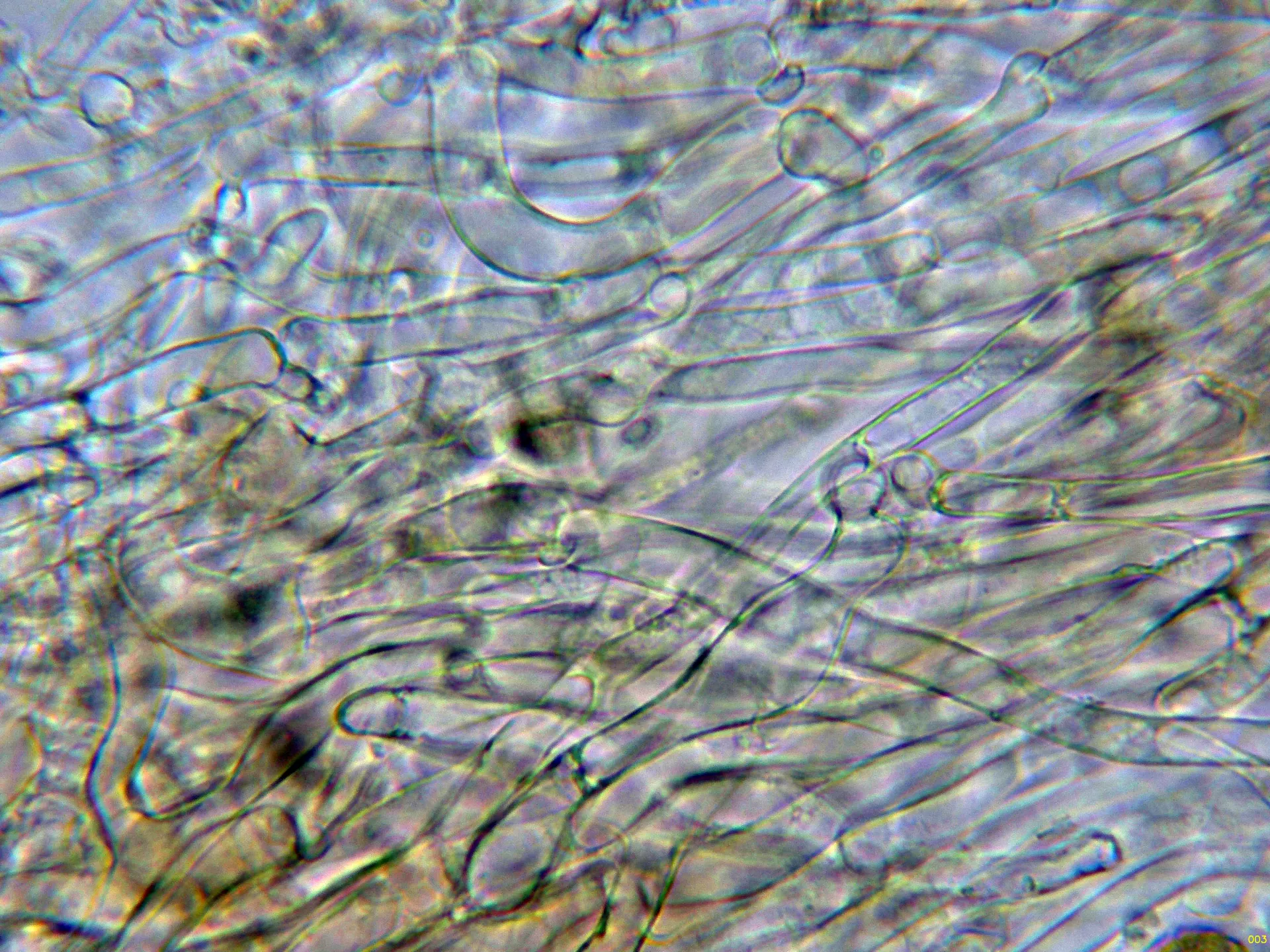
Cuticle formed by cylindrical hyphae, thin- to slightly thick-walled, 2 to 5 µm in diameter, densely interwoven, with faint brownish intracellular pigment, profusely branched, septate and clamped.
Cheilocystidia scattered, subcylindrical, coralloid in appearance, with outgrowths and bifurcations, up to 30 µm long and 3 to 6 µm wide.
Lamellar trama regular or parallel.
Basidia cylindrical-clavate, 20 to 30 µm long, 5 to 7 µm wide, with basal clamp connections and two or four sterigmata (two- or four-spored).
Spores subglobose to ellipsoidal, smooth, hyaline, thin-walled, 4.5 to 6 µm long, 3.5 to 5 µm wide, with an apiculus at one end, interior practically homogeneous, lacking conspicuous oil droplets, at most with faint granular content.
Herbarium material available: JTP2027/23.
Geographic references
Map generated from global occurrence data from GBIF. GBIF.
Study measurements
Values in Microns (µm)Macroscopic gallery
Microscopic gallery