Rhizopogon luteolus
Fr.
Study description
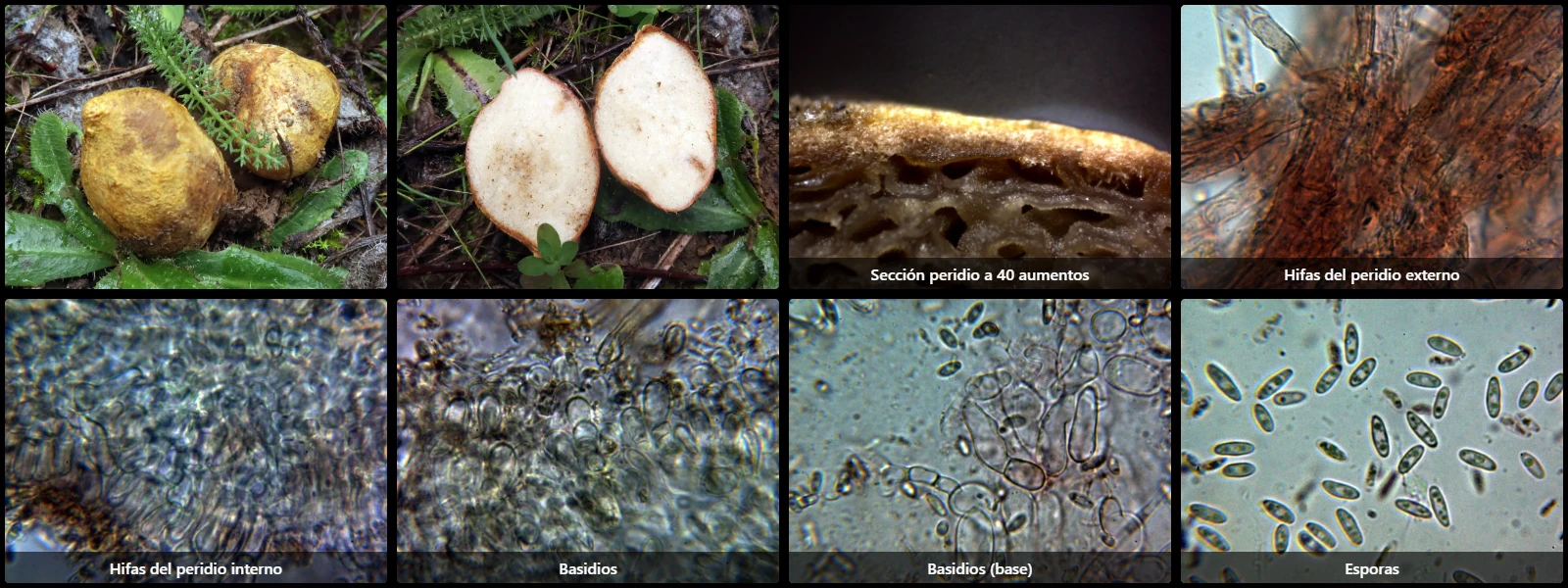
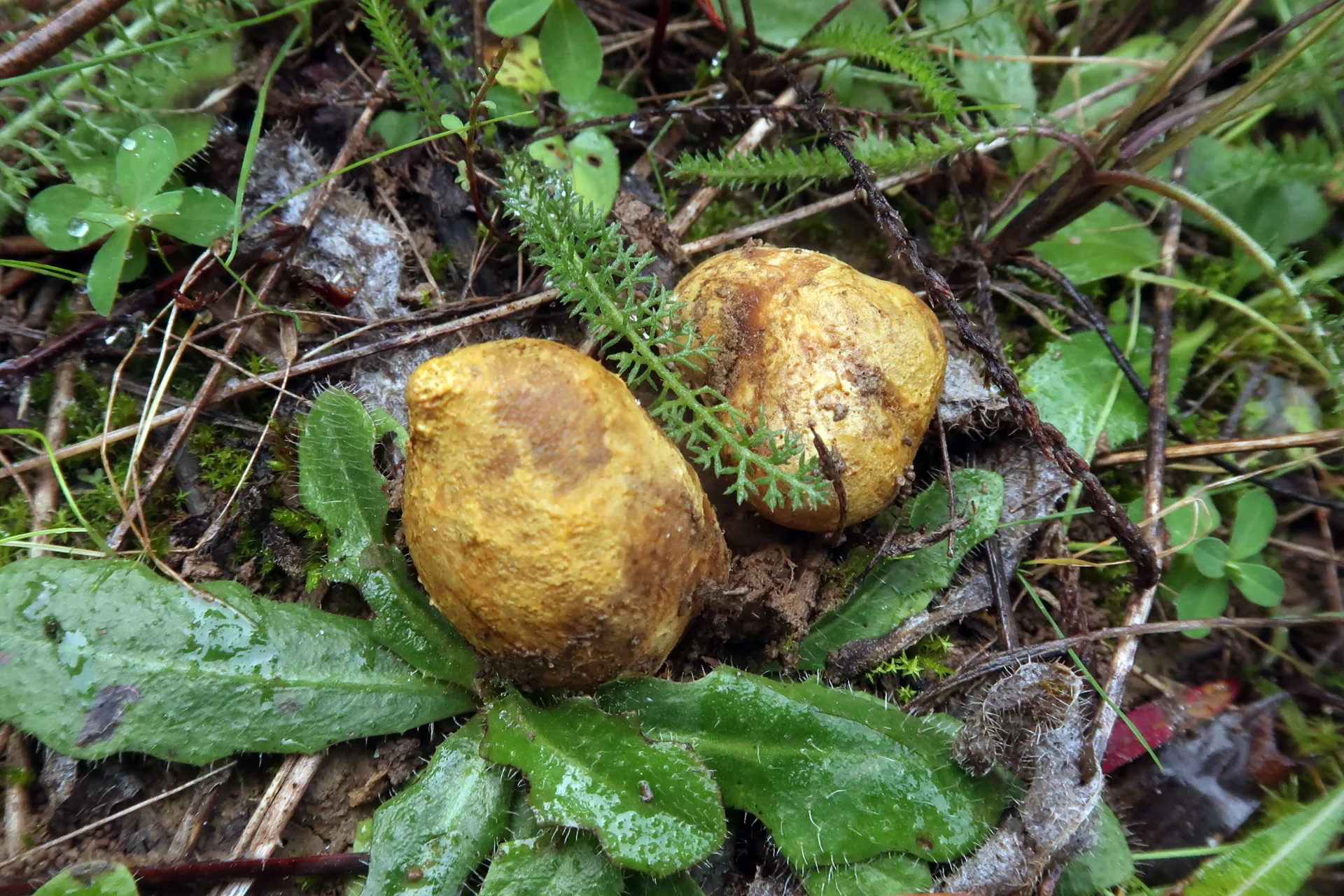
A semi-hypogeous fungus characteristic of pine forests, potato-like in shape, up to 4 or 5 cm long, yellow, with interior (gleba) white to olive-green with sporulation, mycelial threads on its surface that are more abundant at the base, and without distinct odor or taste.
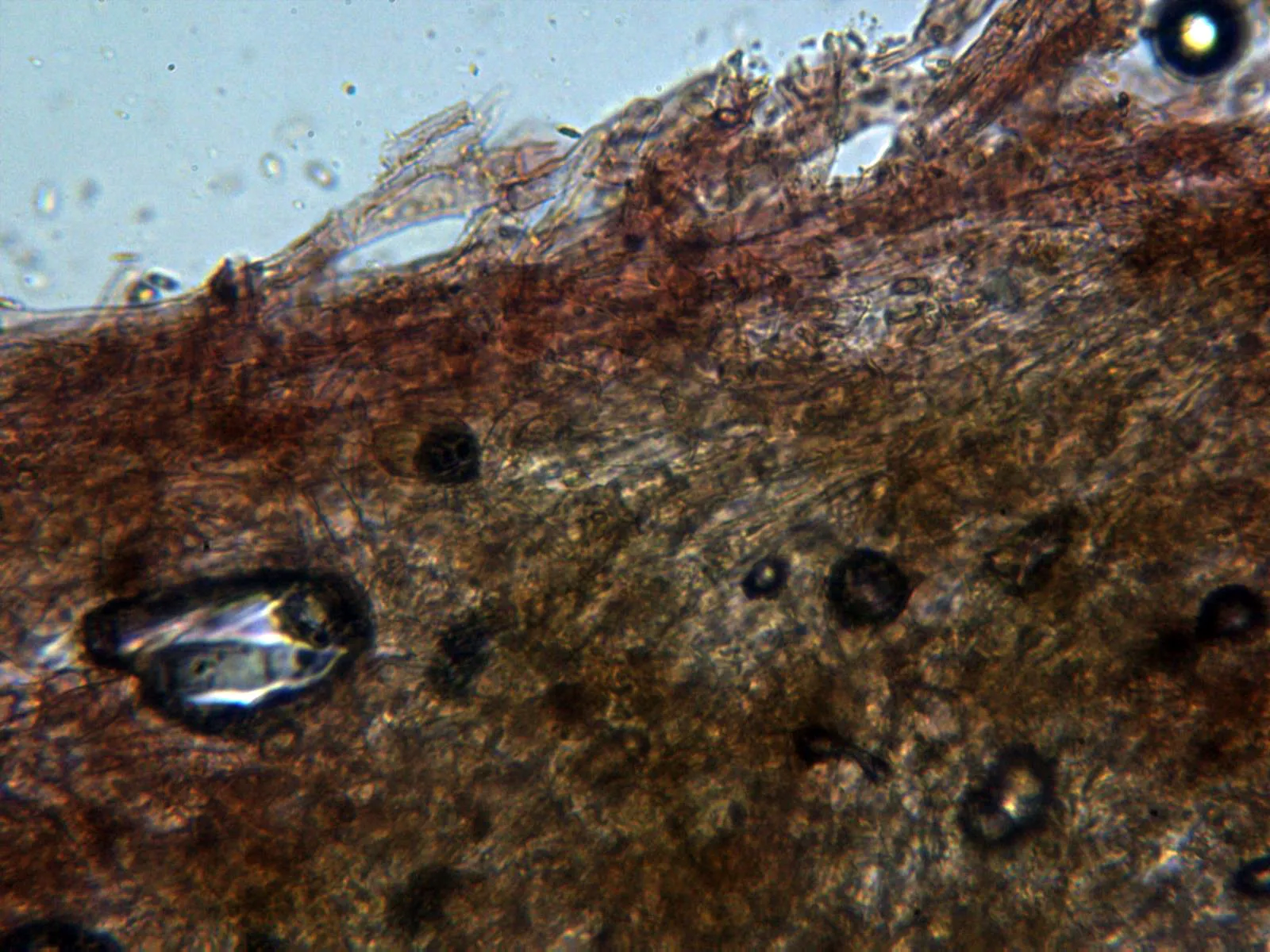
Outer peridial hyphae cylindrical, thin- to slightly thick-walled, arranged more or less parallel, 3 to 6 µm wide, with copious encrusting yellowish-brown extracellular pigment, septate with simple septa (clampless).
Inner peridial hyphae hyaline, thin-walled, 3 to 8 µm wide; these hyphae, together with those of the internal glebal trama, support the basidia.
Basidia very irregular, subcylindrical, clavate to pyriform, hyaline, 18 to 25 µm long, 6 to 8 µm wide, simple-based (clampless) and generally four-spored.
Spores cylindrical-ellipsoidal, smooth, moderately thick-walled, hyaline or with faint greenish intracellular pigment, 6.5 to 9 µm long, 2.5 to 3 µm wide, with refringent oil droplets inside concentrated at the poles, and inamyloid in Melzer's reagent.
Geographic references
Map generated from global occurrence data from GBIF. GBIF.
Study measurements
Values in Microns (µm)Macroscopic gallery
Microscopic gallery