Rhizochaete filamentosa
(Berk. & M.A.Curtis) Gresl., Nakasone & Rajchenb.
Study description
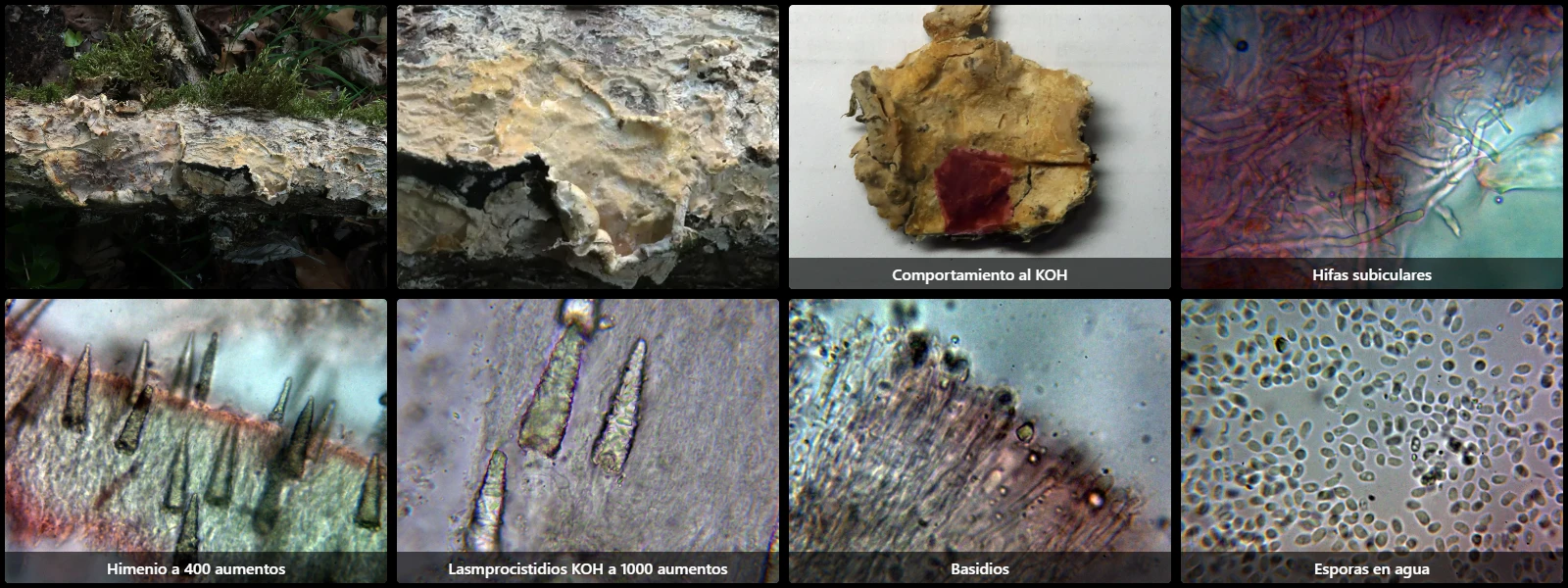
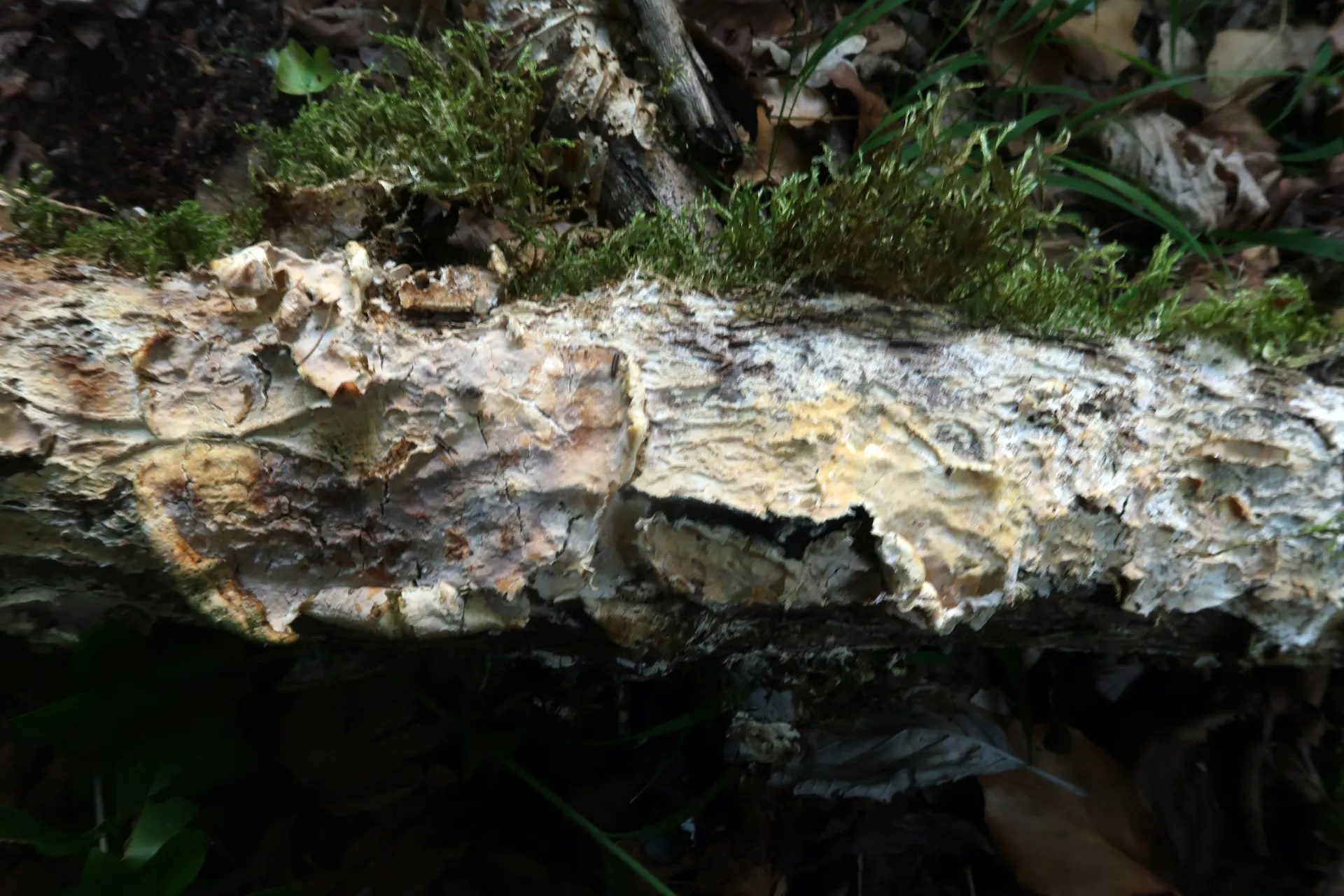
On wood or bark of both conifers and broadleaves, formerly known as Phanerochaete filamentosa, with completely resupinate basidiomes, very thin (only up to 0.5 mm thick), surface smooth to slightly rugose, cream to orange-brown, turning vinaceous red with KOH on the surface.
Hyphal system monomitic, formed by cylindrical, hyaline generative hyphae, thin- to moderately thick-walled, 2.5 to 5 µm in diameter, septate with simple septa (without clamp connections).
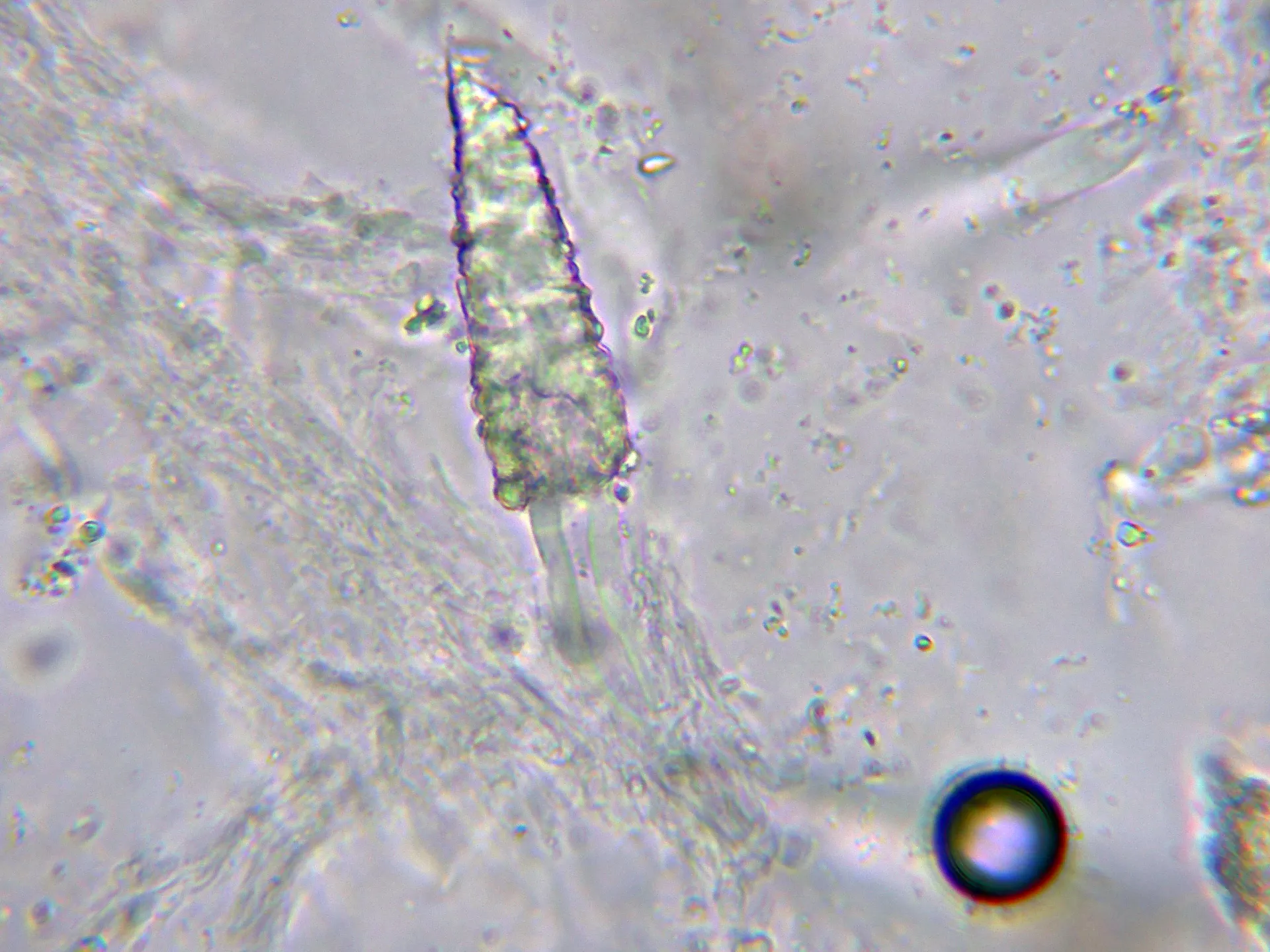
Cystidia abundant, of lamprocystidium type, very thick-walled, 55 to 100 µm long, 10 to 16 µm wide, with more than half of the upper (emergent) part completely covered in yellowish encrustations.
Basidia cylindrical-clavate, 30 to 35 µm long, 5 to 6 µm wide, simple-based (clampless) and four-spored.
Spores ellipsoidal, smooth, hyaline, thin-walled, 4 to 5.5 µm long, 2.5 to 3.5 µm wide, with a slightly pointed end corresponding to the apiculus, containing oil droplets (guttules) inside, and inamyloid in Melzer's reagent.
Geographic references
Map generated from global occurrence data from GBIF. GBIF.
Study measurements
Values in Microns (µm)Macroscopic gallery
Microscopic gallery