Resupinatus striatulus
(Pers.) Murrill
Study description
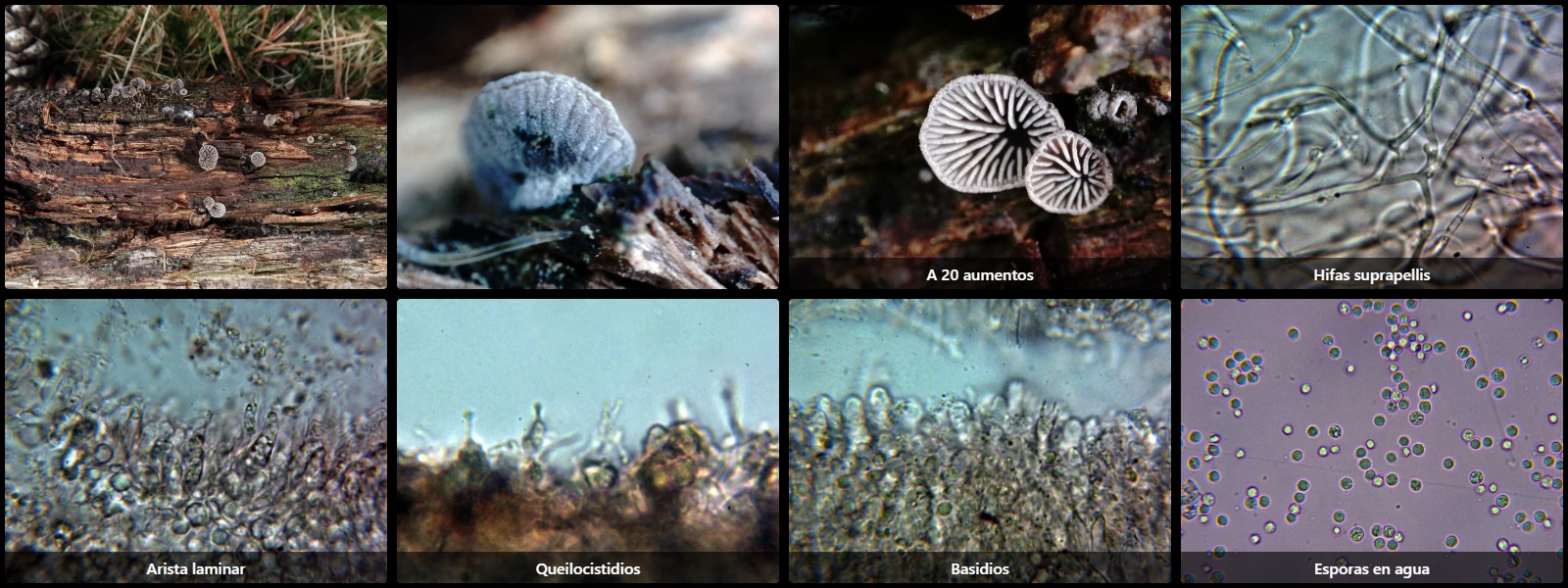
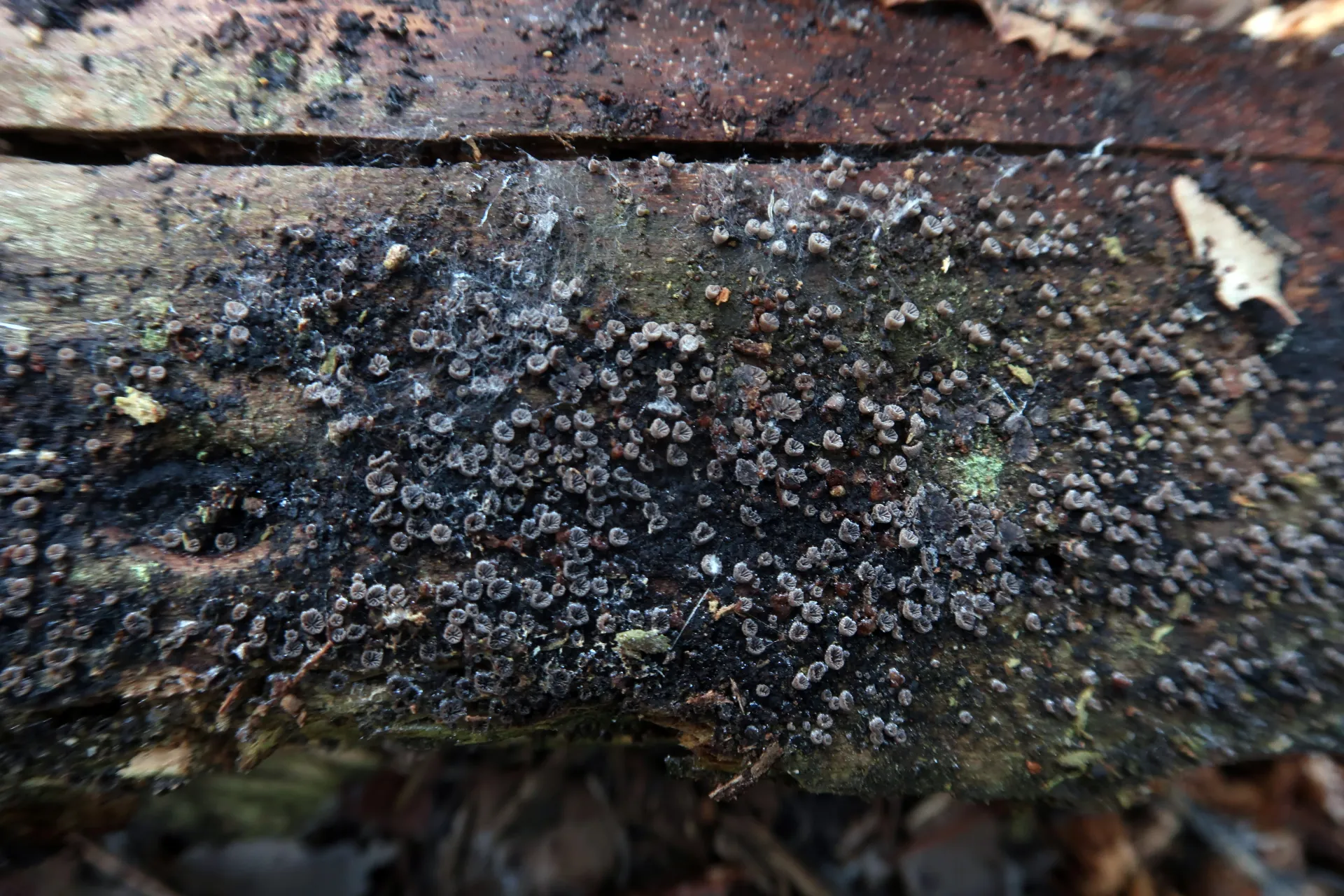
On decaying ground wood, especially of Pinus, also on Fagus, with campanulate basidiomes, stemless, attached dorsally to the substrate, 0.3 to 1 cm in diameter, greyish brown often with pinkish tints; lamellae sparse, distant, radiating from a central point, greyish with whitish edges; gelatinous in texture.
Cuticle with filamentous hyphae, the uppermost widely spaced by gelification, 2 to 3.5 µm wide, abundantly branched, septate with prominent clamp connections at the septa.
Cheilocystidia cylindrical, coralloid, with one or more finger-like projections, with constrictions or inflations, and basal clamp connections.
Pleurocystidia absent.
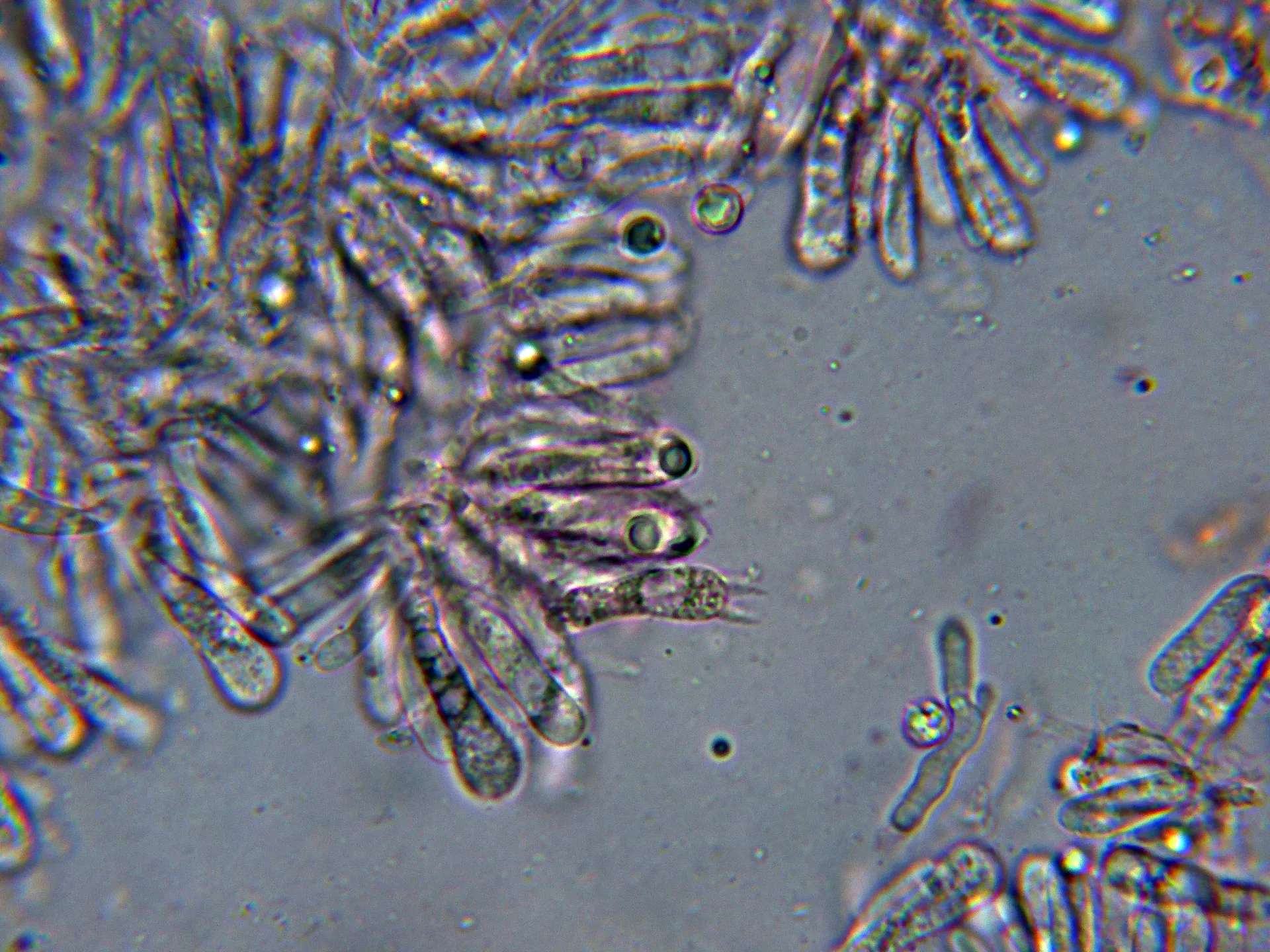
Basidia clavate, 20 to 25 µm long, 5.5 to 7 µm wide, with sterigmata up to 5 µm, basal clamp connections and four-spored.
Spores globose to subglobose, smooth, hyaline, thin-walled, 4 to 6 µm long, 4 to 5.5 µm wide, with an inconspicuous apiculus at one end, containing granular content of small oil droplets inside, and inamyloid in Melzer's reagent.
Geographic references
Map generated from global occurrence data from GBIF. GBIF.
Study measurements
Values in Microns (µm)Macroscopic gallery
Microscopic gallery