


Ramaria paraconcolor
Franchi & M.Marchetti
Study description
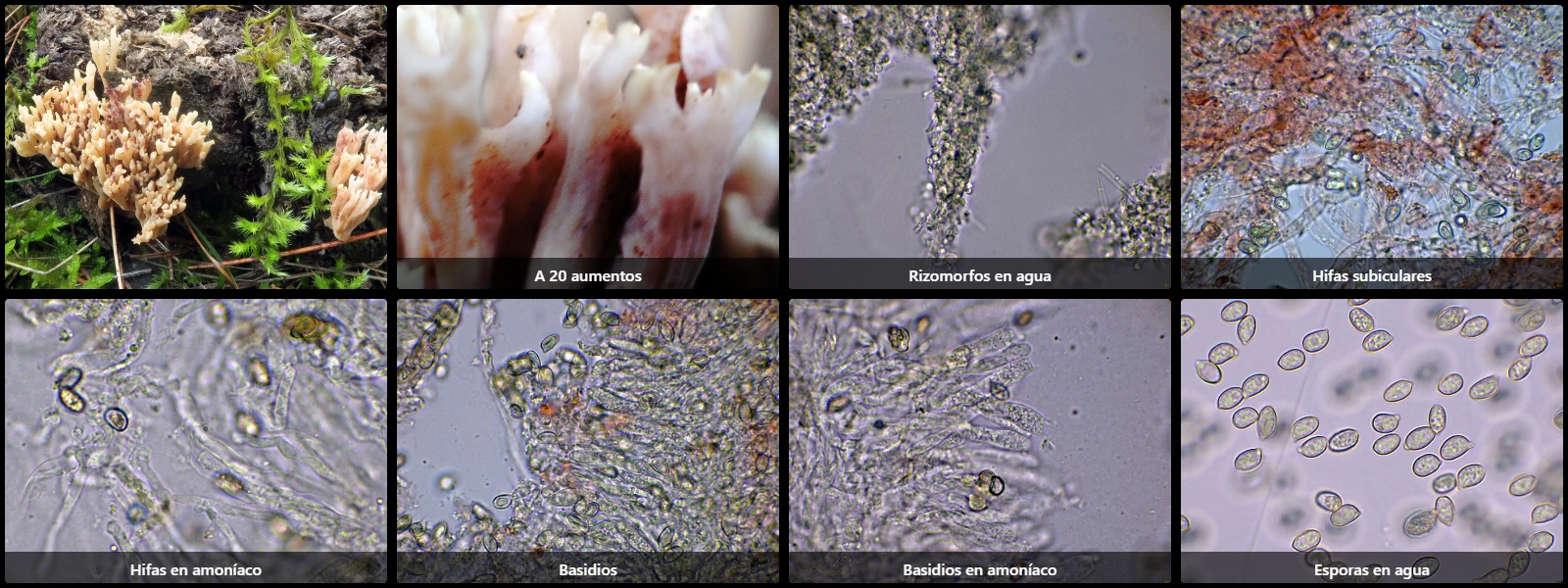
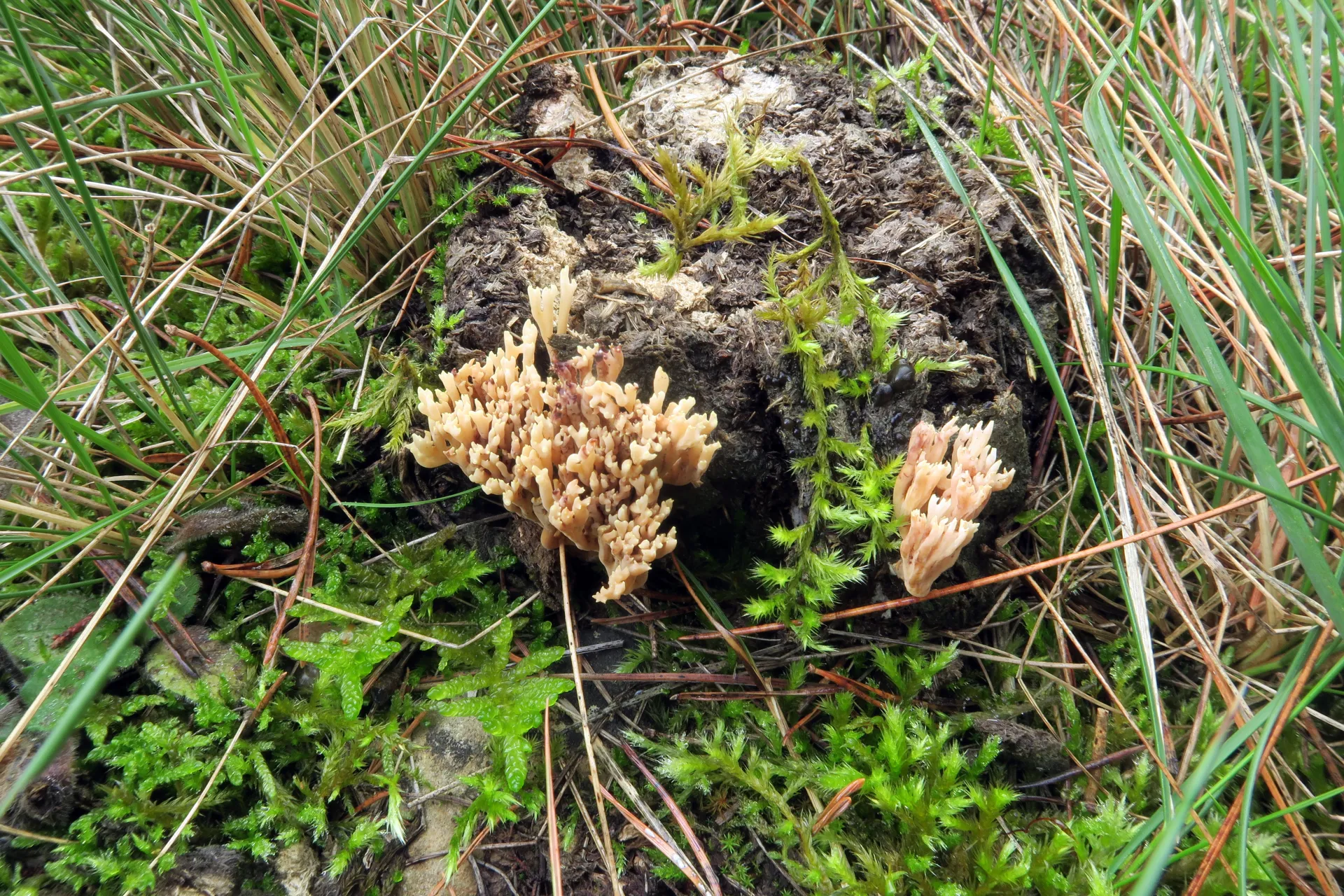
A poorly known and seldom-documented species which, according to the scarce available literature, should form mycorrhizae with forest tree roots; in my case, it was found fruiting directly on cow dung, with coralloid fructifications, pale ochraceous to yellowish with reddish or vinaceous tints, multiple branches, and blunt-tipped branchlets.
Contextual hyphae hyaline, thin- to slightly thick-walled (walls up to 0.5 µm), 4 to 10 µm wide, septate with clamped septa.
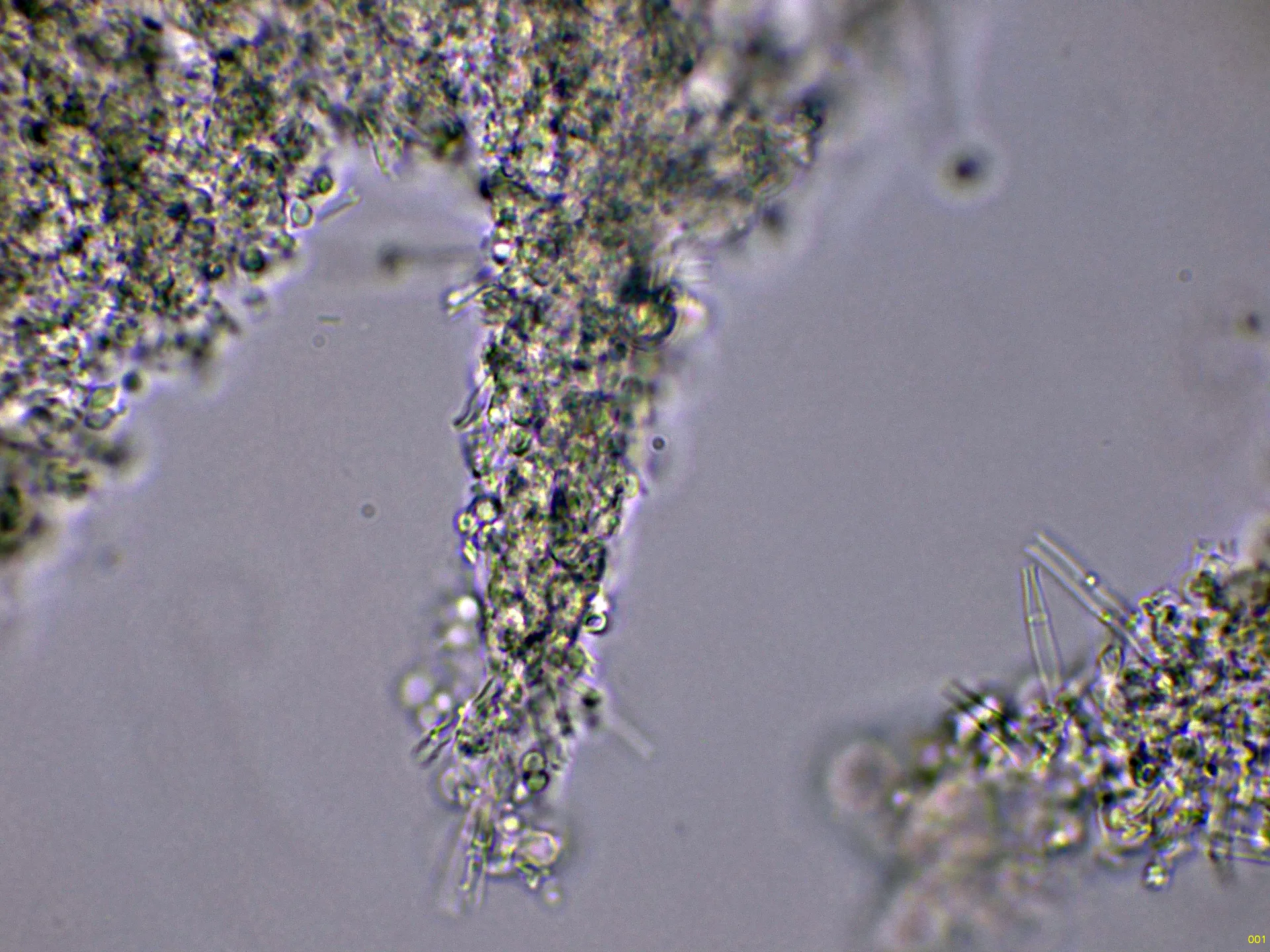
Rhizomorphs hyaline, with abundant accumulations of calcium oxalate crystals over their entire surface.
Basidia cylindrical-clavate, 45 to 65 µm long, 7 to 10 µm wide, with basal clamp connections and four-spored.
Spores ellipsoidal, hyaline, moderately thick-walled, smooth to very slightly verrucose, 7 to 10 µm long, 4.5 to 6 µm wide, covered with fine warts, and inamyloid in Melzer's reagent.
Herbarium material available: JTP2777/25.
Geographic references
Map generated from global occurrence data from GBIF. GBIF.
Study measurements
Values in Microns (µm)Macroscopic gallery
Microscopic gallery
Genetic / Phylogenetic Study
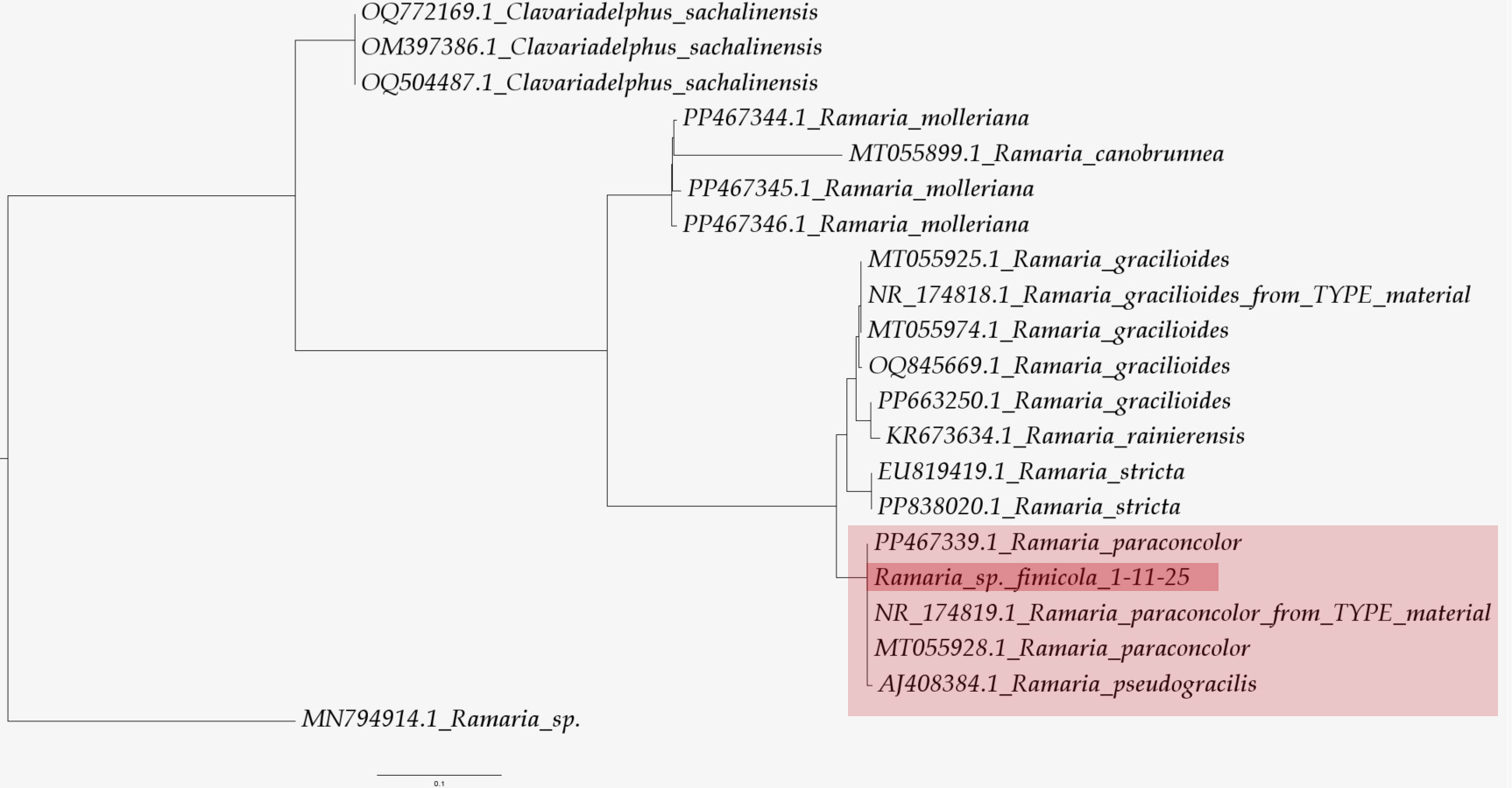
Phylogenetic Tree
Sequences and Data
Sequencing (Chromatogram)
Select a file to visualize the chromatogram