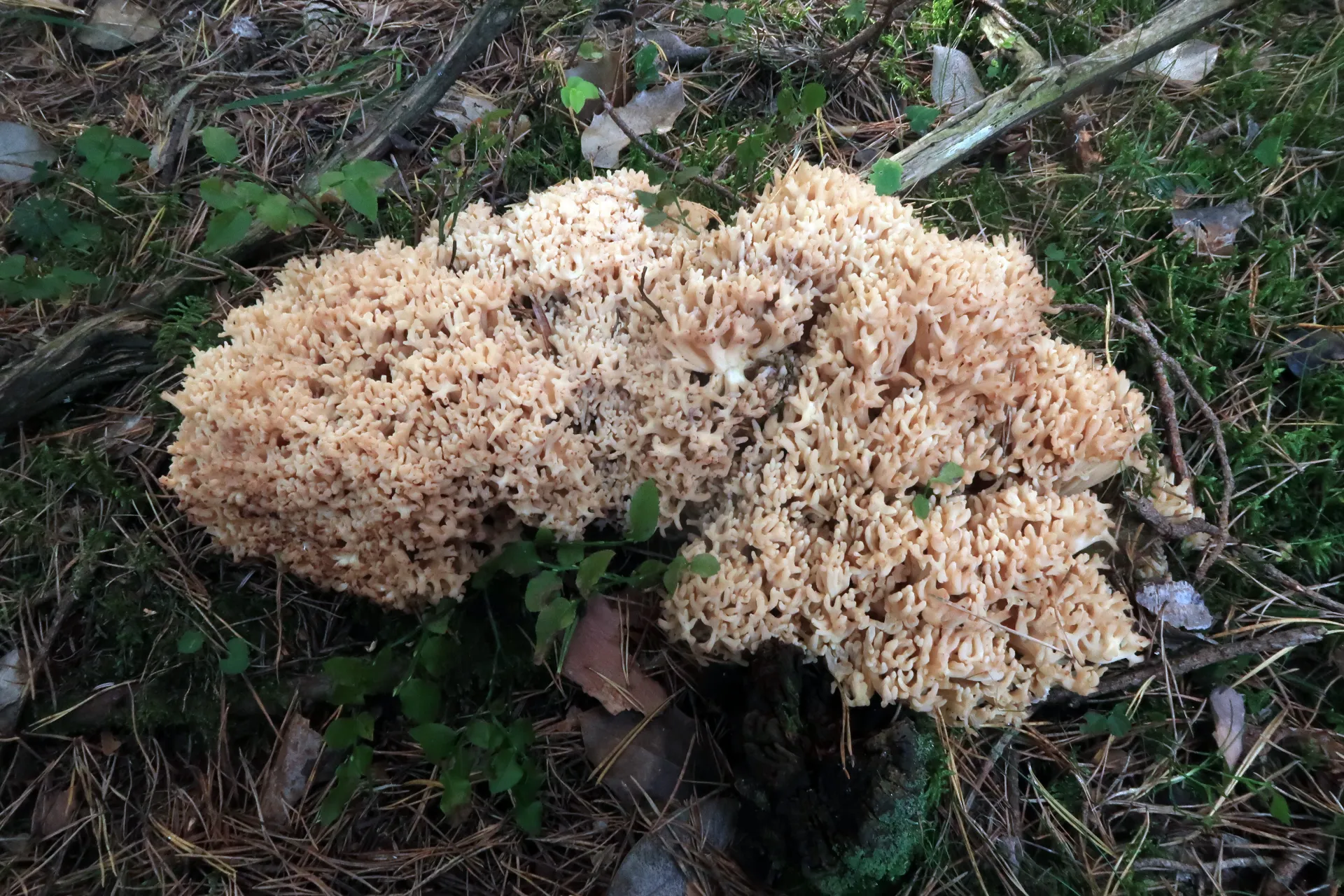
Ramaria pallida
(Schaeff.) Ricken
Study description
Under conifers or deciduous trees, formerly known as Ramaria mairei, cauliflower-like, 6 to 20 cm across, pale ochraceous to yellowish, with tips often displaying vinaceous-violaceous tones; white flesh unchanging upon handling, indistinct odor and slightly bitter taste.
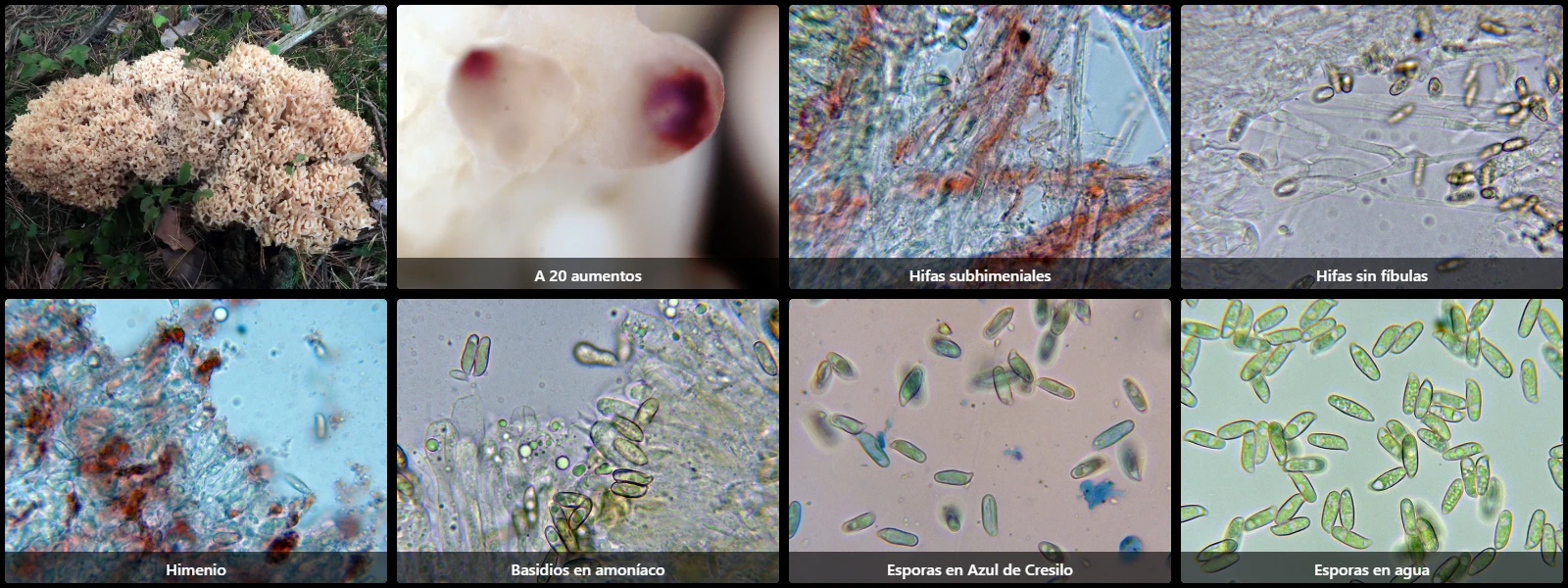
Hyphal system monomitic, with cylindrical, thin-walled hyphae, 2.5 to 12 µm wide, septate and without clamp connections.
Cystidia absent.
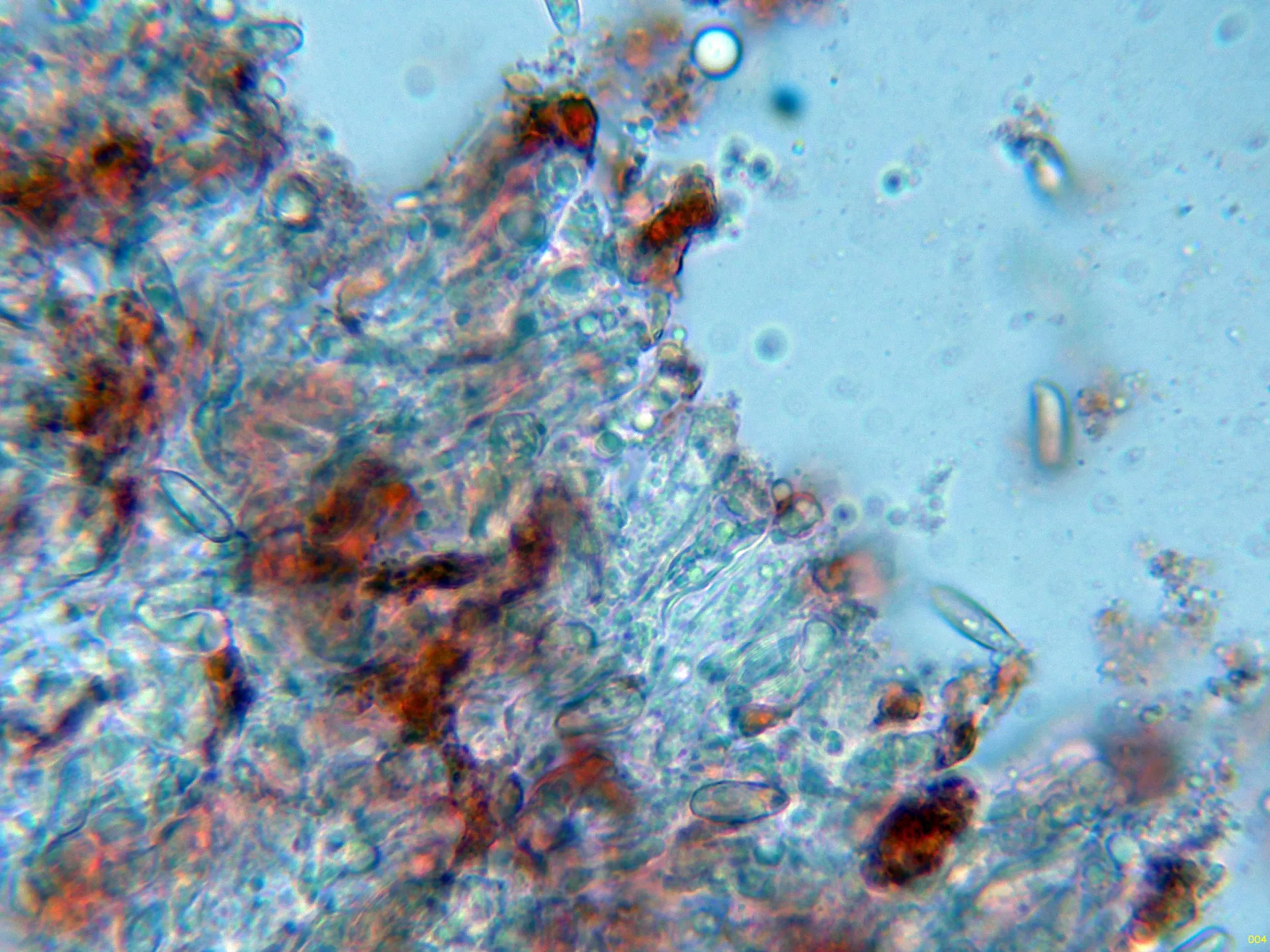
Basidia cylindrical-clavate, 50 to 60 µm long, 8 to 10 µm wide, clampless at the base, and four-spored.
Spores cylindrical, slightly thick-walled and minutely verrucose, with a pointed end where the apiculus is located, pale yellow in water under the microscope, 10 to 12.5 µm long, 3.5 to 5 µm wide, covered with very fine warts, and inamyloid in Melzer's reagent.
Herbarium material available: JTP2247/24.
Geographic references
Map generated from global occurrence data from GBIF. GBIF.
Study measurements
Values in Microns (µm)Macroscopic gallery
Microscopic gallery