Ramaria lutea
Schild
Study description
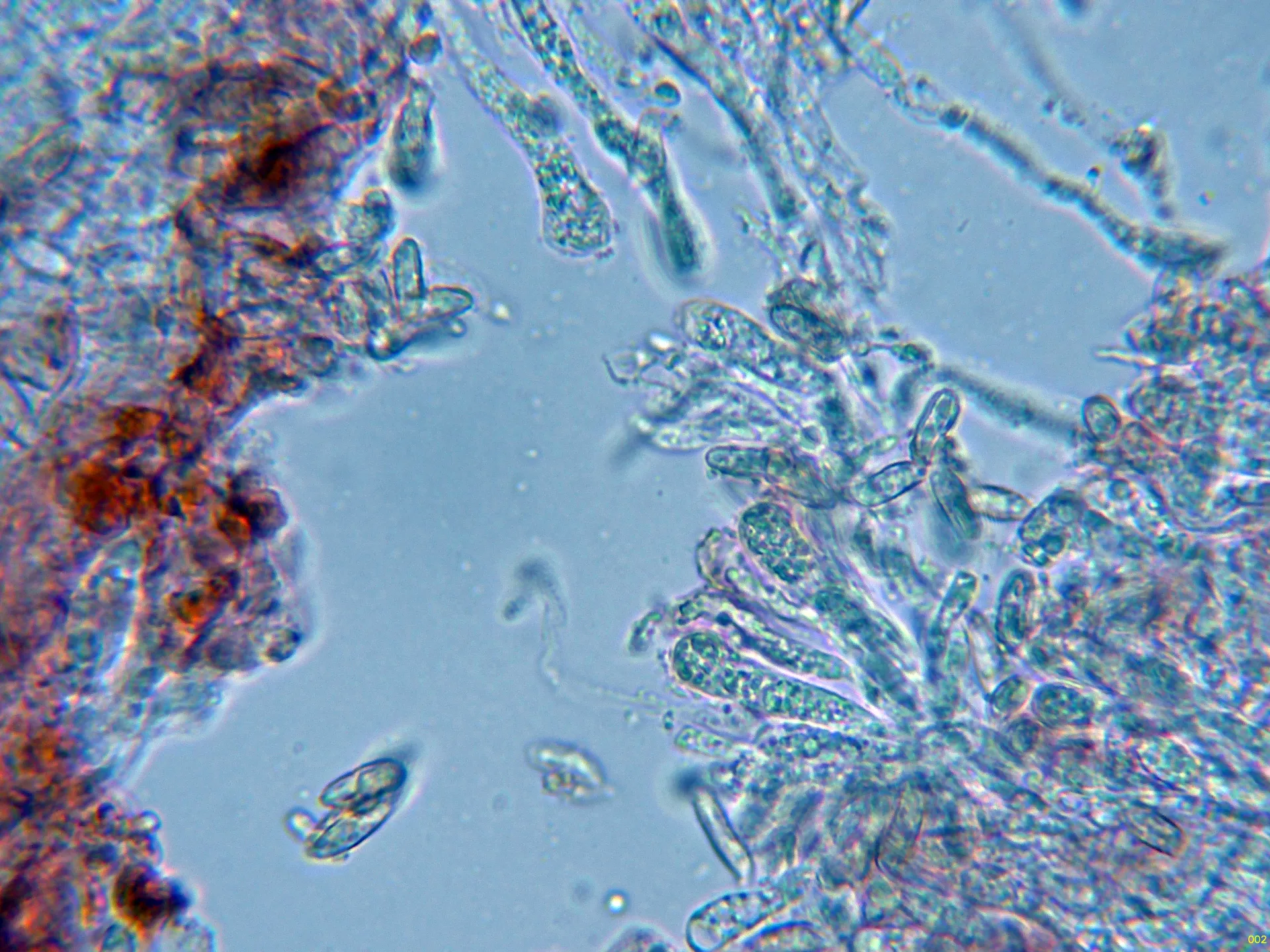
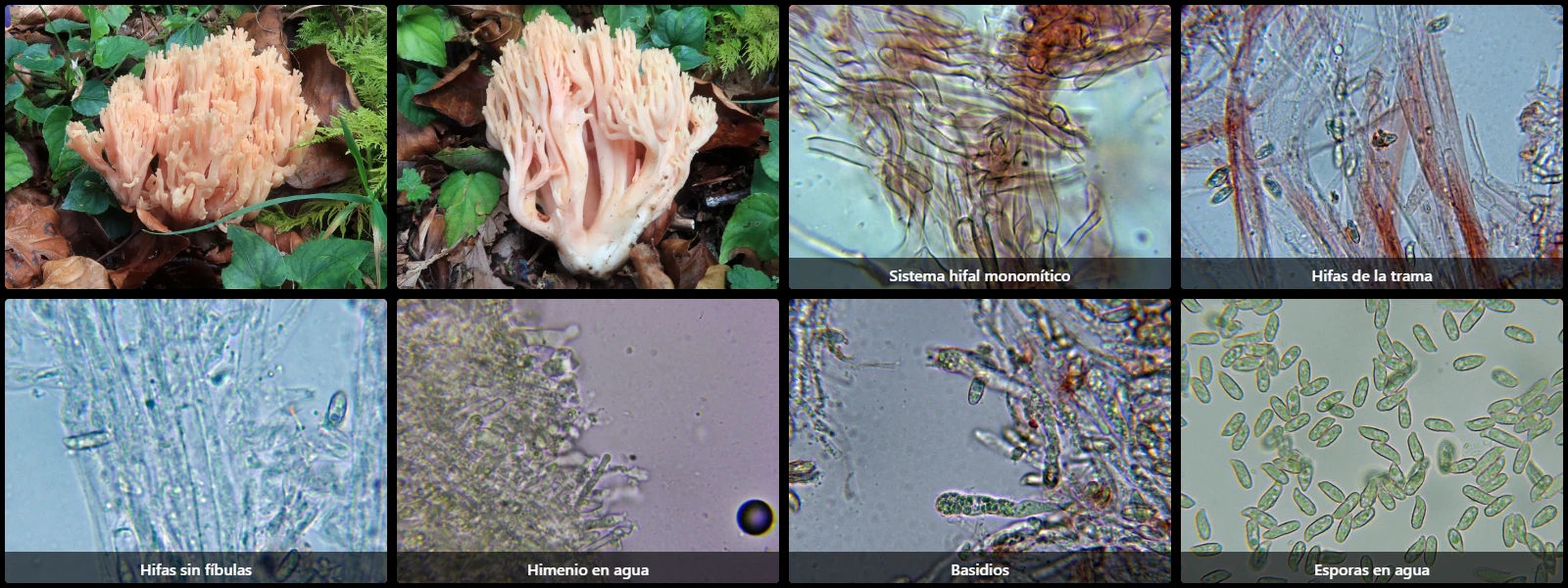
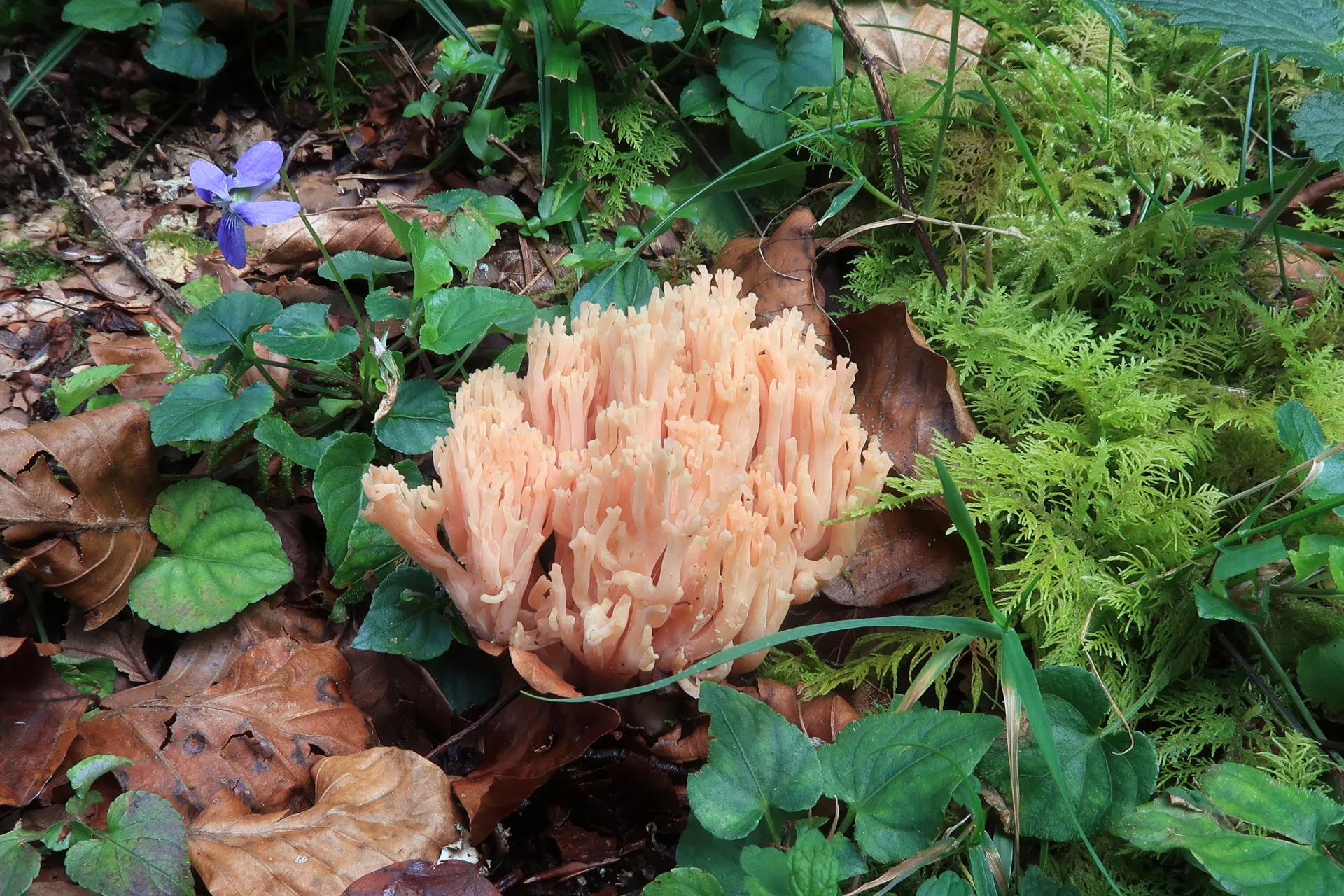
Species typical of deciduous forests, preferably beechwoods, growing directly on the ground, with coralloid fruit bodies 6 to 12 cm across, yellow to ochre, abundantly branched with tips bearing two relatively long prongs; brittle white flesh when cut, pleasant odor and mild taste.
Hyphal system monomitic, formed by hyaline hyphae, thin- to slightly thick-walled, 2.5 to 10 µm wide, septate with simple septa (without clamp connections).
Cystidia absent.
Basidia cylindrical-clavate, 45 to 65 µm long, 7 to 9 µm wide, with simple base (clampless), and four-spored.
Spores cylindrical, moderately thick-walled and slightly verrucose, pale yellow under the microscope, with a pointed end corresponding to the apiculus, 7.5 to 11 µm long, 3 to 4 µm wide, covered across their entire surface with fine warts, and inamyloid in Melzer's reagent.
Geographic references
Map generated from global occurrence data from GBIF. GBIF.
Study measurements
Values in Microns (µm)Macroscopic gallery
Microscopic gallery