Ramaria gracilis
(Pers.) Quél.
Study description
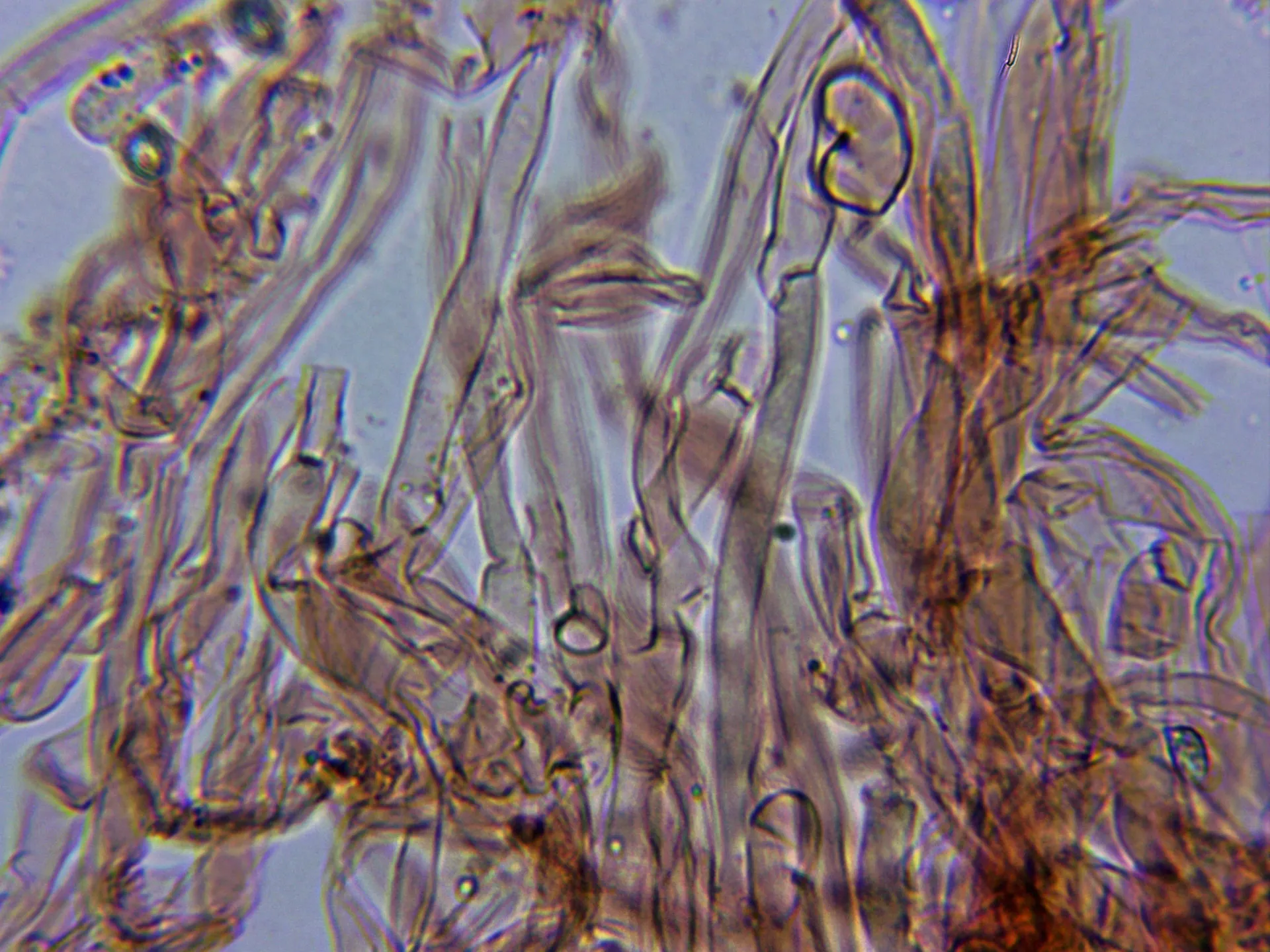
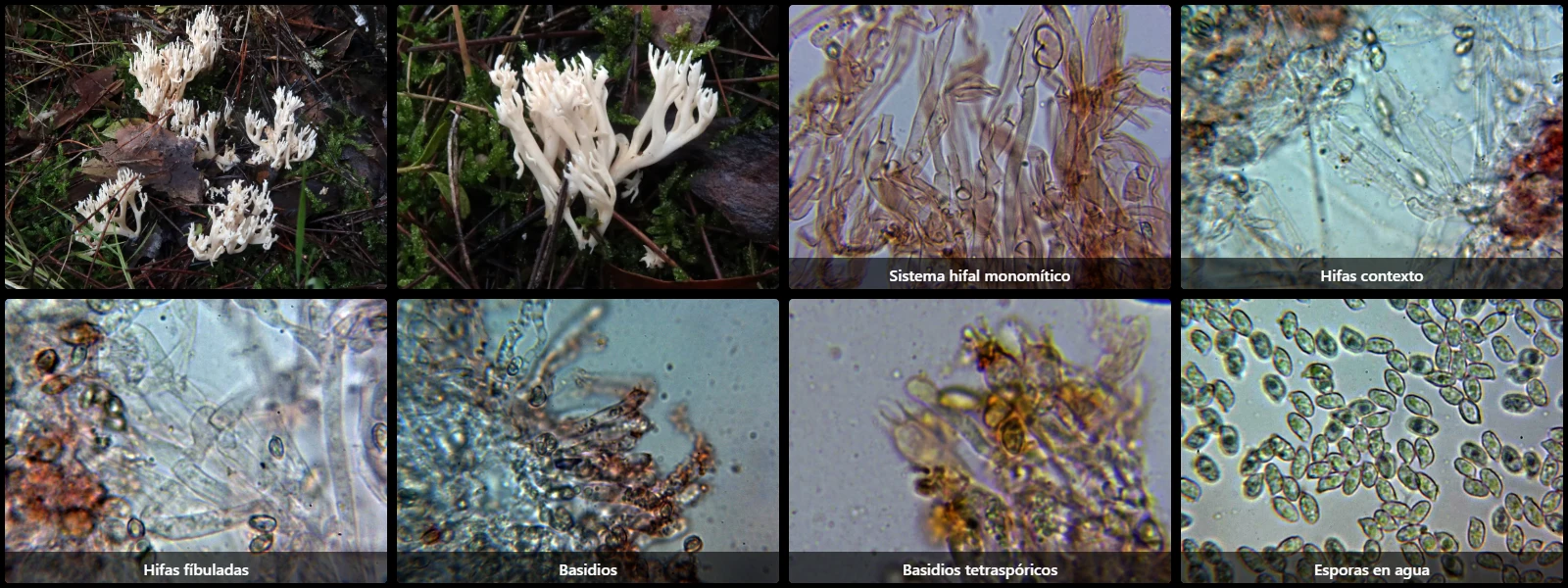
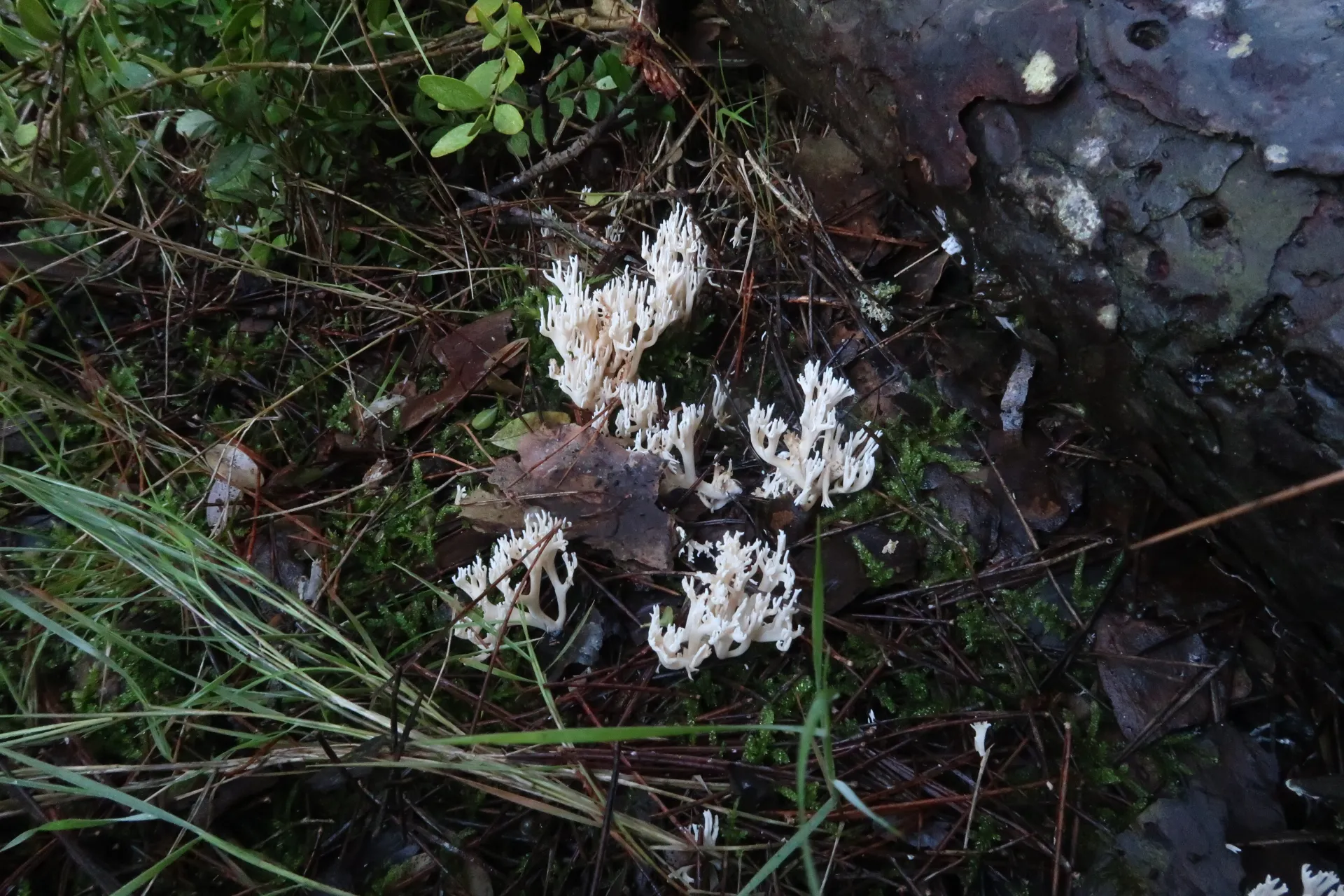
Growing directly from soil or on decaying coniferous wood debris, coralloid from a common base, 3 to 5 cm in diameter, whitish to pale yellowish ochre, unchanging upon handling, with an anise-like odor and slightly bitter taste.
Hyphal system monomitic, with contextual hyphae cylindrical, hyaline, thin-walled, arranged more or less parallel, 1.5 to 3.5 µm in diameter, septate and with prominent clamp connections at the septa.
Cystidia absent.
Basidia cylindrical-clavate, 30 to 40 µm long, 5 to 7 µm wide, with basal clamp connections and four-spored.
Spores ellipsoidal, moderately thick-walled and slightly verrucose, with a pointed end bearing the apiculus, 5.5 to 7.5 µm long, 2.8 to 3.5 µm wide, covered across their entire surface with warts, and inamyloid in Melzer's reagent.
Geographic references
Map generated from global occurrence data from GBIF. GBIF.
Study measurements
Values in Microns (µm)Macroscopic gallery
Microscopic gallery