Ramaria botrytis
(Pers.) Bourdot
Study description
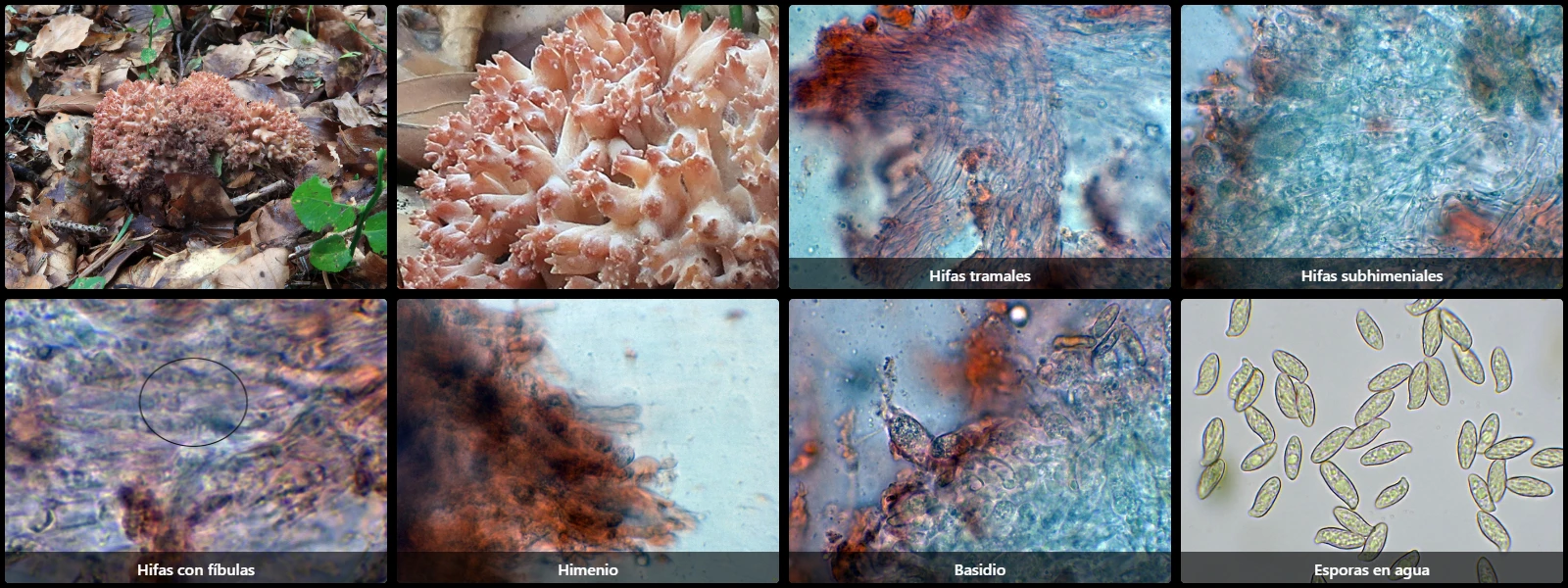
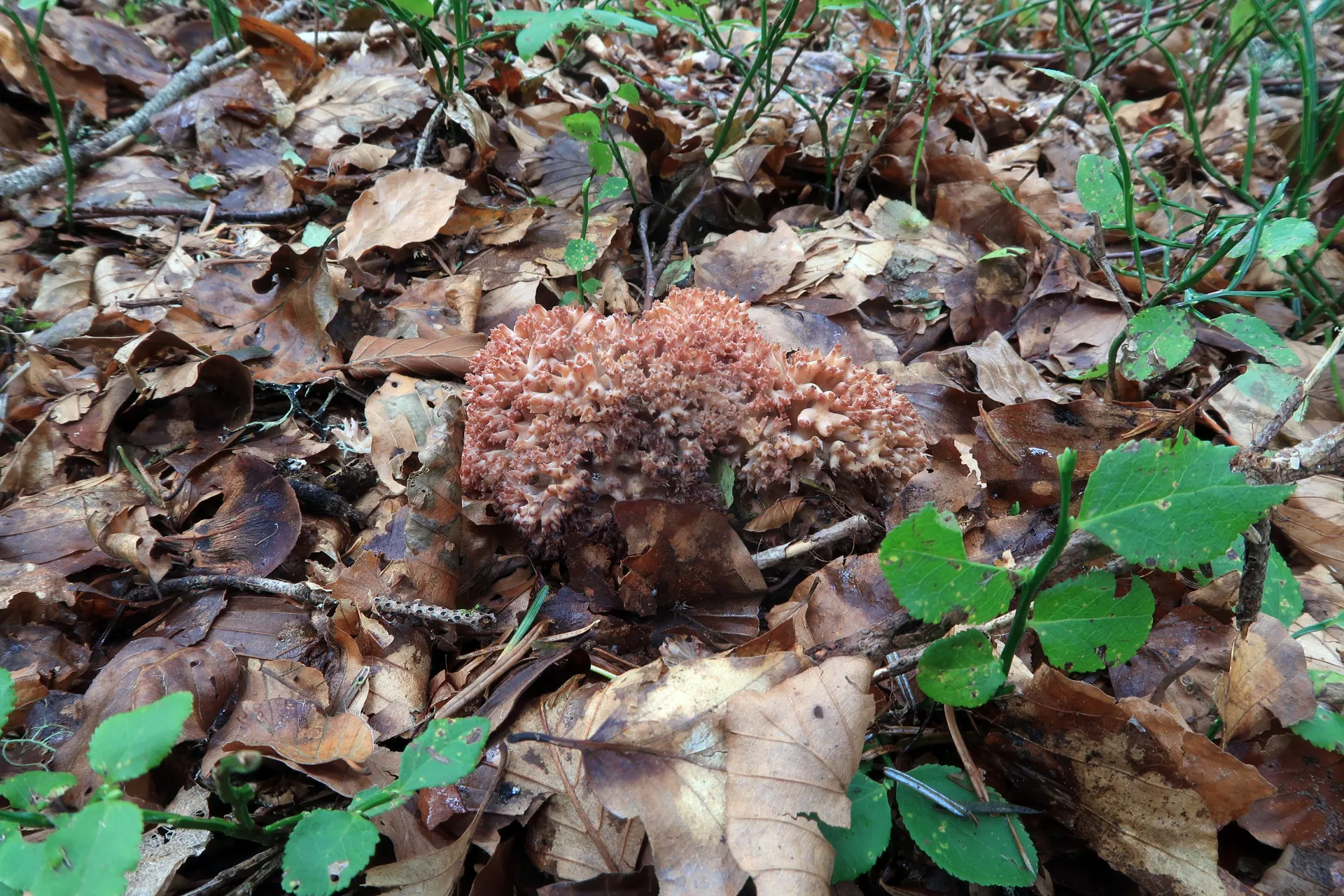
Growing on the ground under both broadleaf trees and conifers, with branched, coralloid fruit bodies up to 30 cm across resembling a cauliflower, with an ochre stem bearing brownish spots that contrast with the short vinaceous-red tips, with a pleasant odor and mild (sweet) taste.
Hyphal system monomitic, with filamentous, cylindrical hyphae, moderately thick-walled, 3 to 8 µm wide, septate and clamped.
Cystidia and other sterile hymenial elements absent.
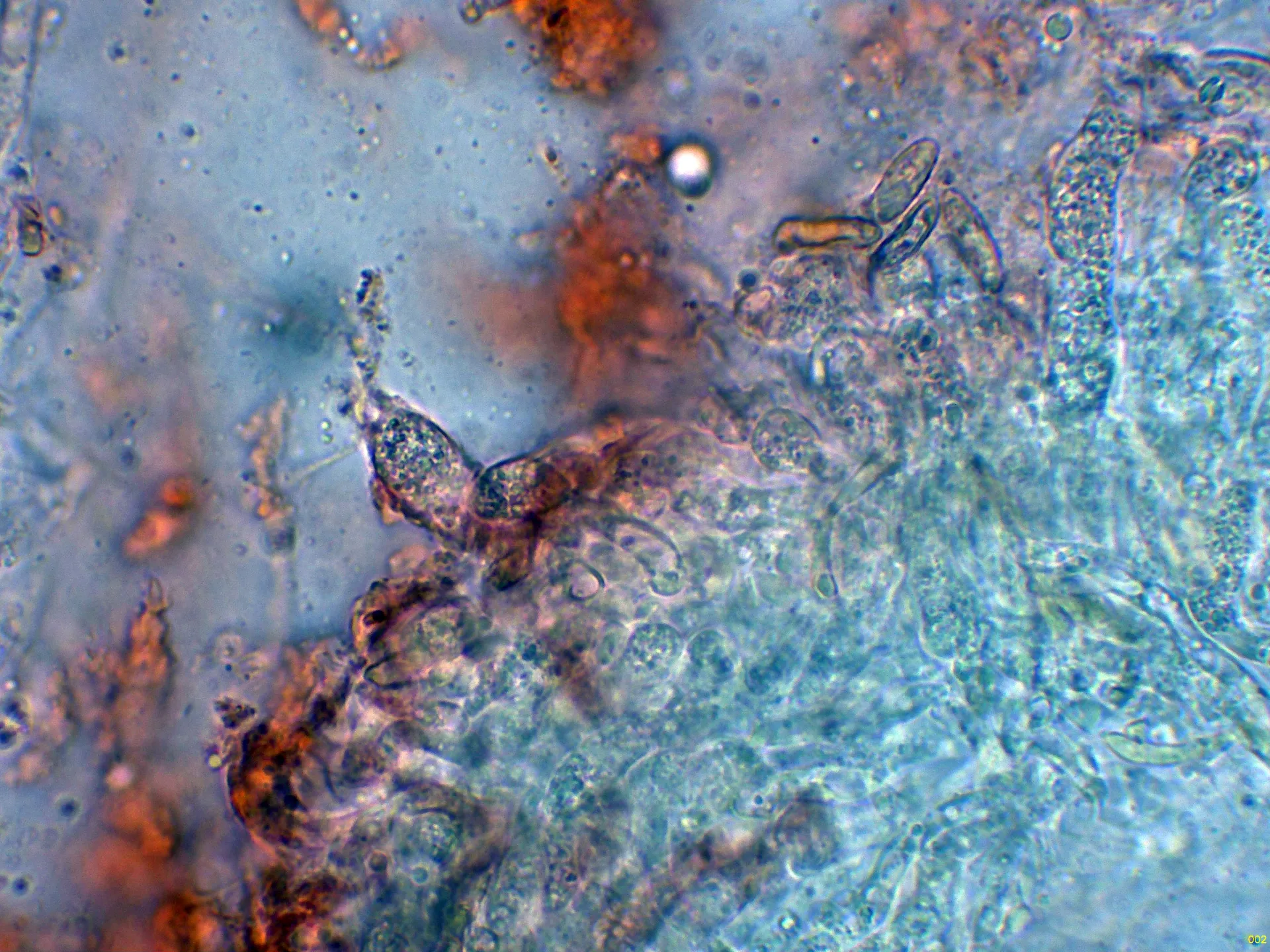
Basidia cylindrical-clavate, 45 to 60 µm long, 9 to 11 µm wide, with basal clamp connections and four-spored.
Spores cylindrical-ellipsoidal to slightly fusiform, with a pointed, curved end corresponding to the apiculus, hyaline, thin-walled, pale yellow under the microscope, 12 to 16 µm long, 4.5 to 6 µm wide, with anastomosing longitudinal striae on their surface, and inamyloid in Melzer's reagent.
Geographic references
Map generated from global occurrence data from GBIF. GBIF.
Study measurements
Values in Microns (µm)Macroscopic gallery
Microscopic gallery