Pyrenula papilligera
(Leight.) Müll.Arg.
Study description
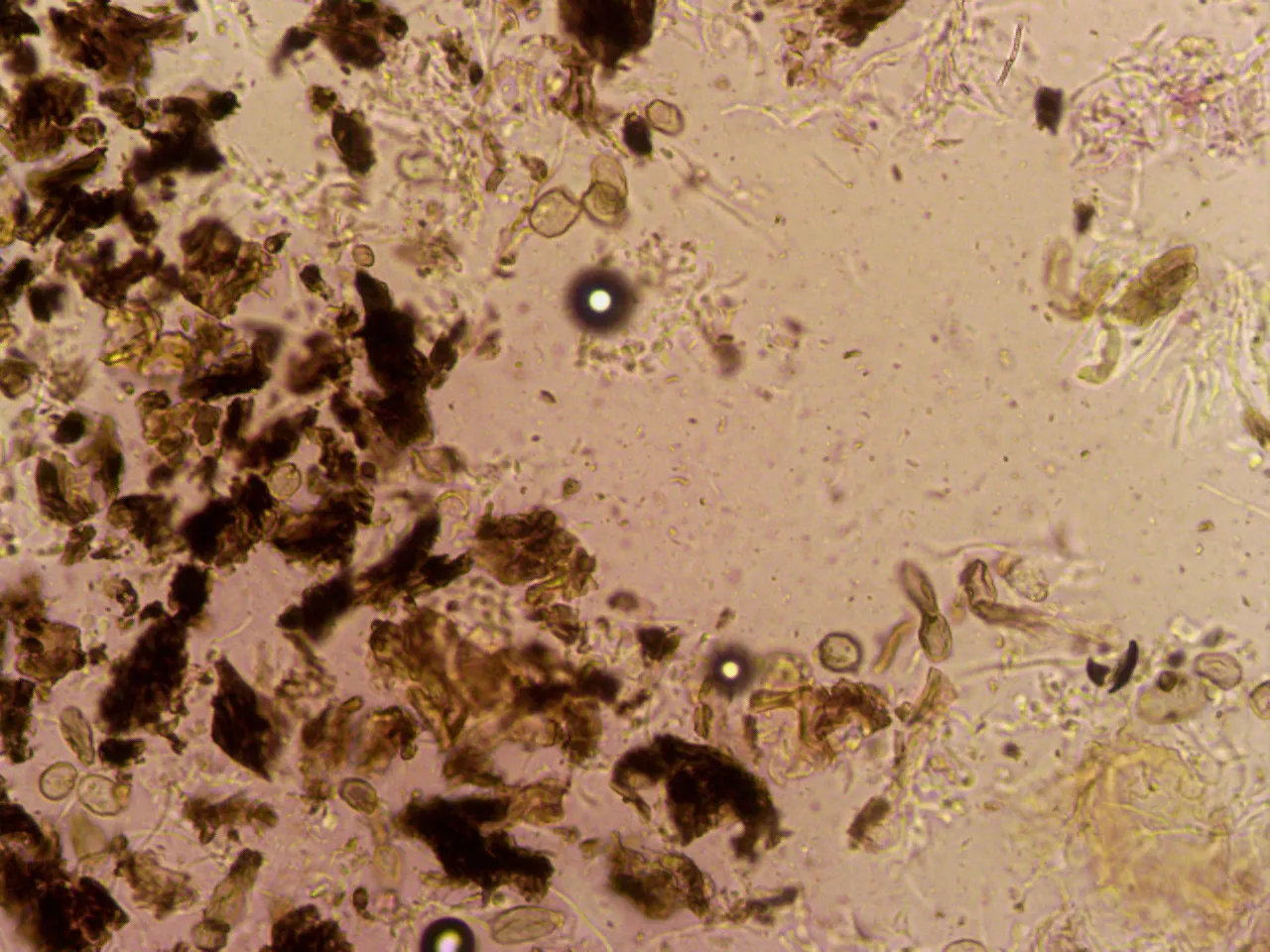
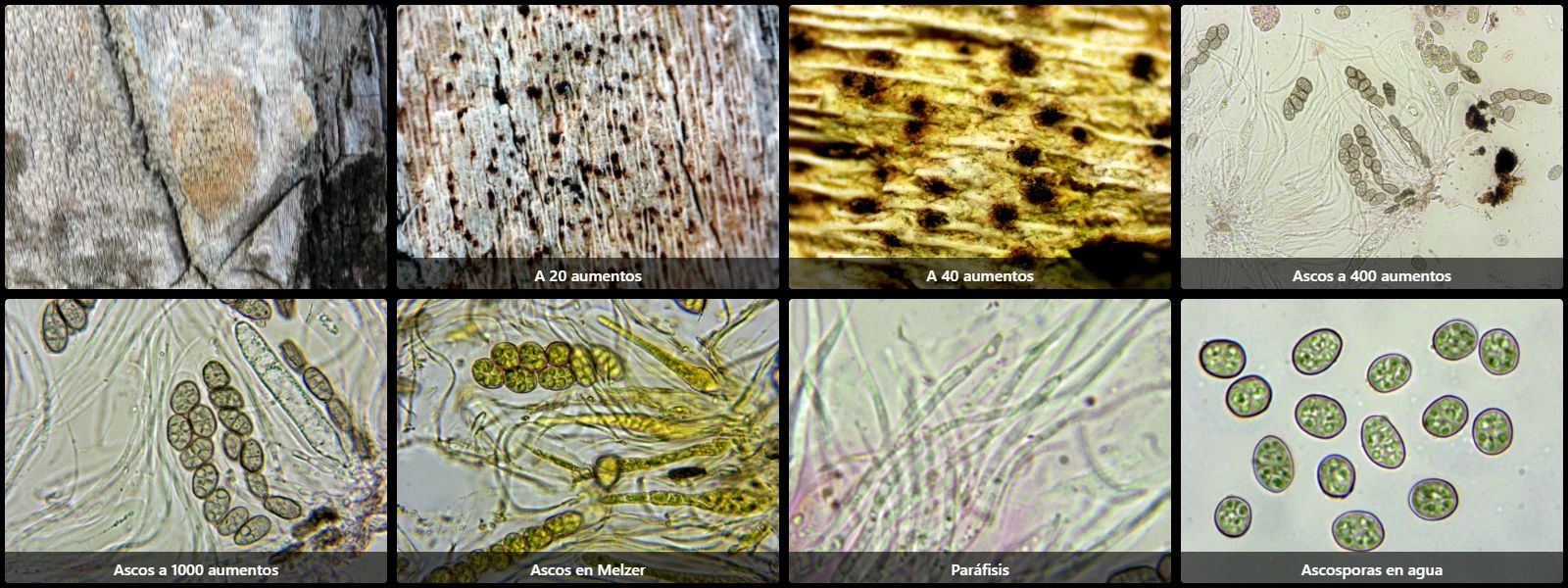
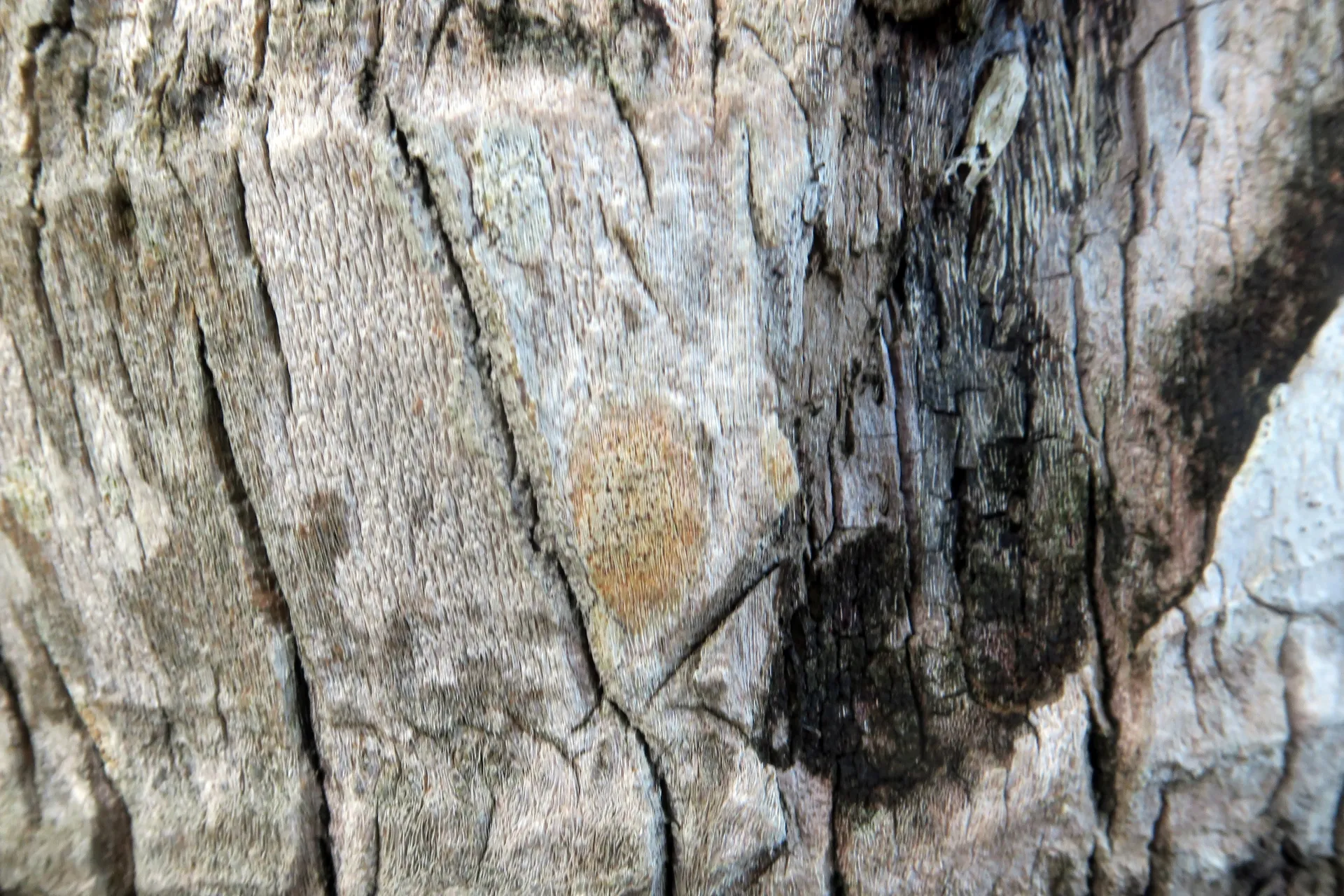
A crustose lichen of tropical climates, widely distributed in Central America, on bark of living trees, with a very thin whitish thallus with yellowish-brown tinges, and globose to subglobose perithecia 0.4 to 0.8 mm across, irregularly arranged on the thallus, black and carbonaceous in appearance.
Asci clavate, eight-spored, 60 to 75 µm long, 12 to 18 µm wide, with spore arrangement inside the ascus varying from biseriate in the upper part to uniseriate in the lower part, without any reaction in Melzer's reagent (inamyloid).
Paraphyses filiform, very slender, hyaline, only 1 to 1.6 µm thick, septate, simple or only slightly branched, exceeding the height of the asci considerably.
Ascospores subglobose to ellipsoidal, smooth, moderately thick-walled, 9 to 13 µm long, 8 to 10 µm wide, with 3 transverse septa whose internal cell lumina typically develop into very distinct spherical to rhomboidal structures.
Geographic references
Map generated from global occurrence data from GBIF. GBIF.
Study measurements
Values in Microns (µm)Macroscopic gallery
Microscopic gallery