Puccinia convolvuli
(Pers.) Castagne
Study description
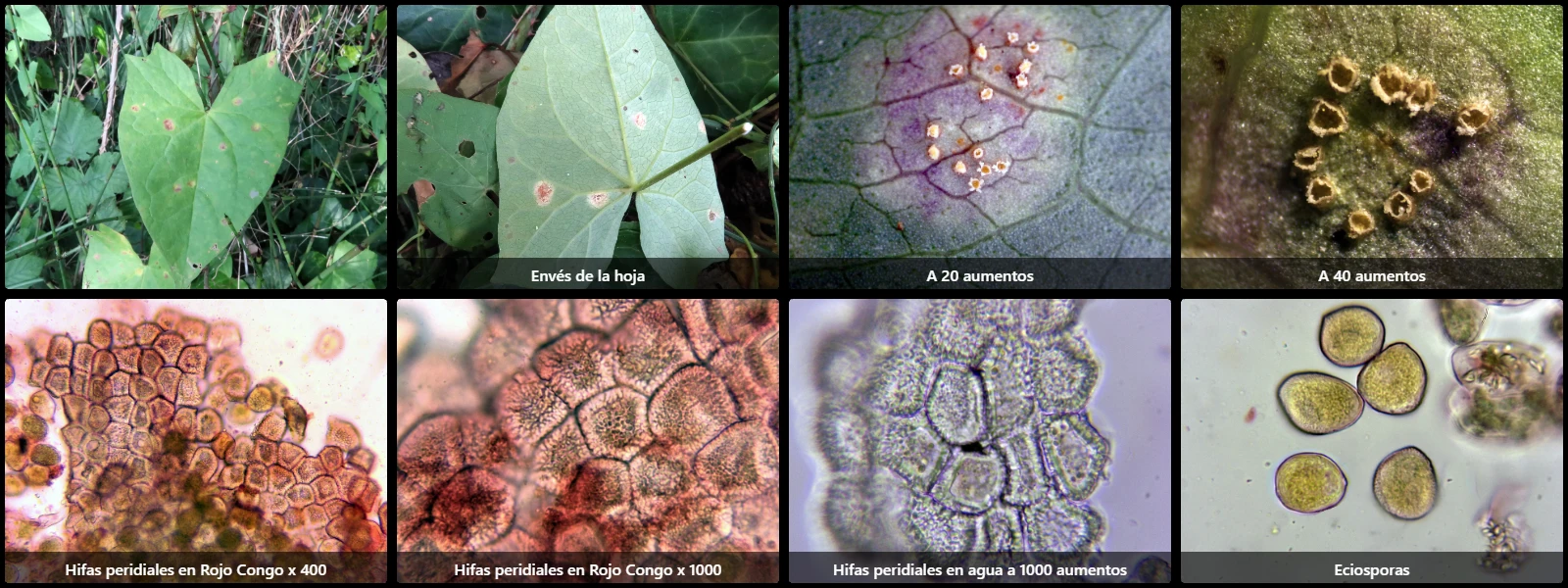
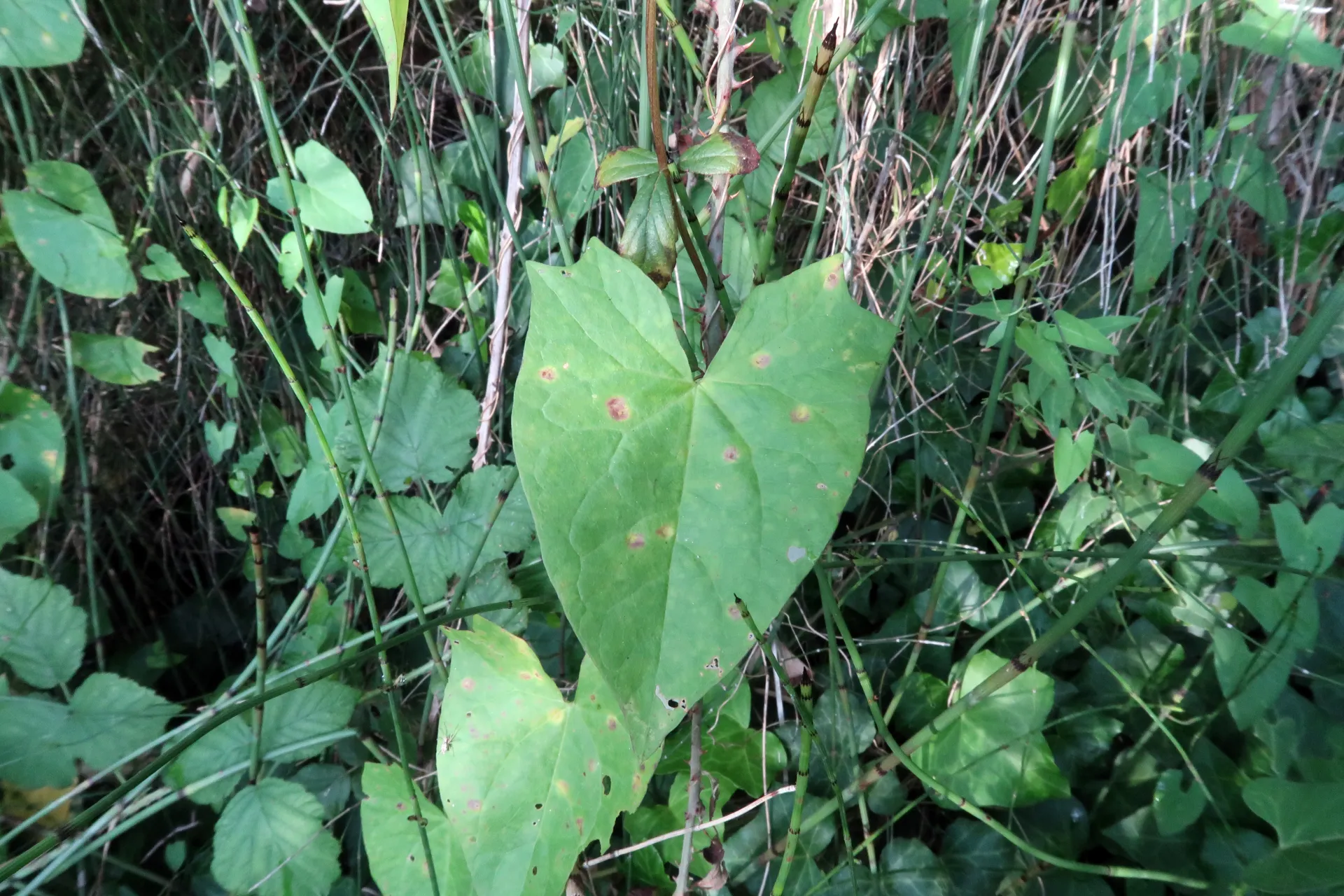
A parasitic fungus developing on living leaves of Calystegia sepium or Convolvulus sepium, with all developmental stages on the same host (spermogonia, aecia, uredinia, telia, and basidia); the present study corresponds to the initial or aecial stage of the species, causing yellowish to reddish spots on the upper leaf surface, with aecia on the underside.
Aecia cup-shaped, 0.5 to 0.7 mm in diameter, with a raised, lacerate, whitish margin and yellowish interior, arranged in rings or circles in clusters of 10 to 15 specimens, reaching a cluster diameter of 3 to 5 mm.
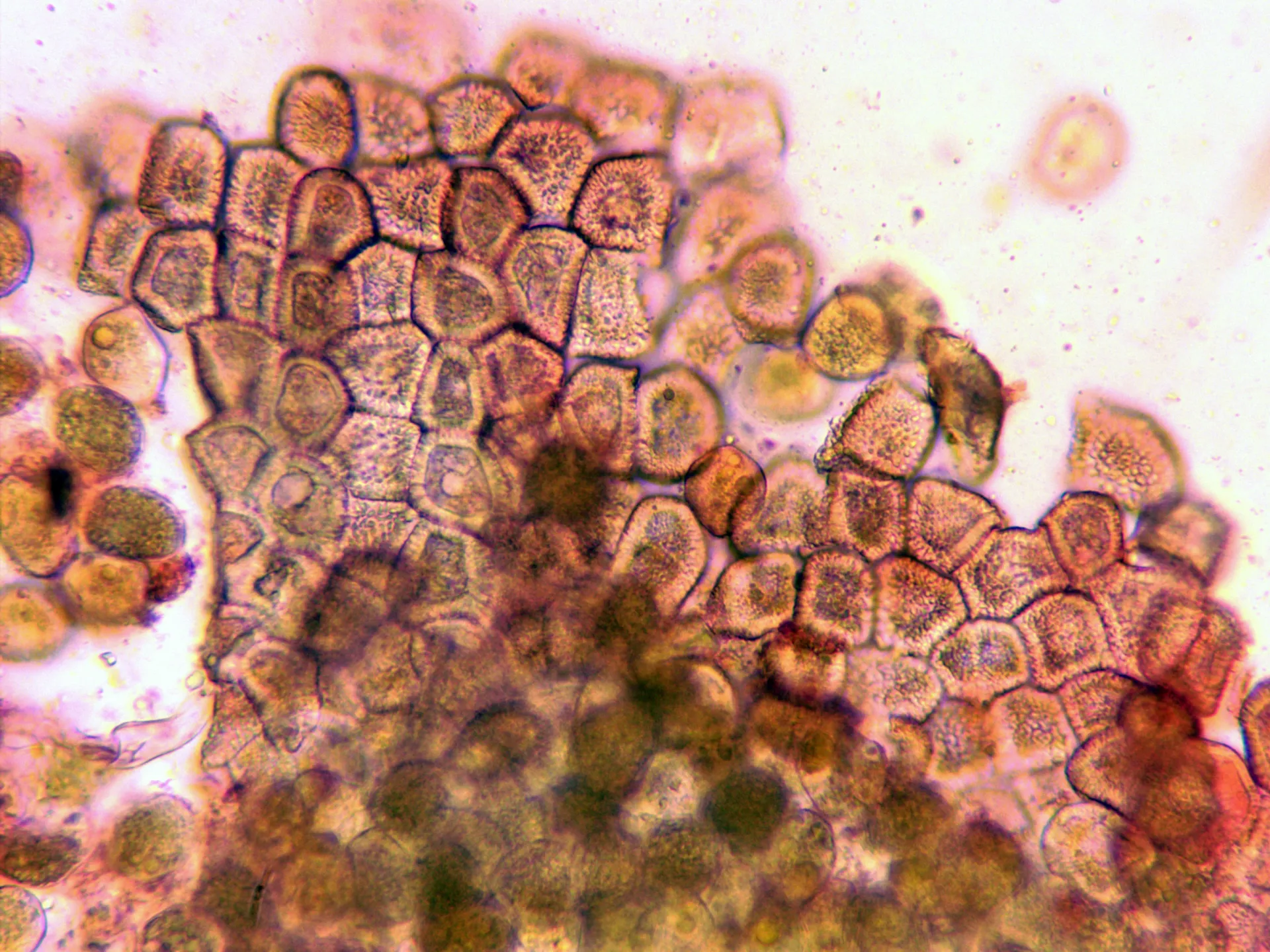
Peridial wall of aecia formed by angular hyphae compressed together, polygonal to rhomboidal, 20 to 30 µm long, 15 to 25 µm wide, with a thick, striate outer wall, and an inner verrucose core with dense uniform warts.
Aeciospores subglobose, broadly ellipsoidal to slightly angular, fairly thin-walled (only 1 to 1.5 µm thick), yellowish under the microscope, 19 to 27 µm long, 16 to 21 µm wide, with bright yellowish to orange granular content inside.
Geographic references
Map generated from global occurrence data from GBIF. GBIF.
Study measurements
Values in Microns (µm)Macroscopic gallery
Microscopic gallery