Pterulicium gracile
(Desm. & Berk.) Leal-Dutra, Dentinger & G.W.Griff.
Study description
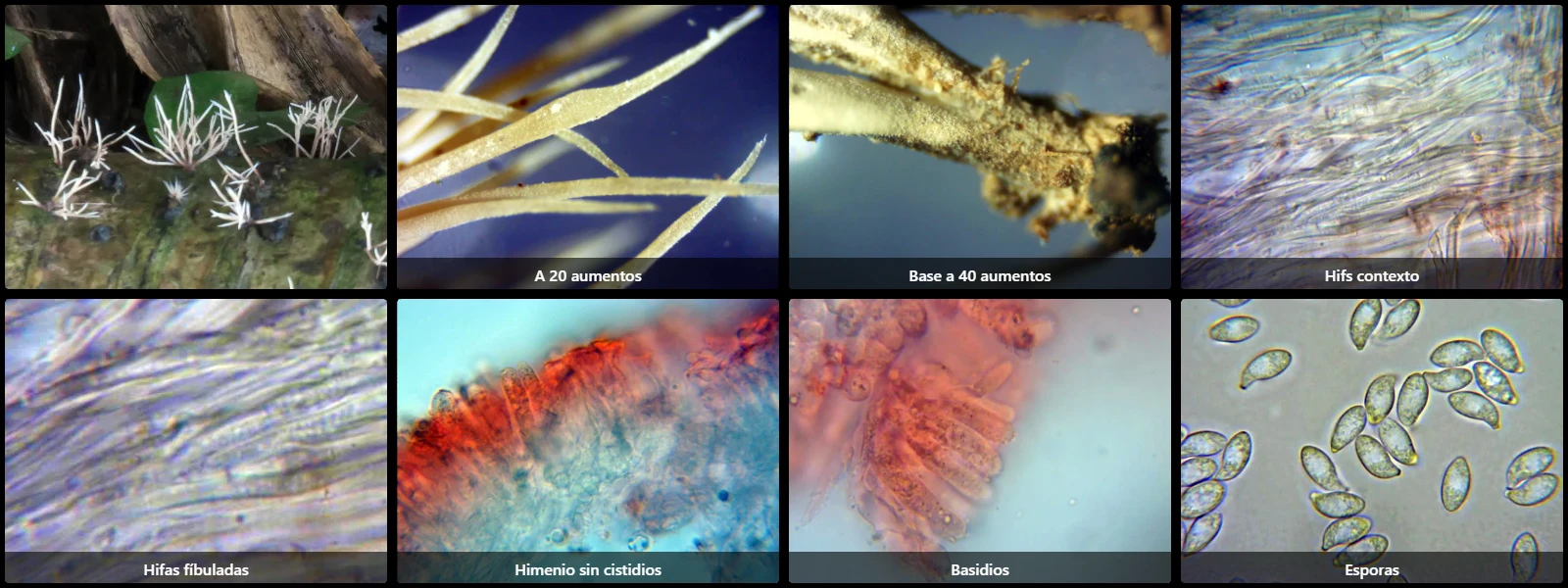
Formerly known as Pterula gracilis, on decaying organic matter, in this study on a palm trunk, with very slender fruit bodies, simple or with a few branches arising from a common base, pale yellowish brown, with pointed (lanceolate) tips.
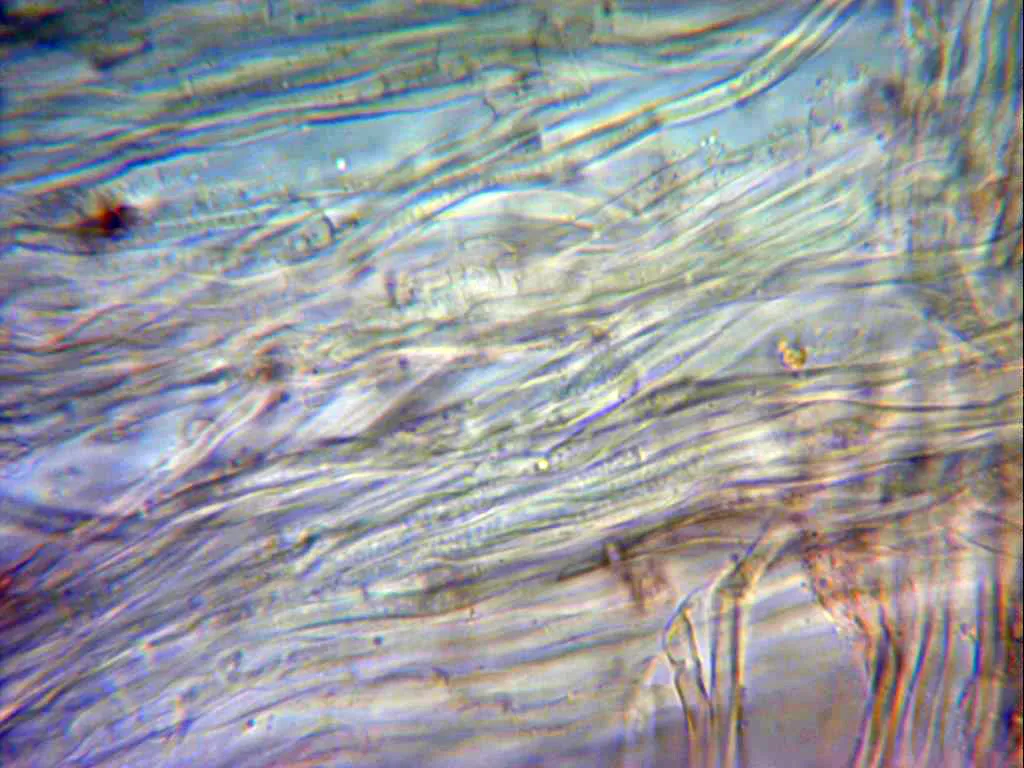
Hyphal system dimitic, with thick-walled skeletal hyphae, without septa, 3 to 5 µm wide, and hyaline, thin-walled generative hyphae, 2 to 3.5 µm wide, septate and clamped.
Cystidia absent.
Basidia cylindrical-clavate, 30 to 45 µm long, 6 to 9 µm wide, with basal clamp connections and two or four sterigmata, two- or four-spored.
Spores ellipsoidal to amygdaliform, smooth, hyaline, thin- to slightly thick-walled, with a curved end where the apiculus is located, 9.5 to 12 µm long, 5 to 6 µm wide, with granular content inside and inamyloid in Melzer's reagent.
Geographic references
Map generated from global occurrence data from GBIF. GBIF.
Study measurements
Values in Microns (µm)Macroscopic gallery
Microscopic gallery