Pseudotomentella nigra
(Höhn. & Litsch.) Svrček
Study description
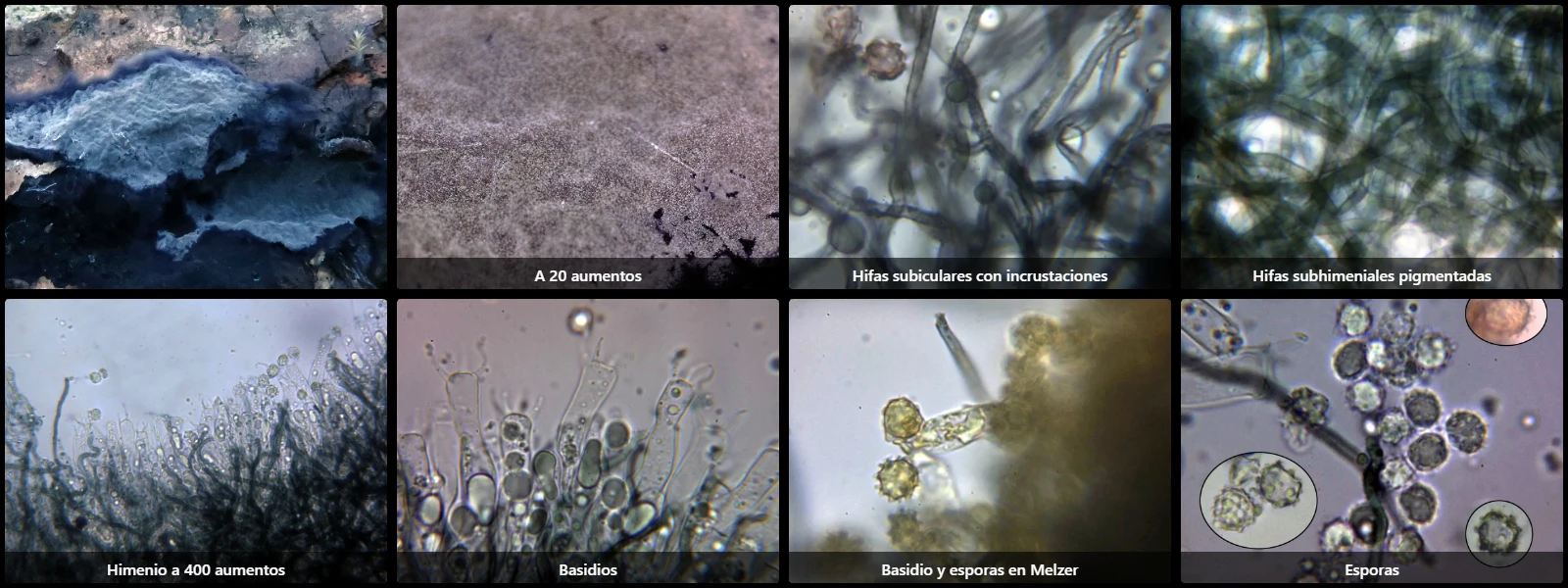
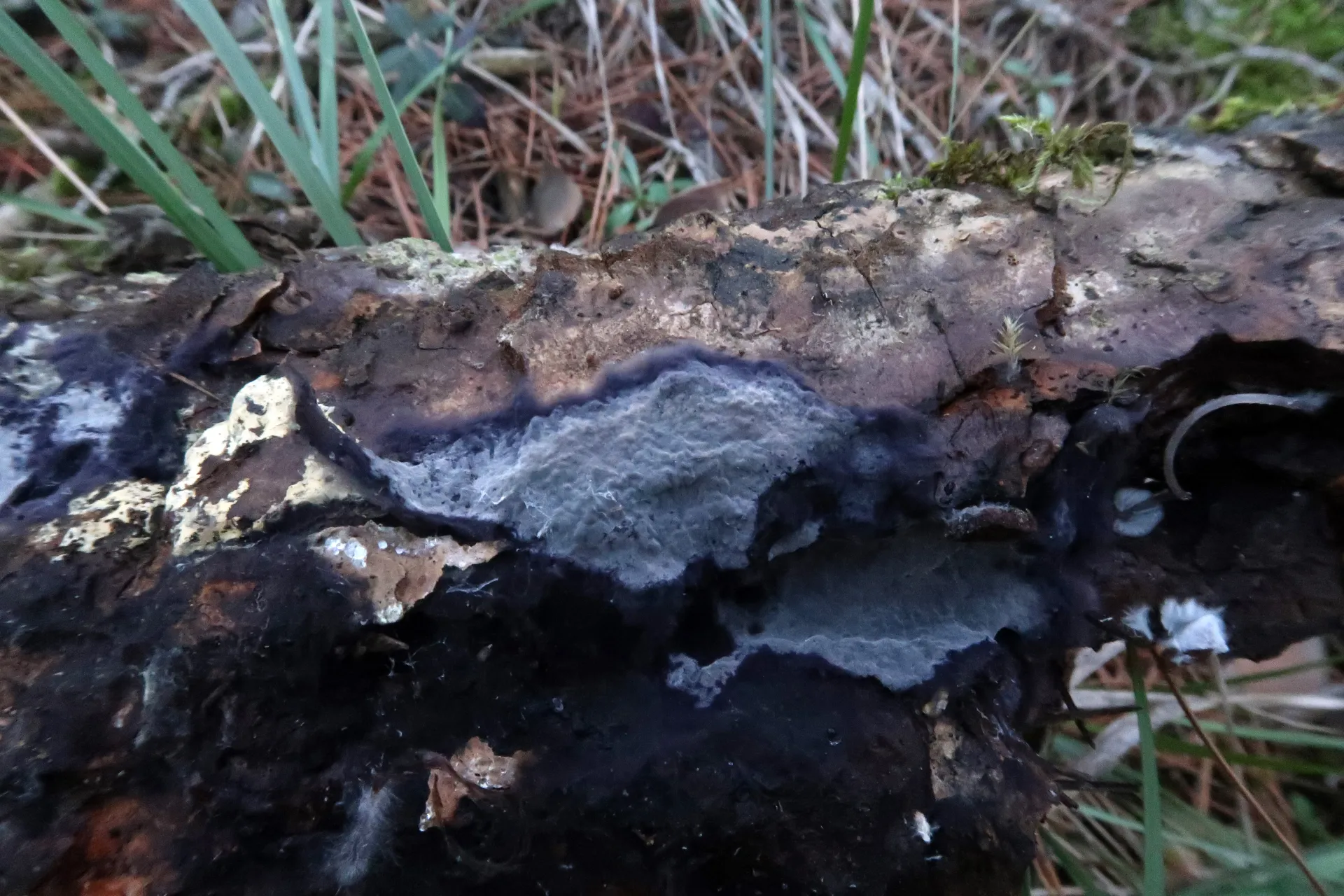
On damp, decaying coniferous wood on the ground, preferentially Pinus or Juniperus (this collection on Pinus pinaster wood), with resupinate basidiomata loosely attached to the substrate, just over 1 mm thick, bluish-grey to dark blue with maturity, with a smooth to faintly pruinose surface.
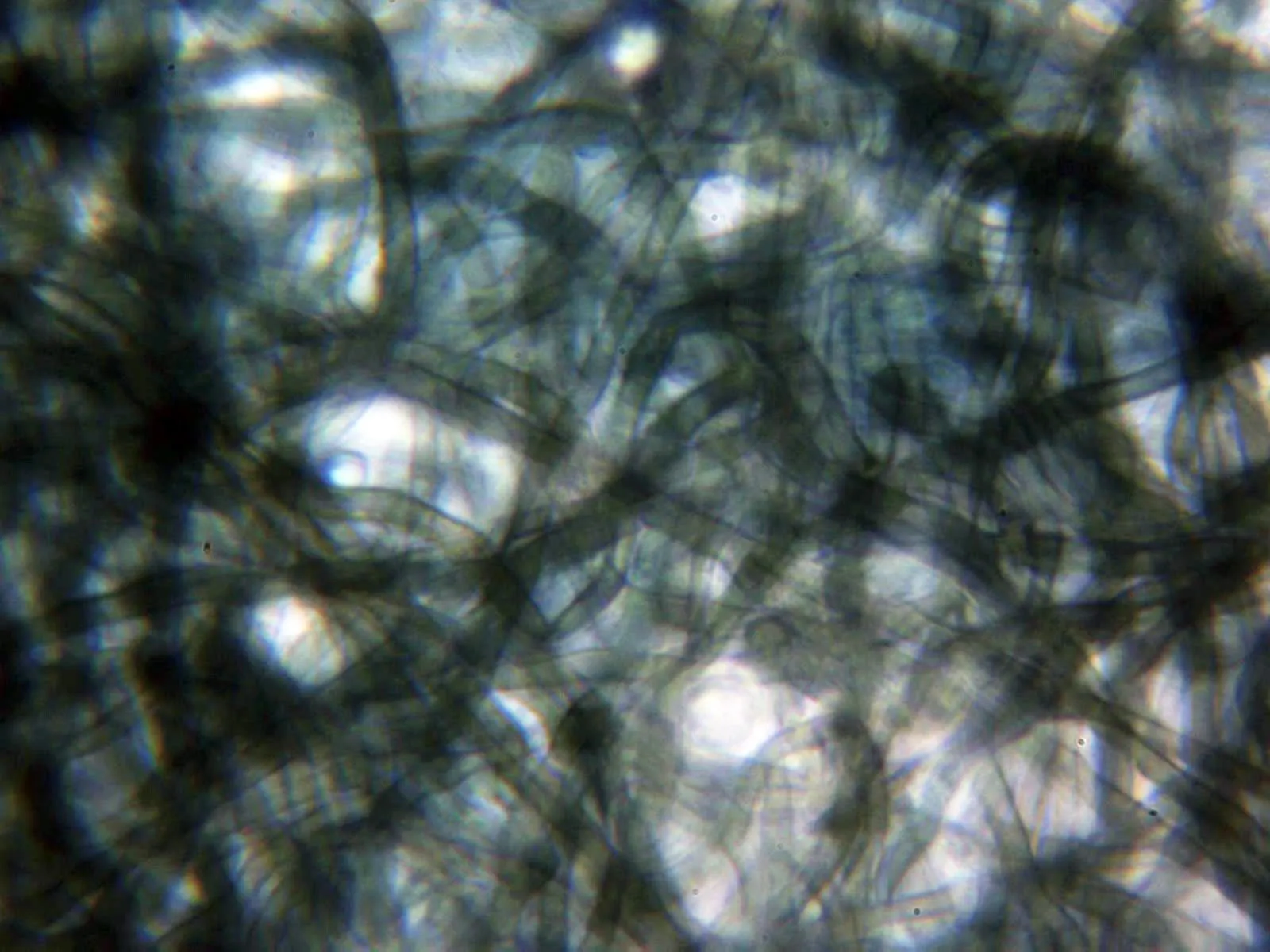
Subhymenial hyphae filamentous, 2 to 4 µm wide, with abundant right-angled branching, containing brownish intracellular pigment, simple-septate. Subicular hyphae similar, densely encrusted with blue granules that impart the blue colour to the subiculum.
Cystidia absent.
Basidia subcylindrical, ventricose, sinuous, hyaline, 40 to 70 µm long, 8 to 11 µm wide, bearing four stout sterigmata up to 7 µm long (up to 2.5 µm wide at the base).
Spores globose to subglobose, hyaline or with faint pale yellowish pigment, thin-walled and verrucose/echinulate, 7 to 10 µm long, 7 to 8.5 µm wide, containing lipid droplets, inamyloid in Melzer's reagent.
Geographic references
Map generated from global occurrence data from GBIF. GBIF.
Study measurements
Values in Microns (µm)Macroscopic gallery
Microscopic gallery