Pseudosperma squamatum
(J.E.Lange) Matheny & Esteve-Rav.
Study description
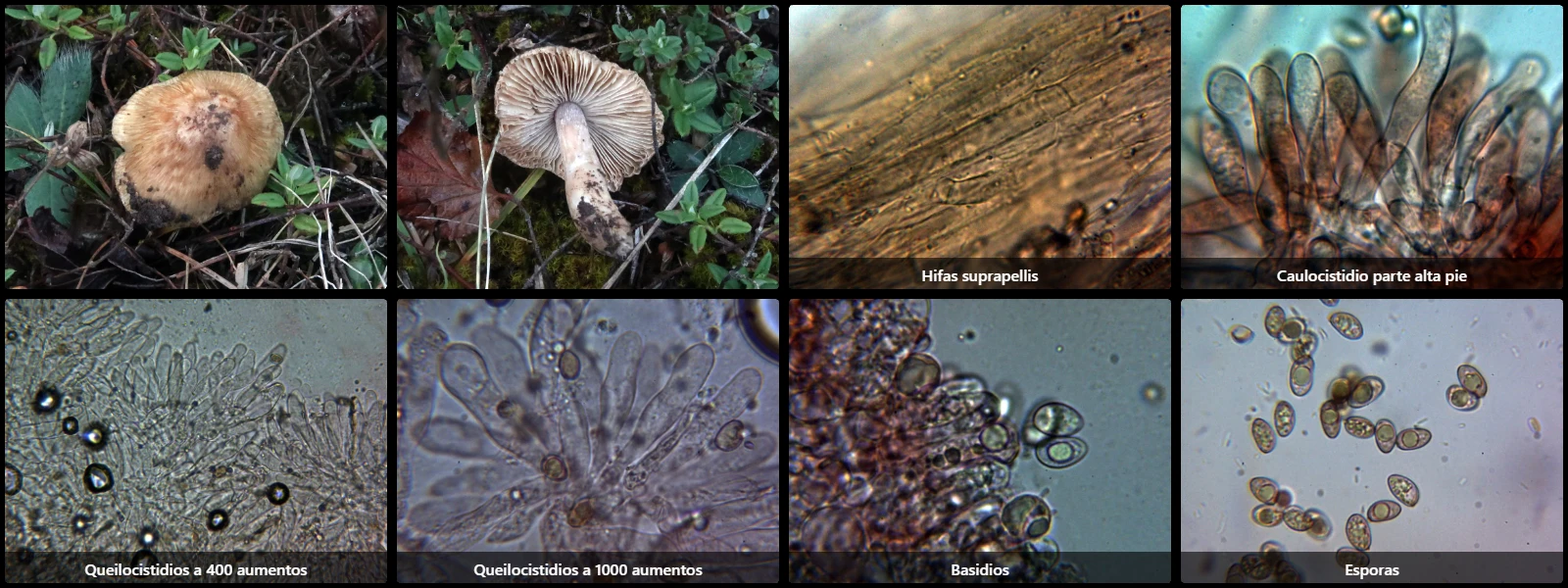
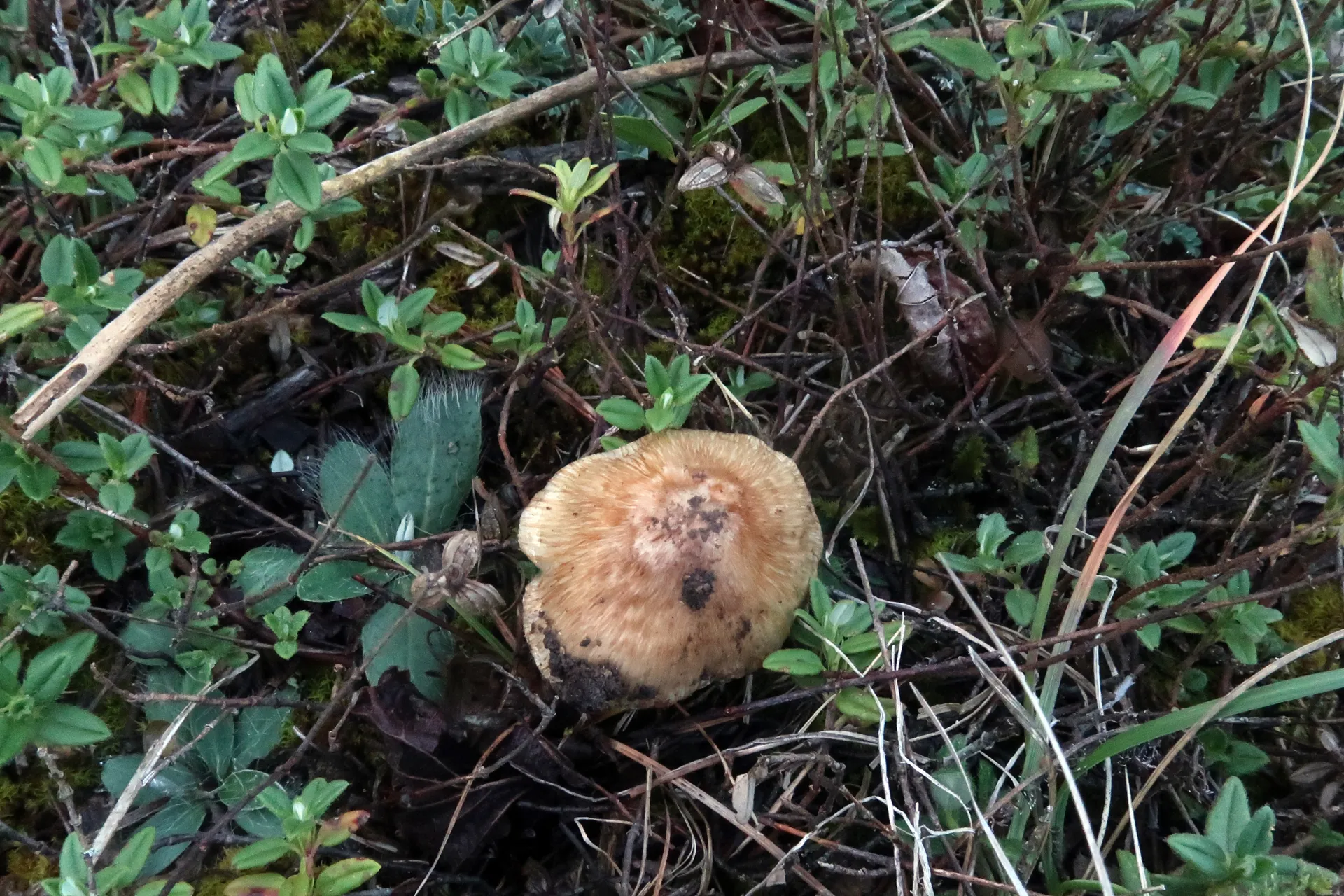
On calcareous soils under broadleaved trees, preferentially Populus, Salix, or Betula, with a conical to slightly convex pileus 2 to 5 cm in diameter, brown with fibrillose-squamulose radiating fibrils, pale yellowish-ochre lamellae, and a solid cylindrical stipe concolorous with the lamellae, slightly enlarged at the base but not bulbous.
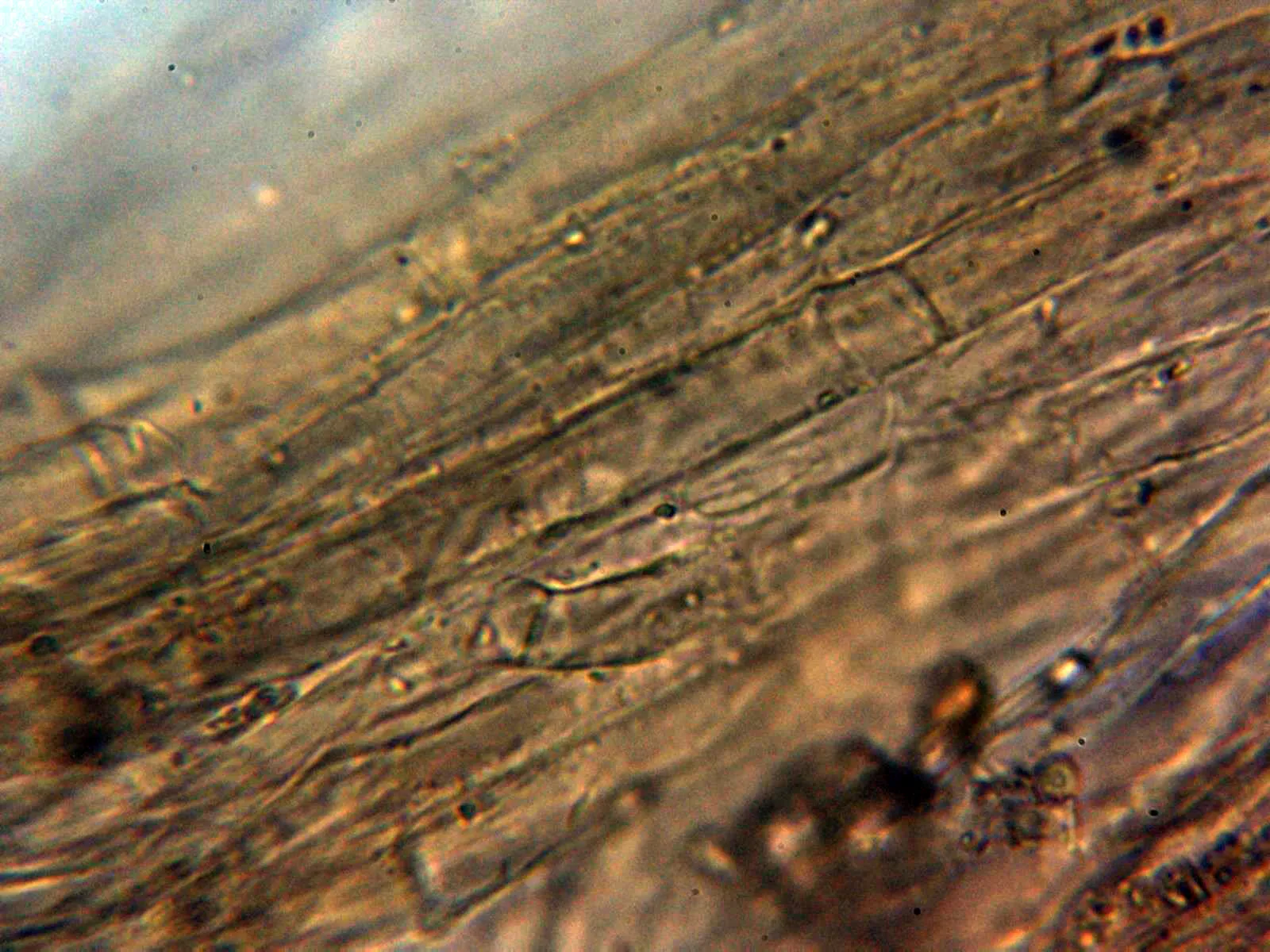
Pileipellis composed of parallel cylindrical hyphae 6 to 14 µm wide, filled with brown intracellular pigment, with faint surface encrustations, septate with clamp connections.
Caulocystidia present only in the upper third of the stipe, cylindrical to clavate, in fascicles.
Cheilocystidia very numerous, rendering the gill edge sterile, cylindrical, subcylindrical to clavate, 40 to 60 µm long and 10 to 15 µm wide, clamped at the base.
Pleurocystidia absent.
Basidia clavate, 30 to 40 µm long, 10 to 15 µm wide, clamped at the base, typically 4-spored, with occasional 2-spored basidia.
Spores ellipsoidal, flattened on one side, smooth, moderately thick-walled, yellowish-brown under the microscope, 8 to 11 µm long, 5.5 to 7.5 µm wide, with an inconspicuous eccentric hyaline apiculus at one pole, containing oil guttules.
Geographic references
Map generated from global occurrence data from GBIF. GBIF.
Study measurements
Values in Microns (µm)Macroscopic gallery
Microscopic gallery