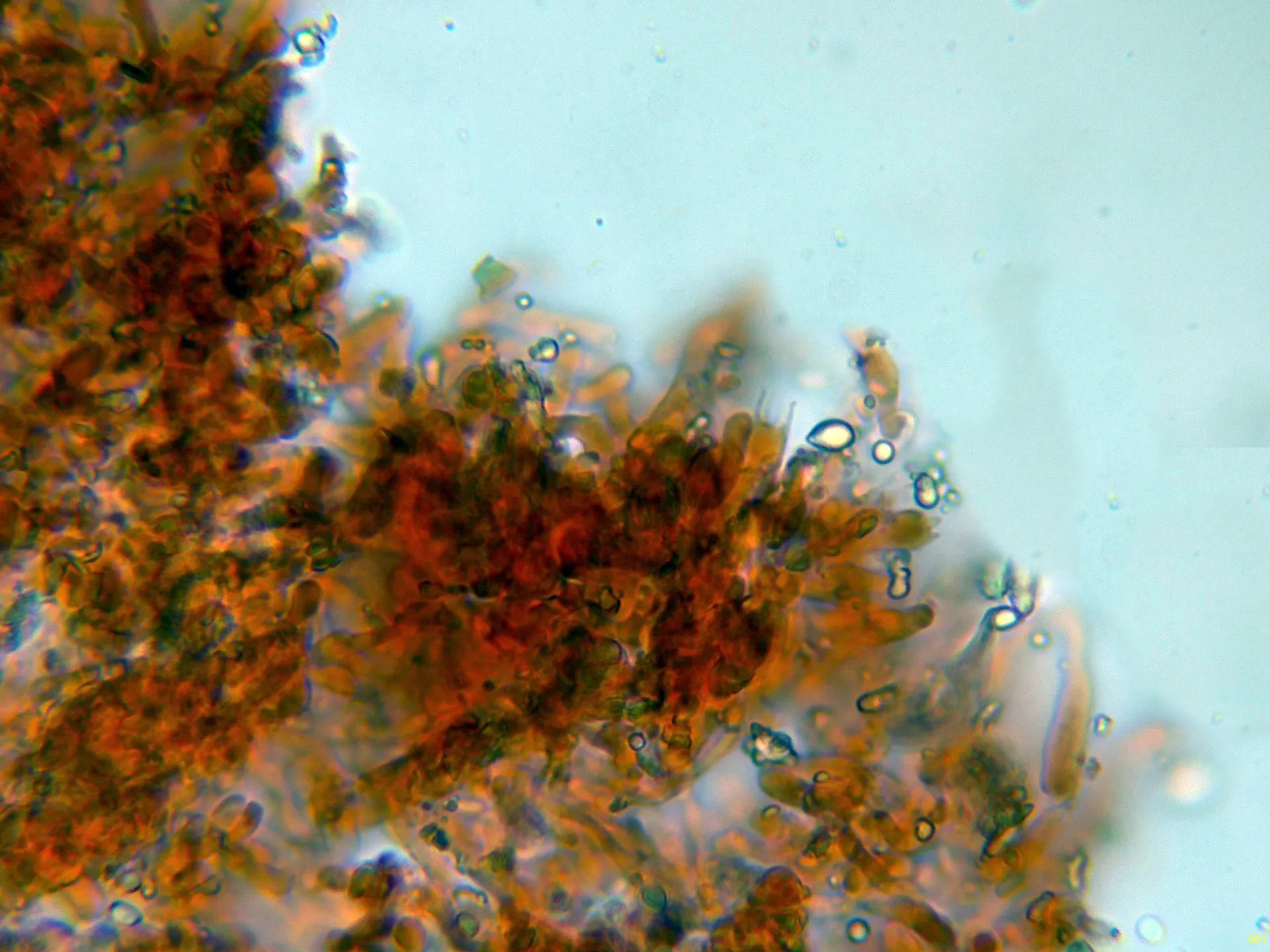
Pseudomerulius aureus
(Fr.) Jülich
Study description
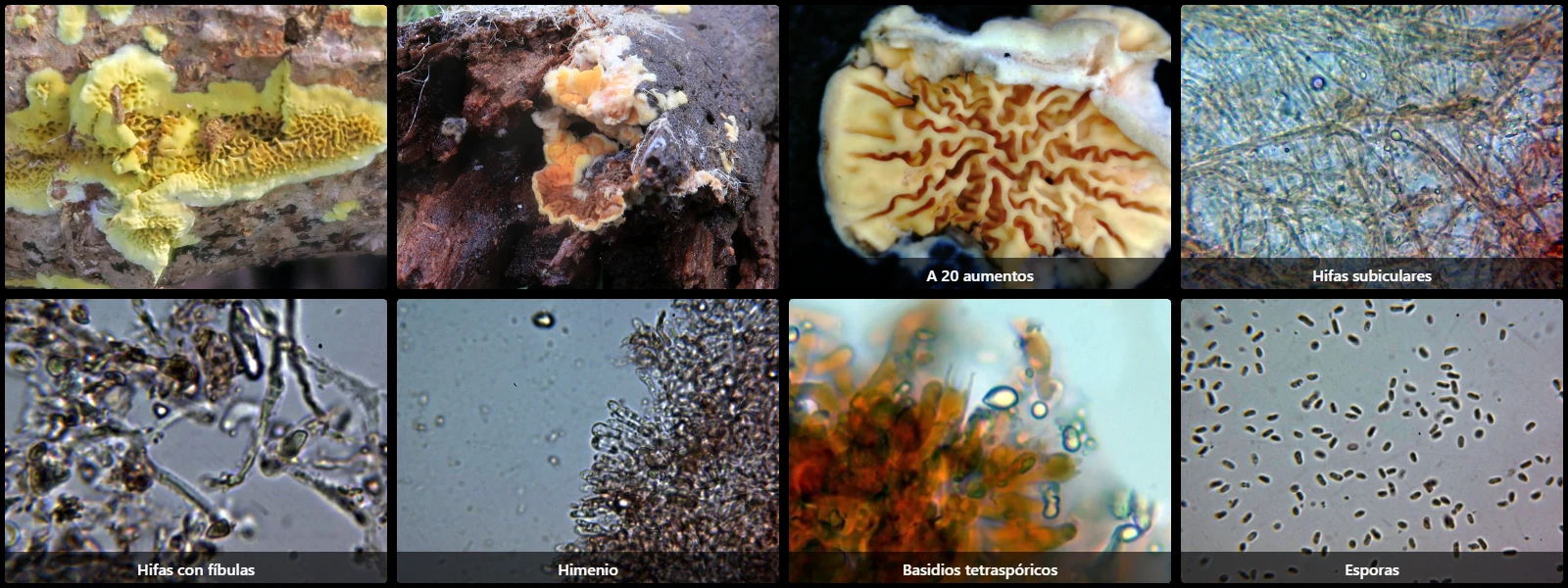
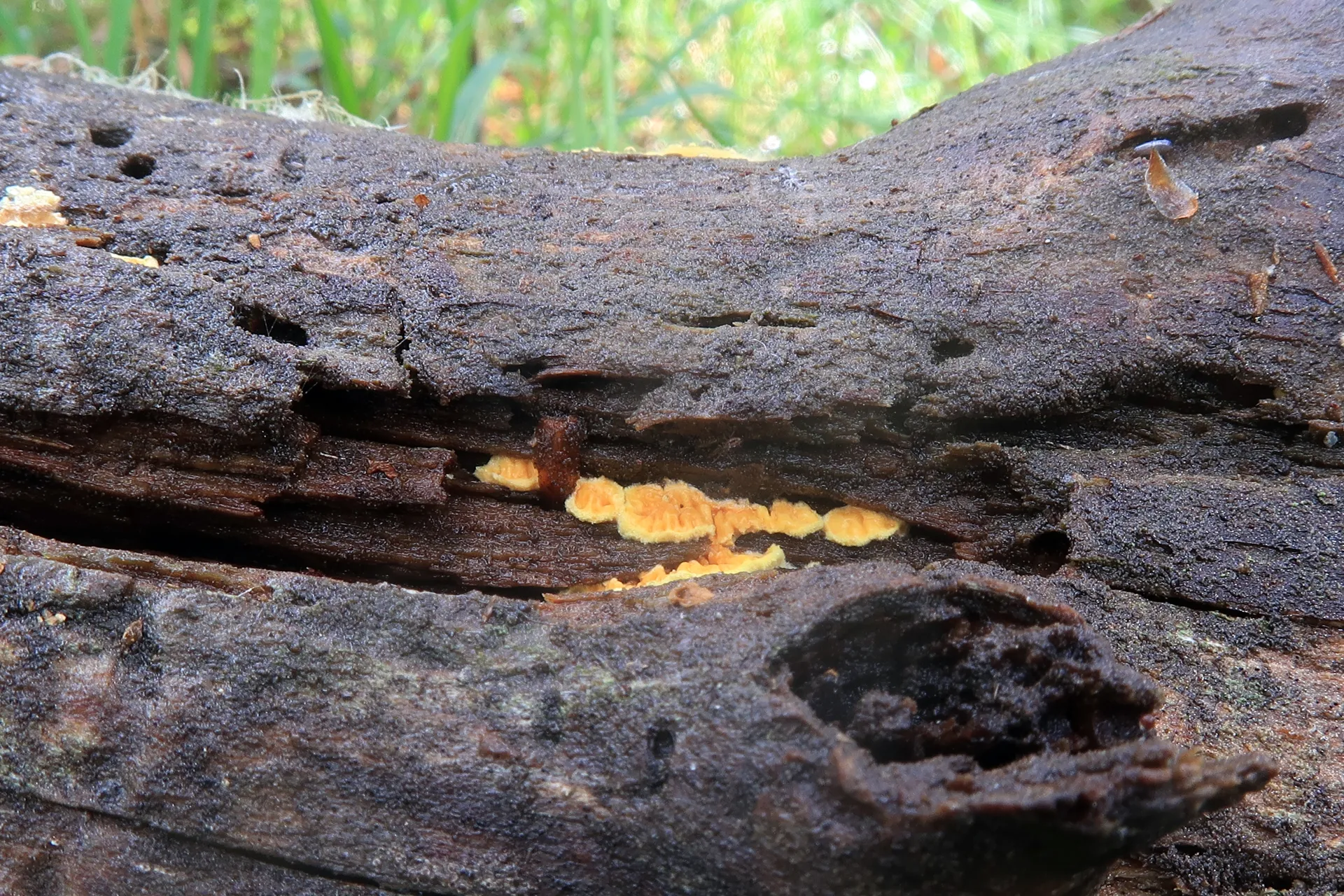
On dead wood and bark of conifers, especially Pinus (this collection on Pinus sylvestris wood in direct contact with the ground), with resupinate to slightly effused-reflexed basidiomata, with a merulioid, rugose hymenophore featuring interconnected, anastomosing radial folds, vivid lemon-yellow to golden-orange, soft and waxy when fresh.
Hyphal system monomitic; hyphae cylindrical, 1.5 to 3.5 µm wide, containing brown intracellular pigment, branched, interwoven, slightly separated by gelatinization, septate and partly clamped.
Cystidia and other sterile hymenial elements absent.
Basidia cylindrical-clavate, 15 to 25 µm long, 3 to 4 µm wide, clamped at the base, 4-spored.
Spores small, cylindrical, smooth, hyaline, thin-walled, 3.5 to 4.5 µm long, 1.5 to 2 µm wide, lacking a distinct apiculus, containing minute oil droplets, inamyloid in Melzer's reagent.
The folded-merulioid hymenophore, bright yellow colour, and small cylindrical spores are diagnostic for the species.
Herbarium material available: JTP2106/24.
Geographic references
Map generated from global occurrence data from GBIF. GBIF.
Study measurements
Values in Microns (µm)Macroscopic gallery
Microscopic gallery