Pseudohydnum gelatinosum
(Scop.) P.Karst.
Study description
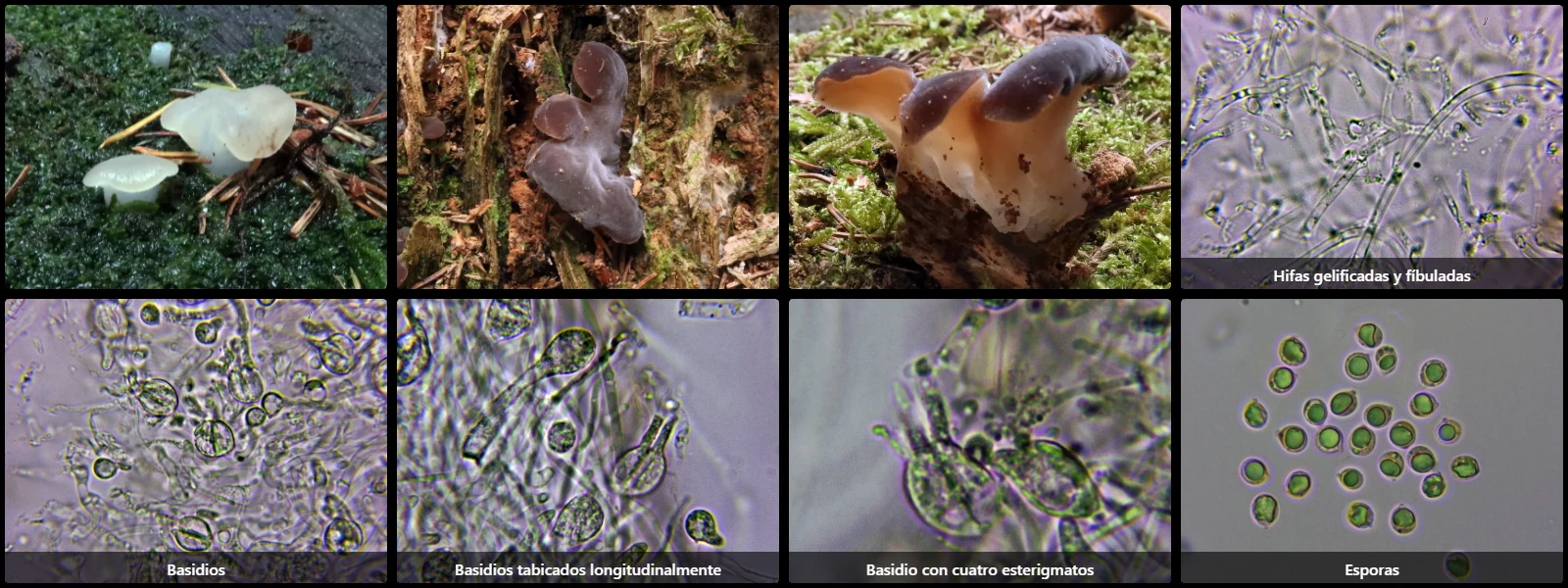
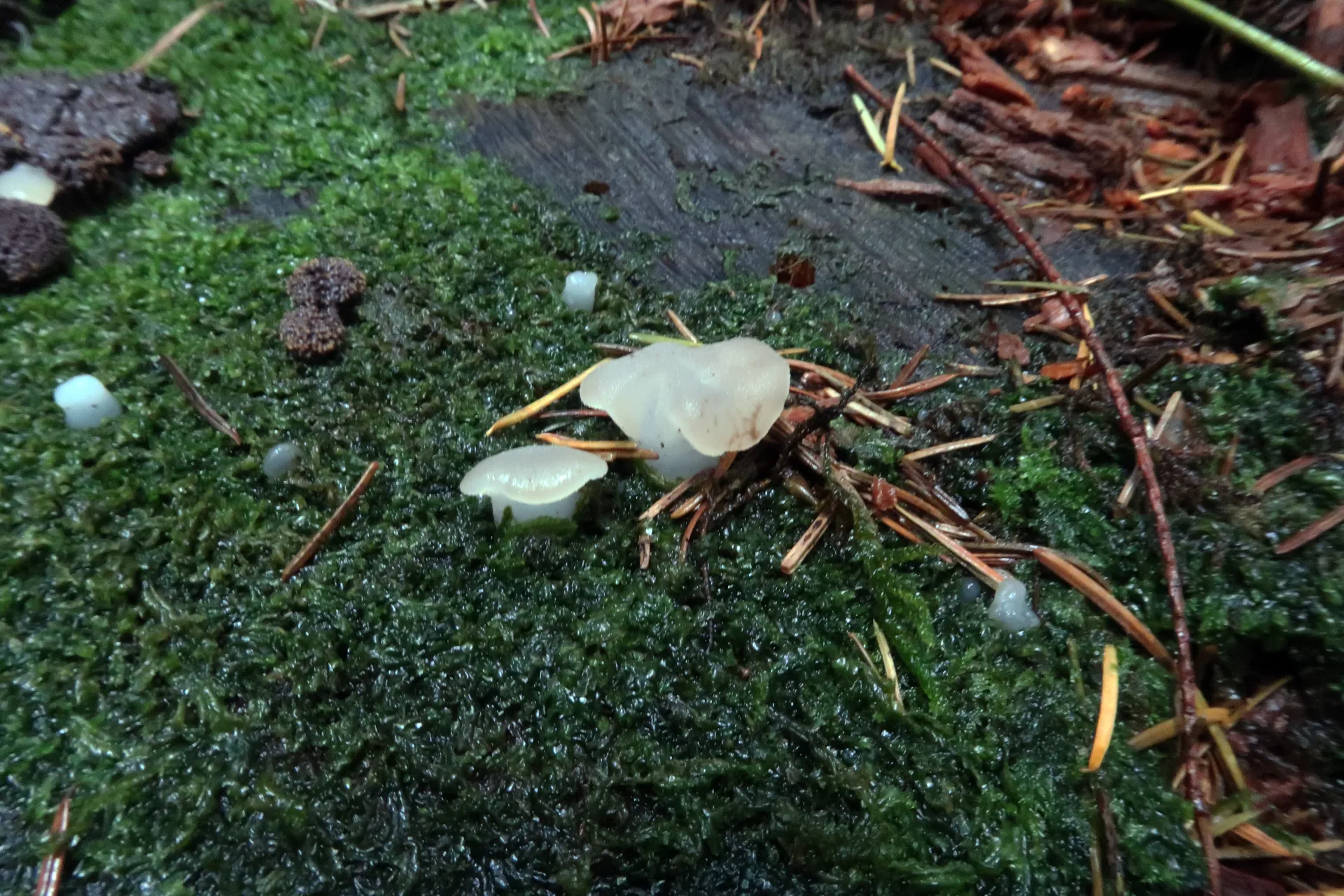
On heavily decayed conifer stumps and logs, spathulate to fan-shaped (pleurotoid), 2 to 6 cm in diameter, pileal surface rugose, translucent white to greyish-brown, with a hydnoid hymenophore composed of white, pointed, conical teeth/spines, and gelatinous, translucent, odourless and tasteless context.
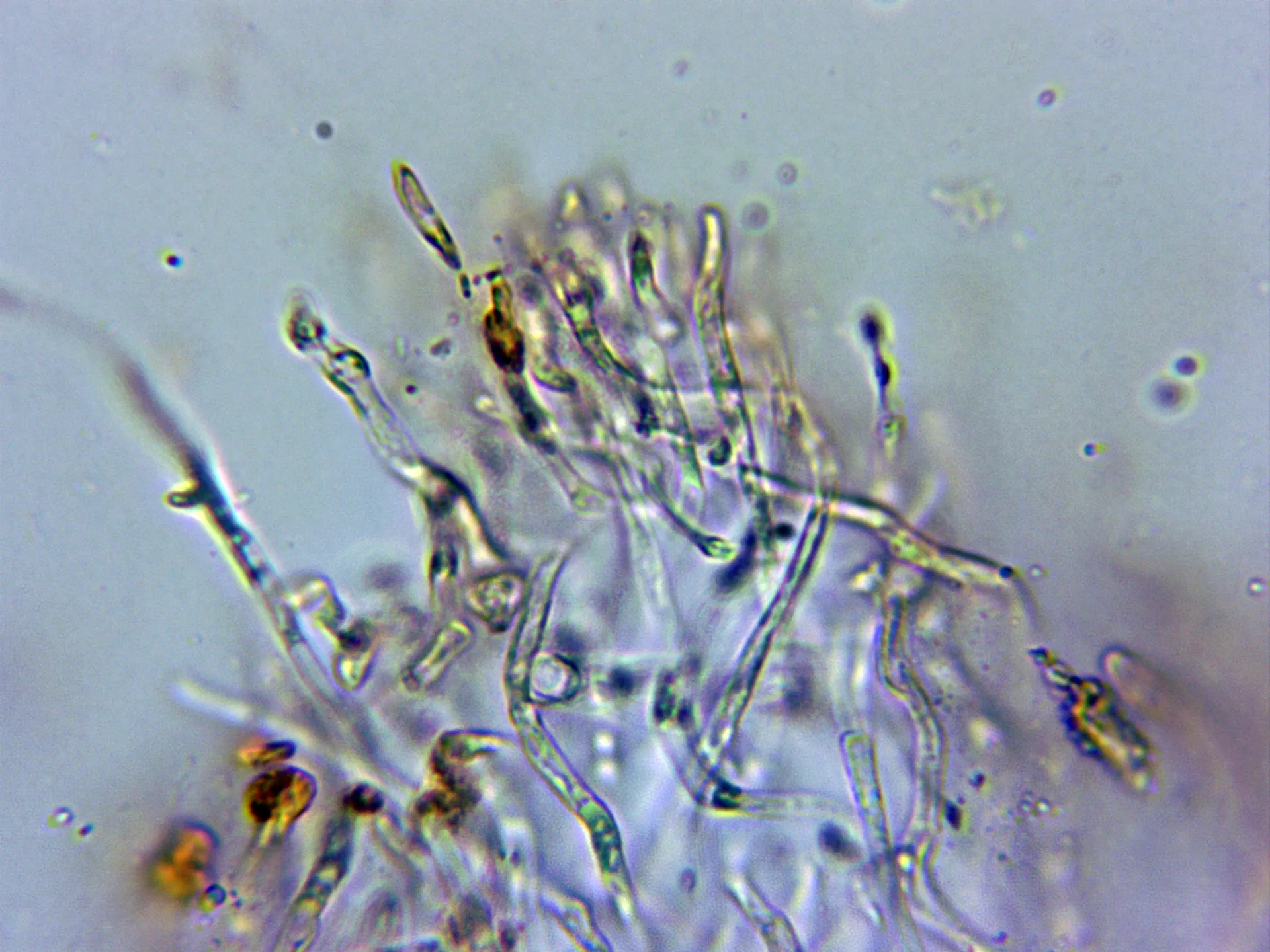
Pileipellis composed of very slender filamentous hyphae 1.5 to 2.5 µm wide, hyaline, widely separated by a thick gelatinous matrix, septate with clamp connections.
Cystidia and other sterile hymenial elements absent.
Basidia globose, oblong to pyriform, longitudinally septate (cruciate-septate/phragmobasidia), 11 to 16 µm long and 8 to 12 µm wide, bearing 2 to 4 stout tubular epibasidia/sterigmata up to 8 µm long.
Spores globose to subglobose, smooth, hyaline, thin-walled, with a pointed apicular end, 6 to 7.5 µm long, 5 to 6.5 µm wide, typically containing a large oil guttule, inamyloid in Melzer's reagent.
Geographic references
Map generated from global occurrence data from GBIF. GBIF.
Study measurements
Values in Microns (µm)Macroscopic gallery
Microscopic gallery