

Pseudocoprotus catenipilus
(J.Moravec) U.Lindem., Fellm. & J.A.Castillo
Study description
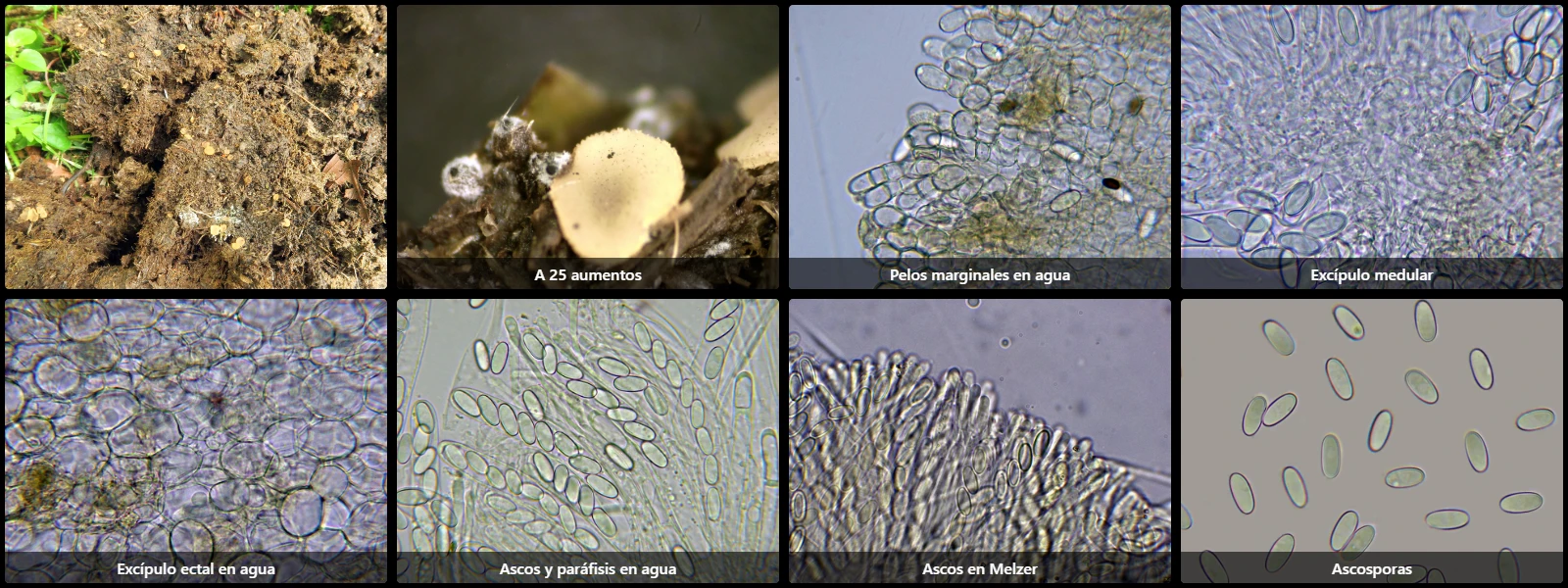
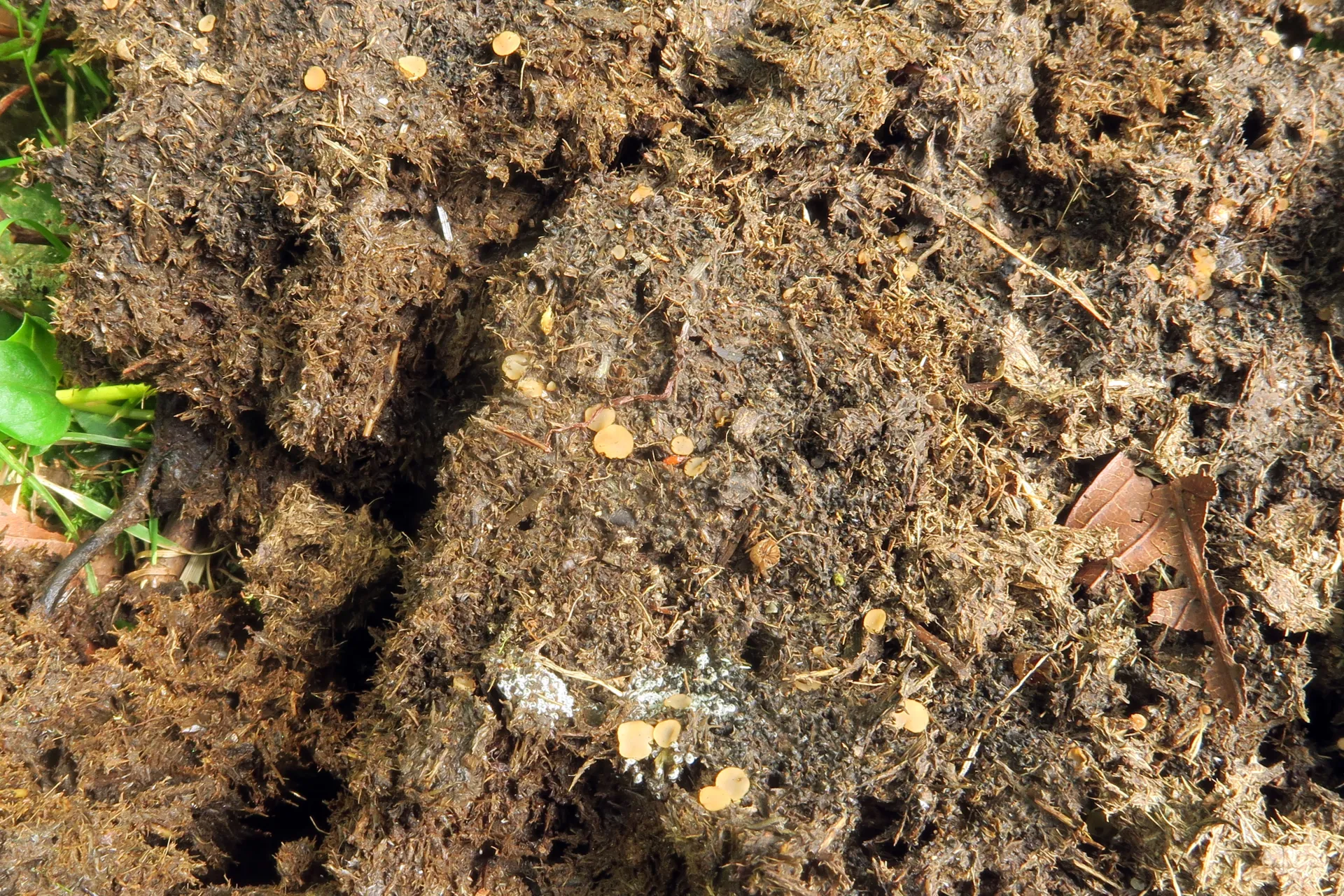
On well-decayed cattle dung, with sessile, cupuliform to discoid ascomata, 0.5 to 1.5 mm in diameter, white to yellowish, with a minutely pubescent outer surface.
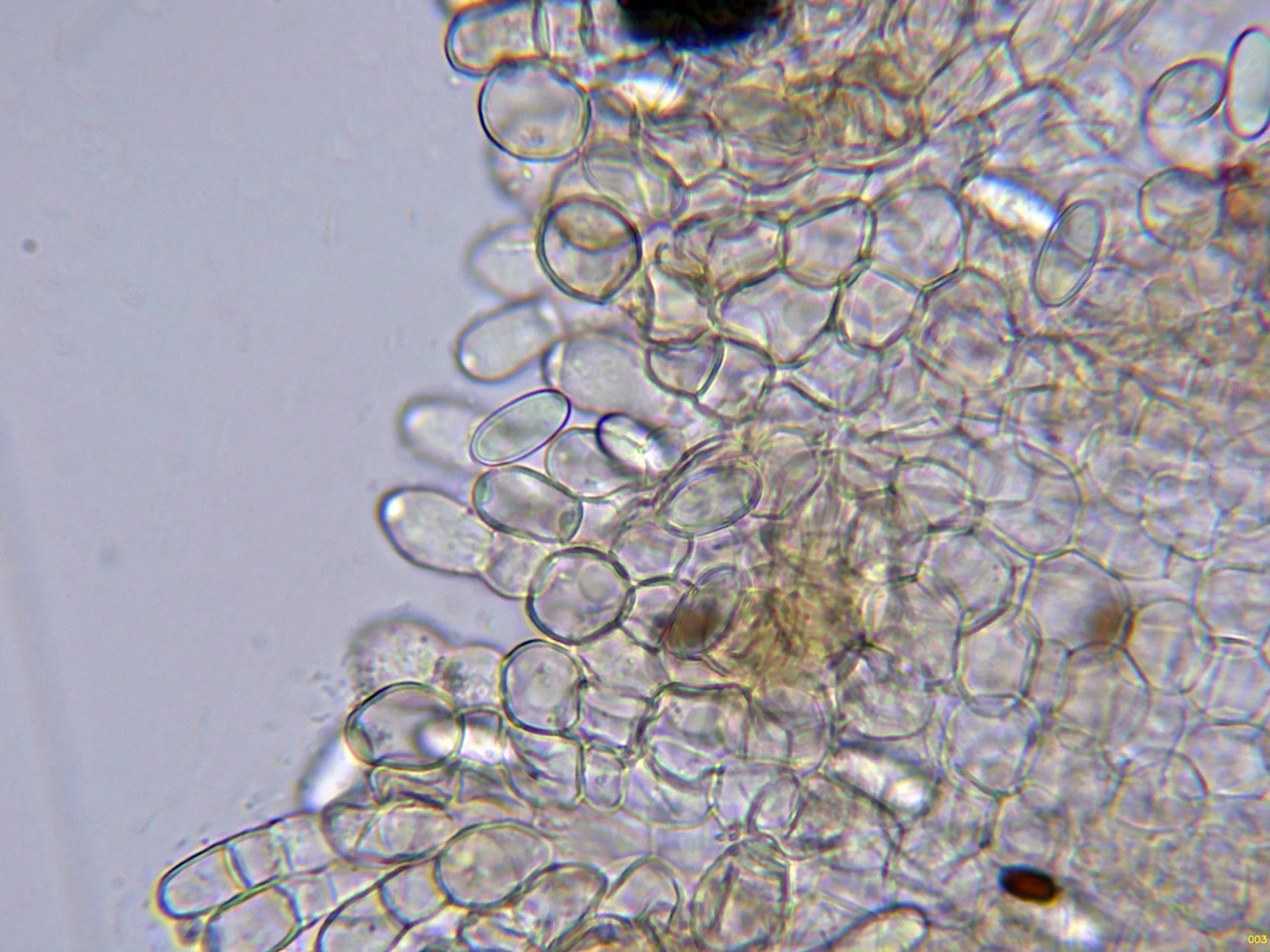
Medullary excipulum of textura intricata, composed of filamentous, hyaline, intertwined hyphae, and beneath these in the ectal excipulum globose to subglobose, hyaline, thin- to slightly thick-walled hyphae, 12 to 25 µm in diameter.
Hyphae of the marginal zone arranged in chains, forming catenulate hairs up to 75 µm long, which give rise to its specific epithet.
Asci cylindrical, eight-spored (octosporic), 140 to 170 µm long by 11 to 13 µm wide, with spore arrangement within the ascus generally uniseriate in the lower and middle parts to biseriate or irregular in the uppermost part, with basal croziers, and inamyloid in Melzer's reagent.
Paraphyses filiform, cylindrical, hyaline, with slight apical swellings 3.5 to 5 µm wide, with some vacuoles in the apical cells, barely or not at all projecting above the level of the asci.
Ascospores cylindric-ellipsoidal to oblong, smooth, hyaline, thin- to slightly thick-walled, 11 to 13 µm long by 5 to 6 µm wide, with a smooth, homogeneous, slightly refractive interior.
Herbarium material available: JTP2838/26.
Geographic references
Map generated from global occurrence data from GBIF. GBIF.
Study measurements
Values in Microns (µm)Macroscopic gallery
Microscopic gallery