Psathyrella panaeoloides
(Maire) Arnolds
Study description
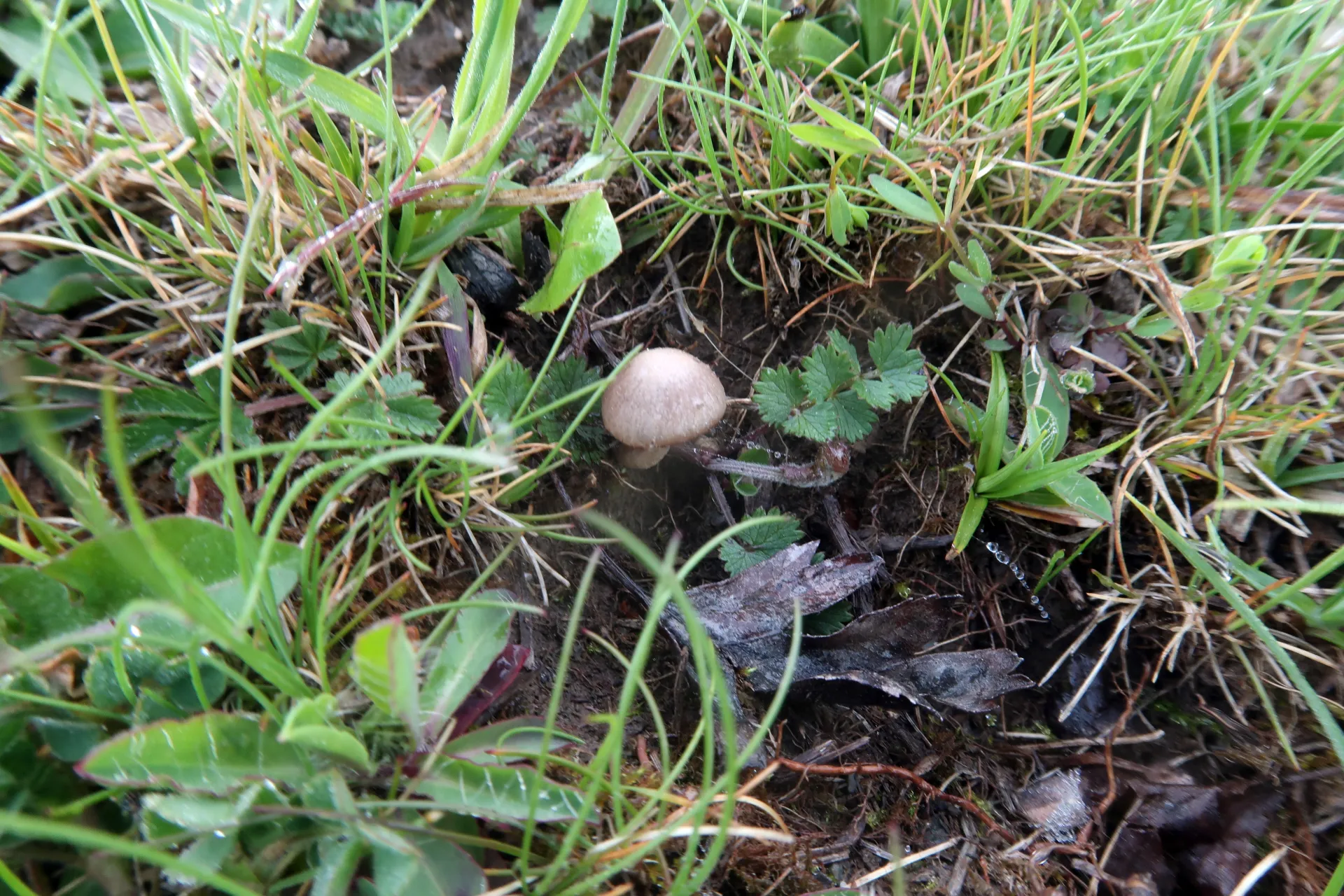
Species typical of pastures and grassy meadows, with a hemispherical to conical-convex pileus 0.5 to 1.5 cm across, greyish-brown with radiating white superficial fibrils, adnate beige to dark purplish-brown lamellae, and a cylindrical greyish-brown stipe coated with whitish fibrils.
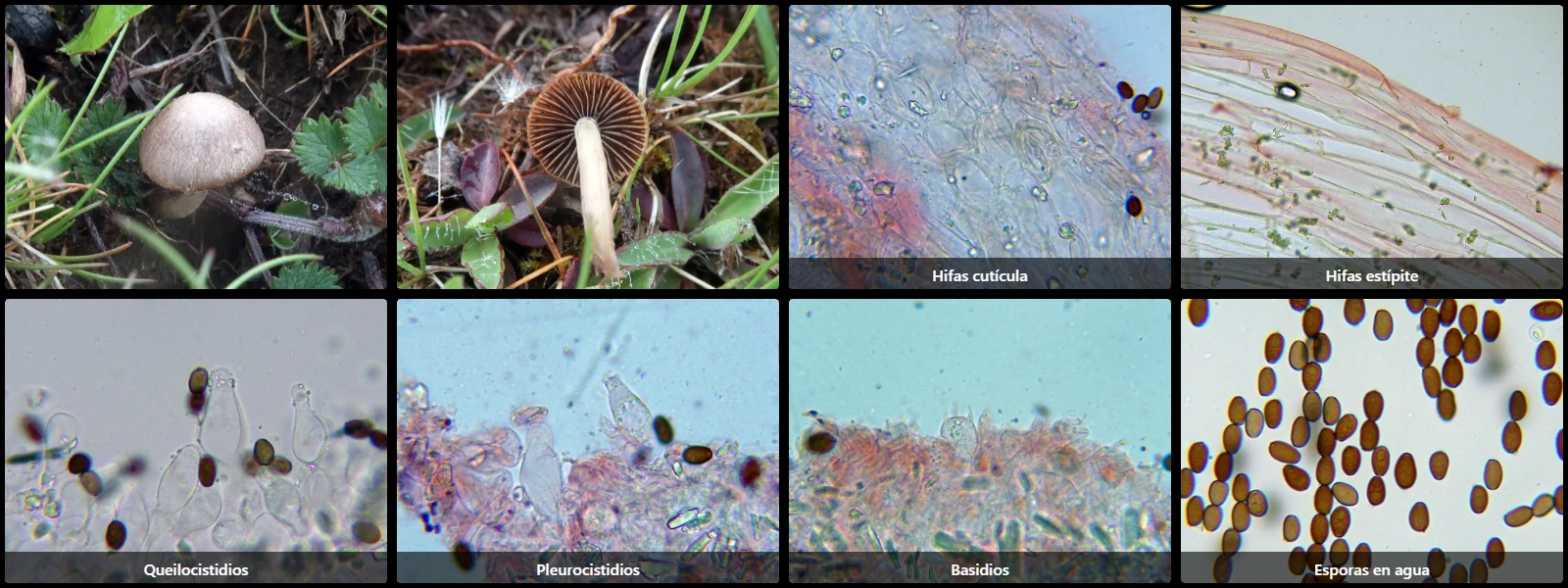
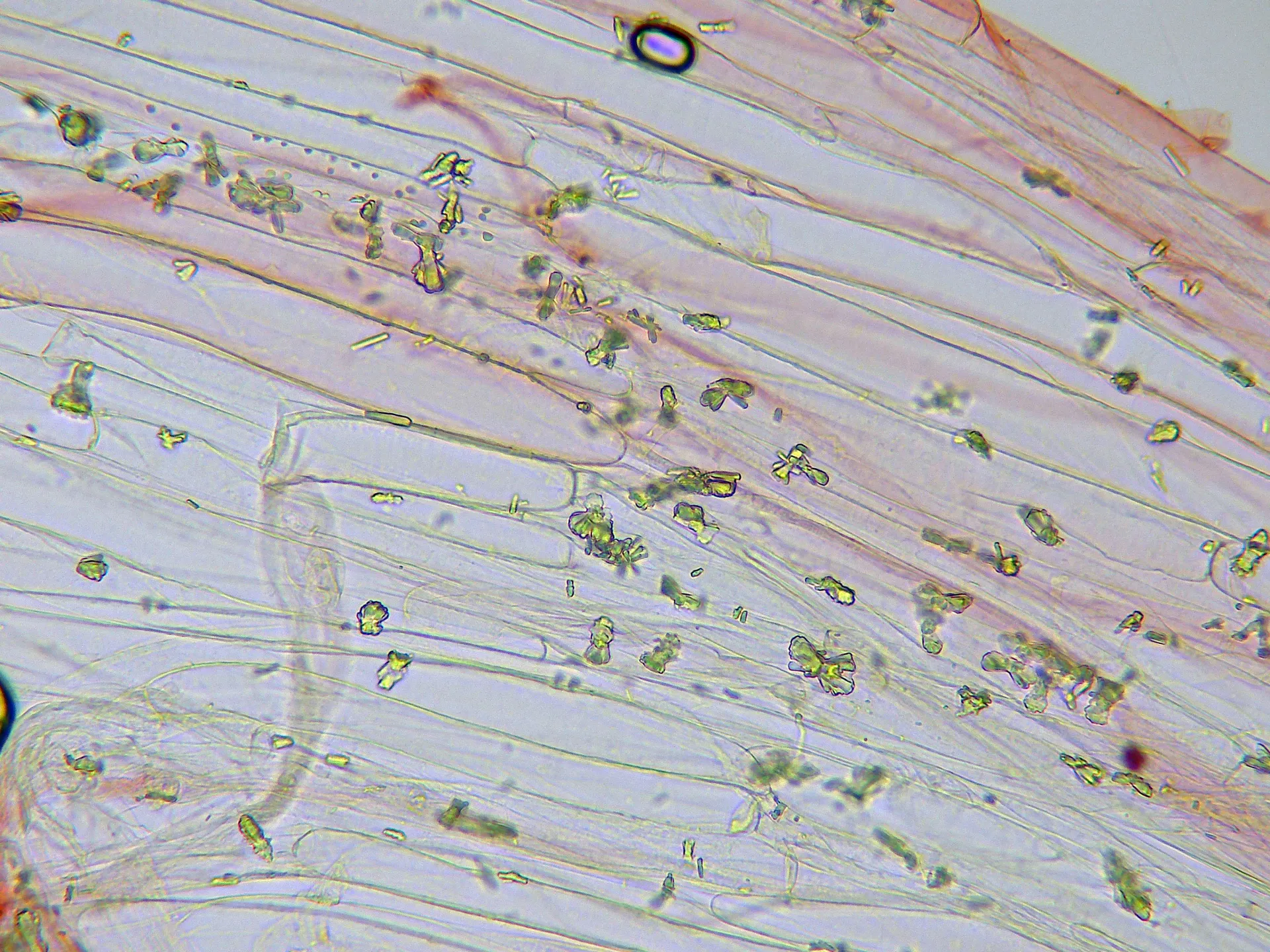
Pileipellis composed of a thick layer of subglobose, pyriform to clavate cells 25 to 45 µm long and 15 to 25 µm wide, containing very faint brownish intracellular pigment.
Cheilocystidia fusiform to utriform, 20 to 30 µm long, 8 to 15 µm wide, often crowned with an amorphous apical exudate, intermixed with sterile pyriform cells.
Pleurocystidia of similar morphology, lacking apical exudate, 25 to 40 µm long and 10 to 14 µm wide.
Basidia clavate, 18 to 24 µm long, 9 to 11 µm wide, clampless at the base, 2- or 4-spored.
Spores ellipsoidal, smooth, slightly thick-walled, 7.5 to 9.5 µm long, 4.5 to 6 µm wide, with an inconspicuous eccentric hyaline apiculus at one end and a central germ pore at the opposite pole.
Geographic references
Map generated from global occurrence data from GBIF. GBIF.
Study measurements
Values in Microns (µm)Macroscopic gallery
Microscopic gallery
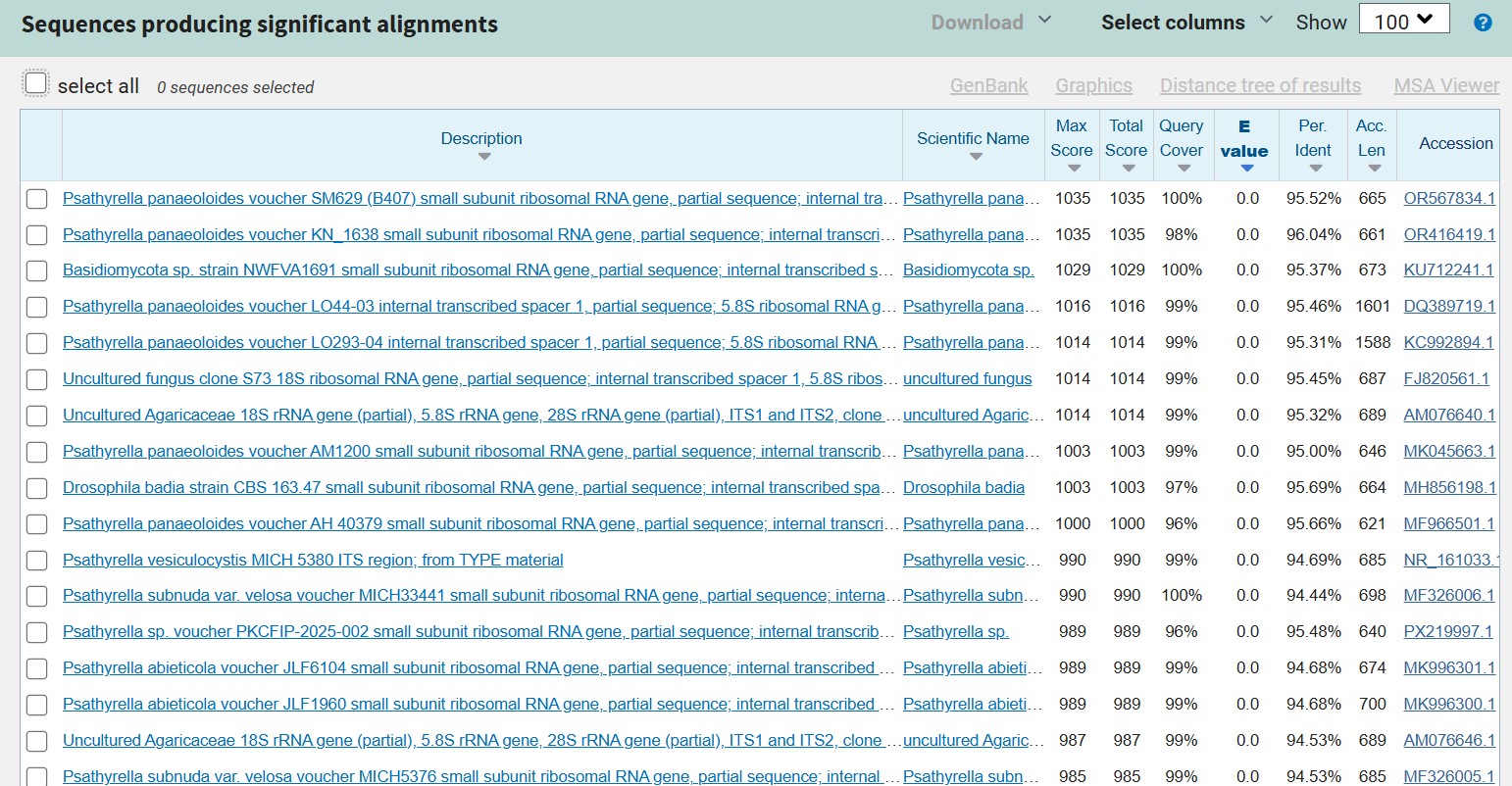
Genetic / Phylogenetic Study
Phylogenetic Tree