Psathyrella noli-tangere
(Fr.) A.Pearson & Dennis
Study description
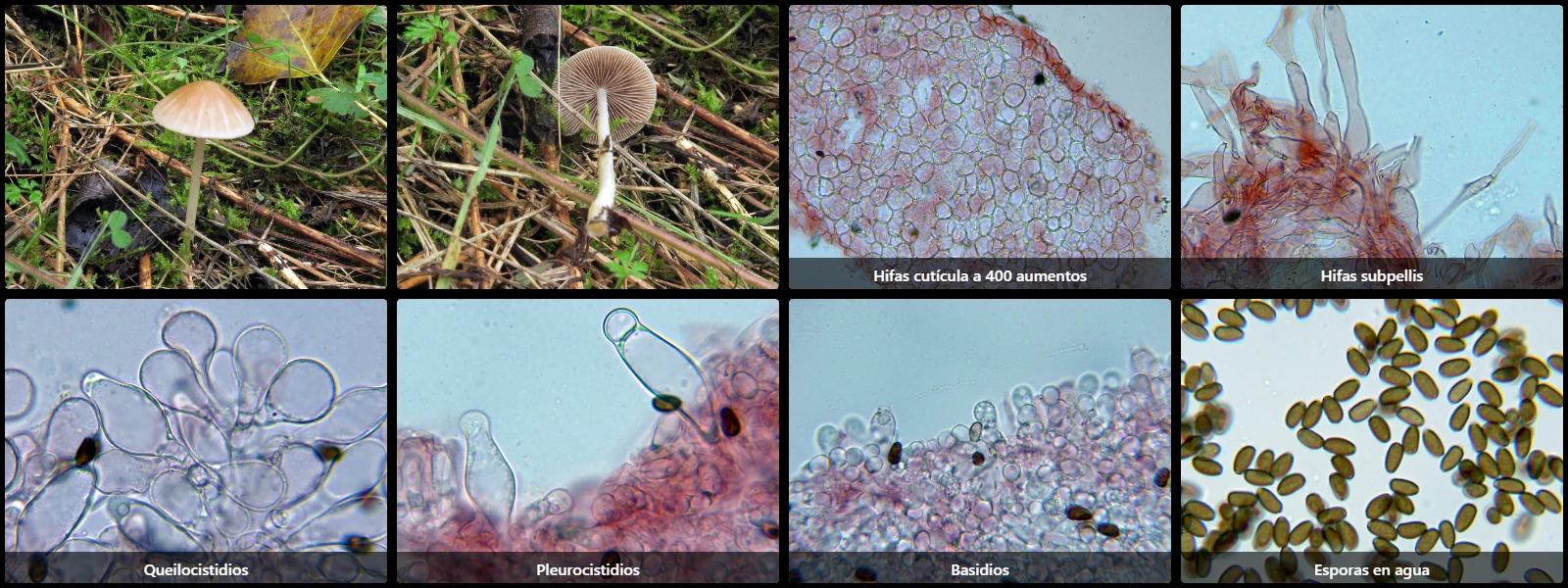
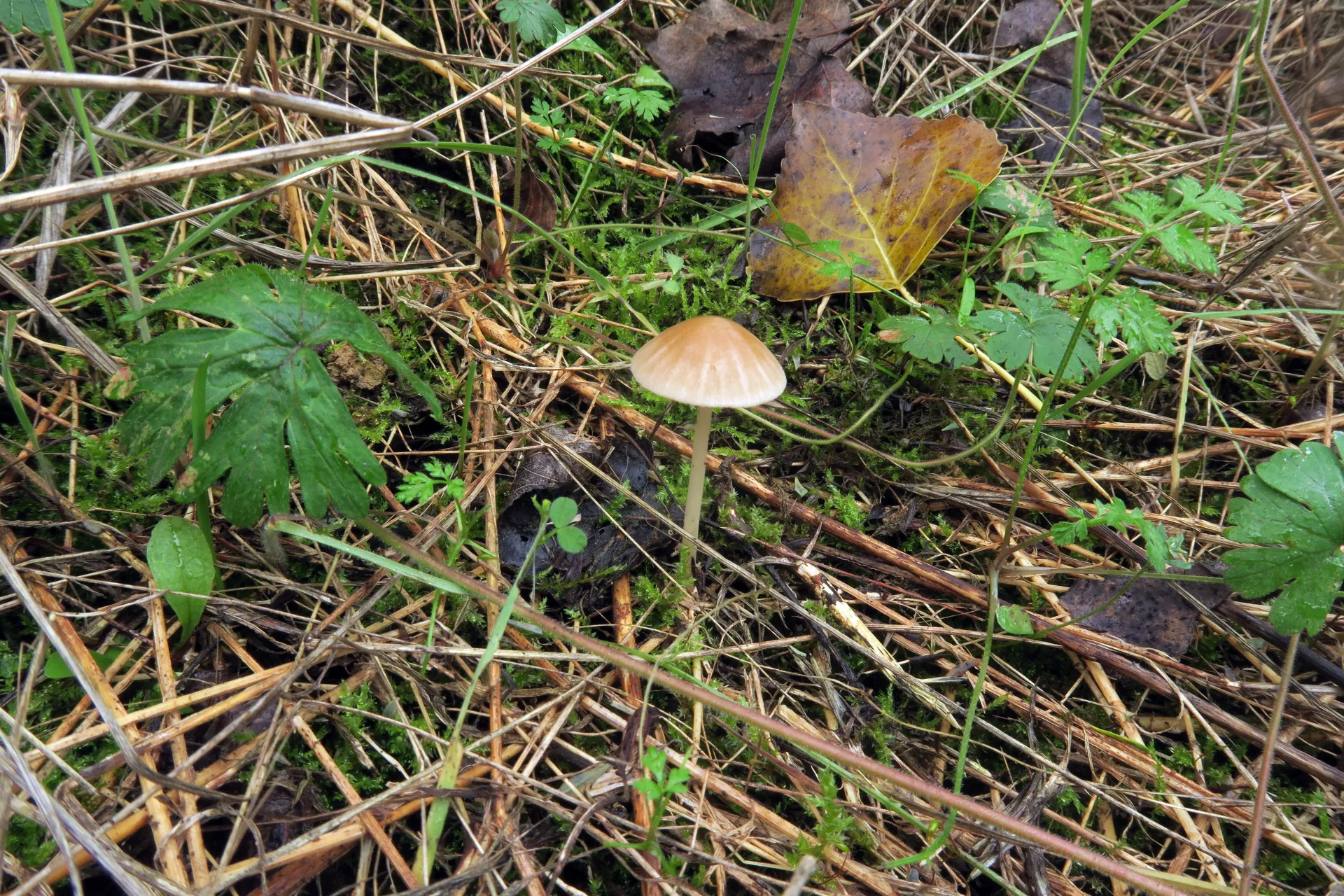
Species developing in waterlogged or very damp soils, with a conical to campanulate pileus 1 to 3.5 cm across, hygrophanous, cream to honey-coloured when moist, with a whitish appendiculate margin, white to brown lamellae, and a cylindrical, very fragile whitish stipe.
Pileipellis composed of thin-walled spherical, subglobose to pyriform hyaline cells 15 to 45 µm in diameter, overlying parallel cylindrical hyphae 5 to 15 µm wide with faint yellowish-brown intracellular pigment.
Cheilocystidia utriform to subutriform, 25 to 40 µm long and 12 to 19 µm wide, intermixed with numerous sterile pyriform cells.
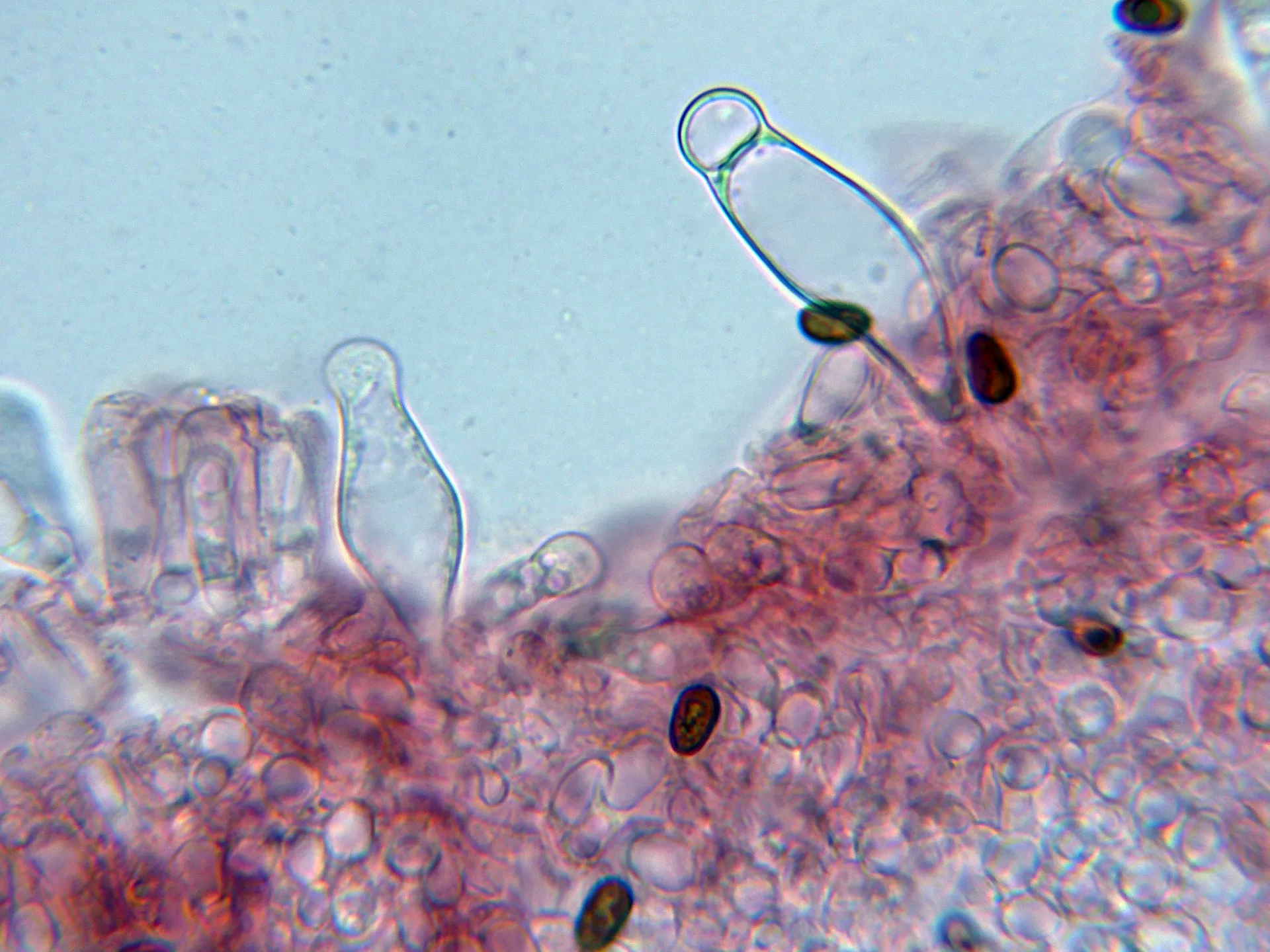
Pleurocystidia utriform, 40 to 70 µm long and 10 to 20 µm wide.
Basidia clavate, 17 to 25 µm long, 7 to 10 µm wide, clamped at the base, 2- or 4-spored.
Spores ellipsoidal, smooth, slightly thick-walled, pale brown under the microscope, 7.5 to 9 µm long, 4 to 5 µm wide, with an almost imperceptible apiculus at one end and a conspicuous germ pore at the opposite pole.
Geographic references
Map generated from global occurrence data from GBIF. GBIF.
Study measurements
Values in Microns (µm)Macroscopic gallery
Microscopic gallery