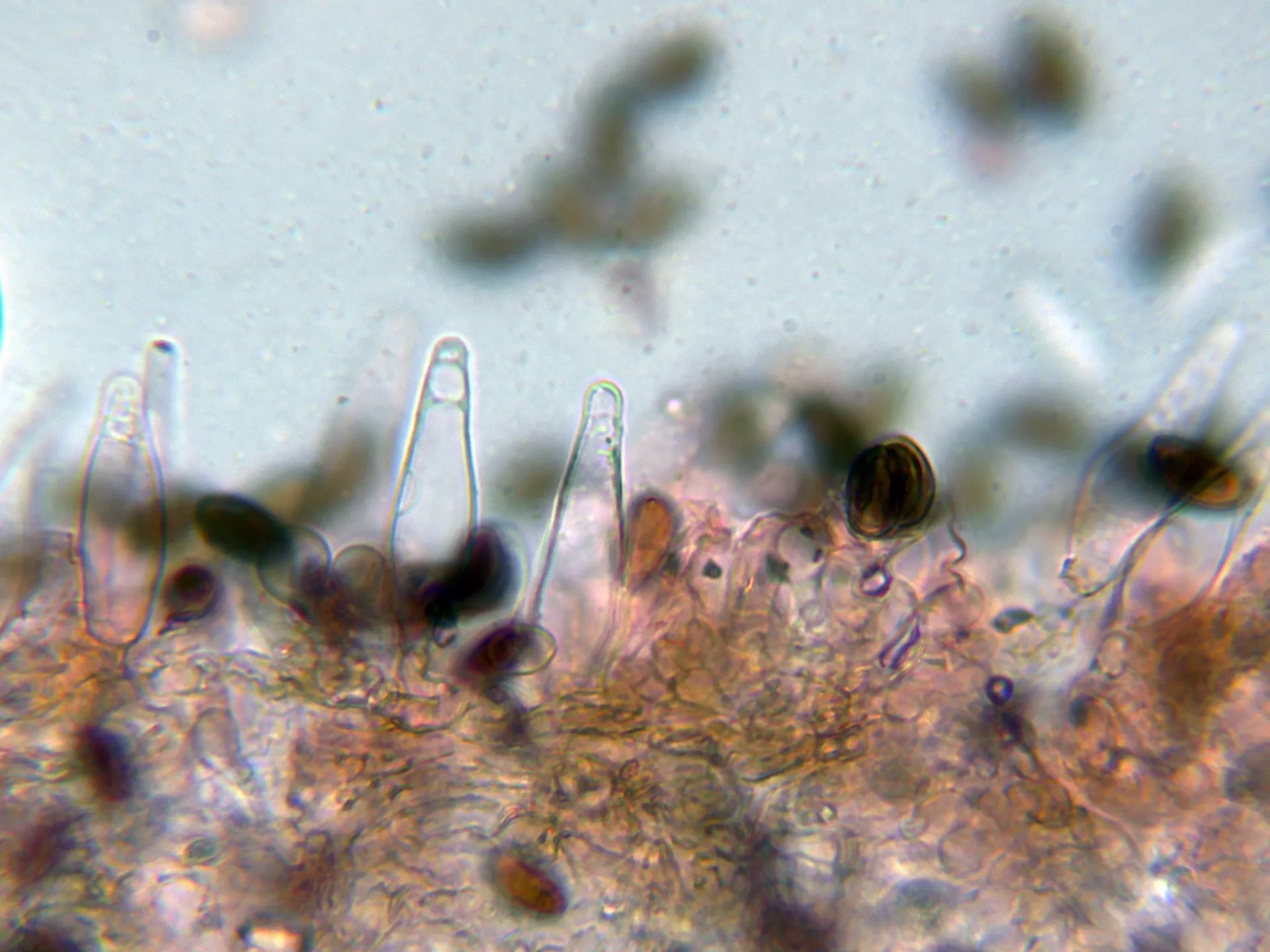
Psathyrella corrugis
(Pers.) Konrad & Maubl.
Study description
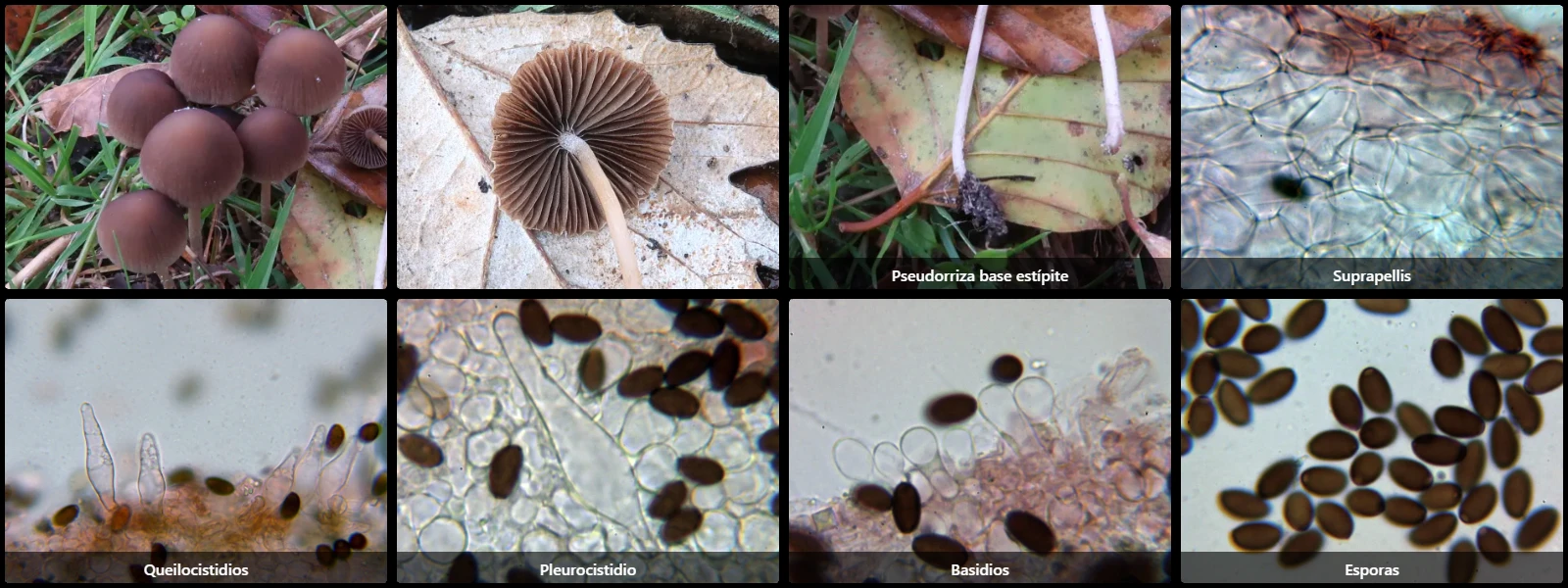
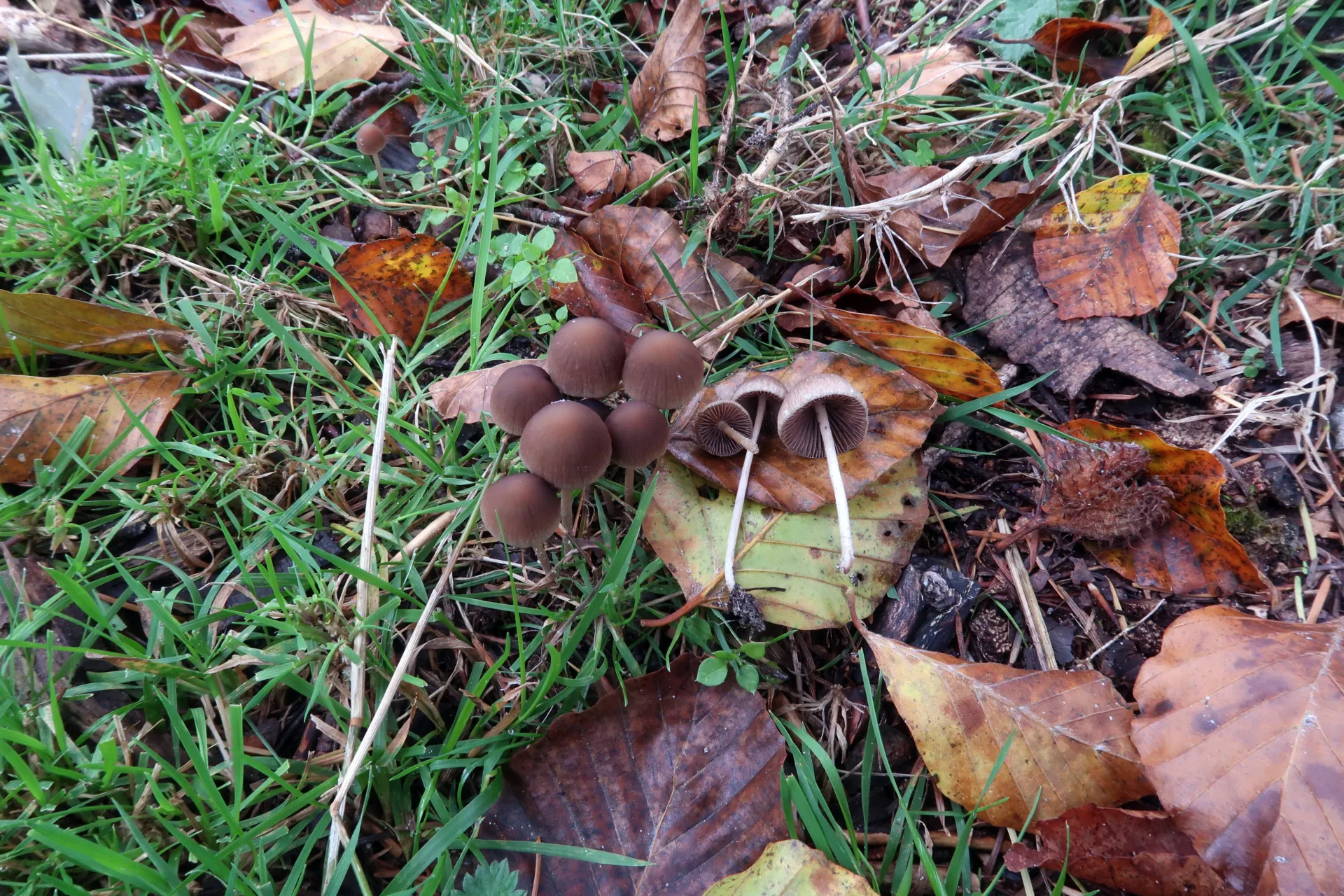
At woodland edges, along tracks, and in parks or gardens on decaying woody debris, with a campanulate to convex pileus 1 to 3 cm across, strongly hygrophanous, pale grey to reddish-brown, adnate to decurrent by a tooth, a whitish, very fragile cylindrical stipe typically ending in a buried pseudorrhiza, without distinct odour or taste.
Suprapellis cellular, with a thick layer of thin-walled subglobose, clavate to pyriform cells 20 to 50 µm in diameter; subpellis of slightly interwoven cylindrical hyphae 10 to 18 µm wide.
Caulocystidia present at the stipe apex, cylindrical to lageniform, in bundles, 35 to 50 µm long and 9 to 12 µm wide.
Cheilocystidia fusiform to lageniform, 30 to 45 µm long and 10 to 12 µm wide (literature indicates they may contain reddish-brown intracellular pigment, though often absent).
Pleurocystidia scattered, lageniform, 60 to 70 µm long and 12 to 14 µm wide.
Basidia clavate, 20 to 25 µm long, 9 to 14 µm wide, clamped at the base, 4-spored.
Spores ellipsoidal, smooth-walled, dark brown under the microscope, 10 to 14 µm long, 5 to 7 µm wide, with an almost imperceptible apiculus at one end and a distinct central germ pore up to 2 µm wide at the opposite pole, homogeneous inside.
Geographic references
Map generated from global occurrence data from GBIF. GBIF.
Study measurements
Values in Microns (µm)Macroscopic gallery
Microscopic gallery