Psathyrella berolinensis
Ew.Gerhardt
Study description
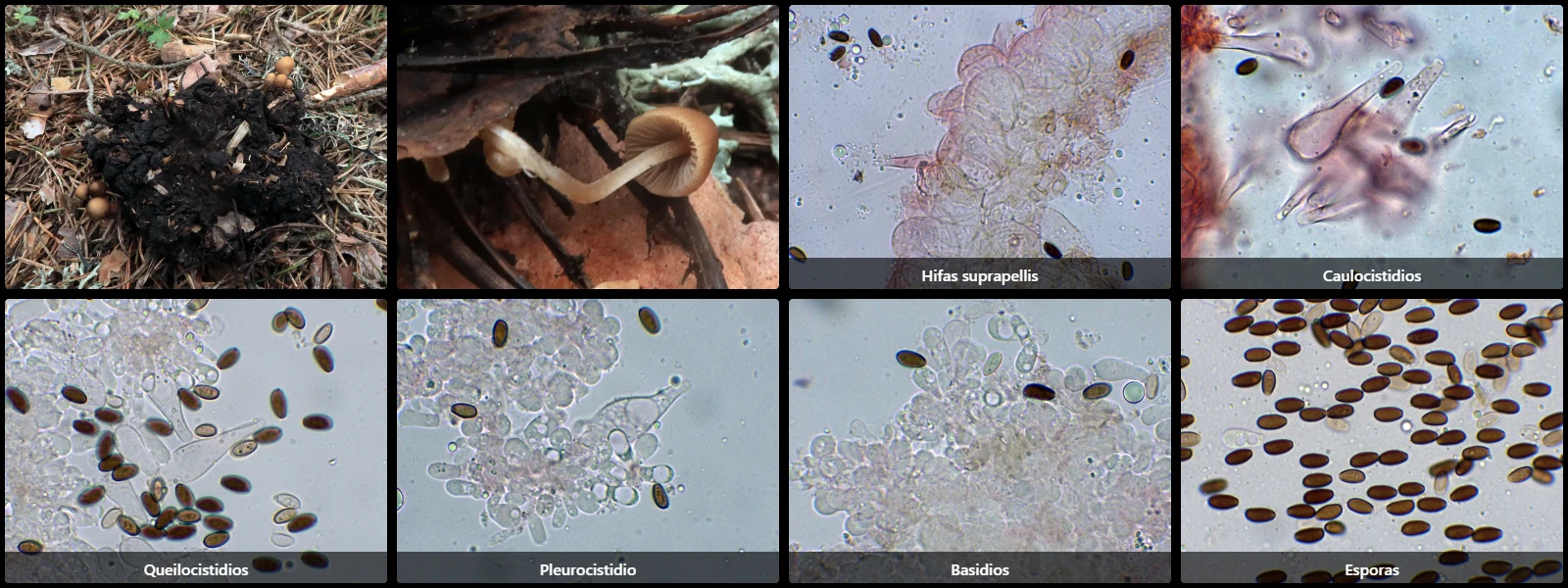
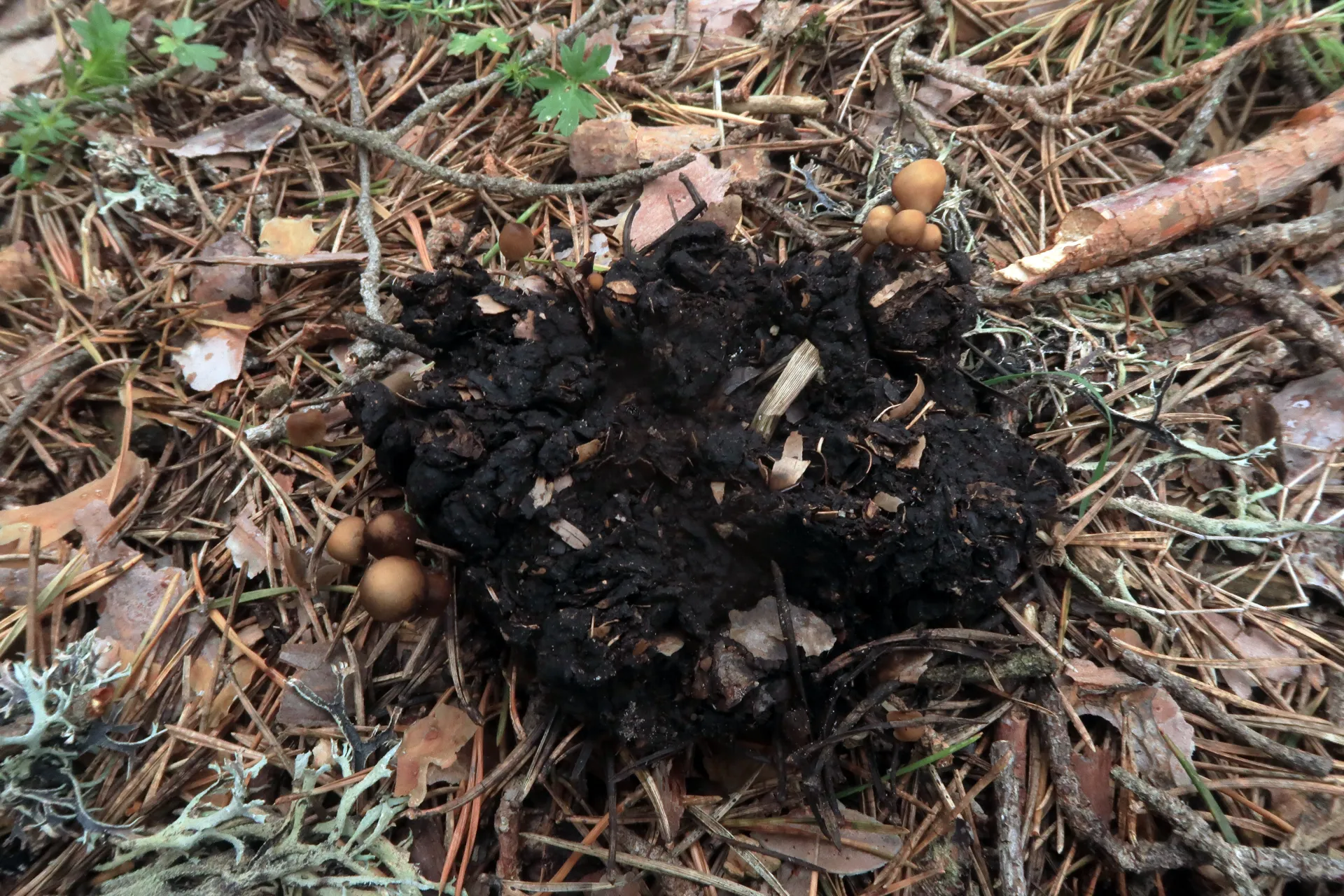
On decaying wild boar (Sus scrofa) dung, with a small conical to convex pileus 0.5 to 2 cm in diameter, hygrophanous, ochraceous brown when fresh; adnate lamellae white to dark purplish brown with sporulation; stipe cylindrical, hollow, fragile, up to 4.5 cm long, whitish to cream, translucent, with abundant whitish fibrils on its surface.
Suprapellis formed by hyaline, globose, subglobose, clavate to pyriform hyphae 25 to 40 µm in diameter, with some scattered cylindrical to lageniform pileocystidia projecting above the suprapellis level.
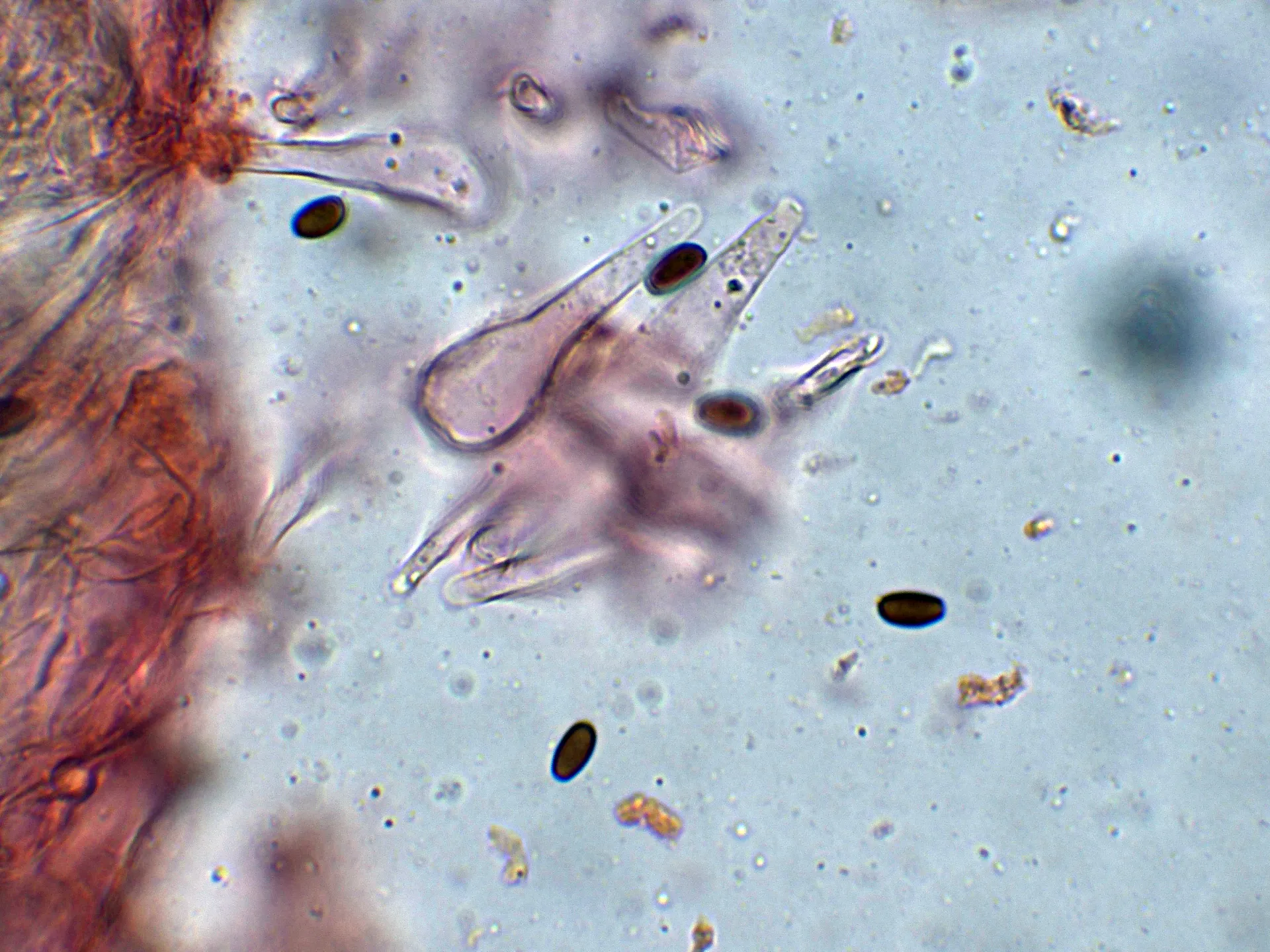
Caulocystidia abundant, lageniform, clustered in bundles or fascicles, responsible for the powdery appearance of the stipe surface.
Cheilocystidia and pleurocystidia lageniform, ventricose, with a narrow neck, 25 to 35 µm long and 8 to 12 µm wide.
Basidia clavate to sphaeropedunculate, 10 to 16 µm long, 4.5 to 6.5 µm wide, with basal clamp connections and four-spored.
Spores ellipsoidal to cylindrical-ellipsoidal, smooth, thick-walled, dark brown under the microscope, 6 to 8 µm long, 3.3 to 4 µm wide, with a virtually imperceptible apiculus at one end and a prominent central germ pore at the opposite end.
Herbarium material available: JTP2791/26.
Geographic references
Map generated from global occurrence data from GBIF. GBIF.
Study measurements
Values in Microns (µm)Macroscopic gallery
Microscopic gallery