Porotheleum fimbriatum
(Pers.) Fr.
Study description
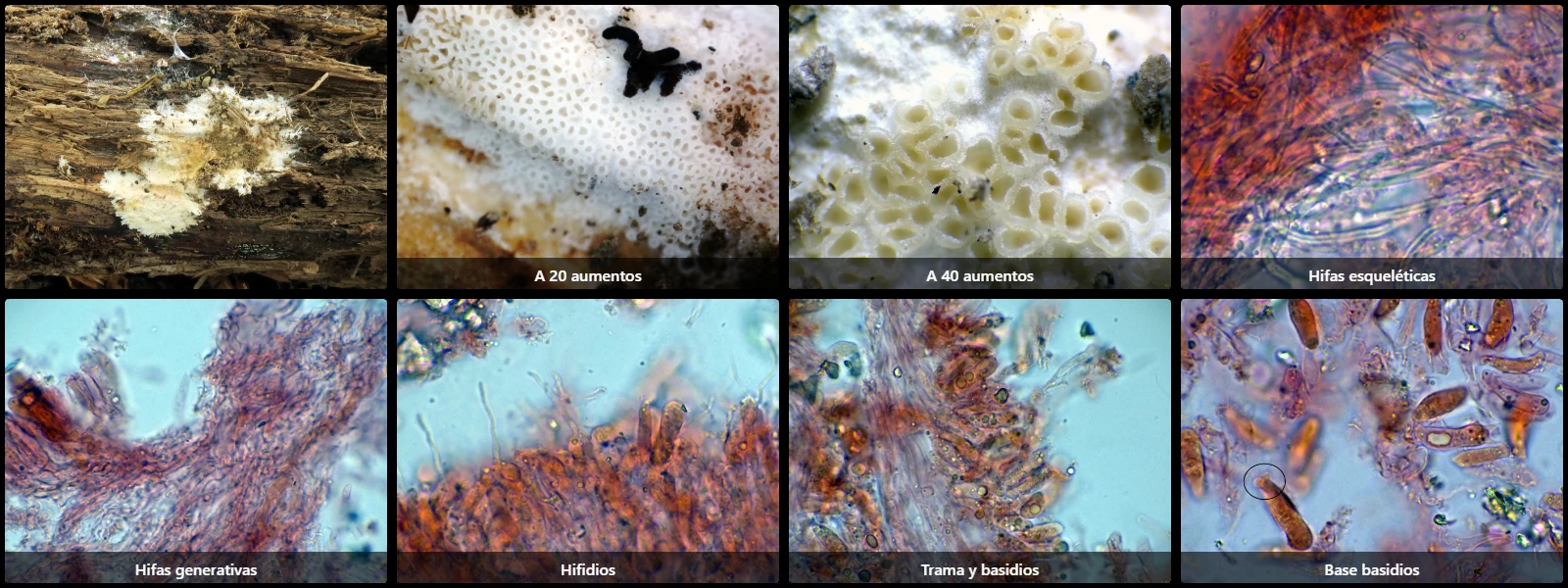
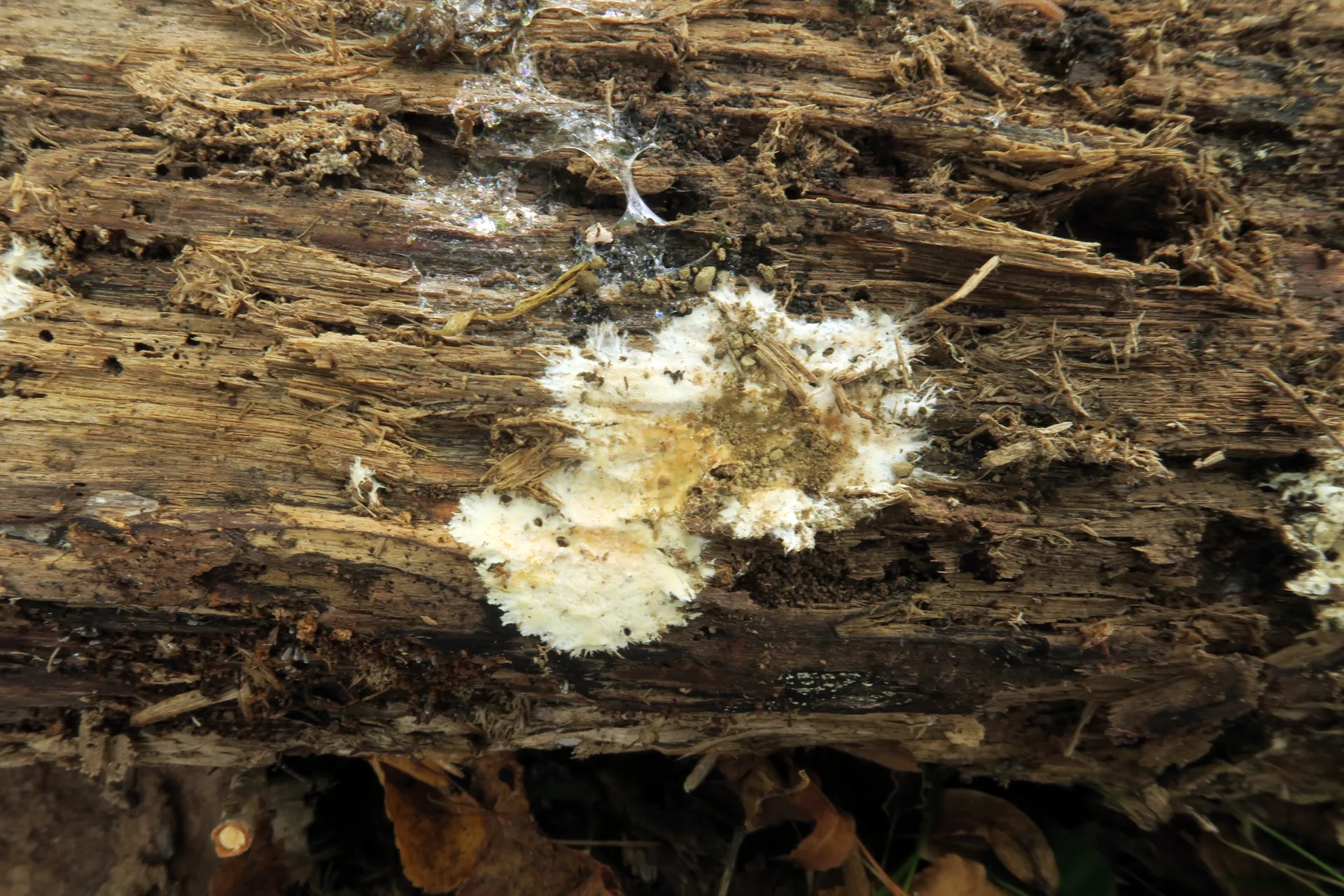
On damp, heavily decayed wood on the ground, with fruitbodies densely clustered upon a common subiculum, resembling a polypore but composed of individual cup- or tube-shaped cyphelloid basidiomata, cream-coloured, 0.2 to 0.4 mm across and just over 1 mm high, with a fimbriate/fringed whitish margin.
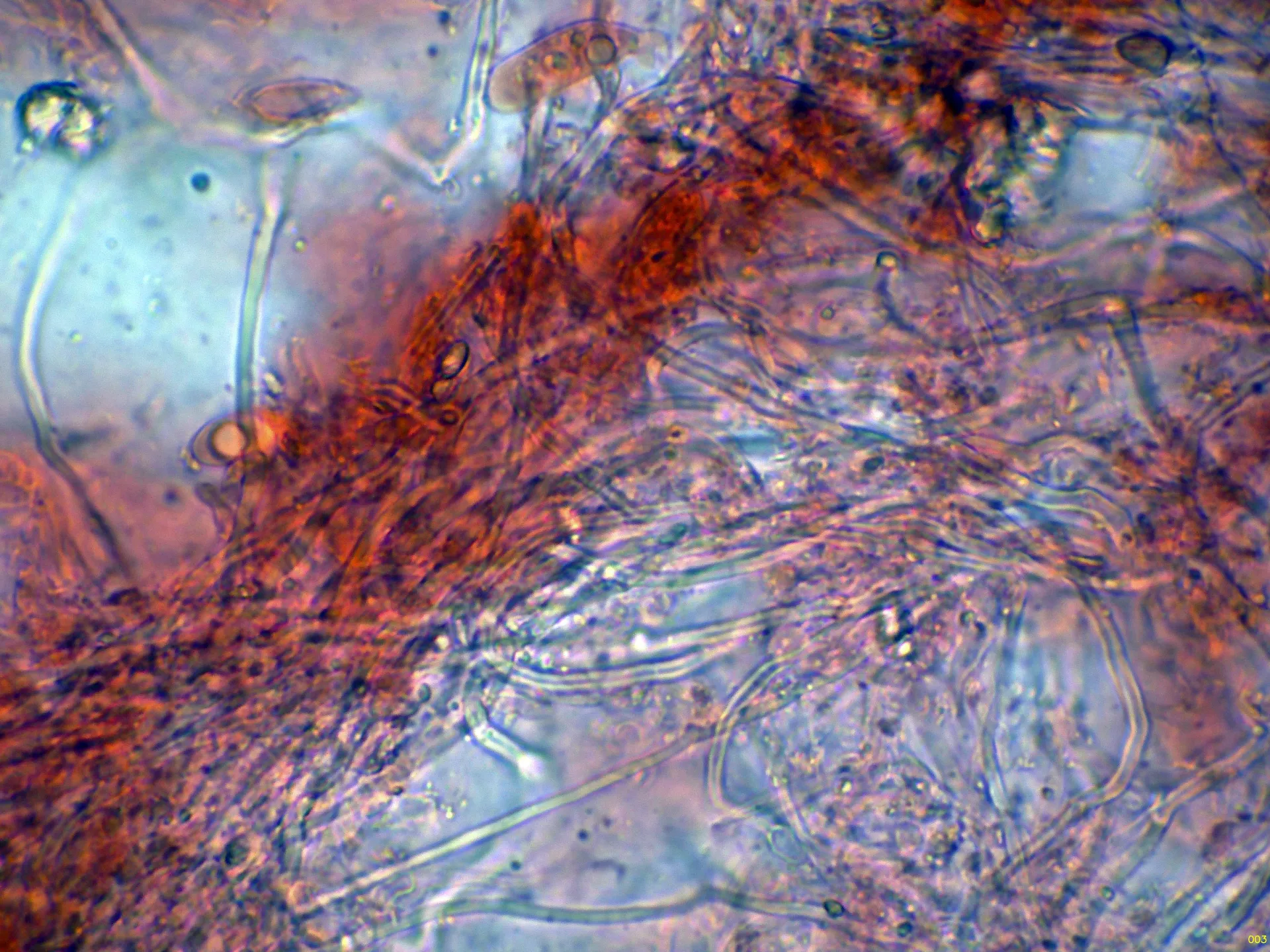
Hyphal system monomitic in the tubules and dimitic in the subiculum: generative hyphae hyaline, 2 to 4.5 µm in diameter, interwoven, septate with clamp connections; subicular skeletal hyphae thick-walled, 3 to 3.5 µm wide.
Cystidia absent, but abundant cylindrical, hyaline hyphidia 1.5 to 2 µm wide with tapered apices project prominently beyond the basidia.
Basidia clavate, 15 to 25 µm long, 5 to 7 µm wide, clamped at the base, 4-spored.
Spores not observed; according to literature ovoid to ellipsoidal, smooth, hyaline, thin-walled, 4.5 to 6.5 µm long, 3.5 to 4.5 µm wide, inamyloid in Melzer's reagent.
Herbarium material available: JTP2642/25.
Geographic references
Map generated from global occurrence data from GBIF. GBIF.
Study measurements
Values in Microns (µm)Macroscopic gallery
Microscopic gallery
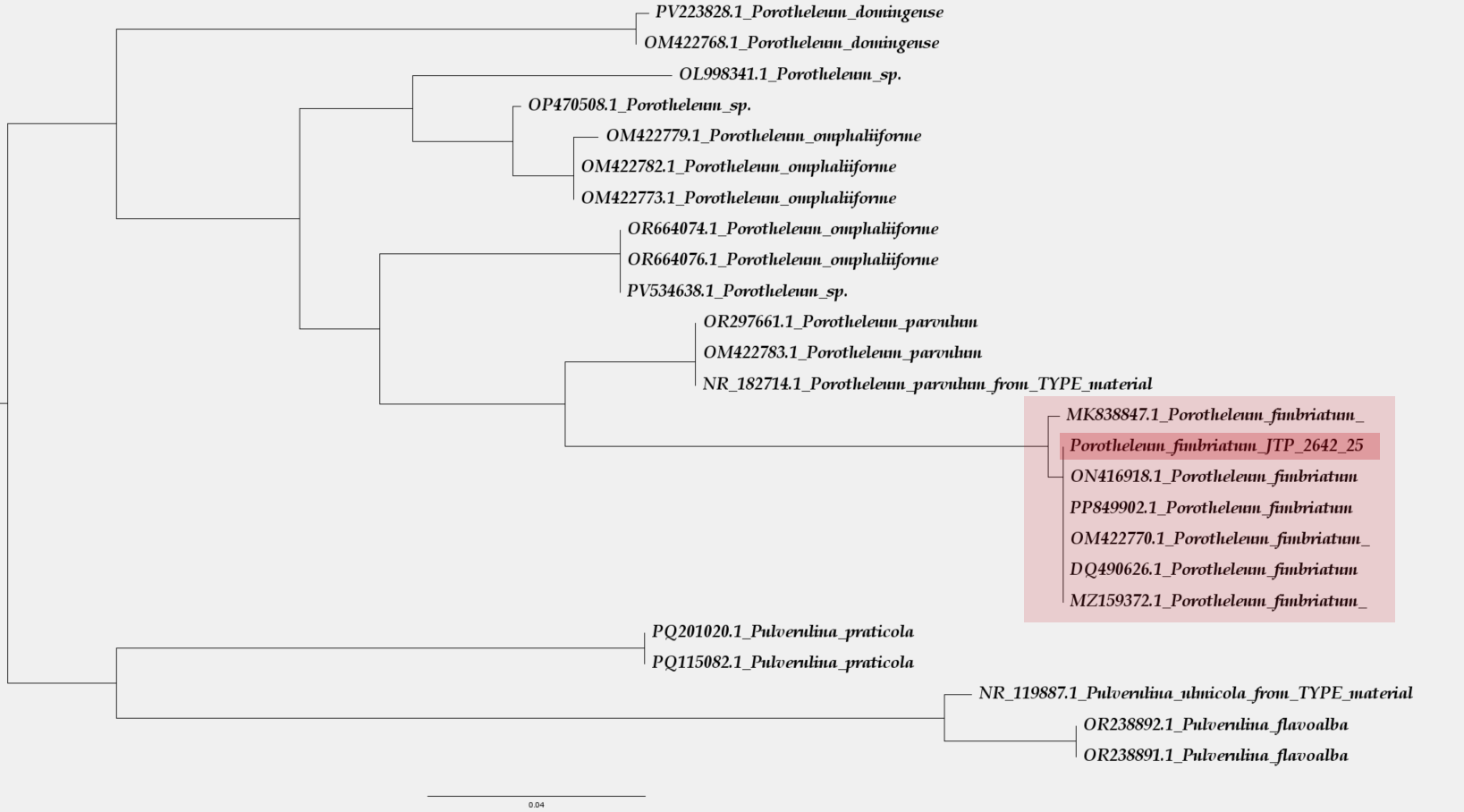
Genetic / Phylogenetic Study
Phylogenetic Tree