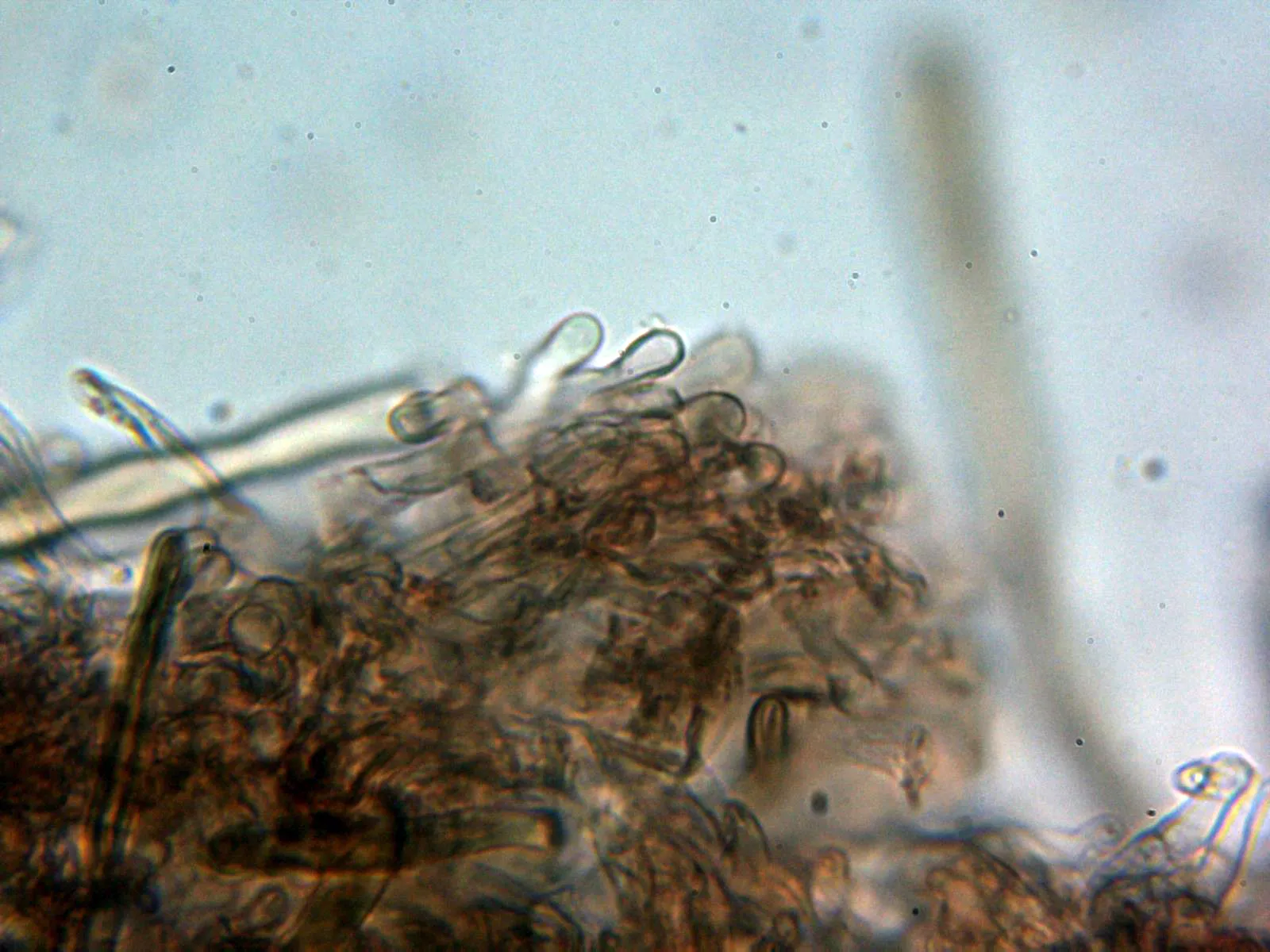
Porostereum spadiceum
(Pers.) Hjortstam & Ryvarden
Study description
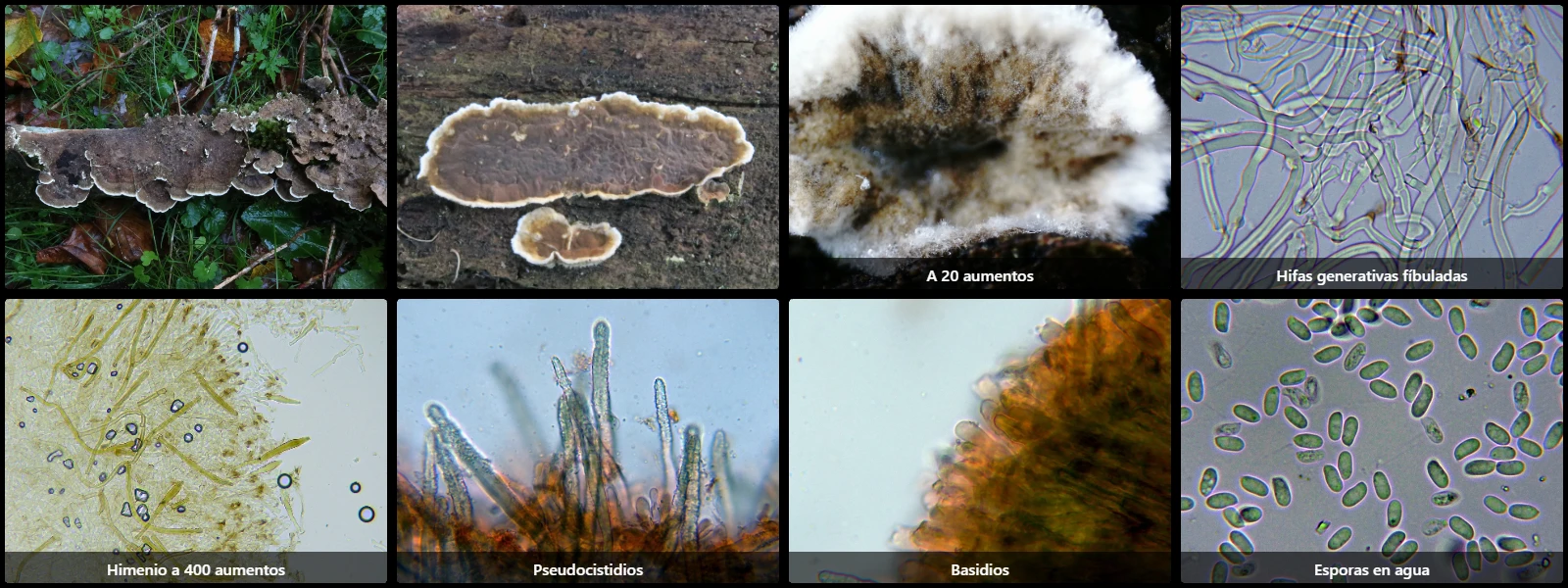
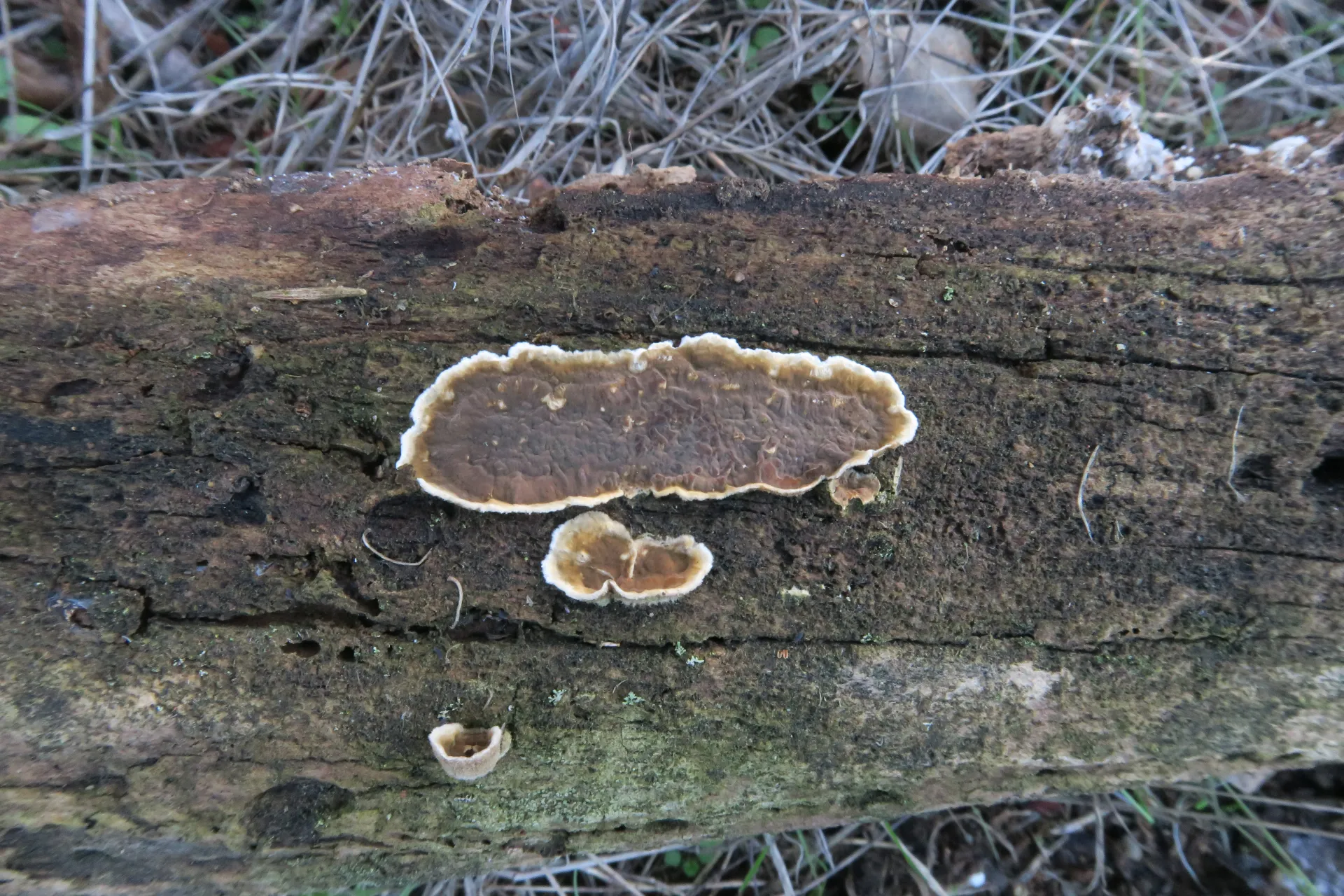
A very abundant species occurring on decaying dead wood on the ground, especially of Fagus or Quercus, with resupinate to effused-reflexed basidiomata, concentrically zonate and slightly hirsute caps, a greyish-brown to reddish-brown hymenium with a whitish margin, and coriaceous flesh up to 2 mm thick.
Hyphal system dimitic: skeletal hyphae thick-walled, 5 to 6 µm wide, aseptate, with brownish intracellular pigment; generative hyphae hyaline, moderately thick-walled, 4 to 5 µm wide, septate with clamp connections.
Pseudocystidia originating from skeletal hyphae, very thick-walled, brownish to hyaline, encrusted with crystals in mature basidiomata, projecting considerably (40 to 50 µm) beyond the basidia.
Basidia cylindrical-clavate, 20 to 30 µm long, 4 to 6 µm wide, clamped at the base, 4-spored.
Spores ellipsoidal to oblong, smooth, hyaline, thin-walled, 6 to 7.5 µm long, 3.5 to 4.5 µm wide, with an inconspicuous apiculus at one end, homogeneous inside without evident guttules, inamyloid in Melzer's reagent.
Geographic references
Map generated from global occurrence data from GBIF. GBIF.
Study measurements
Values in Microns (µm)Macroscopic gallery
Microscopic gallery