Pluteus satur
Kühner & Romagn.
Study description
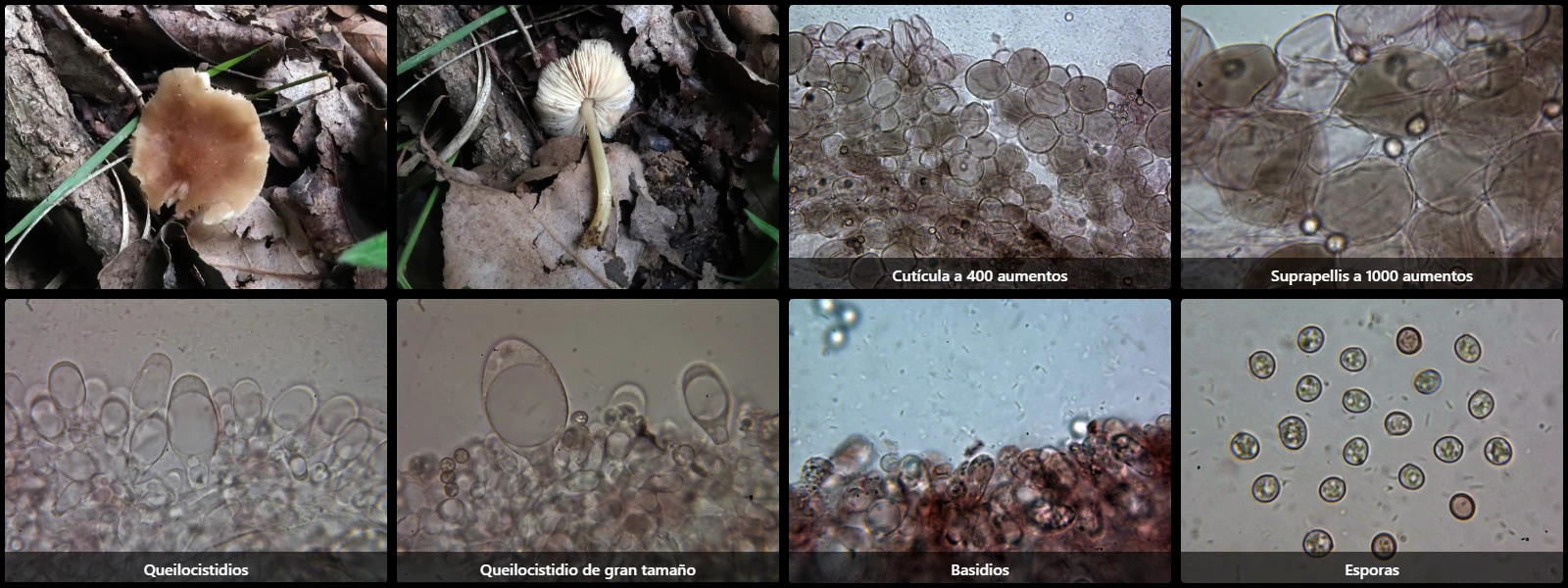
On decaying dead wood on the ground, with a convex to flattened pileus 2 to 5 cm across, brown with a darker disc, matt surface, free lamellae, white turning pink with development, a cylindrical pale yellow stipe, raphanoid odour, and insipid taste.
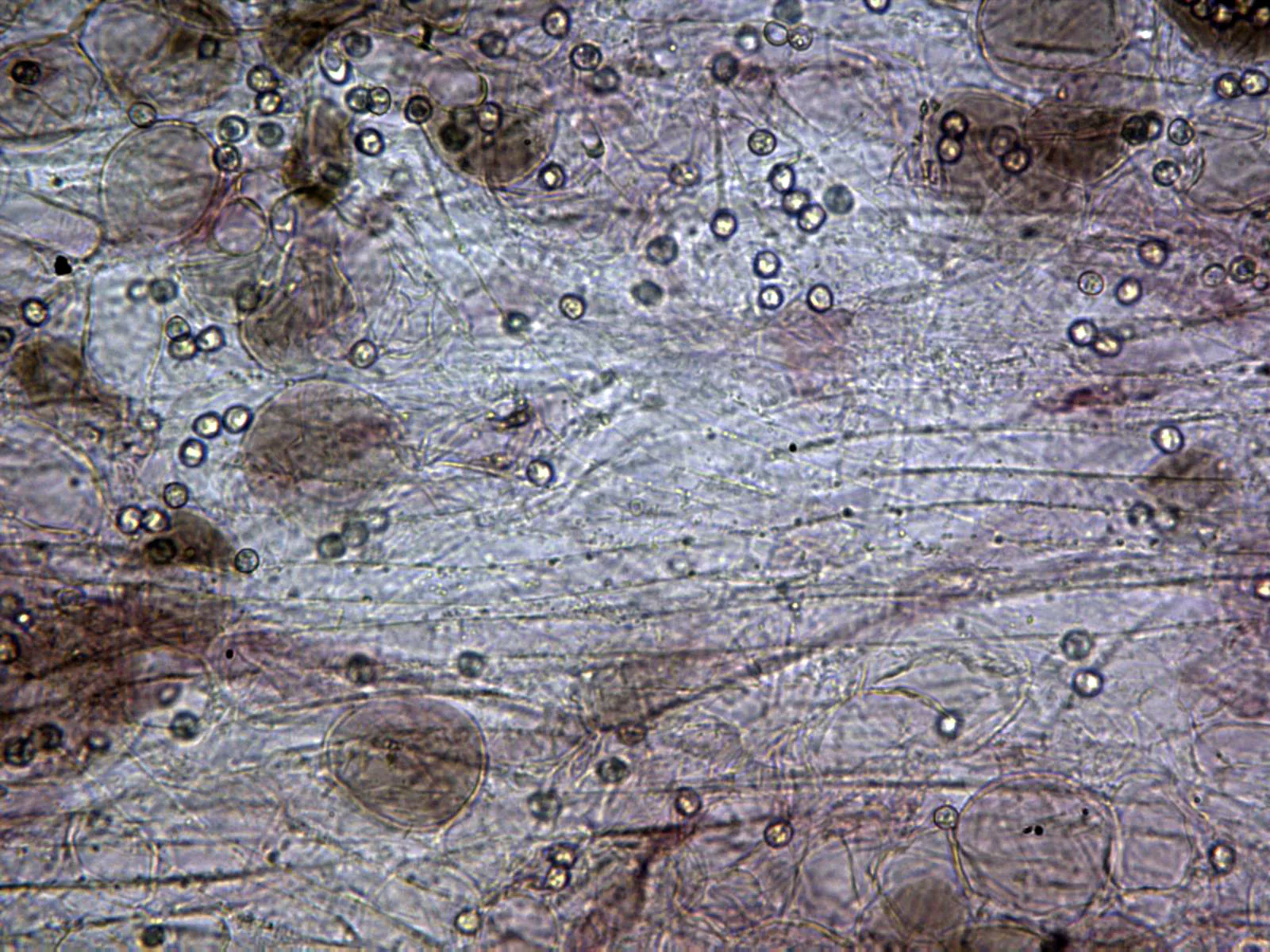
Pileipellis cellular, composed of globose to pyriform cells 30 to 60 µm long and 20 to 40 µm wide, clampless, containing abundant brown intracellular pigment.
Cheilocystidia abundant, clavate to fusiform, hyaline, 30 to 75 µm long and 15 to 35 µm wide.
Pleurocystidia scattered, scarce, similar in morphology and dimensions to cheilocystidia.
Basidia cylindrical, 20 to 30 µm long, 7 to 9 µm wide, clampless at the base, 4-spored.
Spores subglobose to ellipsoidal, smooth, hyaline, moderately thick-walled, pinkish-grey under the microscope, 5.5 to 7 µm long, 4.5 to 6 µm wide, with an almost imperceptible apiculus, containing guttules, inamyloid in Melzer's reagent.
Geographic references
Map generated from global occurrence data from GBIF. GBIF.
Study measurements
Values in Microns (µm)Macroscopic gallery
Microscopic gallery