Pluteus pouzarianus
Singer
Study description
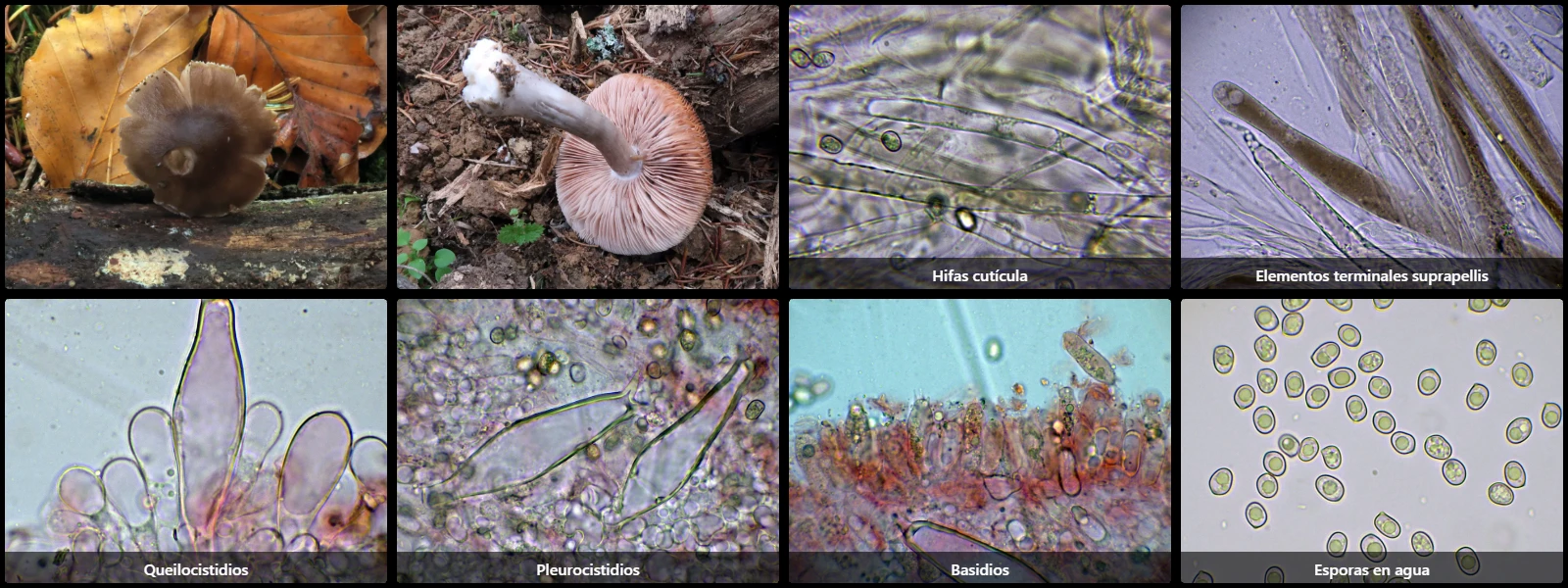
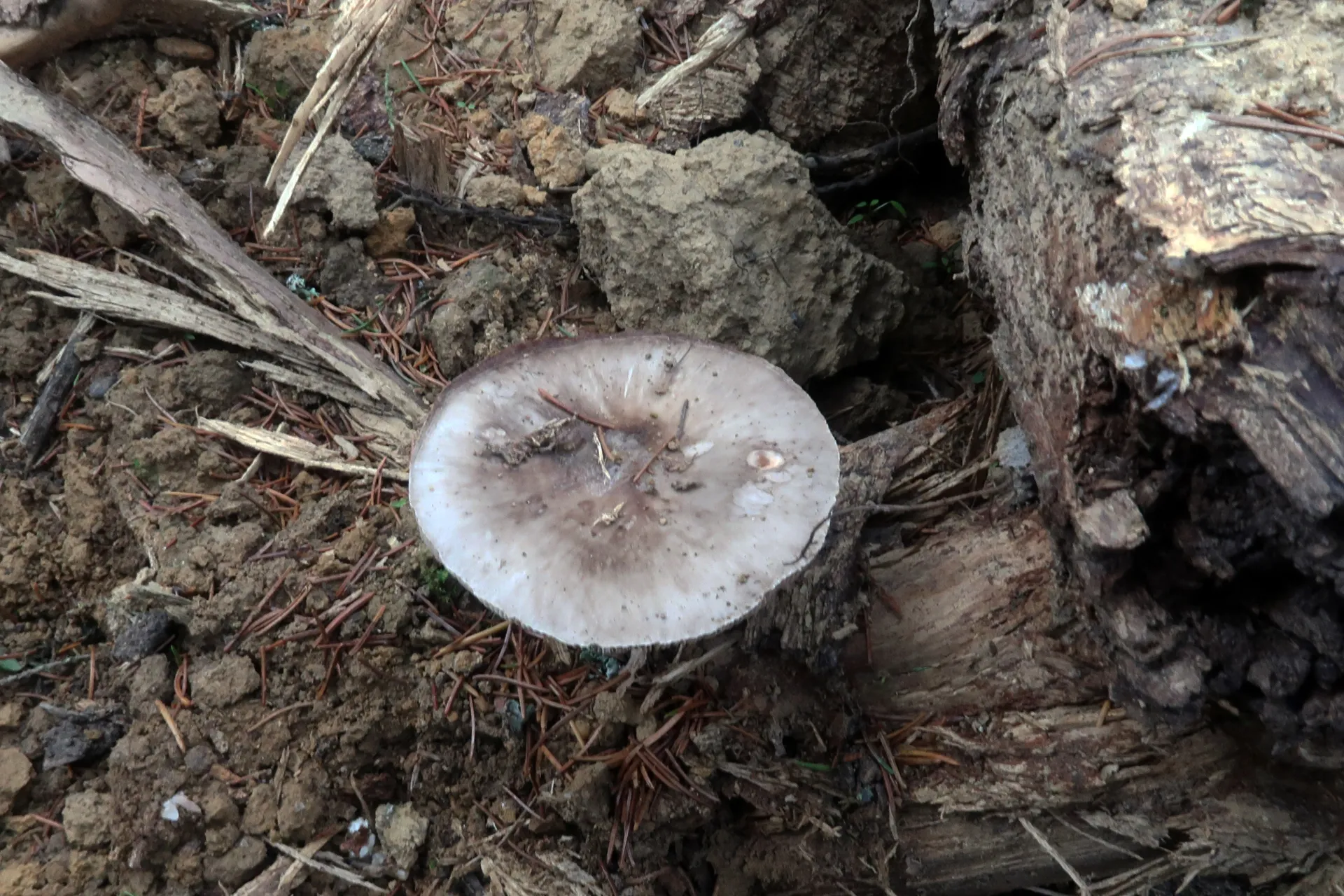
Species growing on decaying dead conifer wood on the ground, with a hemispherical, convex to flattened pileus 4 to 10 cm across, dark brown with an almost black centre, finely fibrillose surface, free lamellae, white turning pink with maturity, a cylindrical stipe slightly enlarged at the base with dark grey longitudinal fibrils over a whitish background, faintly raphanoid odour, and slightly bitter taste.
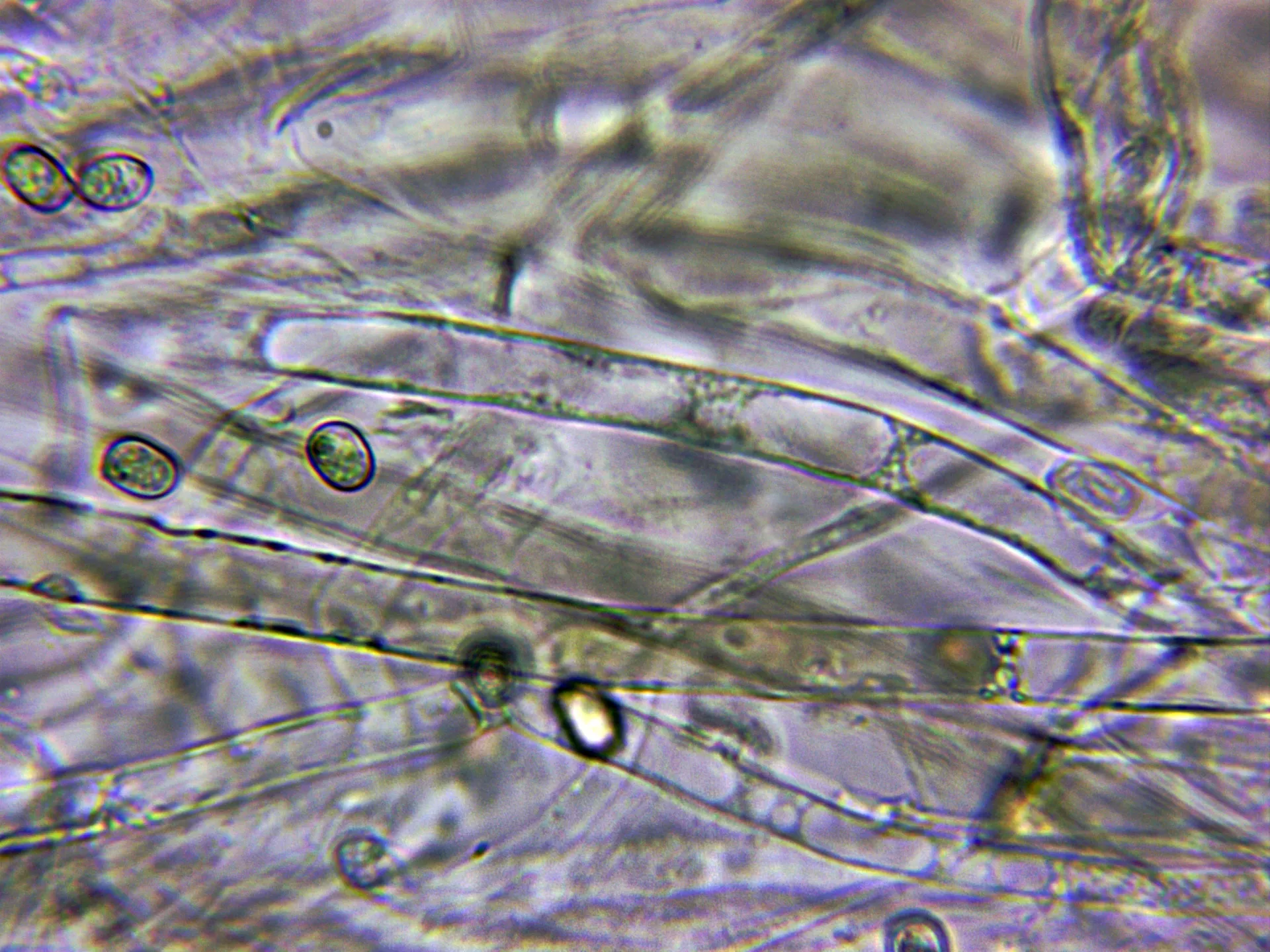
Pileipellis a cutis of more or less parallel hyphae 6 to 10 µm wide, with abundant emergent subcylindrical, fusiform to clavate terminal cells 80 to 200 µm long and 10 to 30 µm wide, filled with brown pigment.
Cheilocystidia clavate, hyaline, slightly thick-walled, 30 to 60 µm long and 10 to 25 µm wide, interspersed with occasional scattered metuloids.
Pleurocystidia metuloidal (coronate), very abundant, fusiform to lageniform, thick-walled, 60 to 100 µm long and 15 to 30 µm wide, crowned with 3 to 4 apical hooks/horns.
Basidia cylindrical, slightly ventricose, 20 to 35 µm long, 7 to 9 µm wide, clampless at the base, 4-spored.
Spores ellipsoidal, smooth, slightly thick-walled, pinkish-grey under the microscope, 6.5 to 9 µm long, 5 to 6.5 µm wide, with a hyaline apiculus at one end, containing oil droplets, inamyloid in Melzer's reagent.
Herbarium material available: JTP2678/25.
Geographic references
Map generated from global occurrence data from GBIF. GBIF.
Study measurements
Values in Microns (µm)Macroscopic gallery
Microscopic gallery