Pluteus podospileus
Sacc. & Cub.
Study description
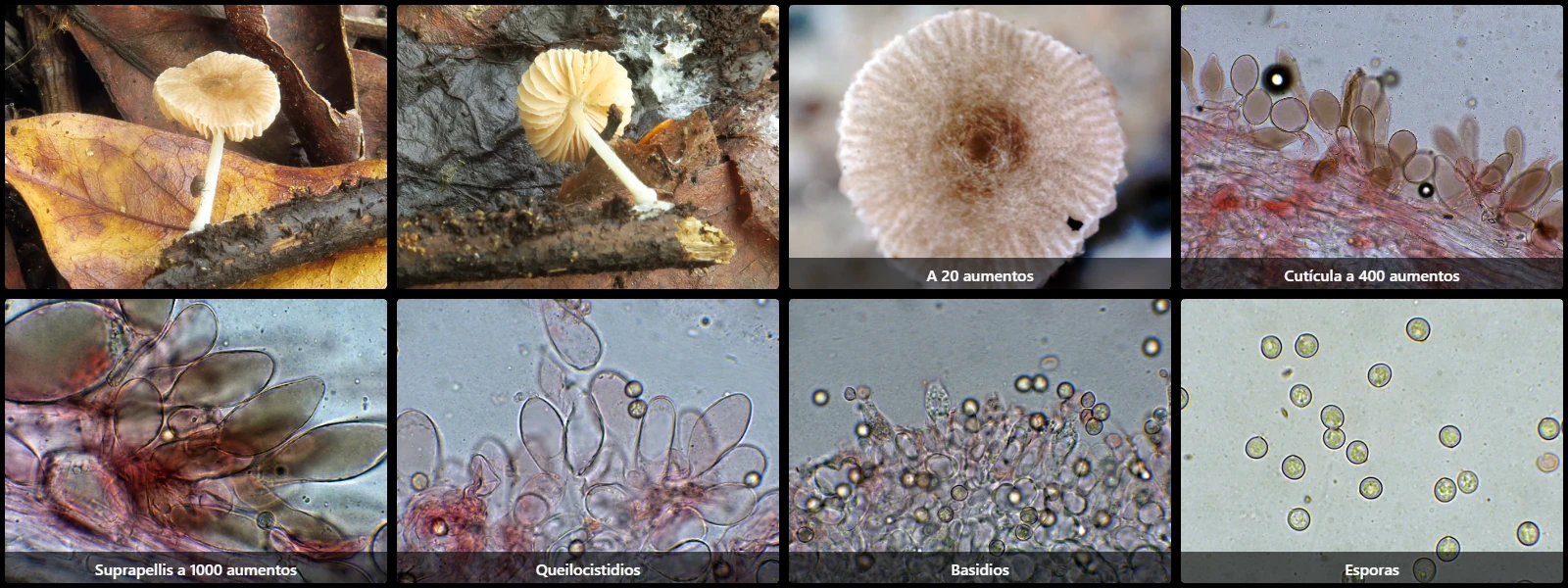
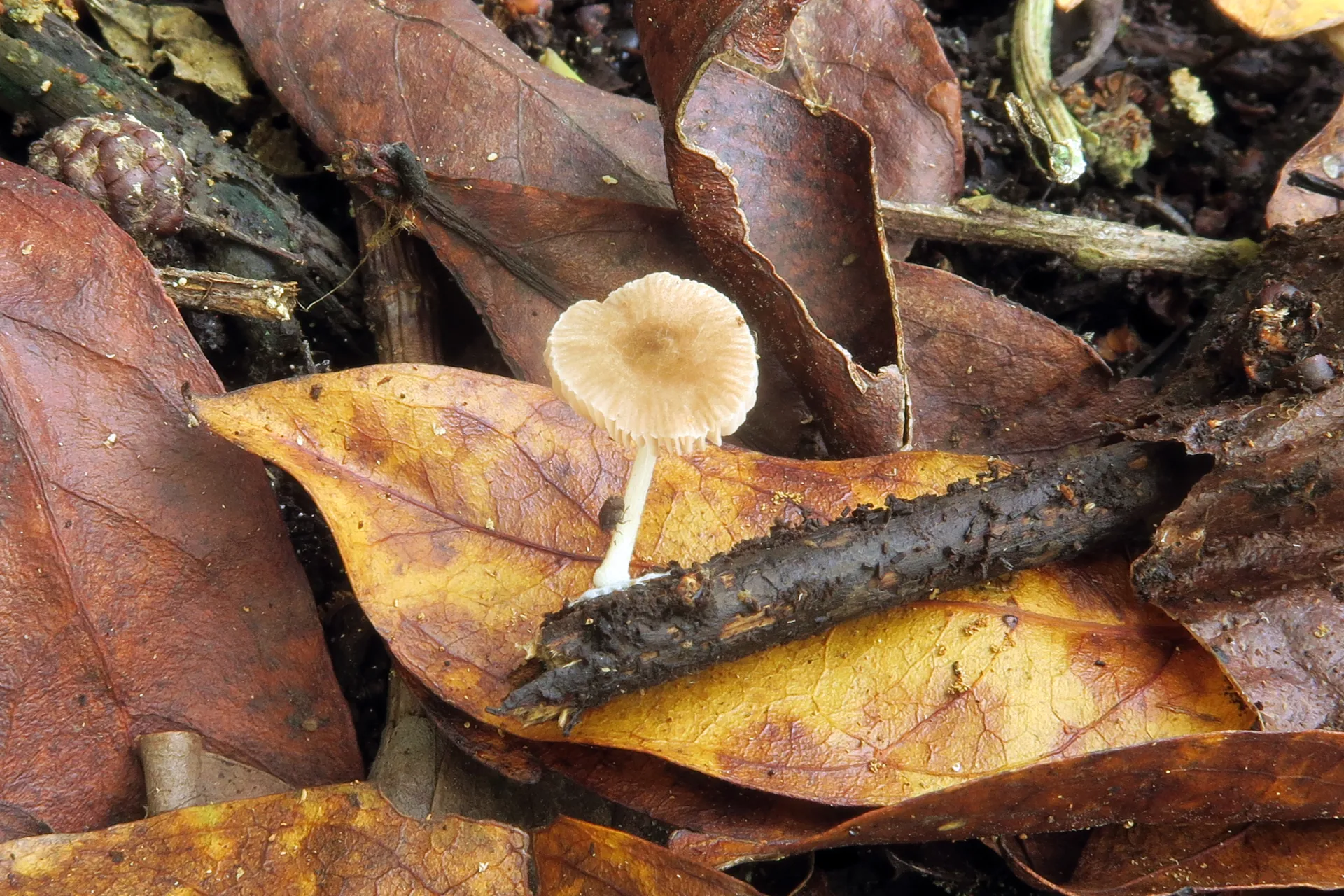
On decaying woody debris on the ground, with a hemispherical to flattened pileus retaining a central umbo, small in size (1 to 2.5 cm across), brown, darker at the centre, with a rugulose surface splitting radially, free white to pinkish-brown lamellae, a cylindrical stipe with a bulbous base, pale brown, without distinctive odour or taste.
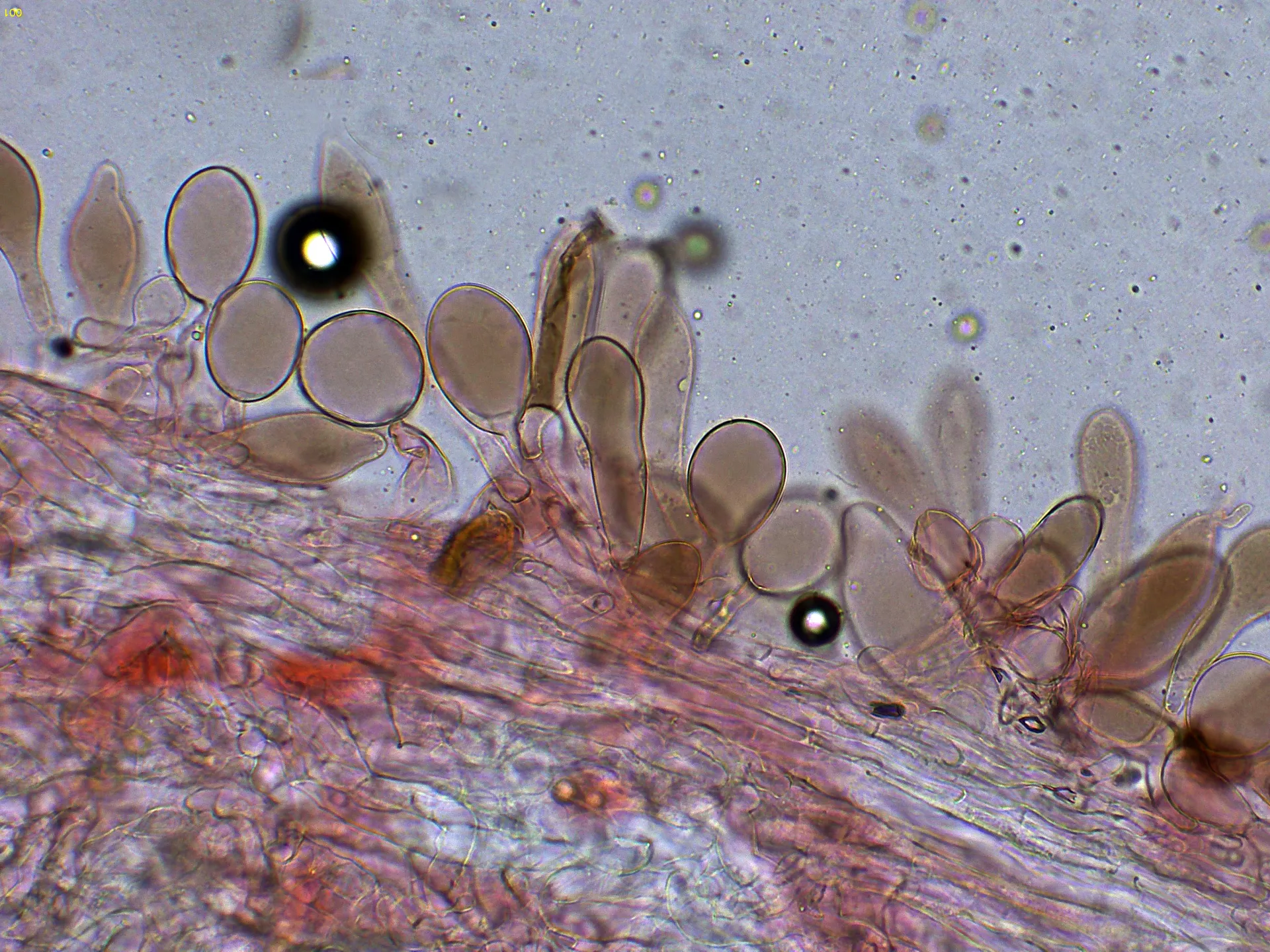
Pileipellis a transition between a cutis and a hymeniderm, composed of more or less parallel hyaline hyphae with simple septa, bearing emergent clavate, pyriform to fusiform pileocystidia 35 to 80 µm long and 20 to 45 µm wide, filled with abundant brown intracellular pigment.
Cheilocystidia clavate to pyriform, hyaline, 25 to 60 µm long and 13 to 25 µm wide.
Pleurocystidia scarce, similar in morphology and dimensions to cheilocystidia.
Basidia cylindrical, ventricose, 20 to 30 µm long, 8 to 10 µm wide, simple-septate at the base, 4-spored.
Spores globose to subglobose, smooth, hyaline, slightly thick-walled, 5.5 to 7.5 µm long, 5.5 to 7 µm wide, with a hyaline apiculus at one pole, containing oil droplets, inamyloid in Melzer's reagent.
Herbarium material available: JTP1960/23.
Geographic references
Map generated from global occurrence data from GBIF. GBIF.
Study measurements
Values in Microns (µm)Macroscopic gallery
Microscopic gallery