Pluteus plautus
(Weinm.) Gillet
Study description
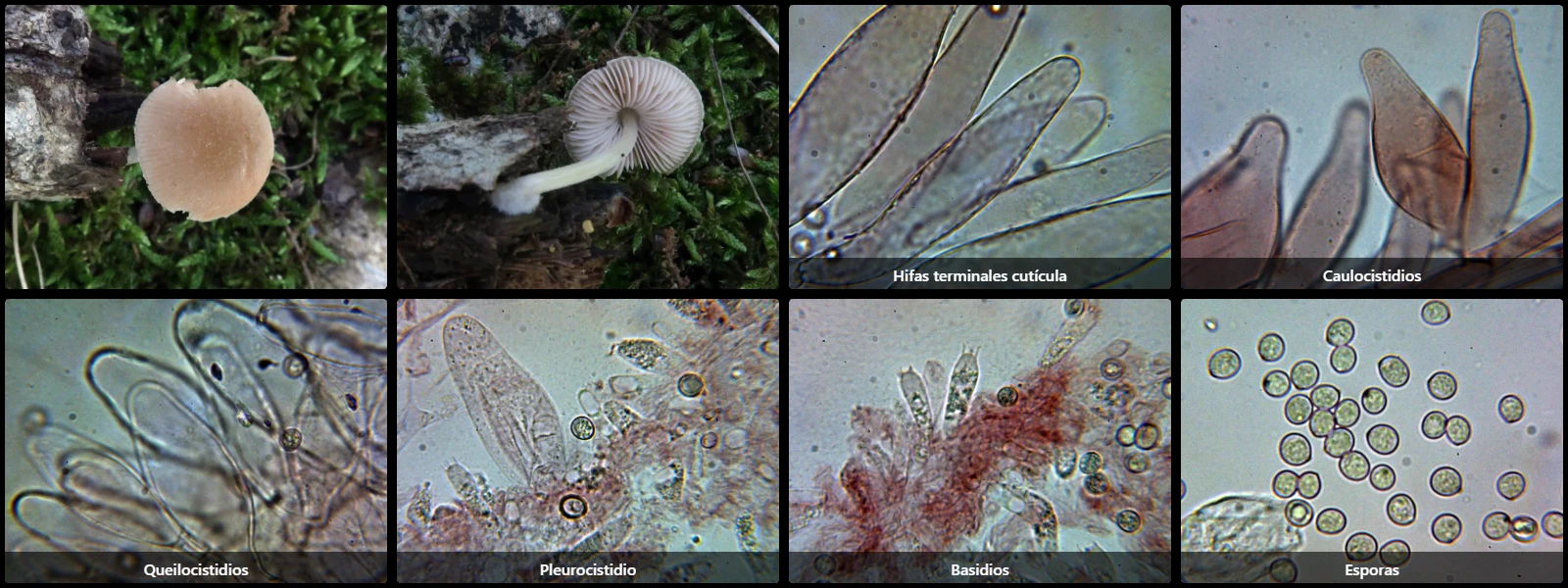
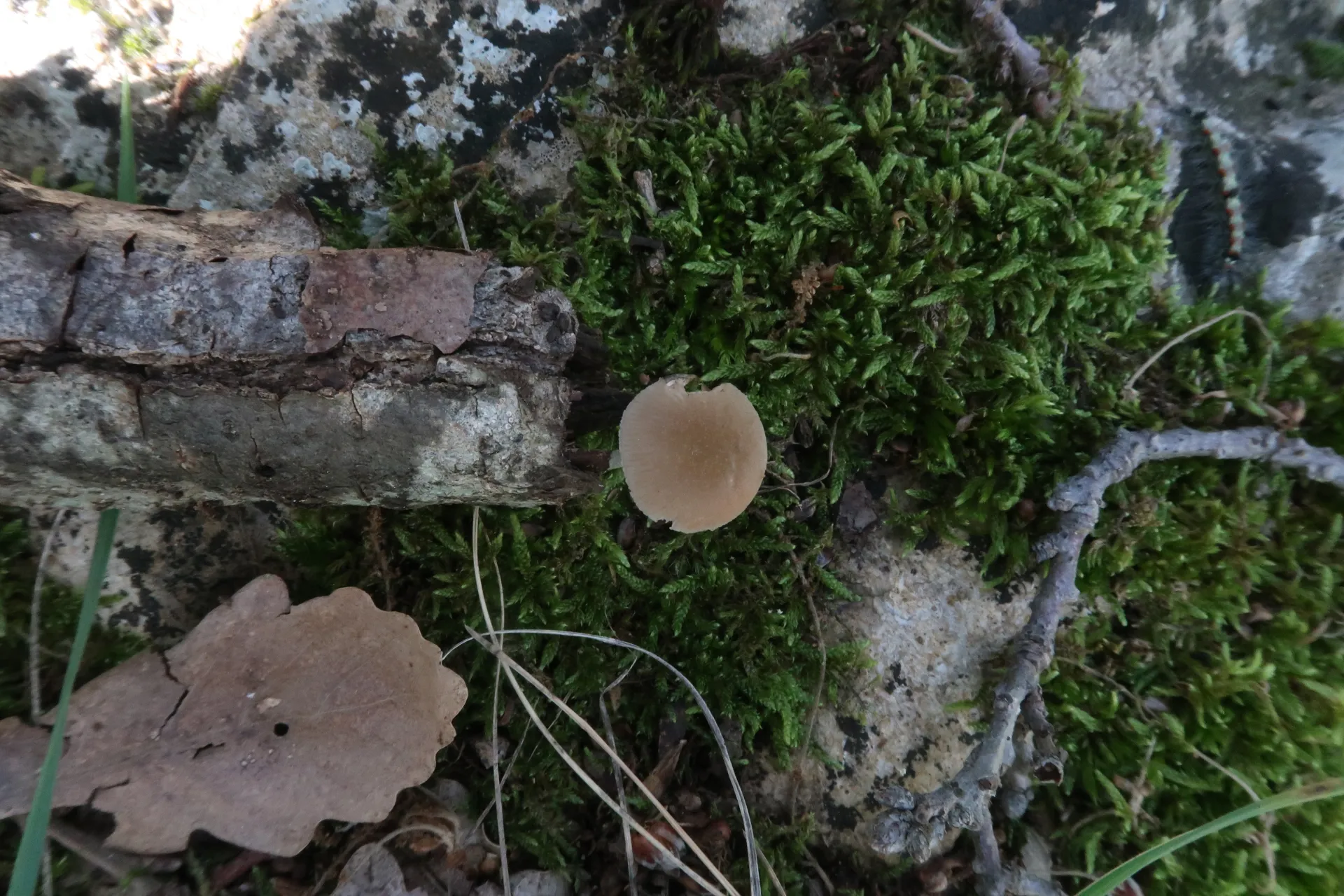
On decaying woody debris of broadleaved trees on the ground, with a convex to flattened pileus 2 to 4.5 cm in diameter, pale cream to olivaceous-brown, slightly woolly/pruinose surface with translucent striations, free white lamellae turning salmon-pink with maturity, a cylindrical stipe covered entirely in fine white hairs/fibrils, wet-grass odour, and mild taste.
Pileipellis with emergent cylindrical to fusiform terminal elements 70 to 150 µm long and 15 to 40 µm wide, containing abundant brown pigment, overlying more or less parallel hyaline hyphae 5 to 15 µm wide, simple-septate (clampless).
Caulocystidia abundant over the entire stipe, particularly at the base, cylindrical to sublageniform, 40 to 85 µm long and 10 to 25 µm wide.
Cheilocystidia clavate, fusiform to utriform, 55 to 80 µm long, 15 to 30 µm wide, hyaline or containing faint brownish pigment.
Pleurocystidia scarce, scattered, fusiform to lageniform, hyaline, 60 to 90 µm long and 20 to 35 µm wide.
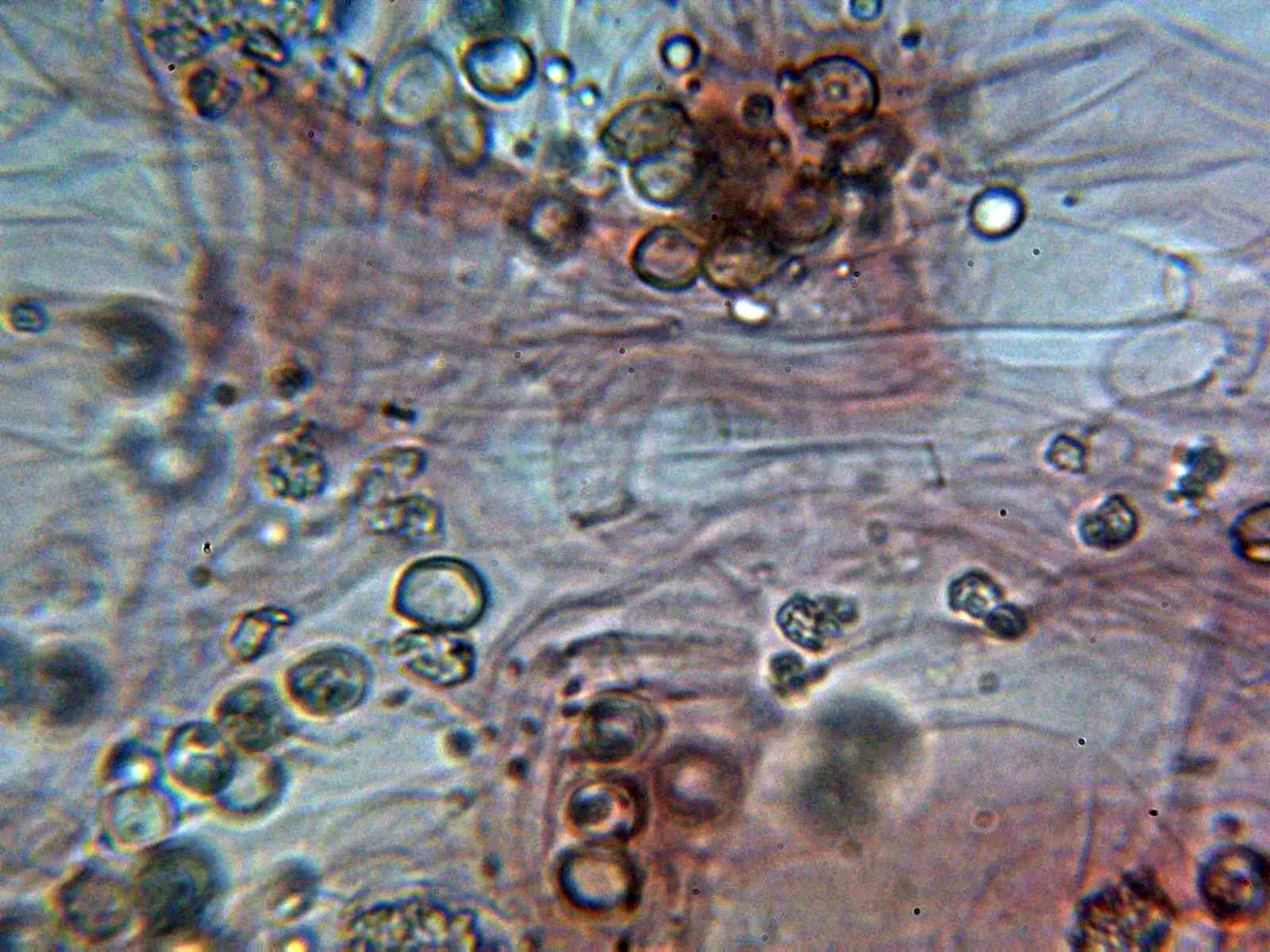
Basidia clavate, 30 to 40 µm long, 7 to 9 µm wide, clampless at the base, 4-spored.
Spores subglobose to ovoid, smooth, hyaline, moderately thick-walled, 5.5 to 7 µm long, 4.5 to 6.5 µm wide, with an inconspicuous apiculus, containing oil droplets, inamyloid in Melzer's reagent.
Geographic references
Map generated from global occurrence data from GBIF. GBIF.
Study measurements
Values in Microns (µm)Macroscopic gallery
Microscopic gallery