Pluteus petasatus
(Fr.) Gillet
Study description
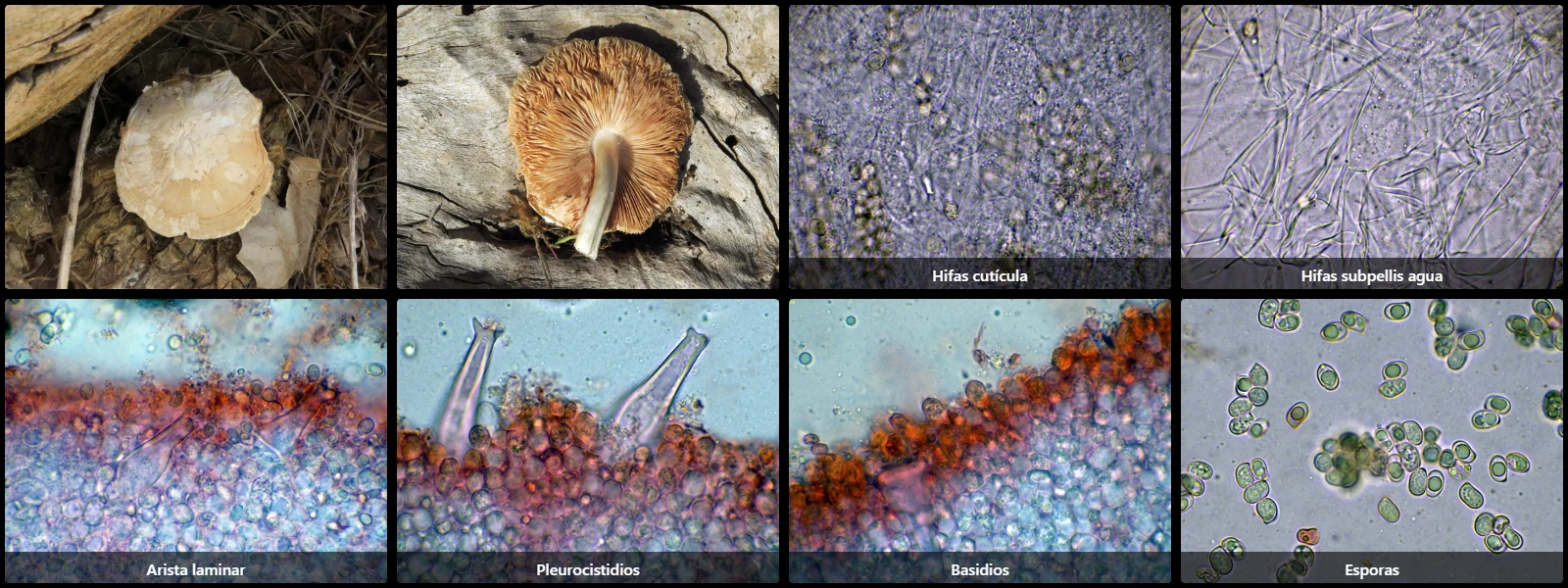
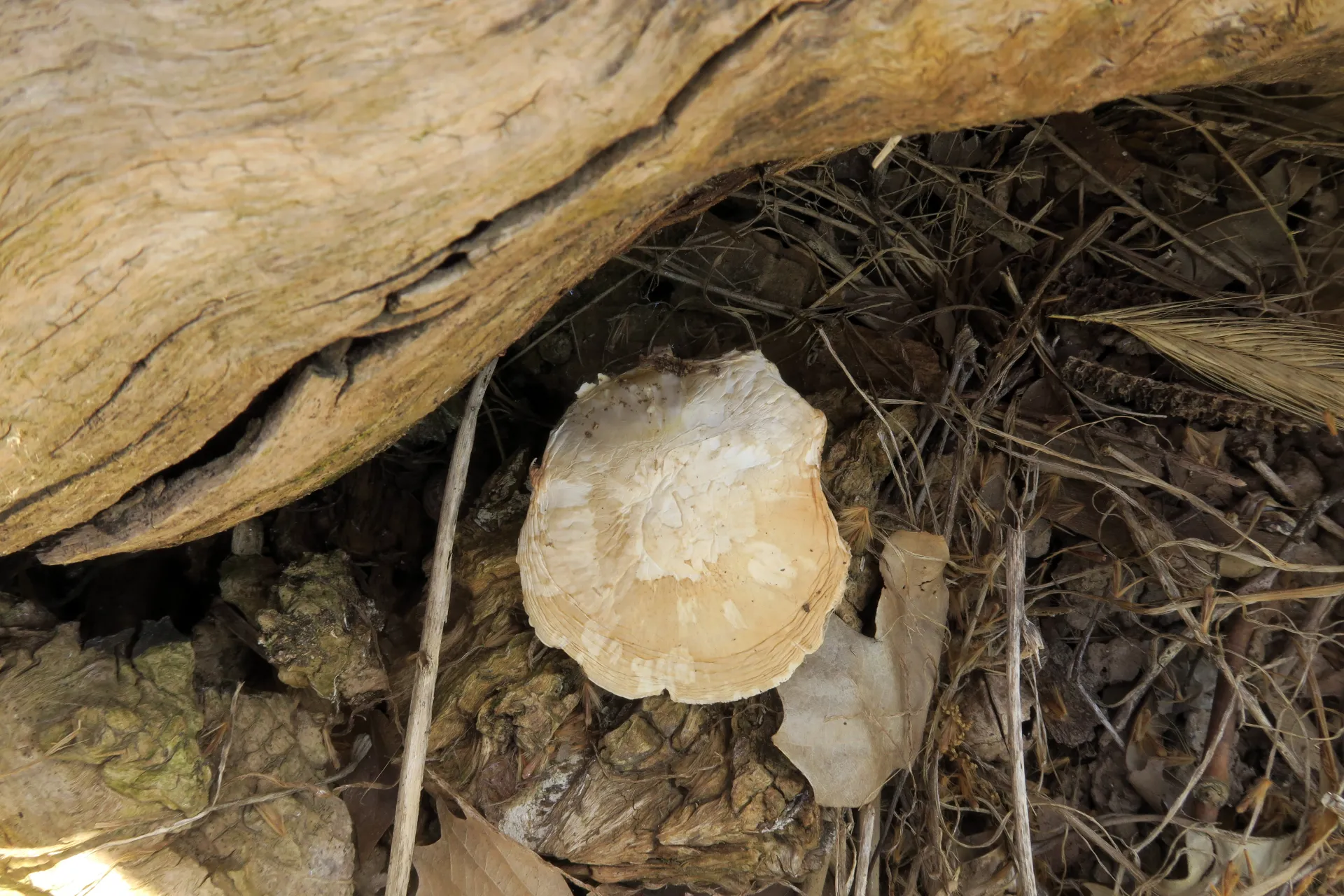
On decaying wood or woodchips of broadleaved trees; the studied specimen was collected from a broadleaf stump in a roadside verge near my home town, with a convex to flattened pileus retaining an obtuse umbo, 5 to 10 cm in diameter, pale brownish to cream, free pinkish-brown lamellae, a cylindrical pale brown stipe with a whitish apex, faintly raphanoid odour, and mild taste.
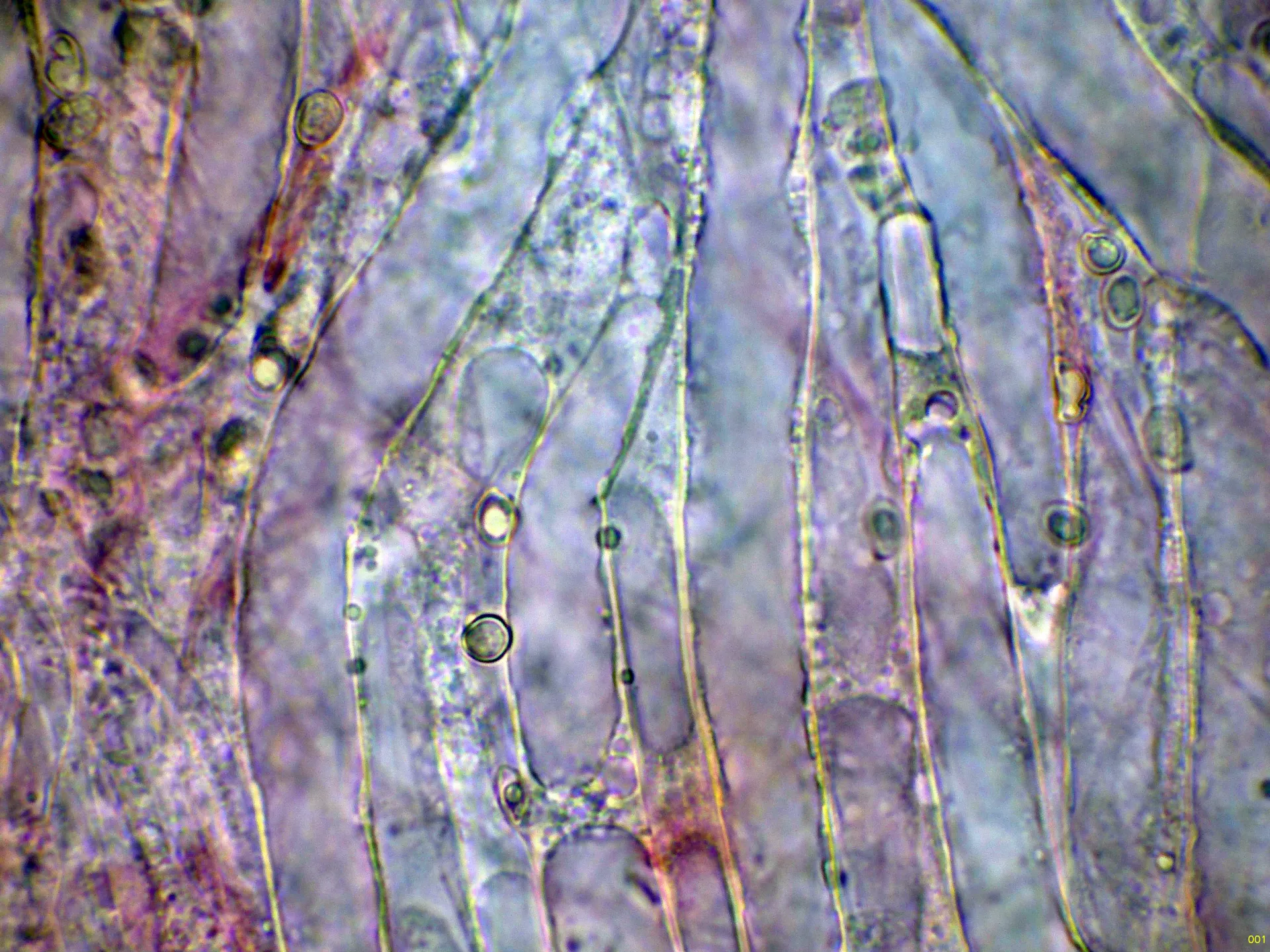
Pileipellis a cutis of more or less parallel, hyaline hyphae 5 to 10 µm wide, clampless, with emergent cylindrical to fusiform terminal elements 70 to 120 µm long and 8 to 18 µm wide filled with brown pigment.
Cheilocystidia cylindrical-clavate to lageniform, 25 to 70 µm long and 10 to 20 µm wide, intermixed with occasional thick-walled cystidia bearing apical horns.
Pleurocystidia metuloidal (coronate), very thick-walled, 60 to 90 µm long, 15 to 20 µm wide, crowned with 2 to 4 apical horns/prongs.
Basidia cylindrical, slightly ventricose, 25 to 35 µm long, 8 to 10 µm wide, simple-septate at the base, 4-spored.
Spores ellipsoidal, smooth, hyaline, thin- to very slightly thick-walled, 6.5 to 8.5 µm long, 4.5 to 6 µm wide, with a lateral apiculus at one end, containing guttules, inamyloid in Melzer's reagent.
Herbarium material available: JTP2499/25.
Geographic references
Map generated from global occurrence data from GBIF. GBIF.
Study measurements
Values in Microns (µm)Macroscopic gallery
Microscopic gallery