Pluteus luctuosus
Boud.
Study description
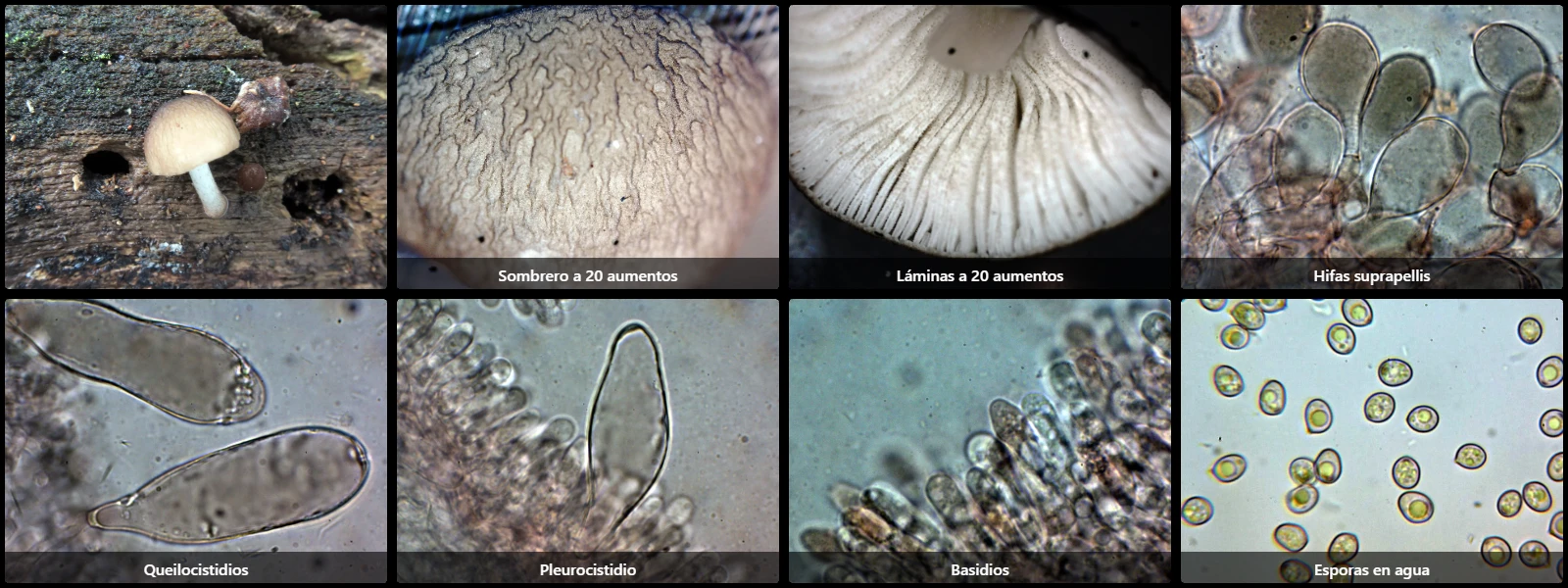
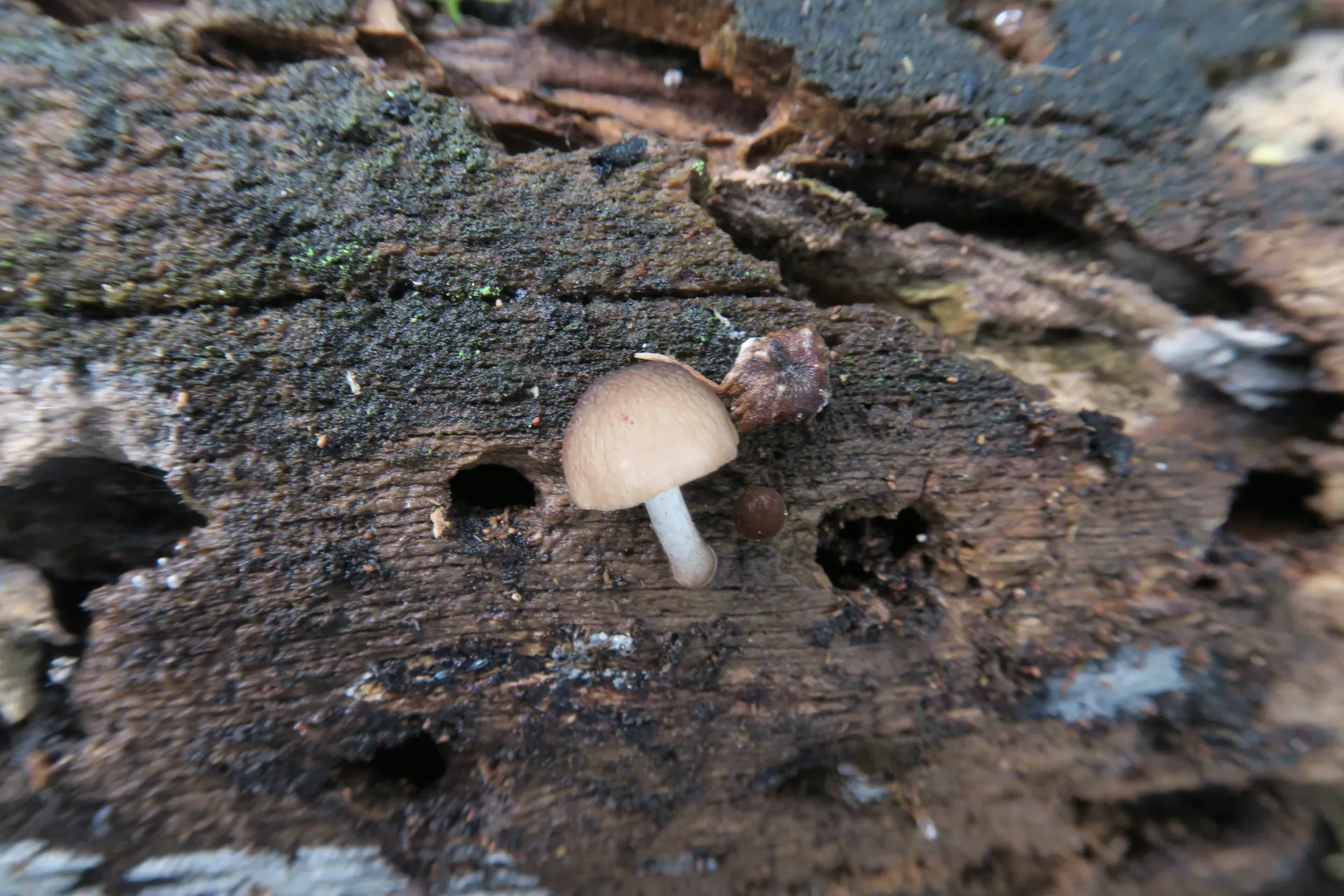
On heavily decayed broadleaved wood, with a convex to expanded pileus 2 to 6 cm in diameter, brownish with a paler margin, rugose-venose surface, free lamellae turning pink with spore maturation, with a dark brown flocculose edge, a cylindrical whitish to greyish stipe slightly enlarged at the base with brownish fibrils, and lacking distinct odour or taste.
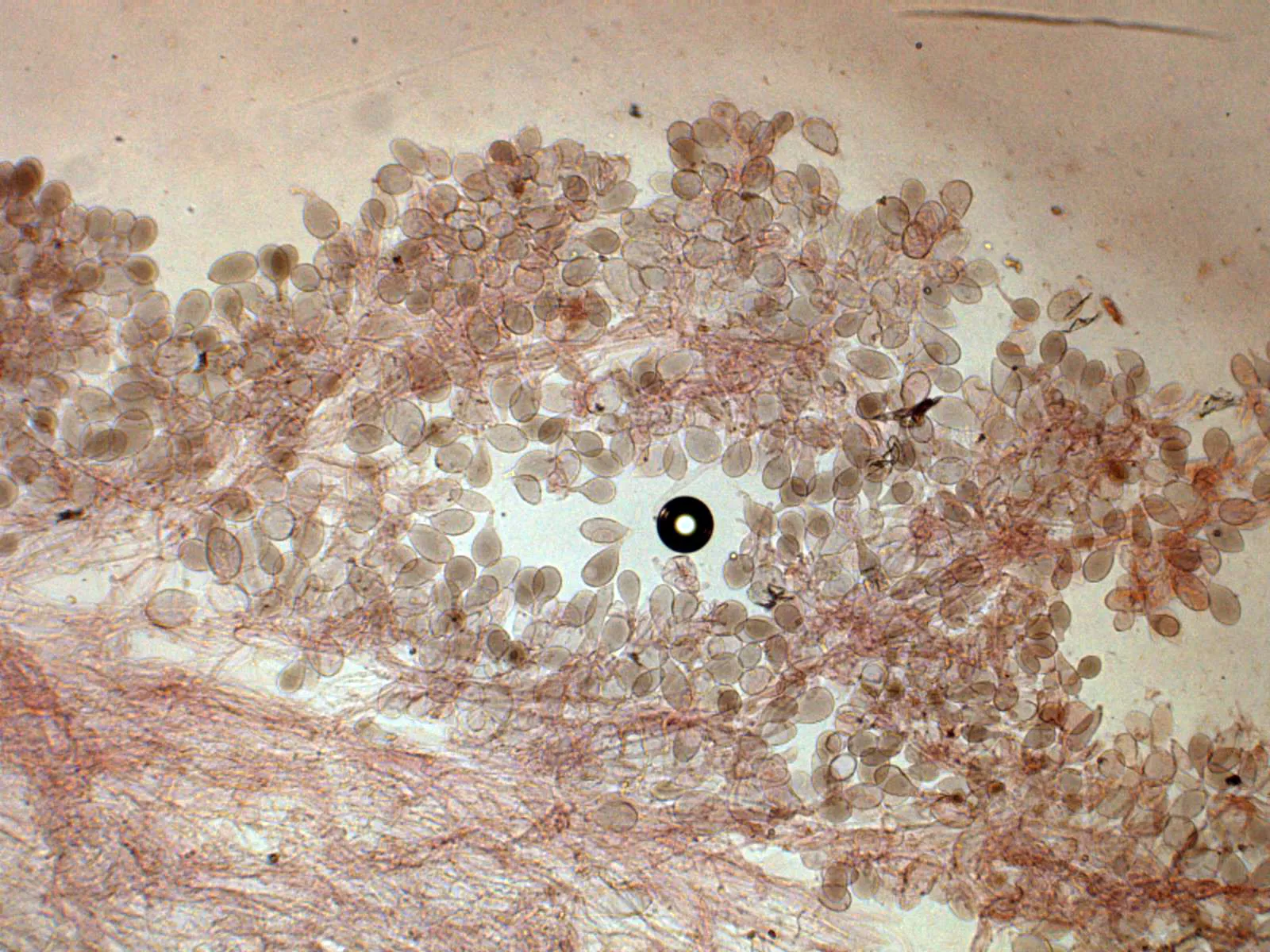
Pileipellis cellular (a hymeniderm), with sphaeropedunculate, subglobose to clavate elements 50 to 75 µm long and 35 to 50 µm wide, clampless, containing abundant brown intracellular pigment.
Cheilocystidia clavate to slightly fusiform, 60 to 85 µm long, 20 to 35 µm wide, predominantly filled with dark brown intracellular pigment that colours the gill margin.
Pleurocystidia abundant, similar in morphology and dimensions to cheilocystidia.
Basidia cylindrical-clavate, 25 to 35 µm long, 7 to 9 µm wide, simple-septate at the base, 4-spored.
Spores subglobose to ellipsoidal, smooth, hyaline, thick-walled, greyish under the microscope, 7 to 9 µm long, 5.5 to 7 µm wide, with a hyaline apiculus at one end, containing guttules, inamyloid in Melzer's reagent.
Geographic references
Map generated from global occurrence data from GBIF. GBIF.
Study measurements
Values in Microns (µm)Macroscopic gallery
Microscopic gallery