Pluteus aurantiorugosus
(Trog) Sacc.
Study description
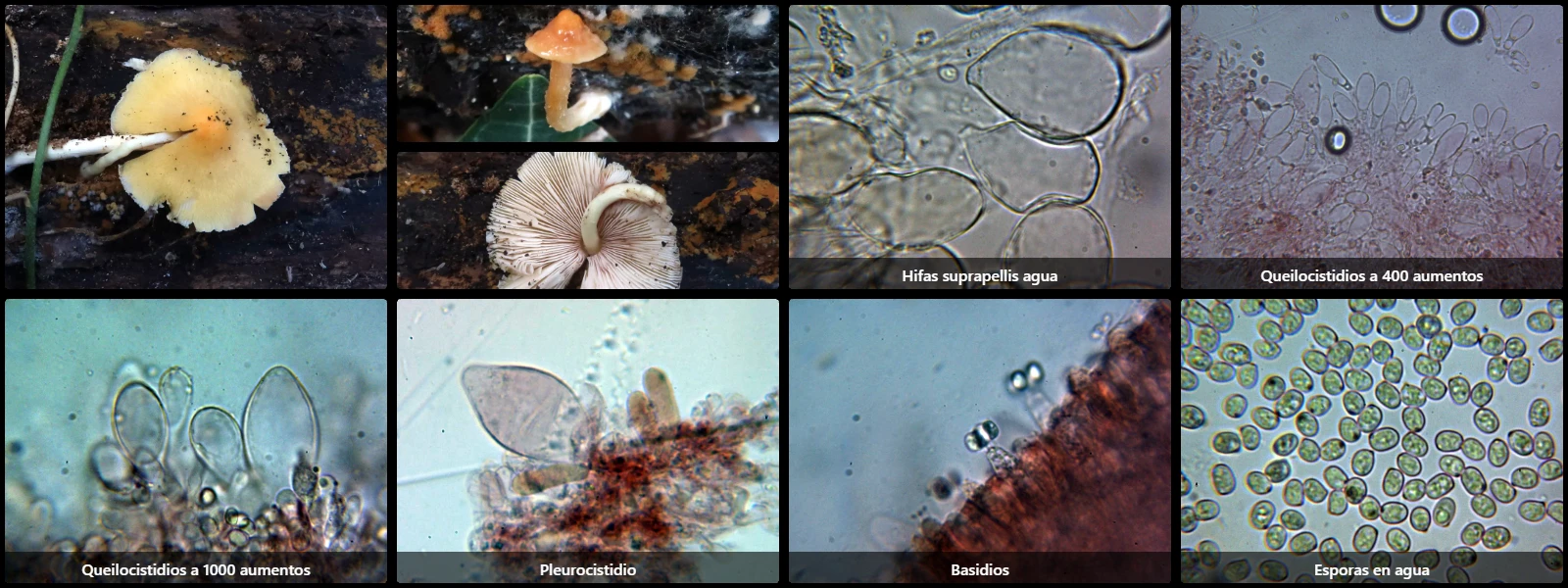
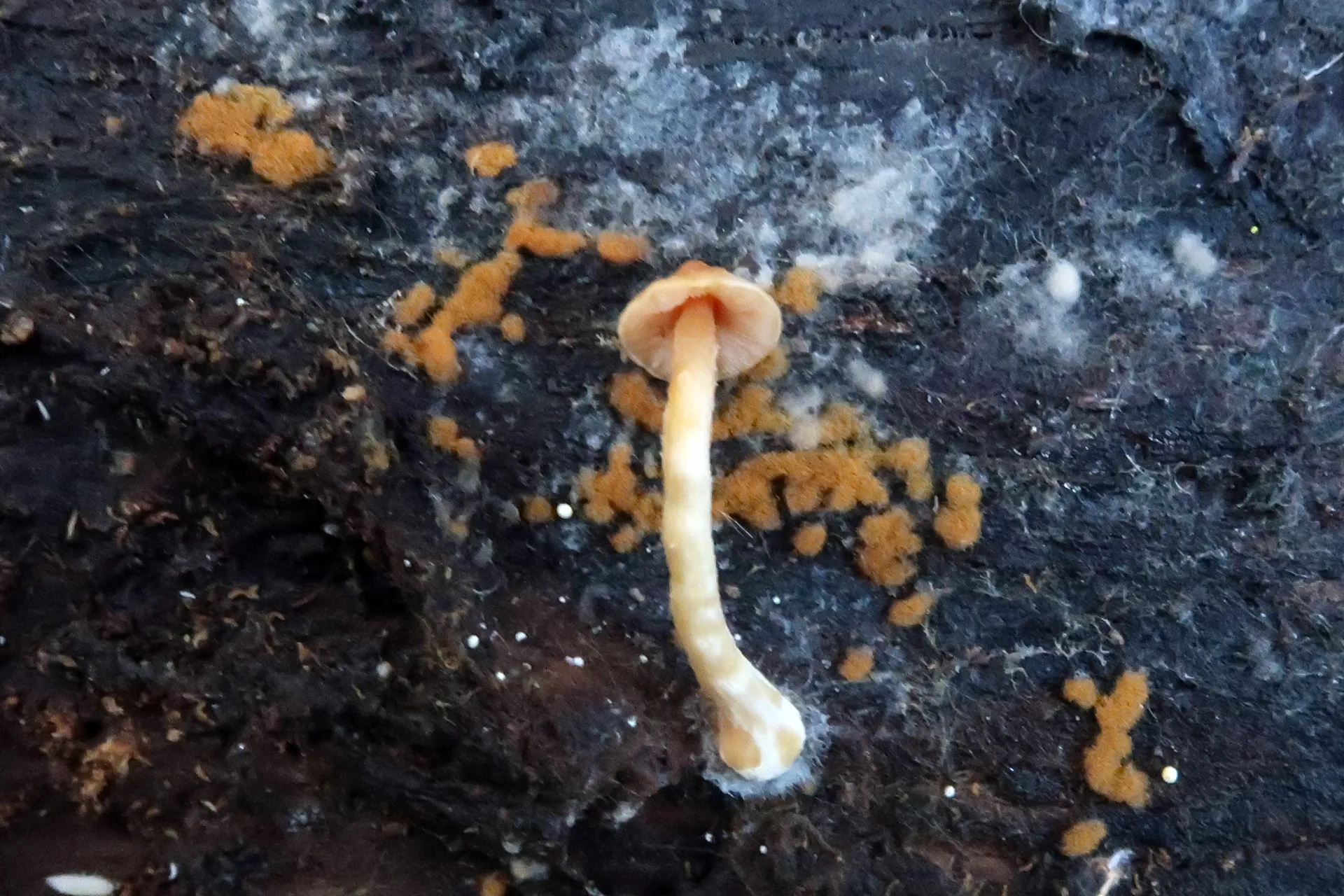
On dead wood on the ground in advanced decay, particularly of Populus, Fraxinus, or Acer, with a conical-convex to flattened pileus retaining an obtuse central umbo, 2 to 6 cm in diameter, vivid bright orange, crowded pink lamellae from sporulation, a cylindrical white to pale yellow stipe, and faint, indistinct odour and taste.
Pileipellis cellular (a hymeniderm), with a superficial layer of globose, pyriform to clavate cells 25 to 45 µm long and 20 to 40 µm wide, containing pale yellowish intracellular pigment, overlying parallel cylindrical hyphae 4 to 12 µm wide with similar pigment.
Cheilocystidia fusiform to clavate, ventricose, hyaline, thin-walled, 30 to 60 µm long and 15 to 30 µm wide.
Pleurocystidia scarce, scattered, similar to cheilocystidia but larger, 45 to 75 µm long and 20 to 35 µm wide.
Basidia clavate, 20 to 25 µm long, 5.5 to 7.5 µm wide, simple-septate at the base, 4-spored.
Spores subglobose to ellipsoidal, smooth, hyaline, slightly thick-walled, 5 to 6.5 µm long, 4 to 4.5 µm wide, with an almost imperceptible apiculus at one end, containing small guttules, inamyloid in Melzer's reagent.
Geographic references
Map generated from global occurrence data from GBIF. GBIF.
Study measurements
Values in Microns (µm)Macroscopic gallery
Microscopic gallery