Pluteus atromarginatus
(Konrad) Kühner
Study description
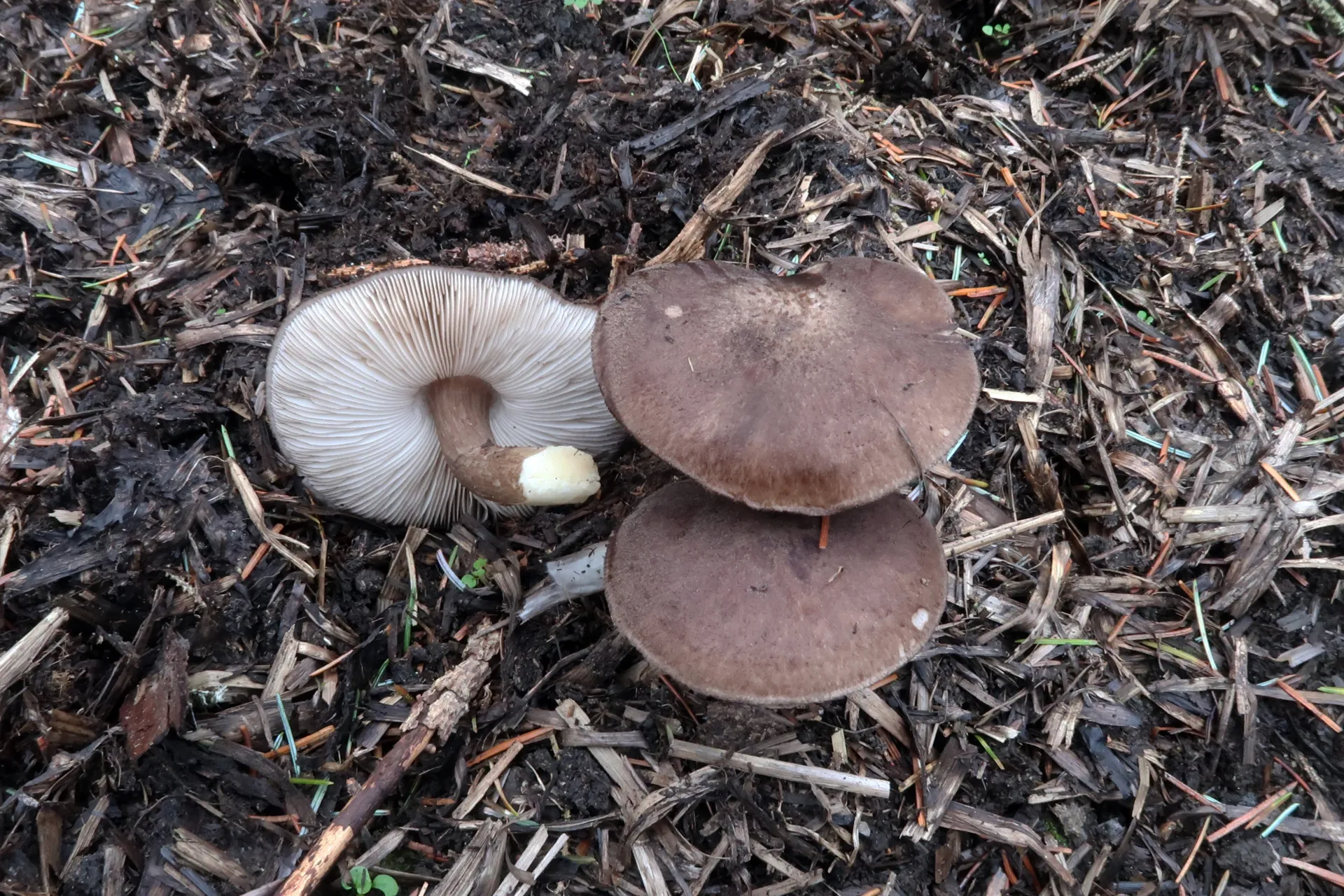
Species typical of conifer stumps and logs, particularly pines (Pinus), with a convex to flattened pileus 4 to 10 cm in diameter, brown, fibrillose to velvety surface, white lamellae turning pink with spore maturation, with a distinctive dark brown, flocculose gill edge, a cylindrical stipe enlarged at the base and covered with brown fibrils, fungal odour, and mild taste.
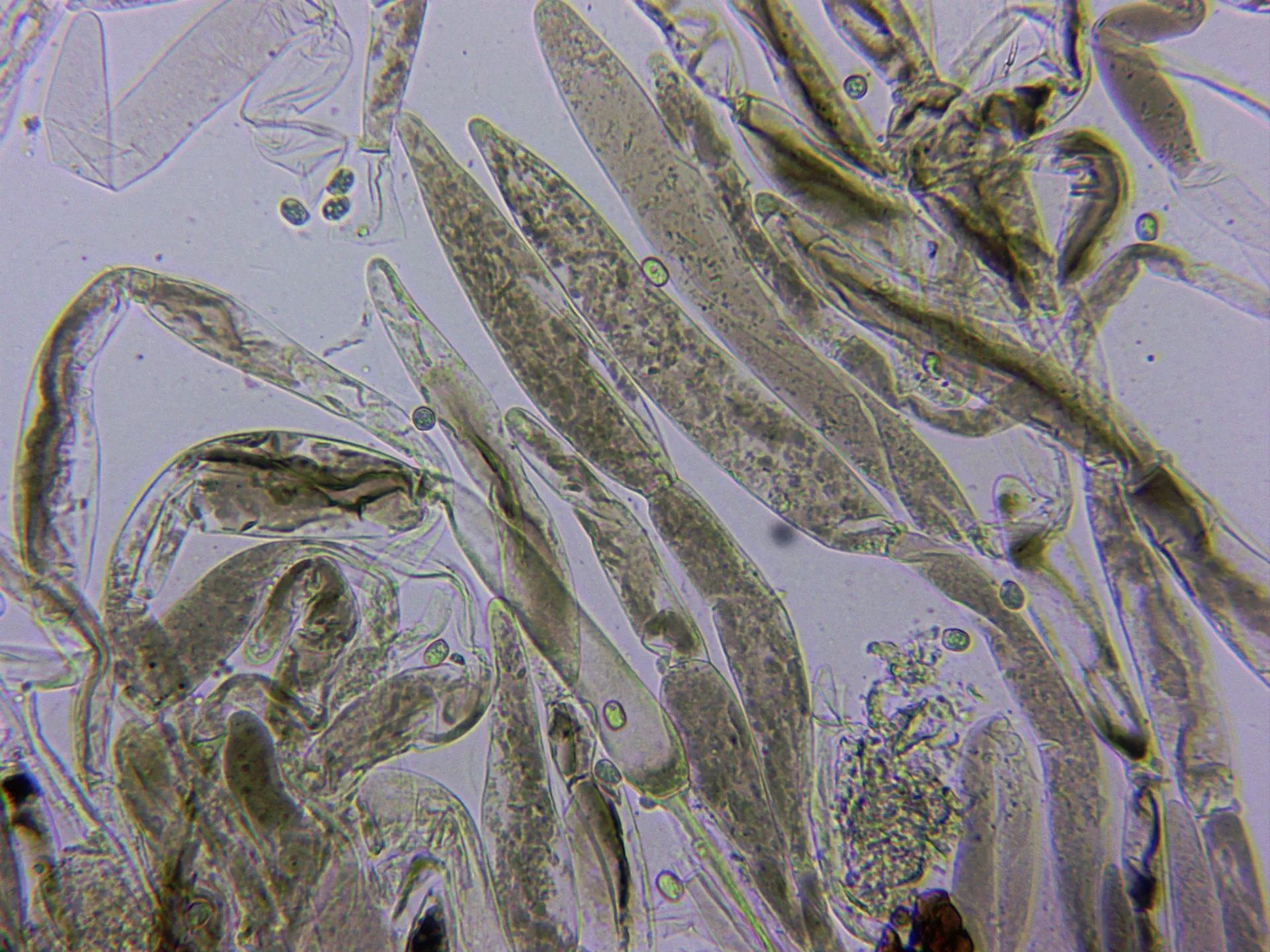
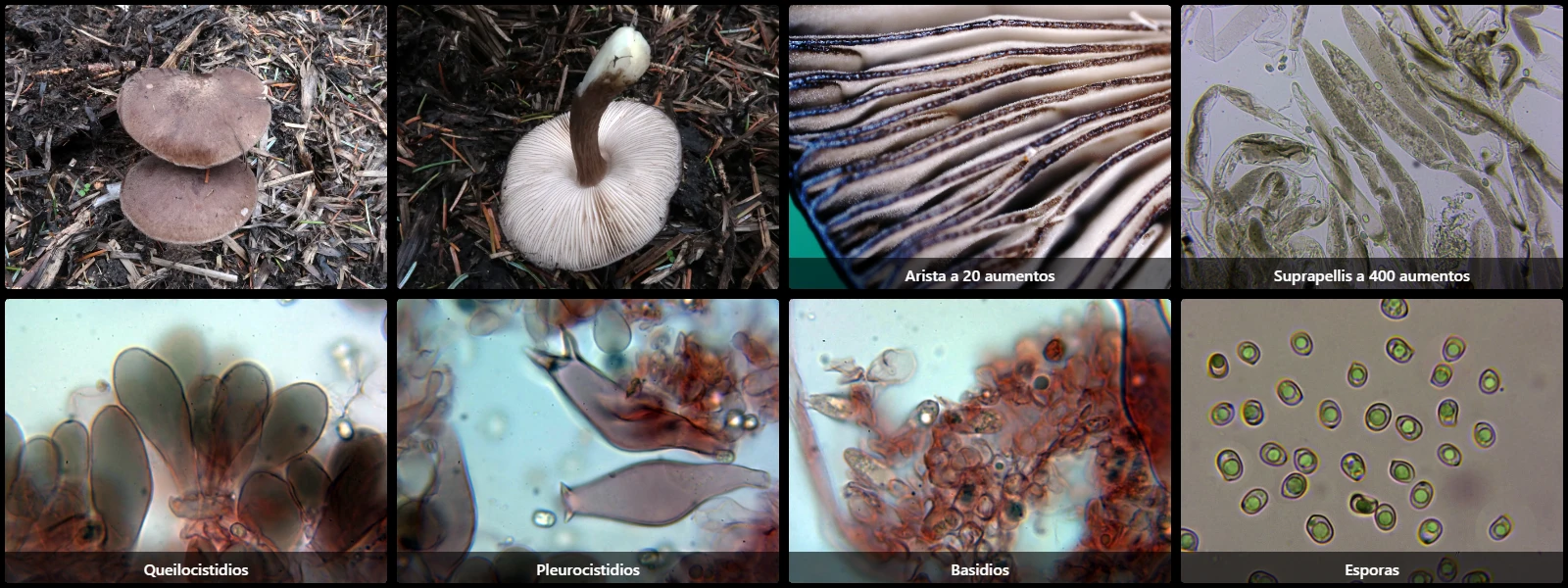
Pileipellis a cutis of more or less parallel filamentous hyphae 6 to 14 µm wide containing brown intracellular pigment, septate with clamp connections, with abundant emergent fusiform terminal elements in the suprapellis measuring 80 to 160 µm long and 10 to 30 µm wide.
Cheilocystidia very abundant, rendering the gill edge sterile, subcylindrical, clavate to pyriform, 30 to 75 µm long, 15 to 30 µm wide, filled with brown intracellular pigment that gives the gill edge its dark margin.
Pleurocystidia metuloidal (coronate), fusiform, thick-walled, bearing 2 to 3 apical hooks/prongs, 70 to 95 µm long and 15 to 25 µm wide, like the cheilocystidia containing brown intracellular pigment.
Basidia ventricose to clavate, 22 to 35 µm long, 8 to 10 µm wide, partly clamped, 4-spored.
Spores ovoid to ellipsoidal, smooth, hyaline, moderately thick-walled, 5 to 7.5 µm long, 4 to 5.5 µm wide, with an inconspicuous apiculus at one end, containing a large oil droplet, inamyloid in Melzer's reagent.
Geographic references
Map generated from global occurrence data from GBIF. GBIF.
Study measurements
Values in Microns (µm)Macroscopic gallery
Microscopic gallery