Piloderma bicolor
(Peck) Jülich
Study description
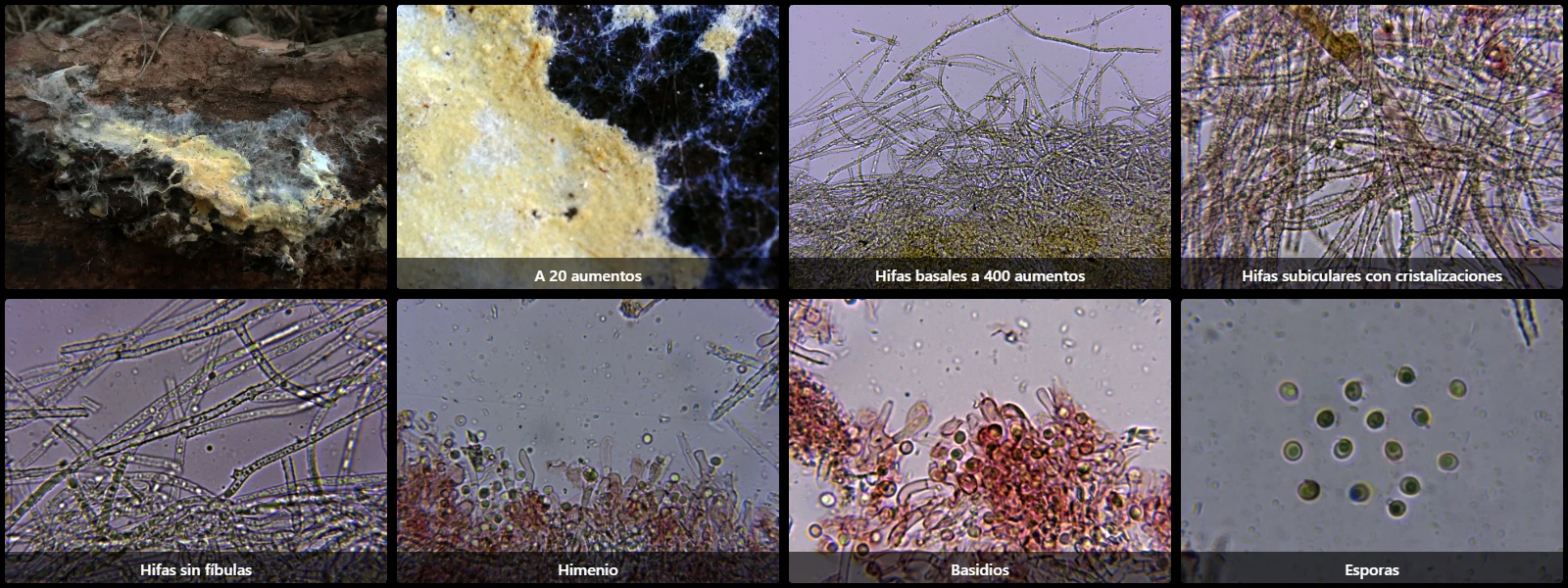
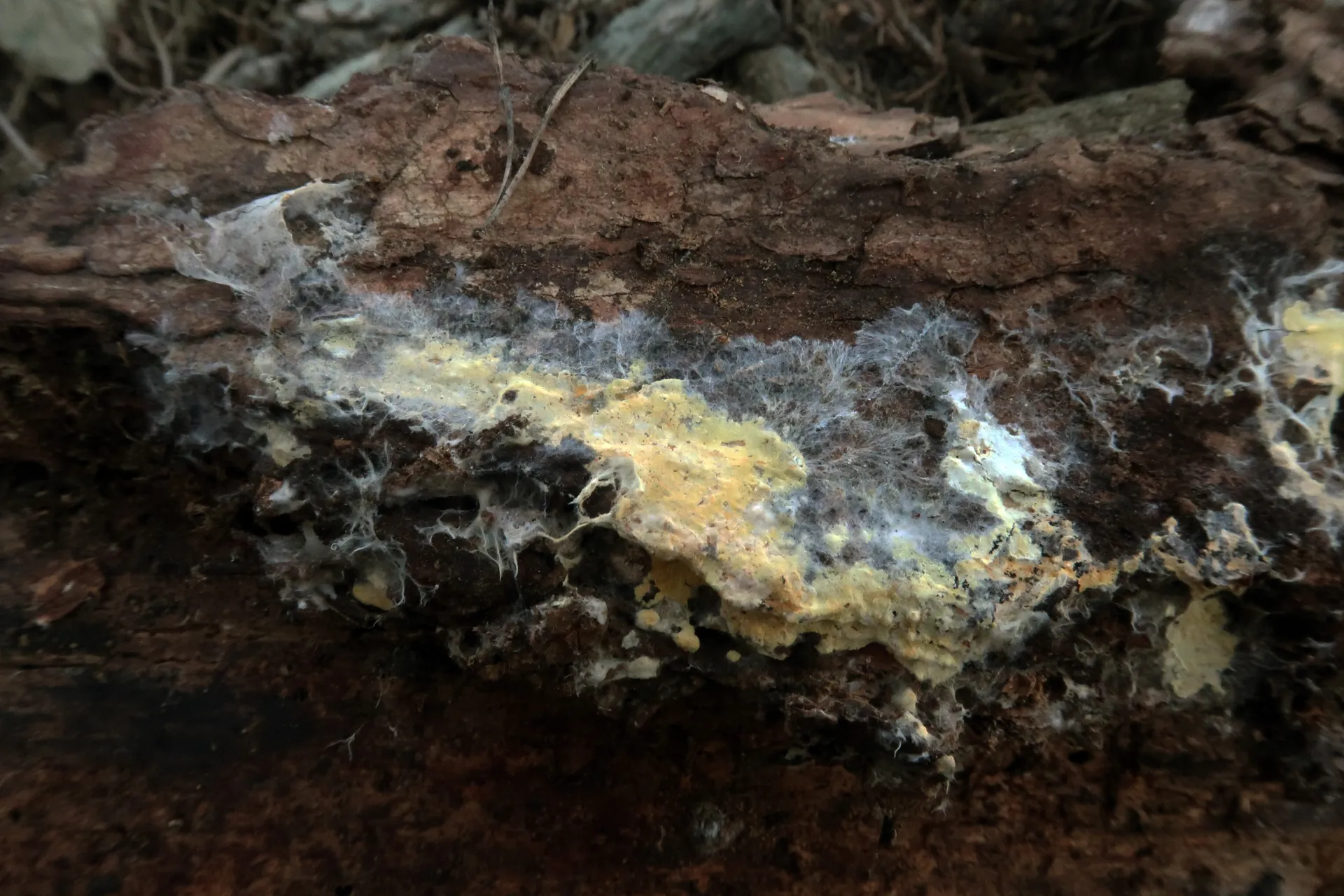
On decaying dead wood on the ground, with a preference for conifers, with completely resupinate basidiomata showing two sharply contrasting zones (whitish to saffron yellow, as indicated by its specific epithet), easily peeled from the substrate, and 0.1 to 0.3 mm thick.
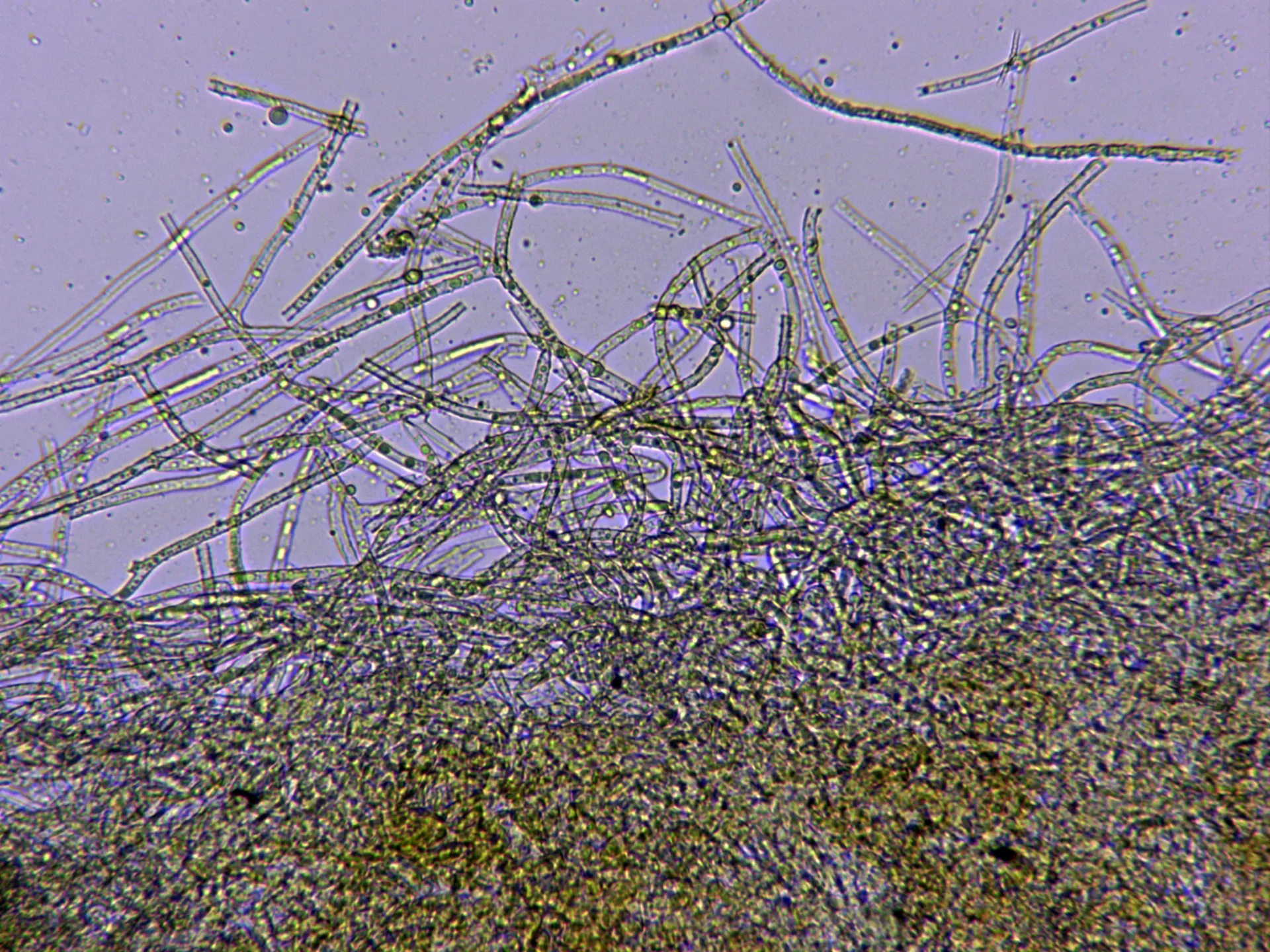
Hyphal system monomitic; subicular hyphae 2 to 4 µm wide, moderately thick-walled, entirely covered with fine acicular crystals, branched, interwoven, septate with simple septa.
Cystidia and other sterile hymenial elements absent.
Basidia subcylindrical to clavate, 10 to 15 µm long, 4 to 6 µm wide, simple-septate at the base, bearing 2 to 4 sterigmata.
Spores subglobose to ovoid, hyaline, smooth- and very thick-walled, 3 to 4 µm long, 3 to 3.5 µm wide, with an inconspicuous apiculus at one end, containing a large oil droplet, practically non-reactive in Melzer's reagent.
Geographic references
Map generated from global occurrence data from GBIF. GBIF.
Study measurements
Values in Microns (µm)Macroscopic gallery
Microscopic gallery