Phylloporus pelletieri
(Lév.) Quél.
Study description
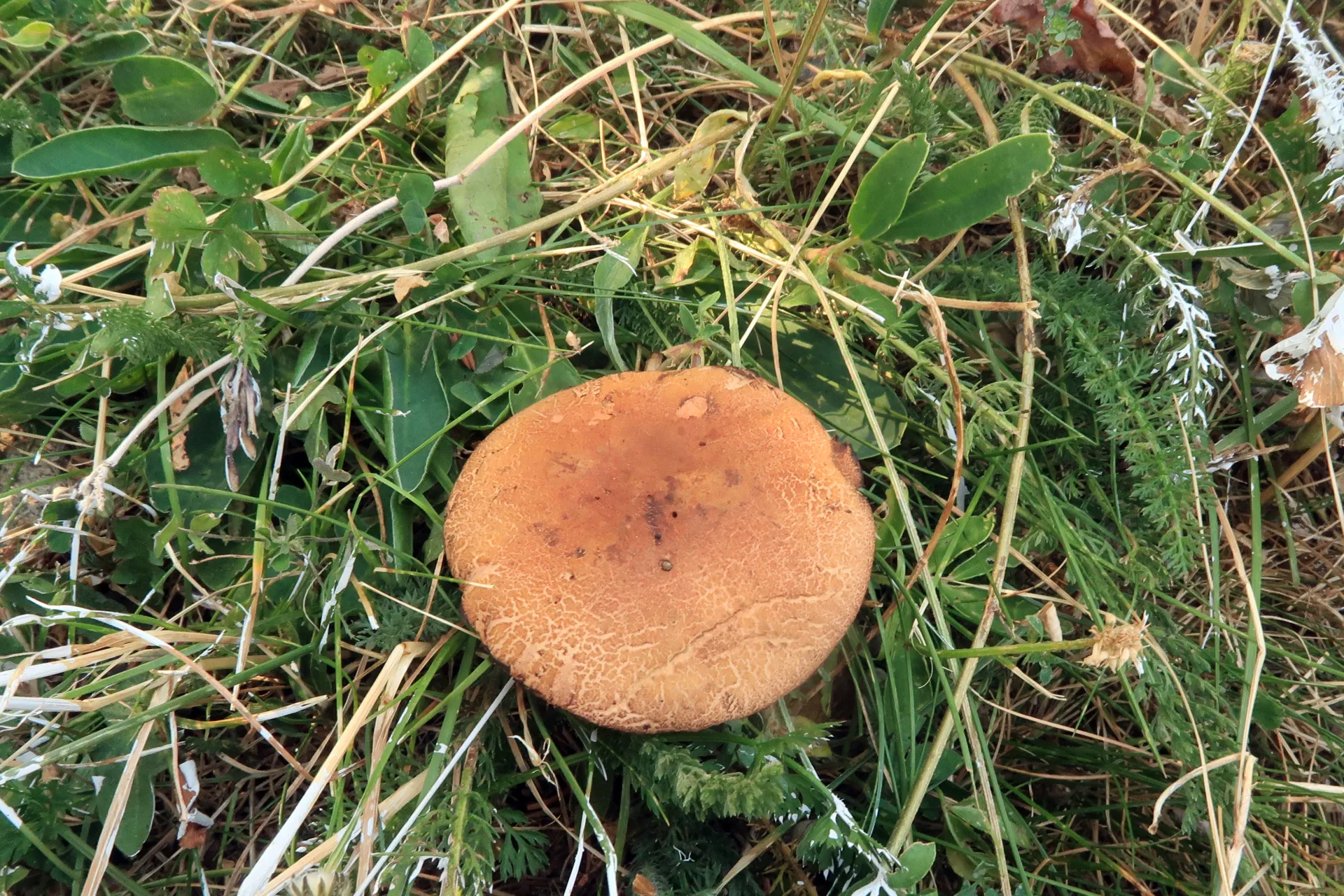
An uncommon bolete-allied species fruiting in coniferous or mixed woodlands on sandy soils, with a convex to flattened pileus 3.5 to 6 cm in diameter, reddish-brown, velvety surface, adnate to decurrent golden-yellow lamellae with transverse anastomoses (intervenose), a cylindrical, yellowish-brown, longitudinally grooved stipe, a pleasant fungal odour, and sweet, nutty taste.
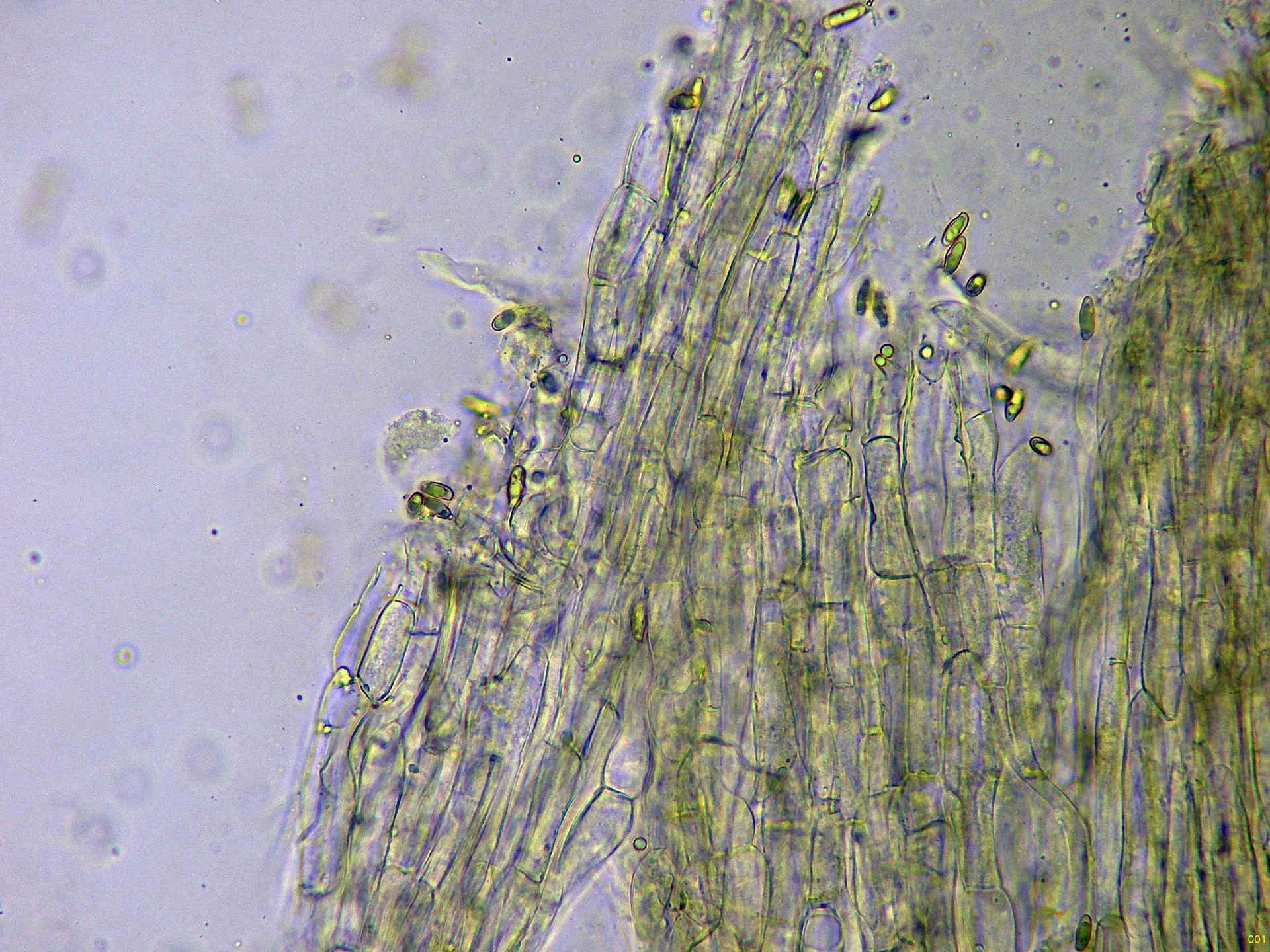
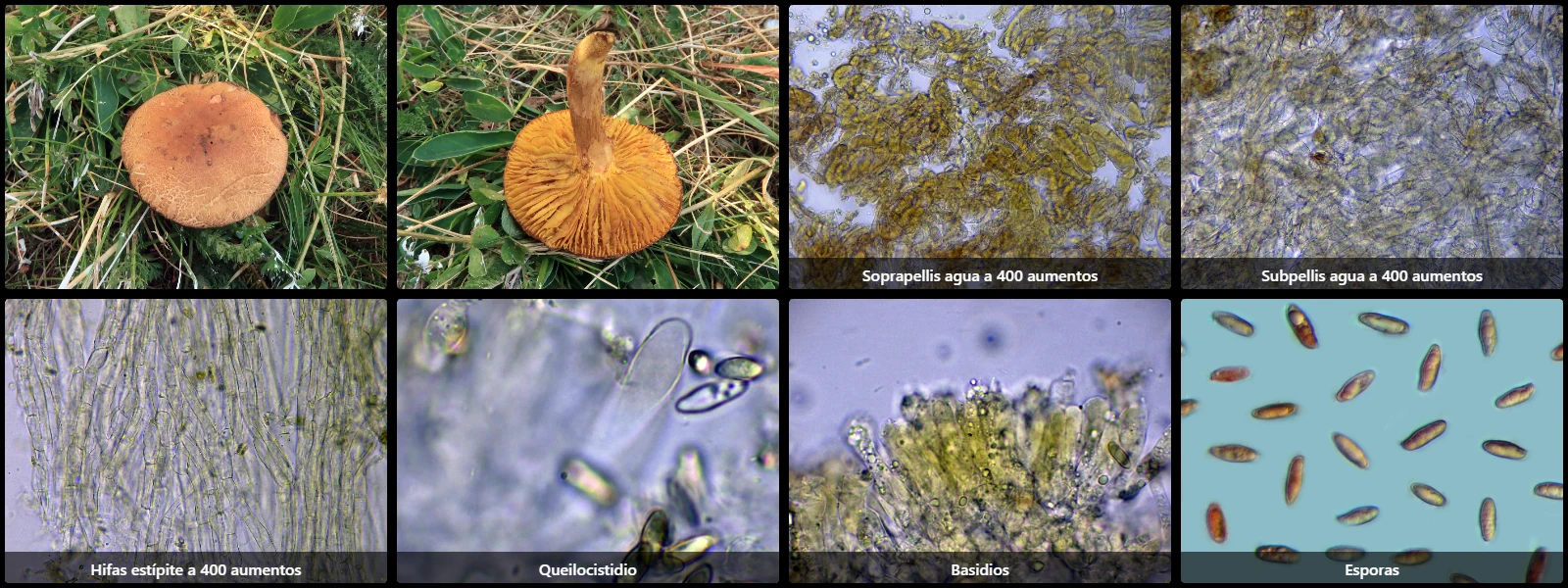
Pileipellis a trichoderm of cylindrical hyphae with short elements 10 to 18 µm wide, containing abundant yellow encrusting intracellular pigment, with emergent terminal elements, septate with simple septa.
Cheilocystidia and pleurocystidia fusiform to clavate, 80 to 100 µm long and 12 to 16 µm wide.
Basidia cylindrical-clavate, 30 to 45 µm long, 7 to 9 µm wide, simple-septate at the base, 4-spored.
Spores cylindrical-ellipsoidal (subfusiform/boletoid), smooth-walled, pale yellow under the microscope, 10 to 14 µm long, 3.8 to 5 µm wide, with a slightly curved, pointed apicular end, containing oil droplets (guttules) inside.
Herbarium material available: JTP2552/25.
Geographic references
Map generated from global occurrence data from GBIF. GBIF.
Study measurements
Values in Microns (µm)Macroscopic gallery
Microscopic gallery