Phomopsis glandicola
(Lév.) Grove
Study description
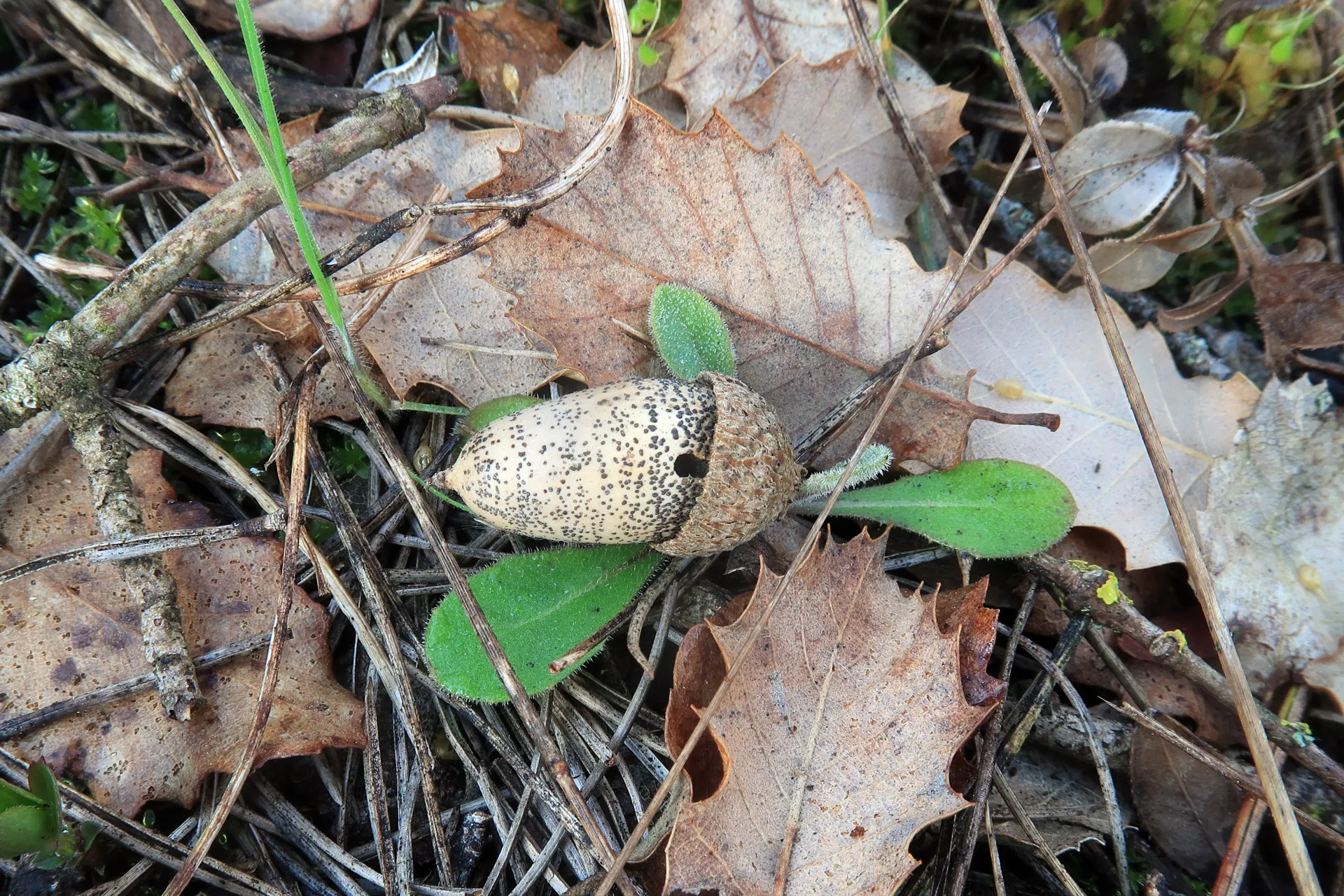
Found on a decaying fallen acorn on the ground. Special thanks to Tony Hardware for his assistance in determining the species.
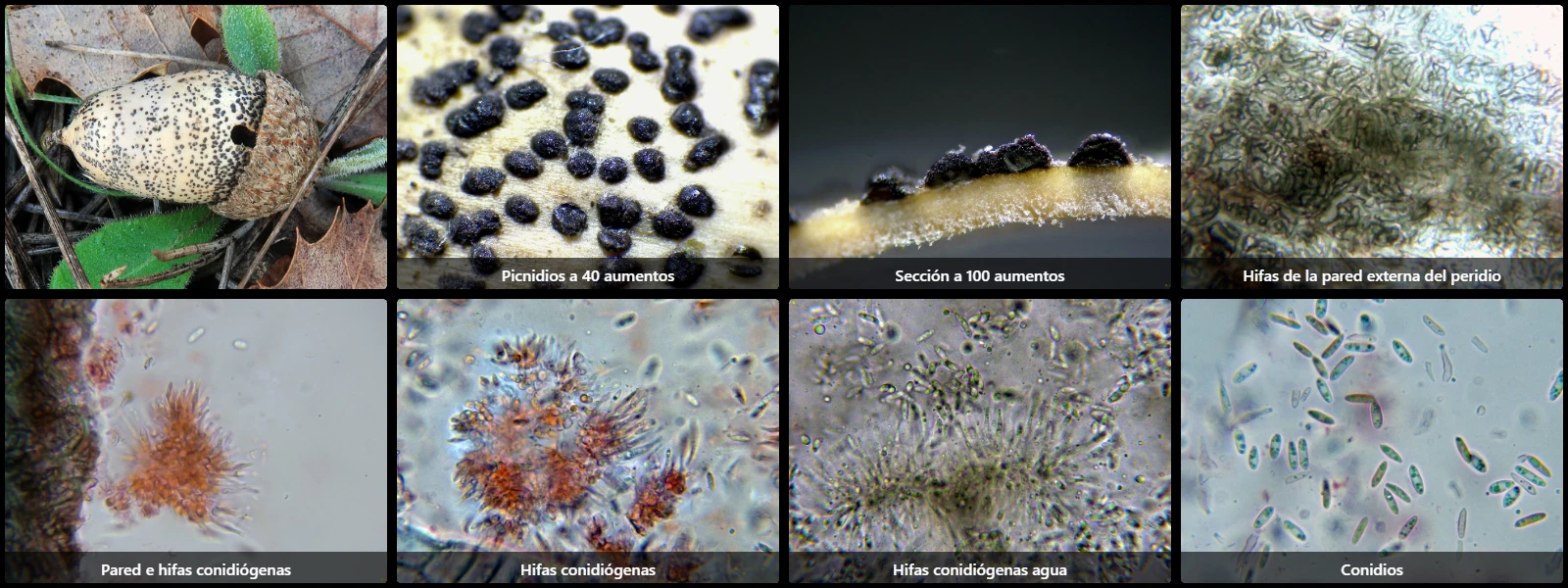
Conidiomata (pycnidia) appearing scattered yet abundant, erumpent but shallowly immersed in the substrate, subglobose to ellipsoidal, black and carbonaceous in appearance, 150 to 220 µm long and 70 to 120 µm wide, with a small central papilla through which the conidia are released.
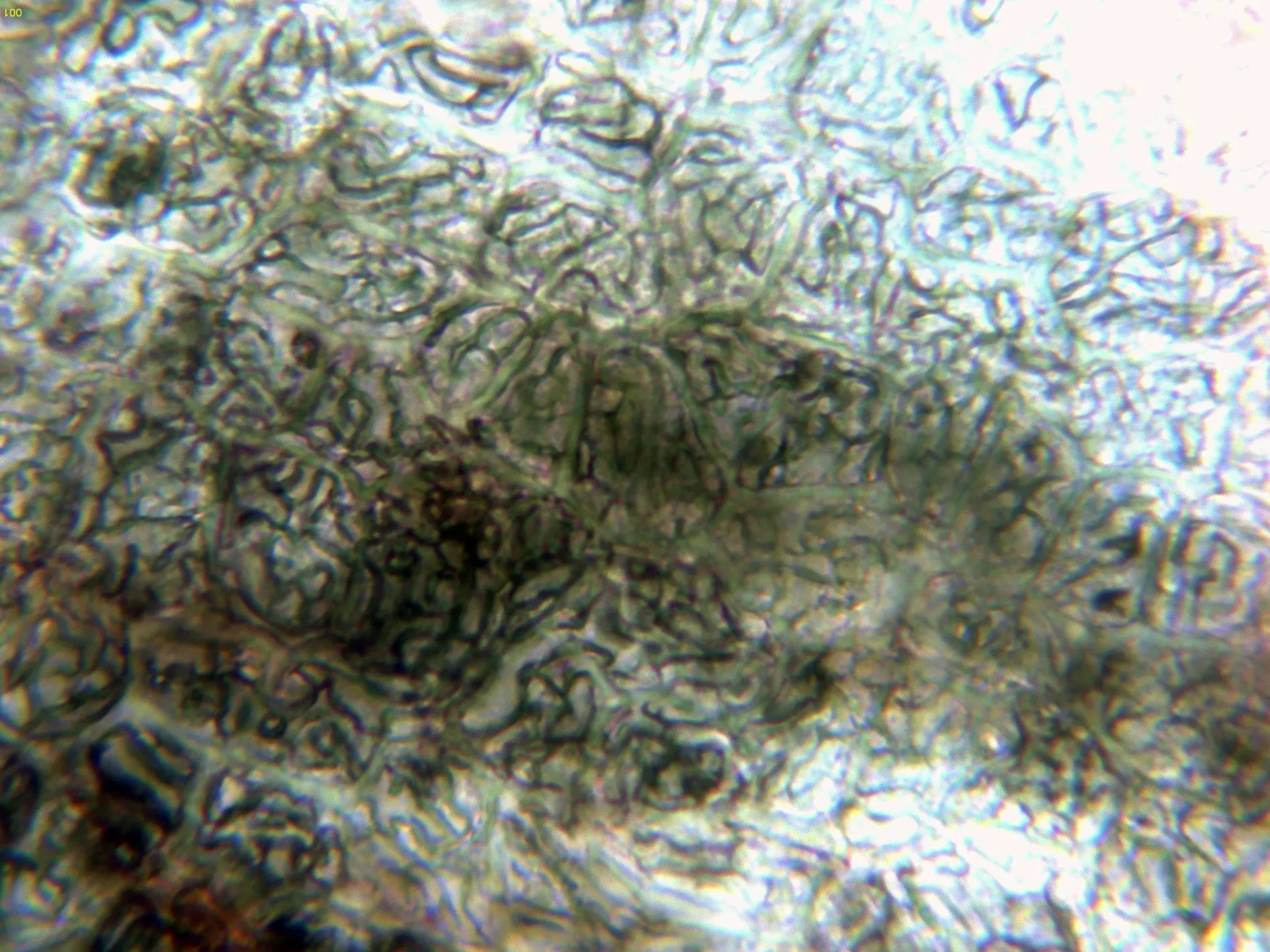
Peridial wall hyphae showing a labyrinthine pattern, composed of short cylindrical, jigsaw-like interwoven hyphae, thick-walled, with abundant brownish intracellular pigment.
Conidiogenous hyphae arising from the base or inner walls of the cavity, cylindrical, slightly tapered at the apex, hyaline, 11 to 25 µm long and 1.6 to 3.5 µm wide.
Conidia cylindrical-ellipsoidal (alpha-conidia), smooth, hyaline, thin-walled, 6.5 to 9.5 µm long, 2 to 3.5 µm wide, containing lipid droplets (guttules) of varying sizes inside.
Herbarium material available: JTP2067/24.
Geographic references
Map generated from global occurrence data from GBIF. GBIF.
Study measurements
Values in Microns (µm)Macroscopic gallery
Microscopic gallery