Pholiotina dasypus
(Romagn.) P.-A.Moreau
Study description
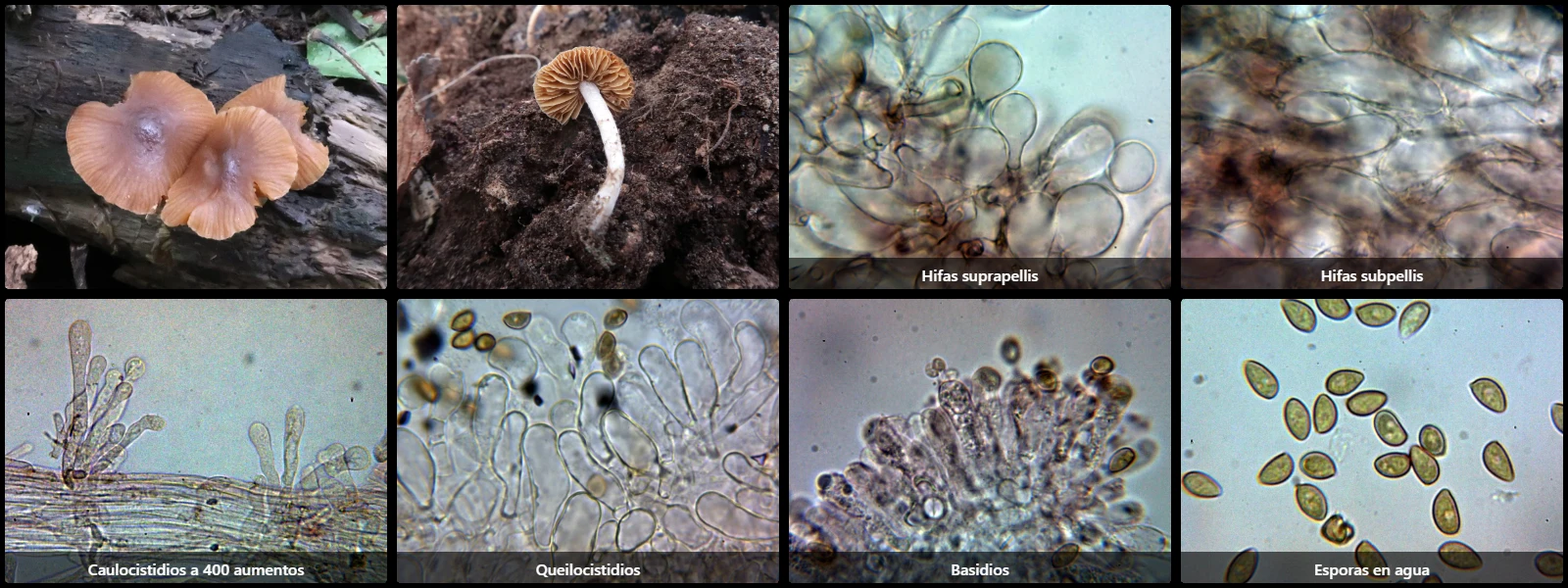
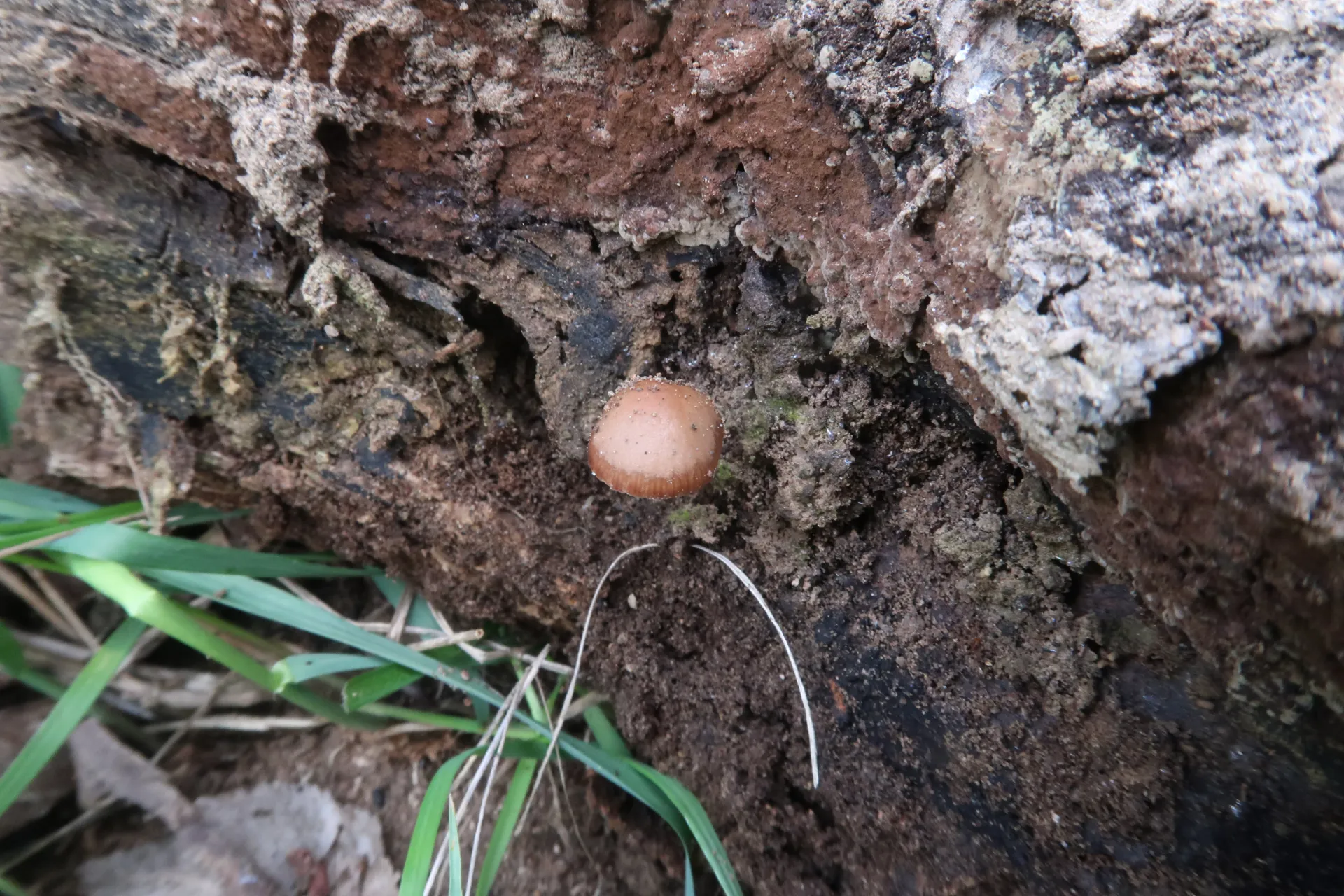
Species found on decaying woody debris in riparian woodlands, with conical to convex pilei retaining a central umbo, 1.5 to 3.5 cm in diameter, orange-brown, darker at the disc, radially translucent-striate, a white cylindrical stipe covered in whitish pruina, indistinct odour, and mild taste.
Pileipellis a hymeniderm of sphaeropedunculate, pyriform to clavate cells 35 to 50 µm long and 11 to 17 µm wide.
Stipitipellis hyphae cylindrical, hyaline, septate, 4 to 10 µm wide, with clamp connections.
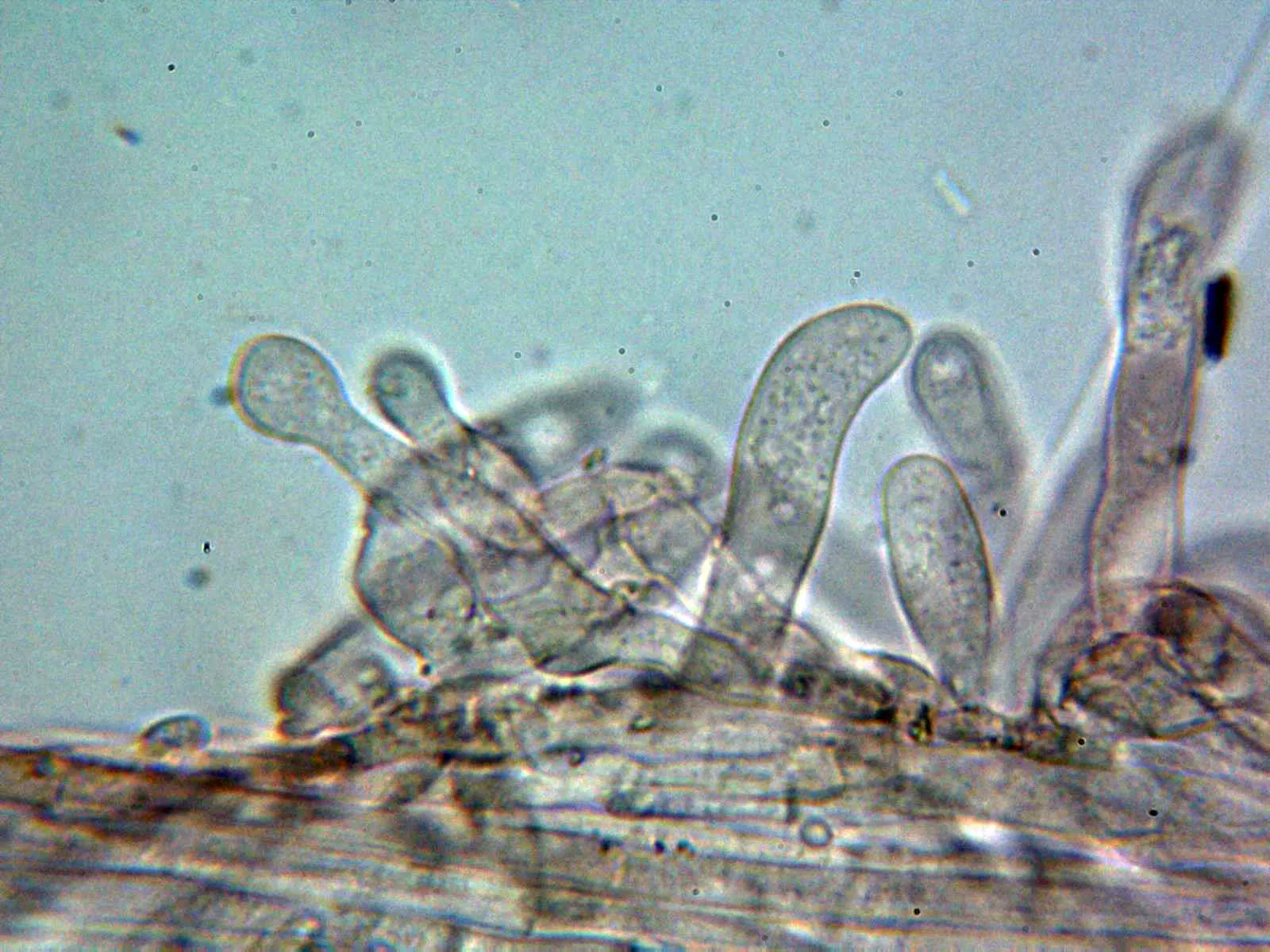
Caulocystidia abundant, subcylindrical to clavate, some slightly capitate, arranged in tufts, large, 40 to 90 µm long and 8 to 20 µm wide.
Cheilocystidia cylindrical to clavate, very abundant, rendering the gill edge virtually sterile, 30 to 40 µm long and 7 to 11 µm wide.
Pleurocystidia absent.
Basidia clavate, 27 to 38 µm long, 7 to 9.5 µm wide, clamped at the base, 4-spored.
Spores ellipsoidal to subamygdaliform, thick-walled, apparently smooth to very minutely verruculose under high magnification, yellowish-brown under the microscope, 7 to 10 µm long, 4.5 to 5.5 µm wide, with an eccentric hyaline apiculus at one end, an apical germ pore at the opposite pole, non-reactive in Melzer's reagent.
Geographic references
Map generated from global occurrence data from GBIF. GBIF.
Study measurements
Values in Microns (µm)Macroscopic gallery
Microscopic gallery