Pholiota squarrosa
(Vahl) P.Kumm.
Study description
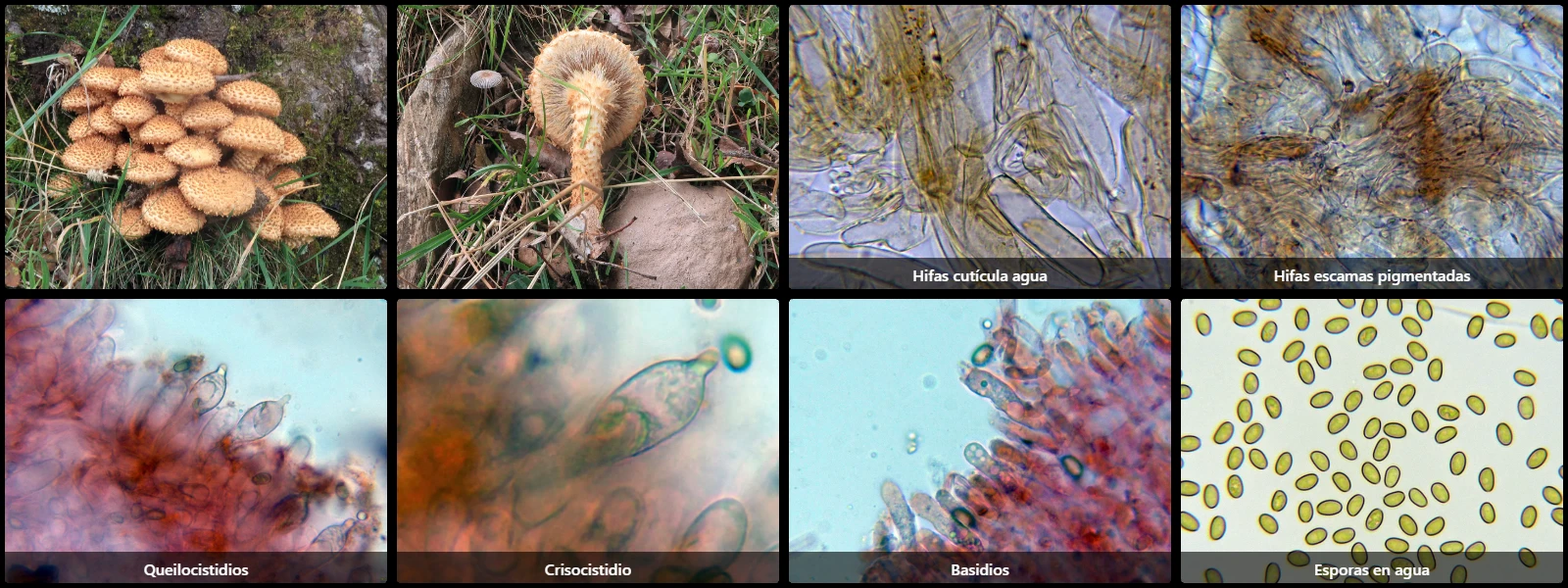
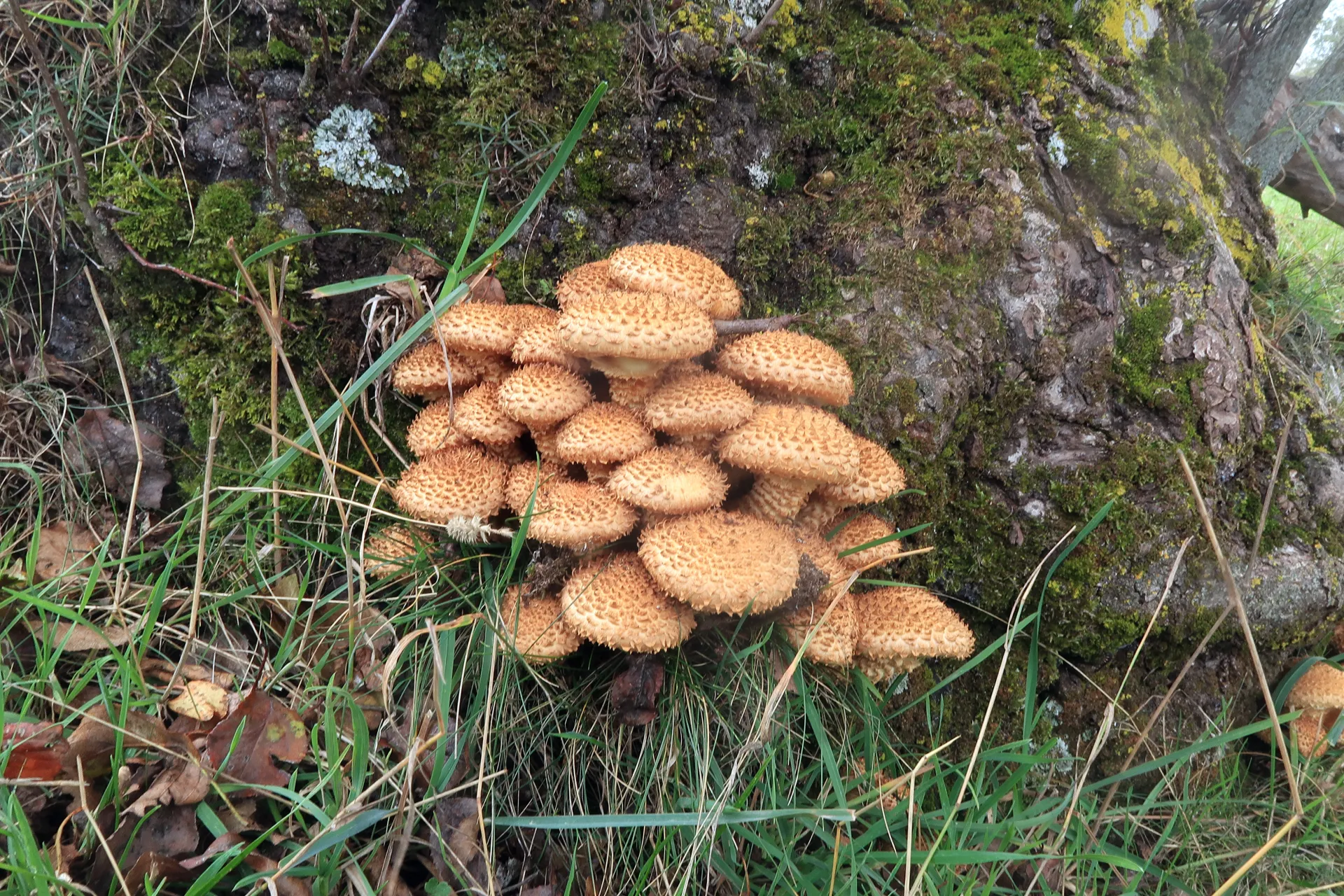
In various forest types as well as in parks and gardens, typically growing in dense caespitose clusters, with a campanulate to convex pileus 3 to 9 cm in diameter, pale yellowish-brown, covered with abundant concentric orange-brown to brown recurved scales, adnate to slightly decurrent lamellae, a cylindrical stipe, pale yellow, with dense coarse brown recurved scales below the annular zone, with a characteristic radish-like or fungal odour and taste.
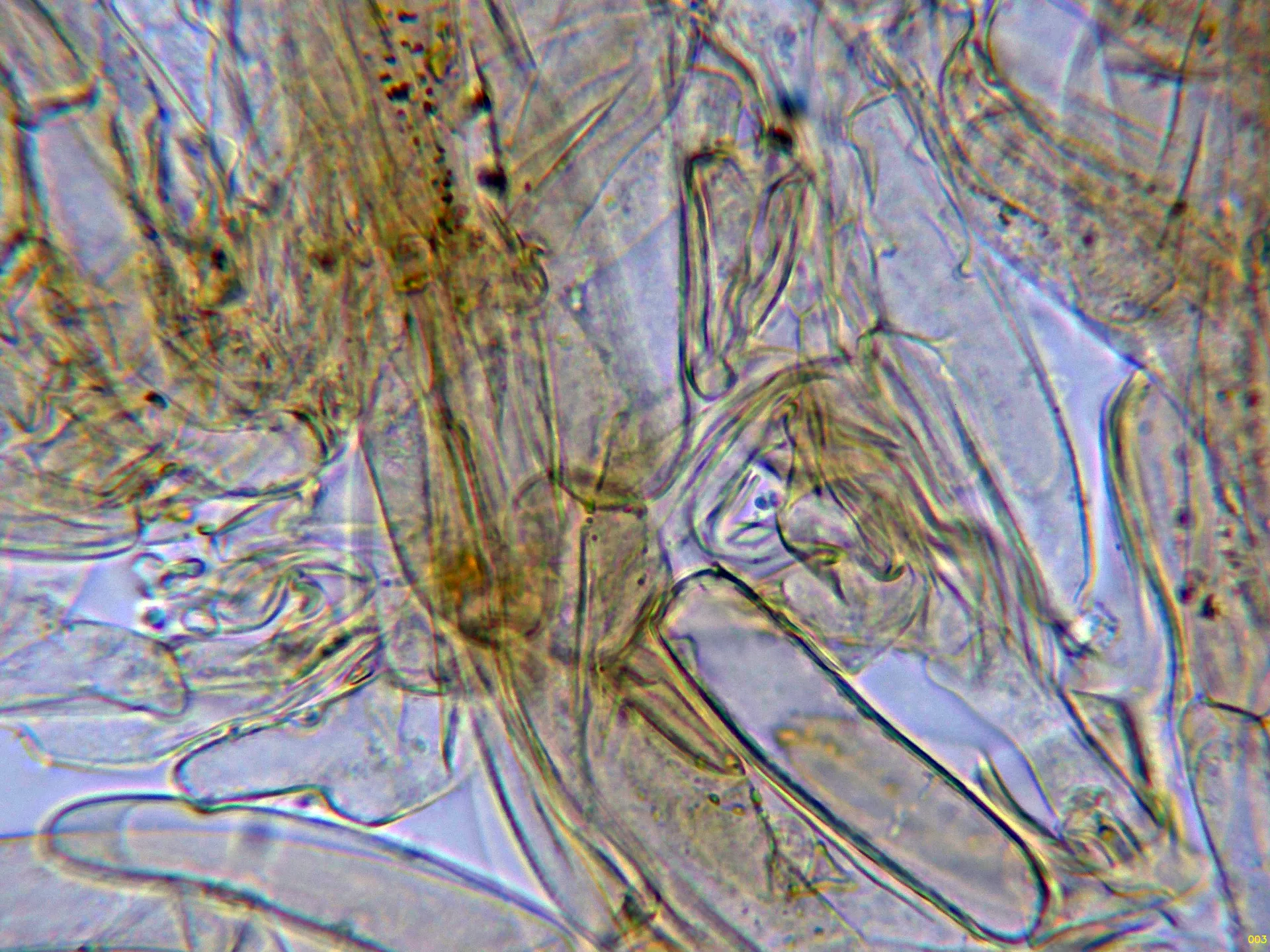
Pileipellis a cutis of filamentous hyphae 7 to 10 µm wide arranged more or less parallel, with emergent terminal tufts up to 20 µm wide forming the squamules, containing encrusting intracellular pigment, septate with clamp connections.
Cheilocystidia clavate to fusiform, some mucronate, 25 to 35 µm long, 8 to 12 µm wide, some with refractive inclusions (chrysocystidia).
Pleurocystidia (chrysocystidia) similar, 25 to 50 µm long and 9 to 14 µm wide.
Basidia cylindrical, 20 to 25 µm long, 6 to 7 µm wide, partly clamped, 4-spored.
Spores ellipsoidal, thick- and smooth-walled, yellowish-brown under the microscope, 6 to 7.5 µm long, 3.5 to 4.5 µm wide, with an eccentric apiculus at one end, a small germ pore at the opposite pole, moderately dextrinoid in Melzer's reagent.
Herbarium material available: JTP2254/24.
Geographic references
Map generated from global occurrence data from GBIF. GBIF.
Study measurements
Values in Microns (µm)Macroscopic gallery
Microscopic gallery