Pholiota pinicola
Jacobsson
Study description
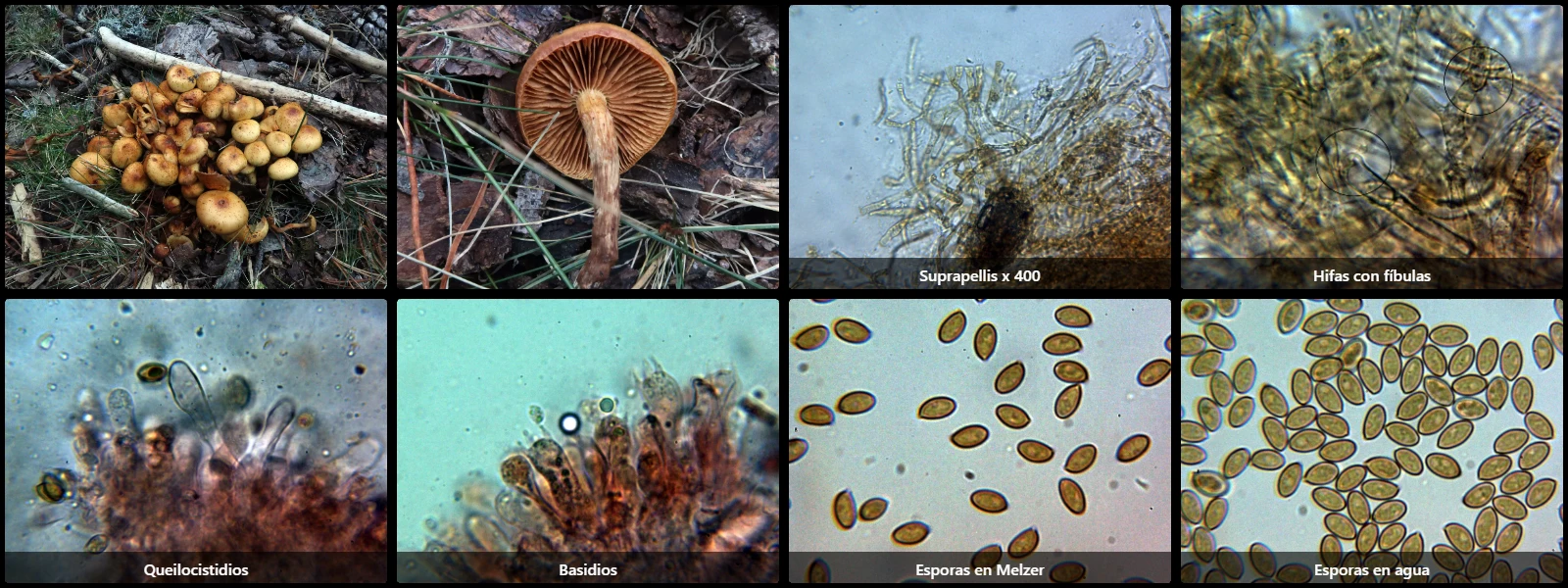
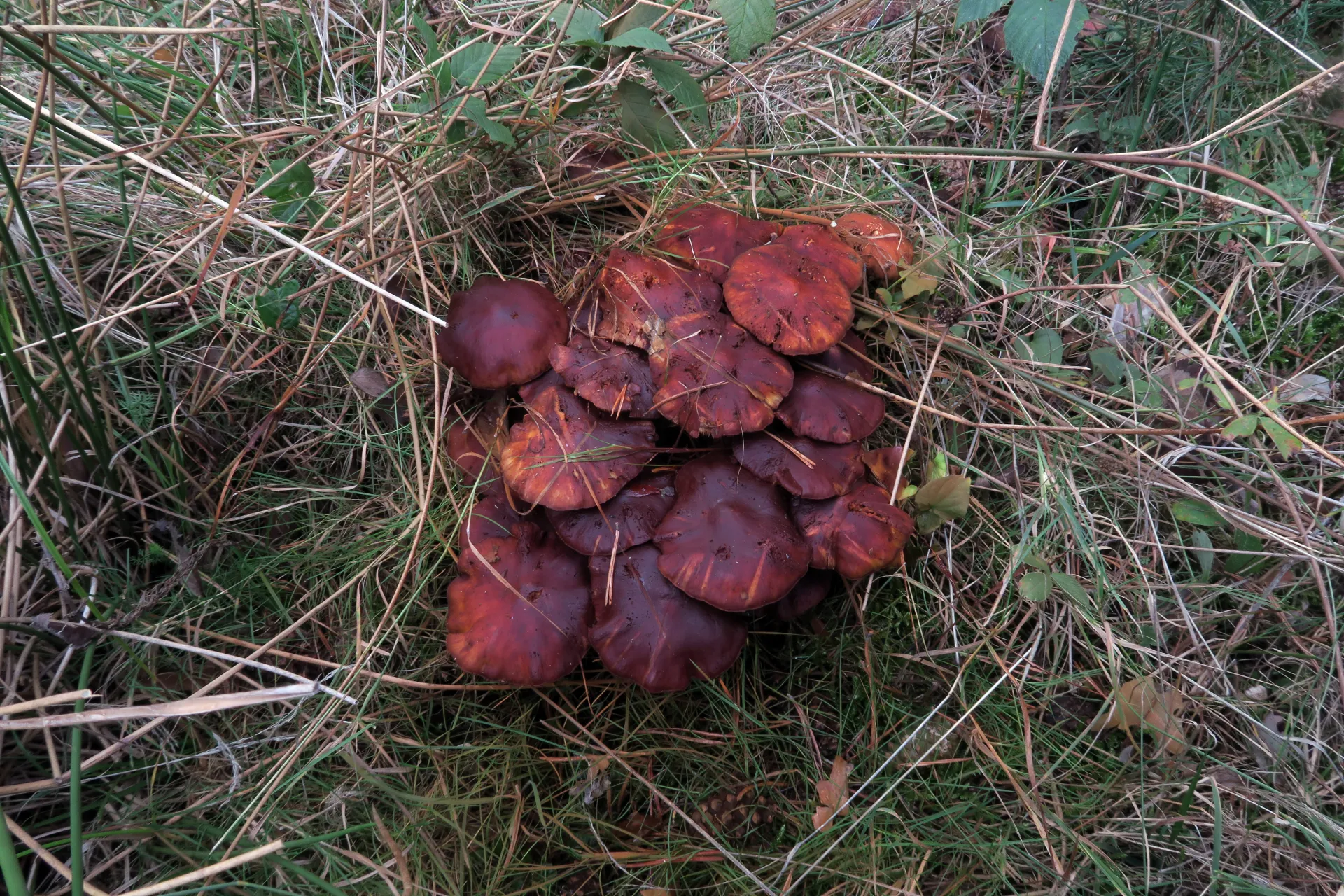
Species typical of pine forests, on decaying dead wood on the ground, growing in large caespitose clusters, with a hemispherical to plano-convex pileus 3 to 7 cm in diameter, yellowish-brown with a darker disc, adnate brown lamellae, a cylindrical stipe yellowish at the apex and brownish towards the base, mild fungal odour, and sweet taste.
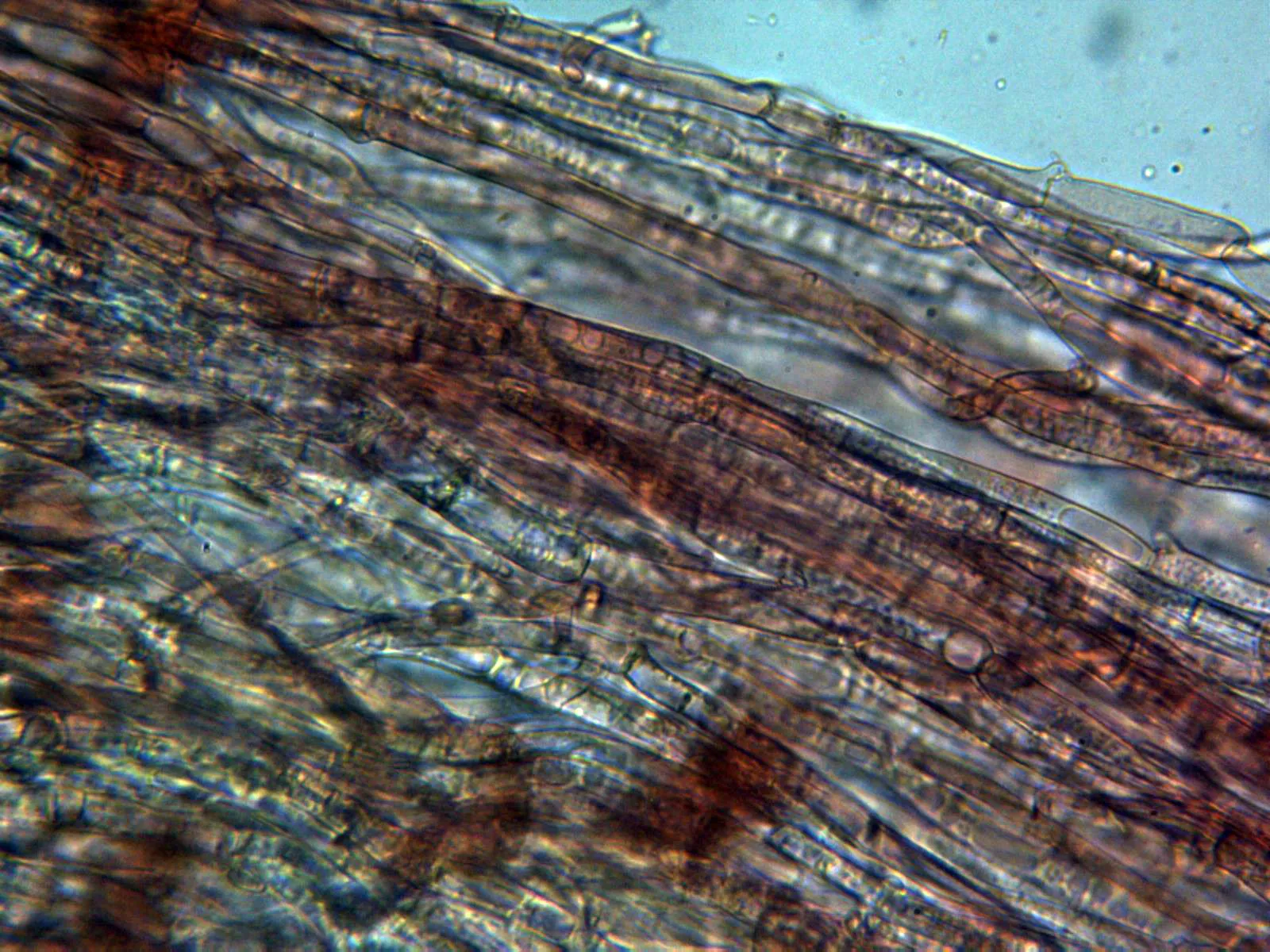
Pileipellis an ixocutis of hyaline cylindrical hyphae 3 to 5 µm wide separated by gelatinization, overlying a more compact layer 4 to 8 µm wide with abundant brown encrusting intracellular pigment; both septate with clamp connections.
Cheilocystidia abundant, cylindrical to clavate, 30 to 45 µm long and 4 to 8 µm wide.
Pleurocystidia and chrysocystidia absent.
Basidia cylindrical-clavate, 25 to 30 µm long, 5 to 7 µm wide, clamped at the base, 4-spored.
Spores ellipsoidal, thick- and smooth-walled, with a pointed apicular end, brown under the microscope, 7 to 9 µm long, 4 to 5 µm wide, with a small germ pore, slightly dextrinoid in Melzer's reagent.
Geographic references
Map generated from global occurrence data from GBIF. GBIF.
Study measurements
Values in Microns (µm)Macroscopic gallery
Microscopic gallery