Pholiota conissans
(Fr.) M.M.Moser
Study description
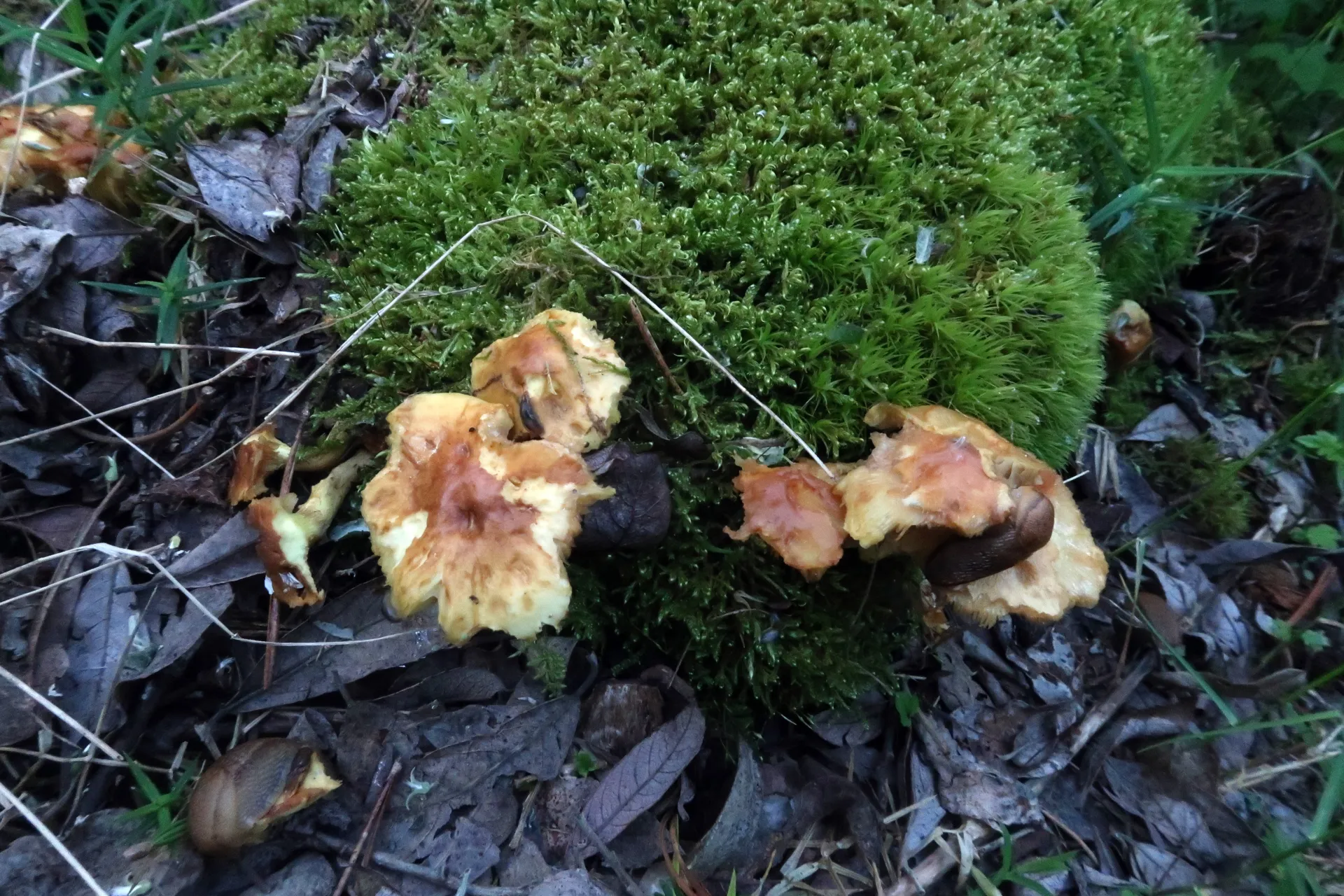
On decaying dead wood on damp ground under willows or alders, with a convex to flattened pileus 1.5 to 3 cm in diameter, reddish-brown at the disc, orange or pale yellow towards the margin, light brown adnate lamellae, a cylindrical stipe pale yellow at the apex and darker at the base, with a slightly bitter taste.
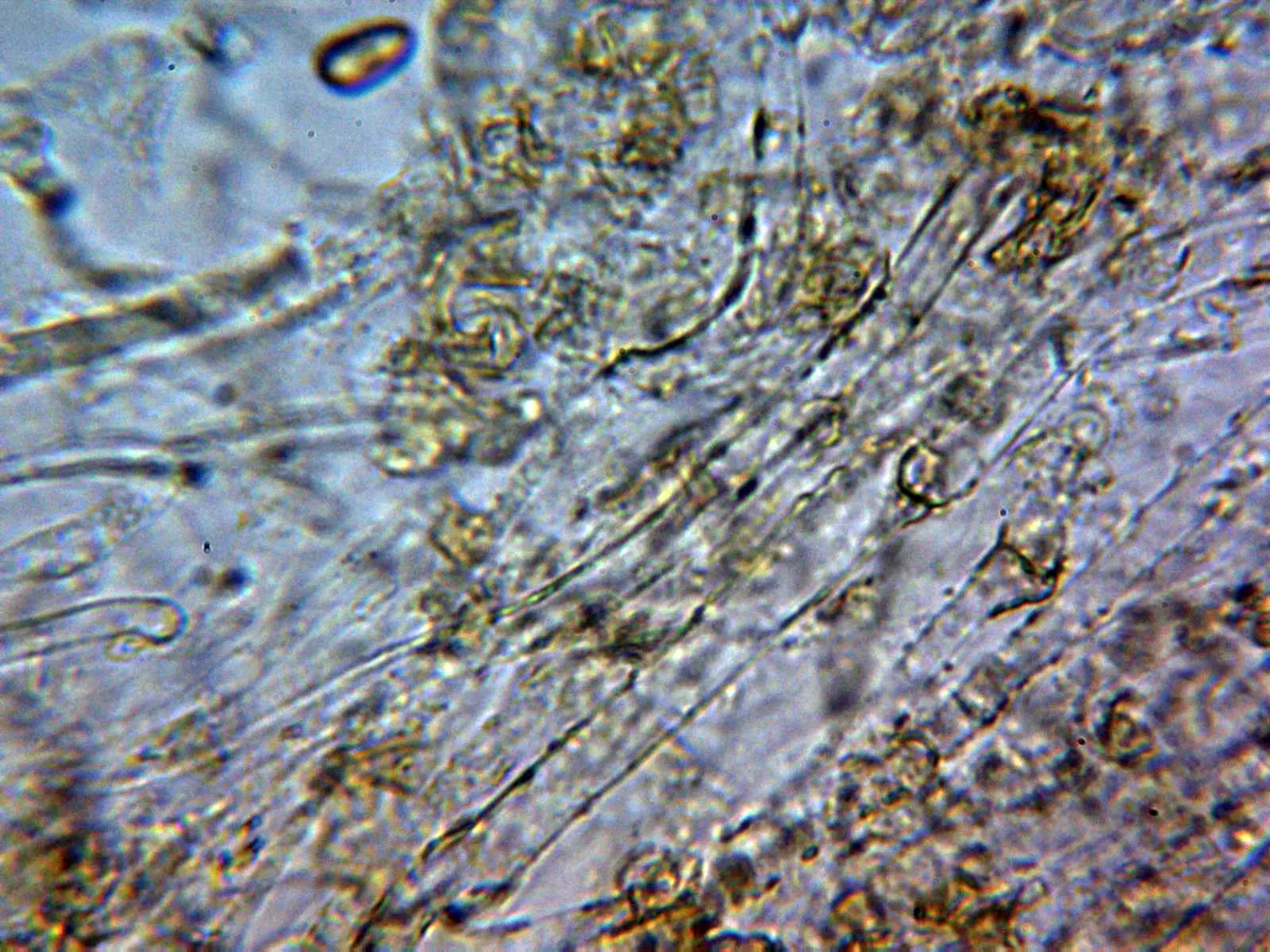
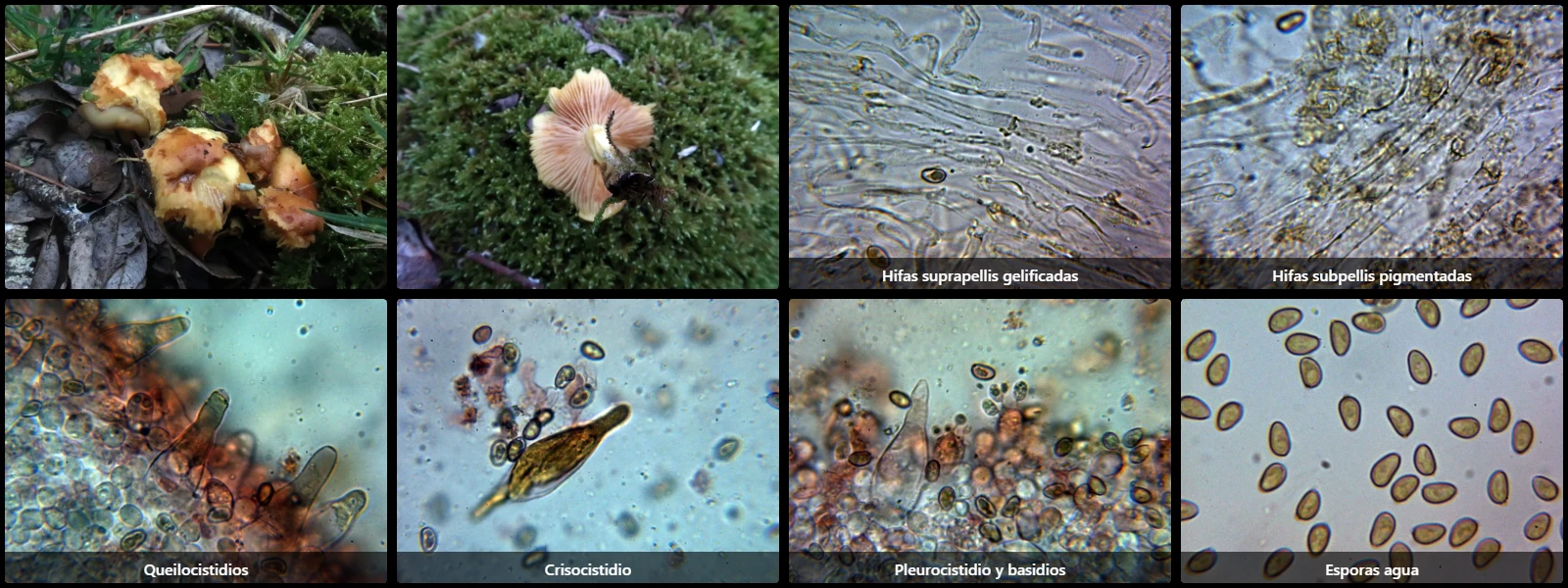
Pileipellis with an ixocutis of more or less parallel, hyaline hyphae 3 to 4 µm wide, widely separated by a gelatinous matrix; subpellis of interwoven hyphae 5 to 10 µm wide with abundant brown encrusting intracellular pigment; both septate and partly clamped.
Cheilocystidia cylindrical to fusiform, ventricose, 25 to 40 µm long, 5 to 10 µm wide, intermixed with some chrysocystidia containing refractive inclusions.
Pleurocystidia fusiform to lageniform, 25 to 40 µm long and 10 to 14 µm wide.
Basidia cylindrical-clavate, 16 to 22 µm long, 6 to 8 µm wide, clamped at the base, 4-spored.
Spores ellipsoidal with a slightly tapered end, smooth, thick-walled, pale brown under the microscope, 6.5 to 8 µm long, 3.5 to 4.5 µm wide, with an eccentric apiculus at one end and a germ pore at the opposite pole, darkening to deep brown in KOH, non-reactive in Melzer's reagent.
Geographic references
Map generated from global occurrence data from GBIF. GBIF.
Study measurements
Values in Microns (µm)Macroscopic gallery
Microscopic gallery