Phlebiopsis papyrina
(Mont.) Miettinen & Spirin
Study description
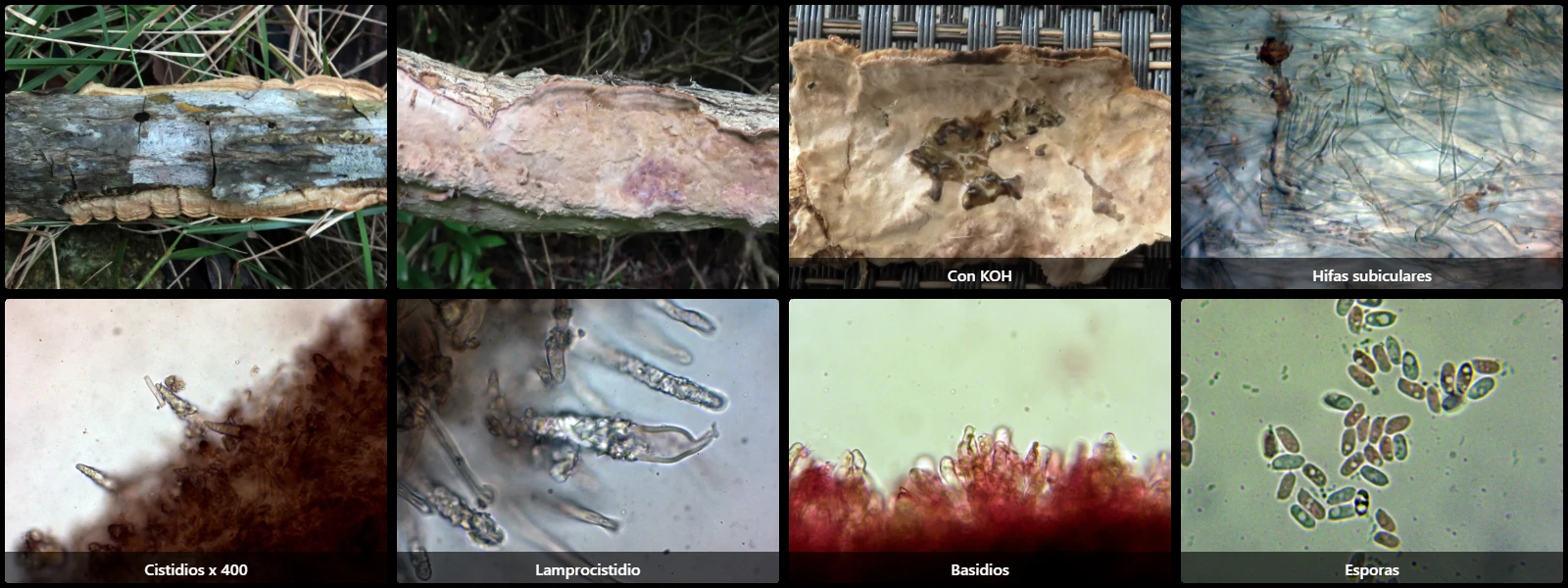
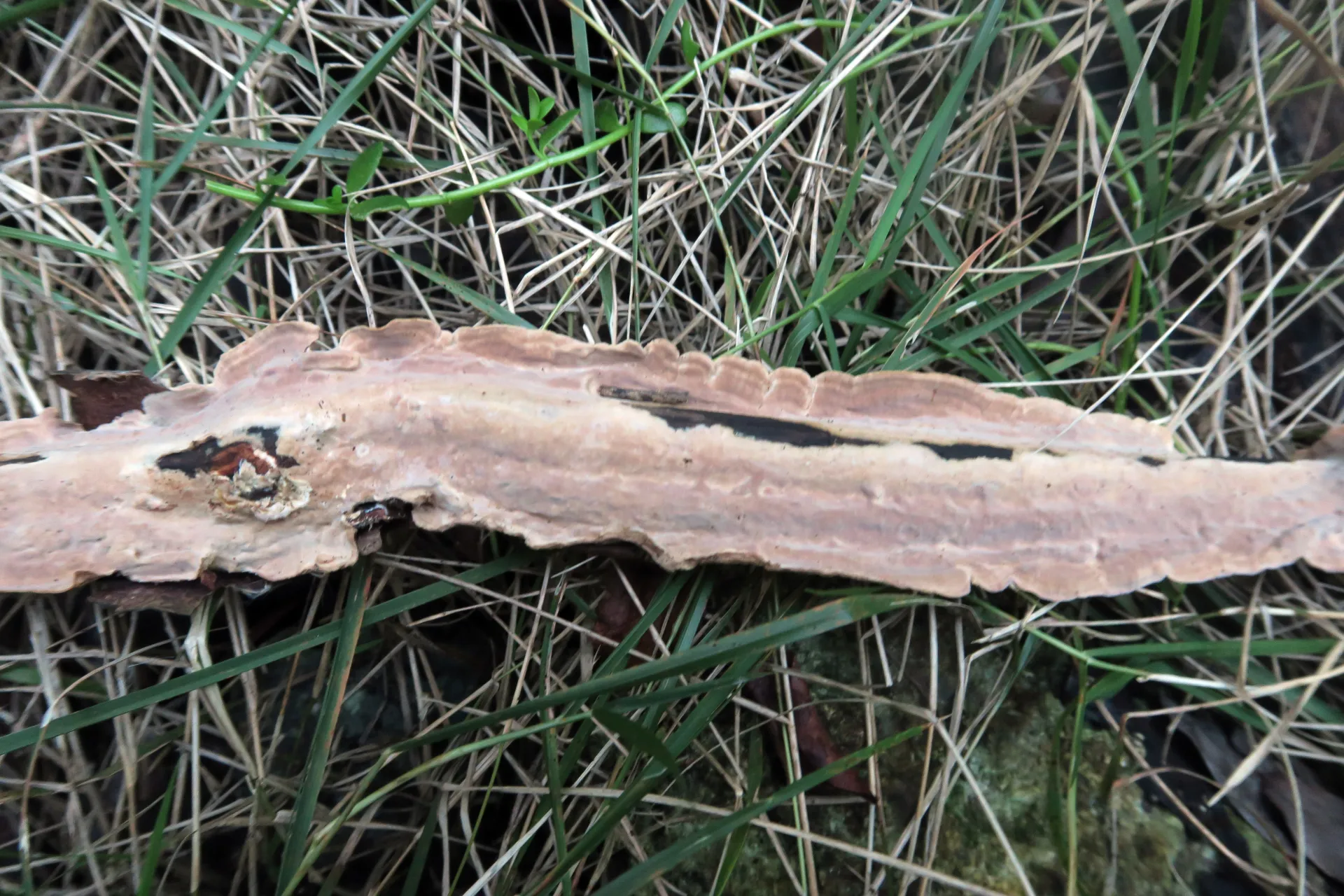
A tropical species growing on decaying dead wood on the ground, with resupinate to effused-reflexed basidiomata, concentrically zonate pileus ranging from white to brown with a velvety texture, and a smooth to slightly rugose, pale brown hymenium with faint purplish tints, showing virtually no reaction with KOH.
Hyphal system monomitic; subicular hyphae smooth, hyaline, slightly thick-walled, 3 to 4 µm wide, densely interwoven, septate with simple septa (clampless).
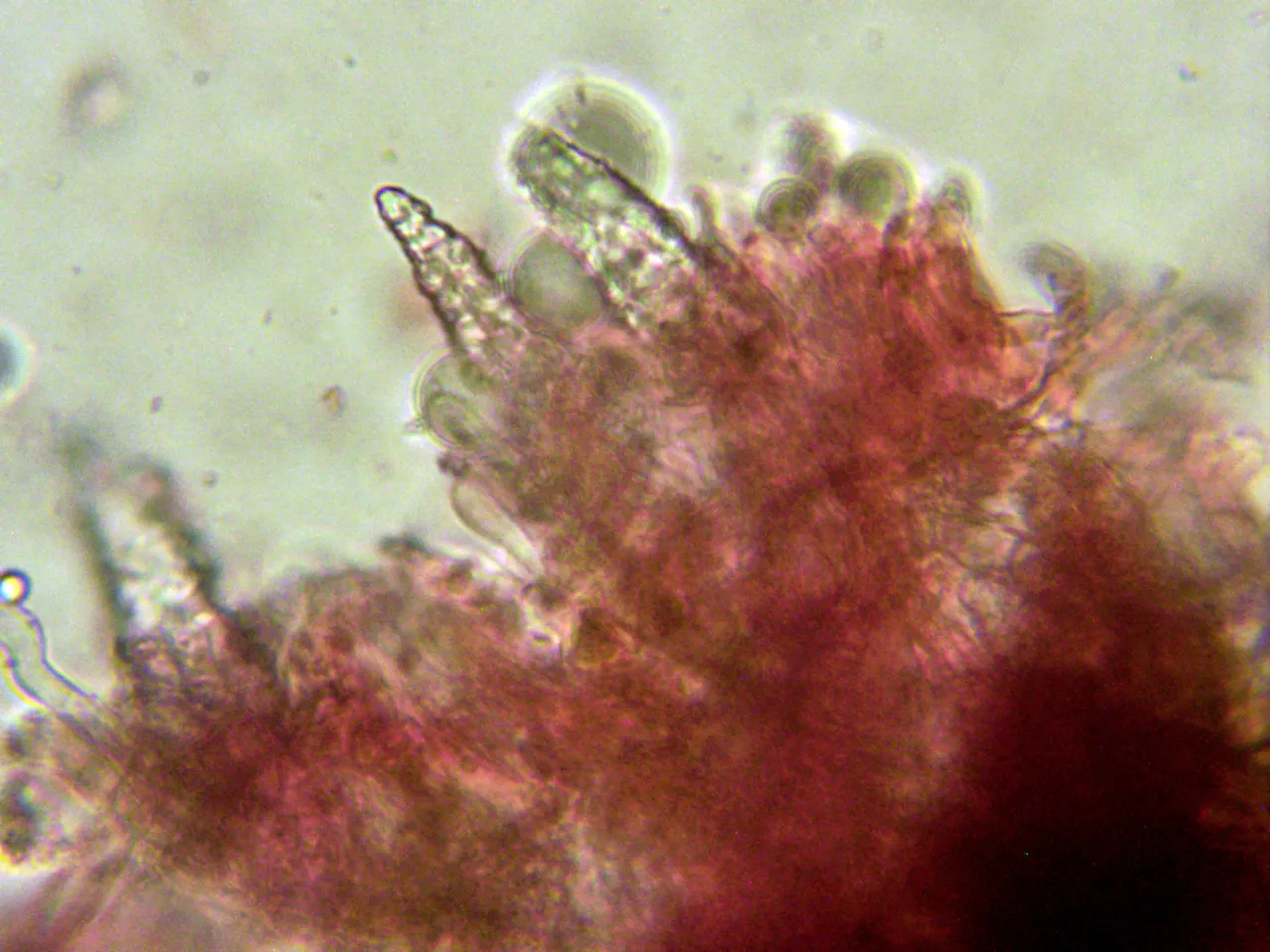
Lamprocystidia fusiform to lageniform, thick-walled, 35 to 50 µm long, 8 to 12 µm wide, with the upper half densely covered with coarse hyaline crystals.
Basidia clavate, 20 to 27 µm long, 4 to 6 µm wide, clampless, 4-spored.
Spores ellipsoidal to cylindrical, smooth, hyaline, thin-walled, 6.5 to 7.5 µm long, 2.5 to 3 µm wide, with an inconspicuous apiculus at one end, containing guttules, inamyloid in Melzer's reagent.
Geographic references
Map generated from global occurrence data from GBIF. GBIF.
Study measurements
Values in Microns (µm)Macroscopic gallery
Microscopic gallery