Phlebiopsis gigantea
(Fr.) Jülich
Study description
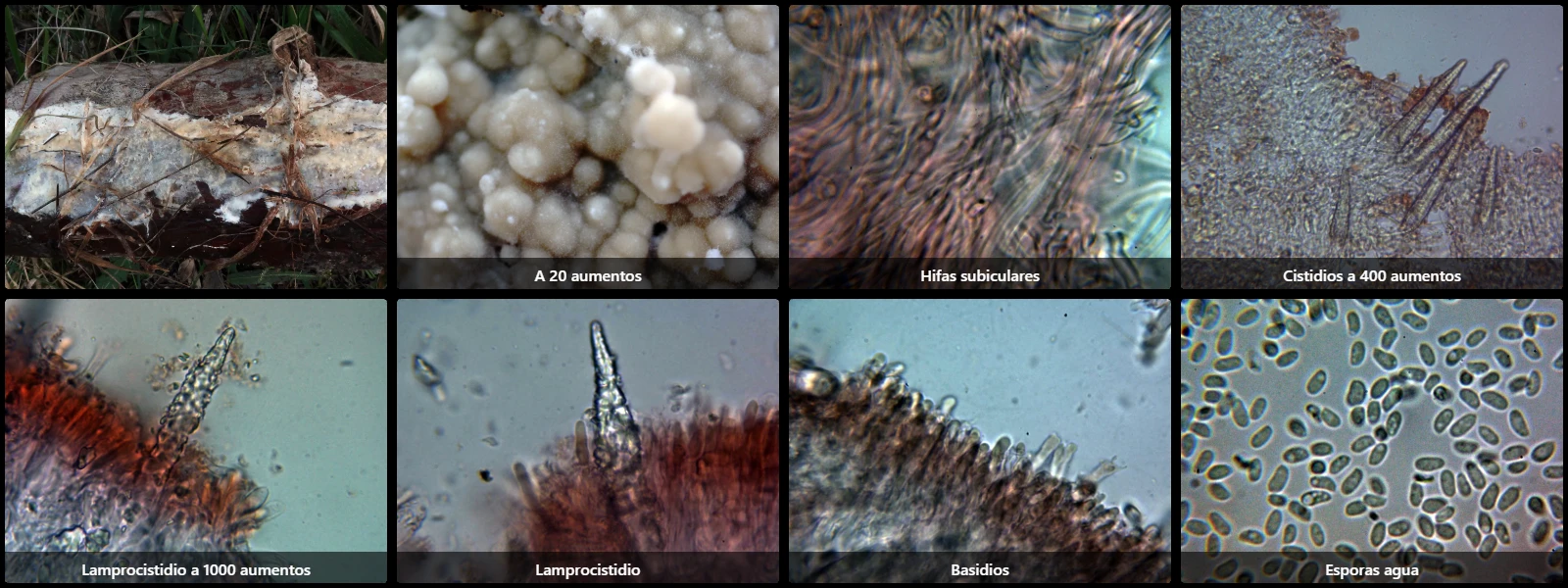
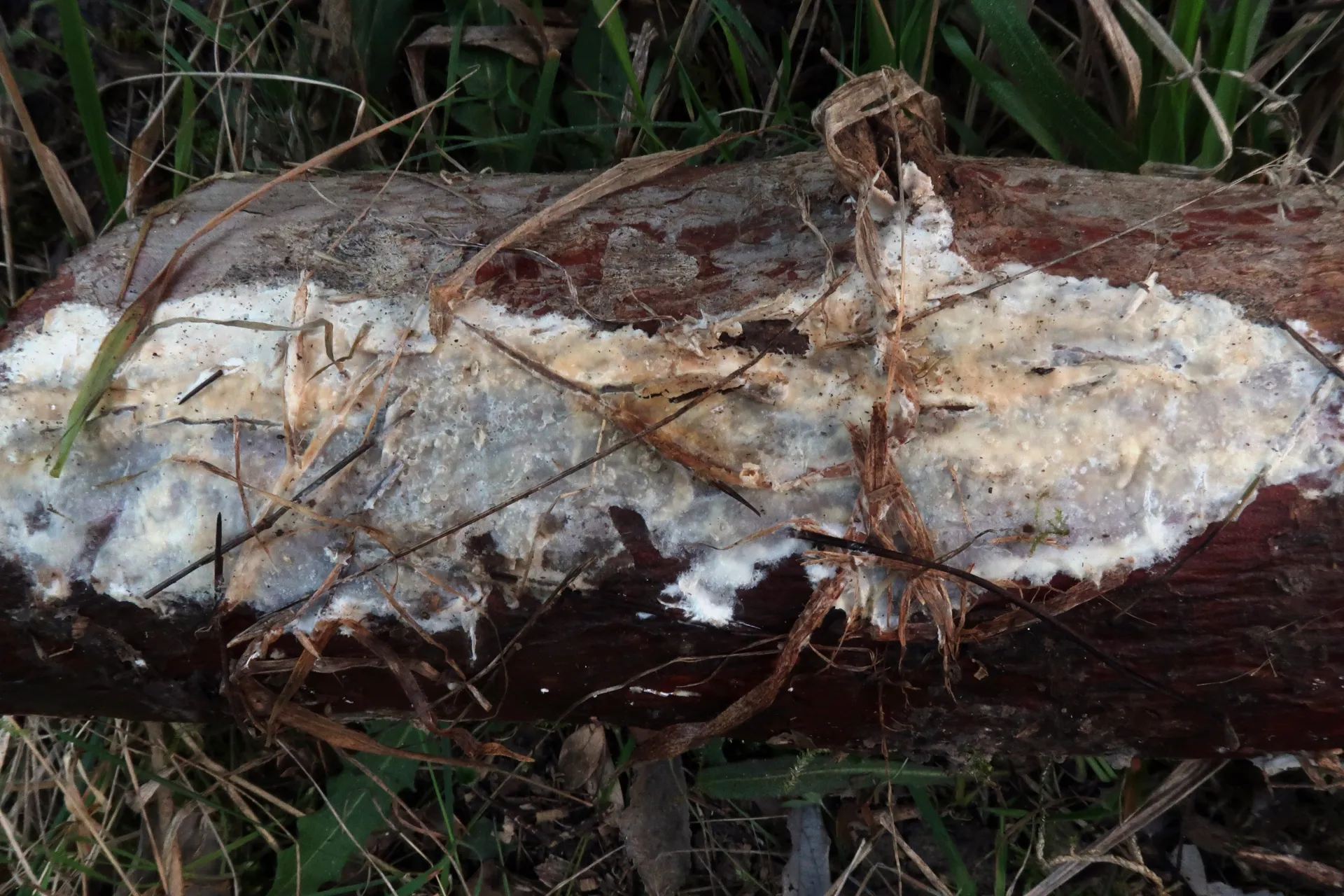
On decaying dead wood of conifers on the ground, especially Pinus sylvestris, with completely resupinate basidiomata, rugose to tuberculate hymenium, glossy greyish-white with brownish shades, waxy when fresh and coriaceous when dry, with a whitish growth margin.
Hyphal system monomitic; hyphae moderately thick-walled, arranged more or less parallel to slightly interwoven, 3 to 5.5 µm wide, septate with simple septa (clampless).
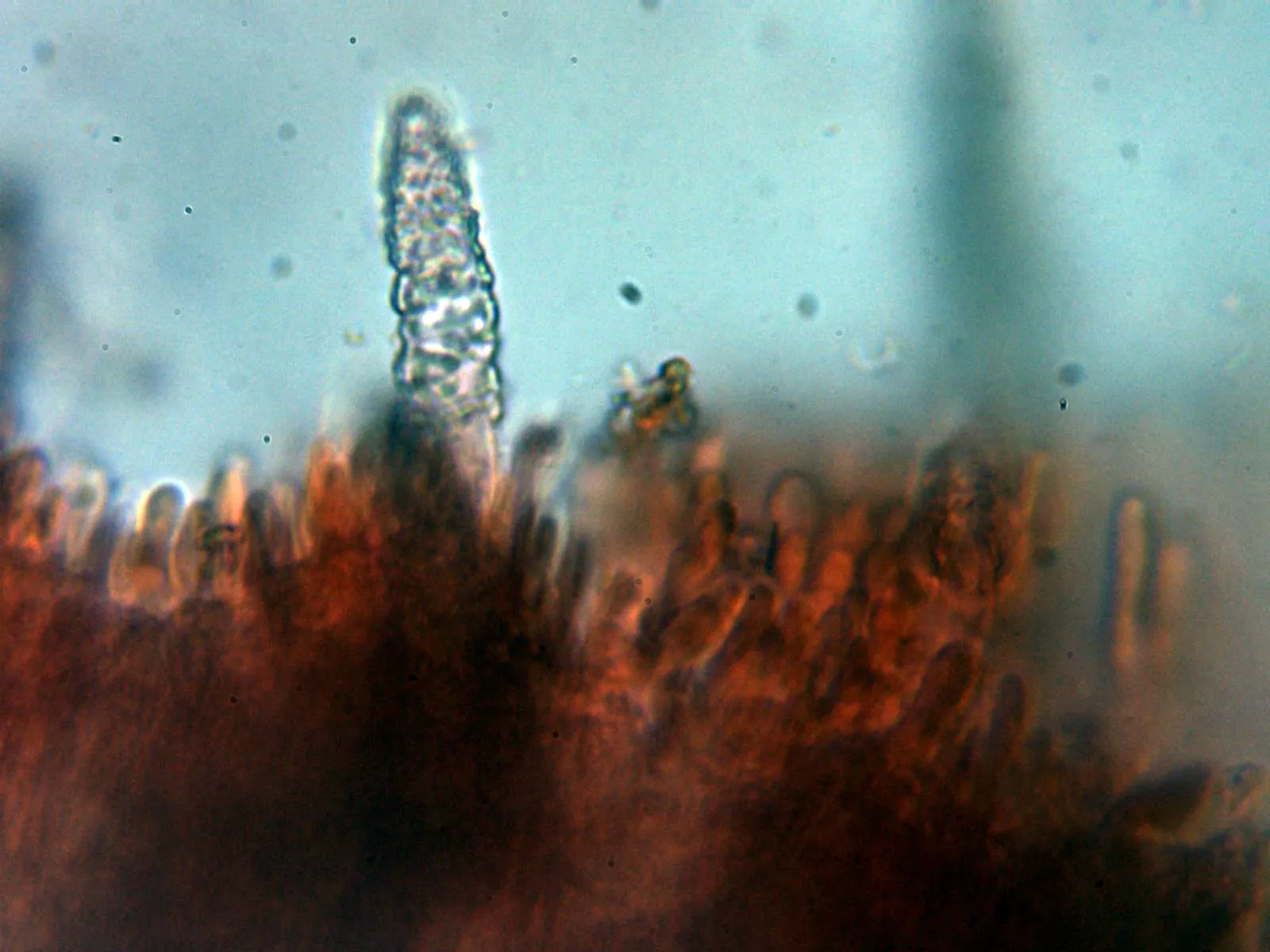
Lamprocystidia very abundant, subcylindrical to fusiform, very thick-walled, 60 to 100 µm long, 10 to 18 µm wide, with the upper half heavily encrusted with coarse hyaline crystals.
Basidia cylindrical-clavate, 25 to 35 µm long, 5 to 6 µm wide, simple-septate at the base, 4-spored.
Spores ellipsoidal to oblong, smooth, hyaline, thin-walled, 5 to 6.5 µm long, 2.5 to 3.5 µm wide, with an almost imperceptible apiculus at one end, containing faint granular content inside, inamyloid in Melzer's reagent.
Geographic references
Map generated from global occurrence data from GBIF. GBIF.
Study measurements
Values in Microns (µm)Macroscopic gallery
Microscopic gallery