Phlebiodontia subochracea
(Bres.) Motato-Vásq. & Gugliotta
Study description
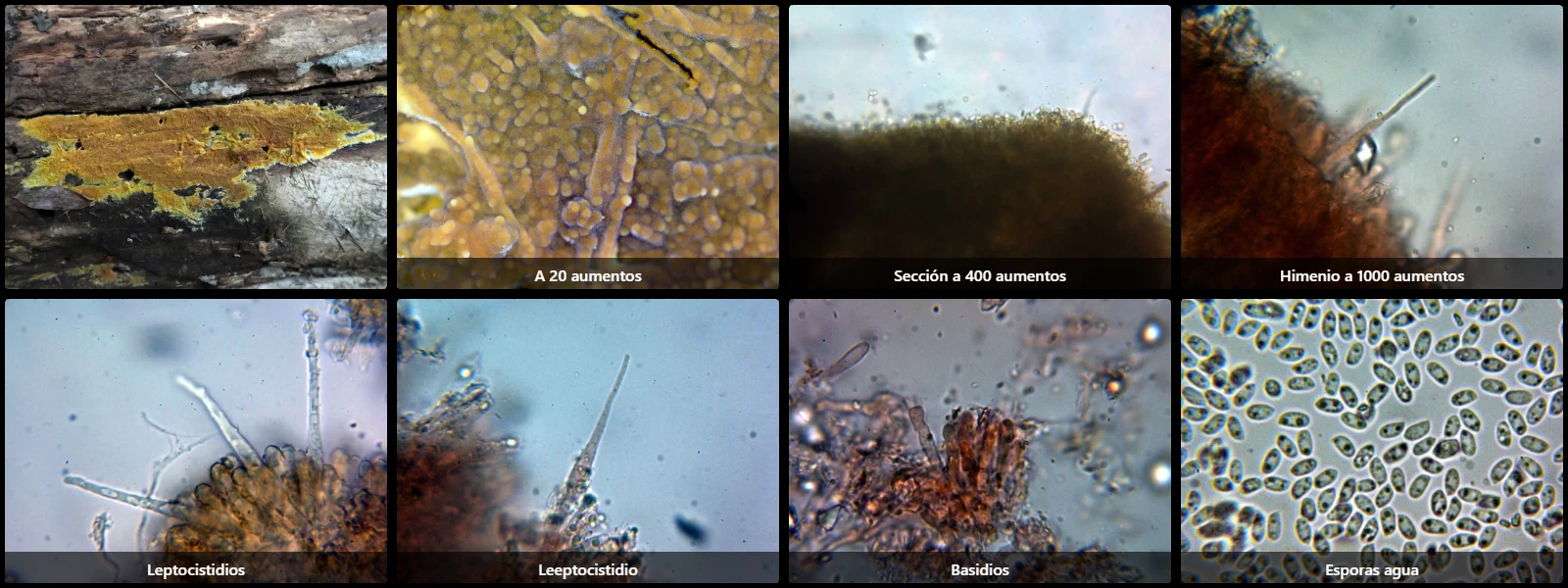
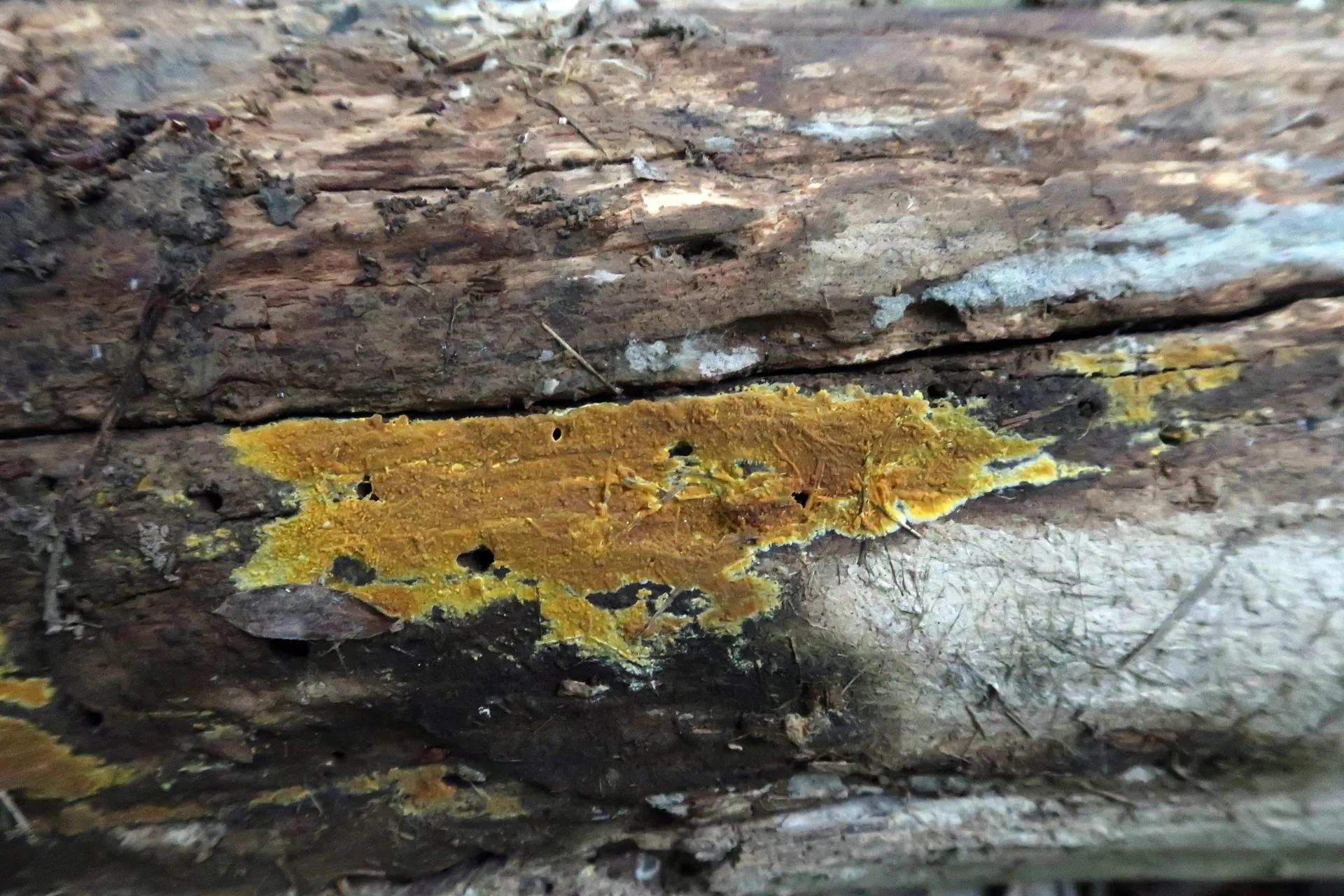
Corticioid species on decaying decorticated dead wood of broadleaved trees, known until recently as Phlebia subochracea, with resupinate basidiomata, bright yellow to ochraceous, waxy in consistency, and with a poorly differentiated whitish growth margin.
Hyphal system monomitic; hyphae hyaline, thin- to slightly thick-walled, 2.5 to 5 µm wide, septate with clamp connections.
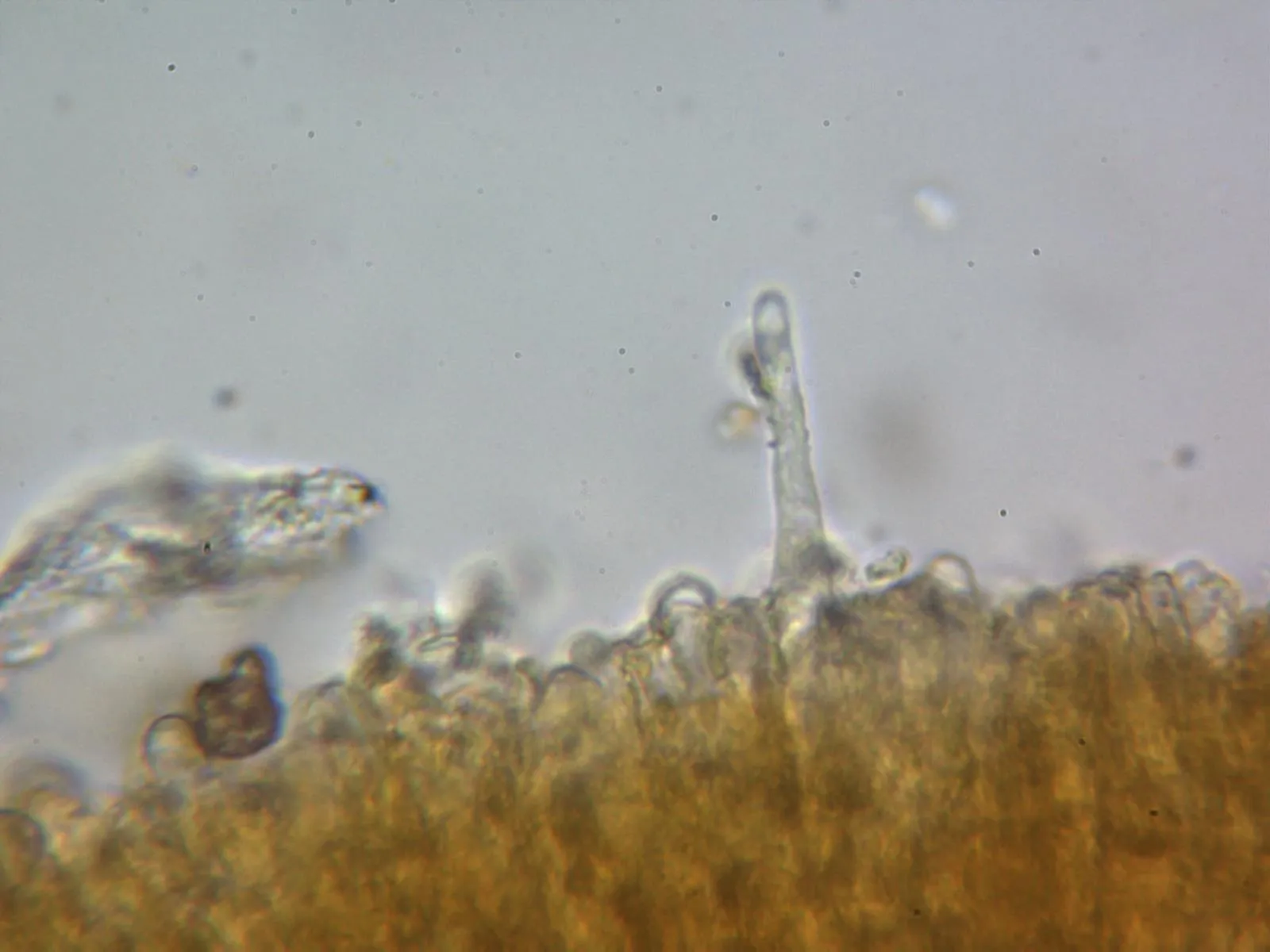
Leptocystidia cylindrical to lageniform, thin-walled, 50 to 65 µm long, 4.5 to 7 µm wide at the base, occasionally bearing faint crystalline encrustations, projecting considerably beyond the basidia.
Basidia cylindrical-clavate, 15 to 20 µm long, 3.5 to 5 µm wide, clamped at the base, 4-spored.
Spores cylindrical-ellipsoidal, smooth, hyaline, thin-walled, with a pointed, slightly curved apicular end, 5 to 6.5 µm long, 2.5 to 3.5 µm wide, containing oil droplets, inamyloid in Melzer's reagent.
Geographic references
Map generated from global occurrence data from GBIF. GBIF.
Study measurements
Values in Microns (µm)Macroscopic gallery
Microscopic gallery