Phellinus igniarius
(L.) Quél.
Study description
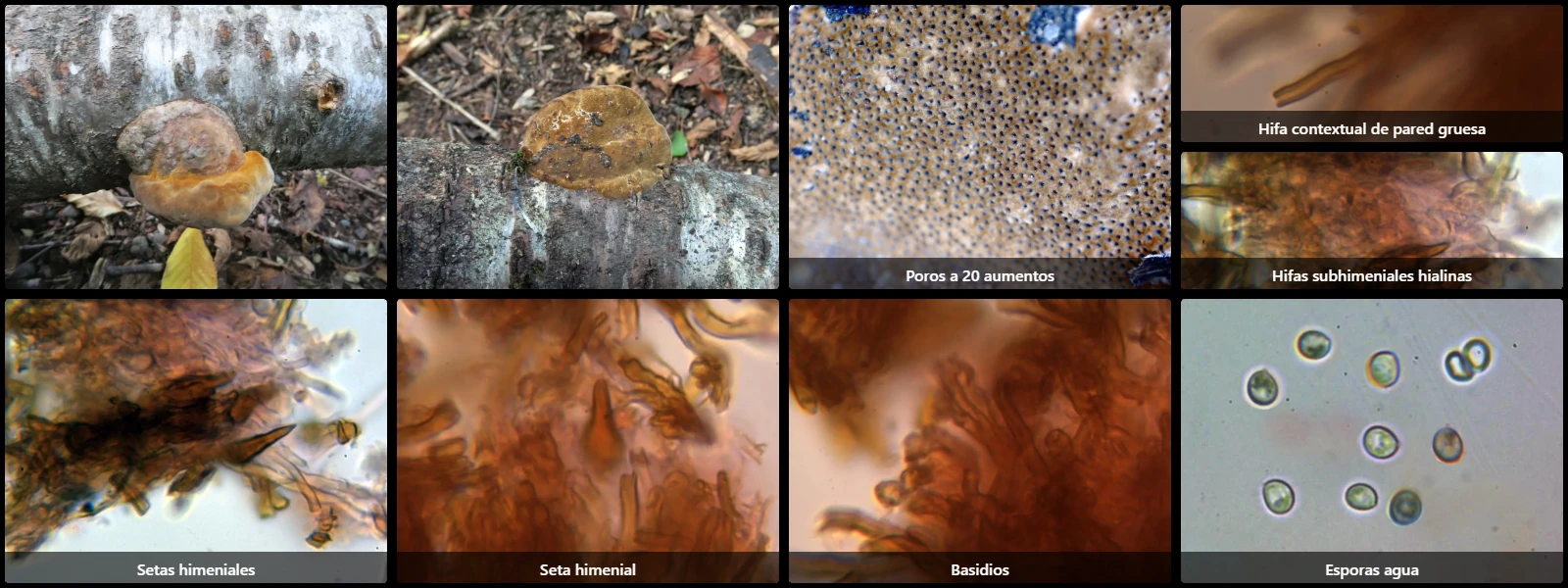
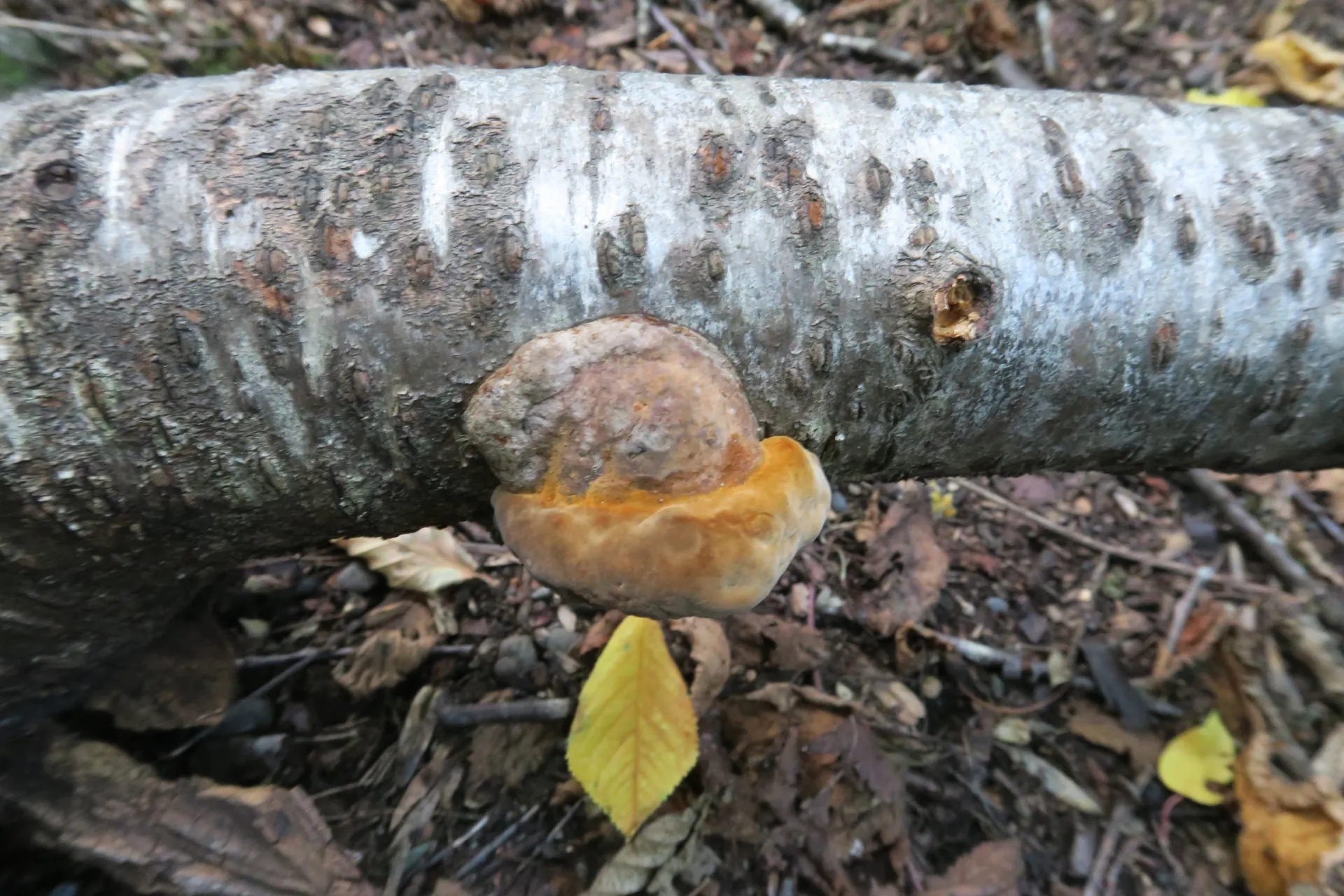
Parasite on living trunks of broadleaved trees, continuing saprophytically after the host dies, showing a preference for Betula, Salix, and Alnus, with sessile, ungulate (hoof-shaped) basidiocarps 10 to 18 cm across, up to 8 cm thick, with a greyish, glabrous pileal surface having a yellowish-brown margin, a brown pore surface with 5 to 6 round pores per mm, and a reddish-brown context in section.
Hyphal system dimitic; skeletal contextual hyphae thick-walled, darkening in KOH, aseptate, 2 to 5 µm wide; generative hyphae more abundant in the subhymenium, hyaline, thin-walled, 2 to 3 µm wide, septate with simple septa (lacking clamps).
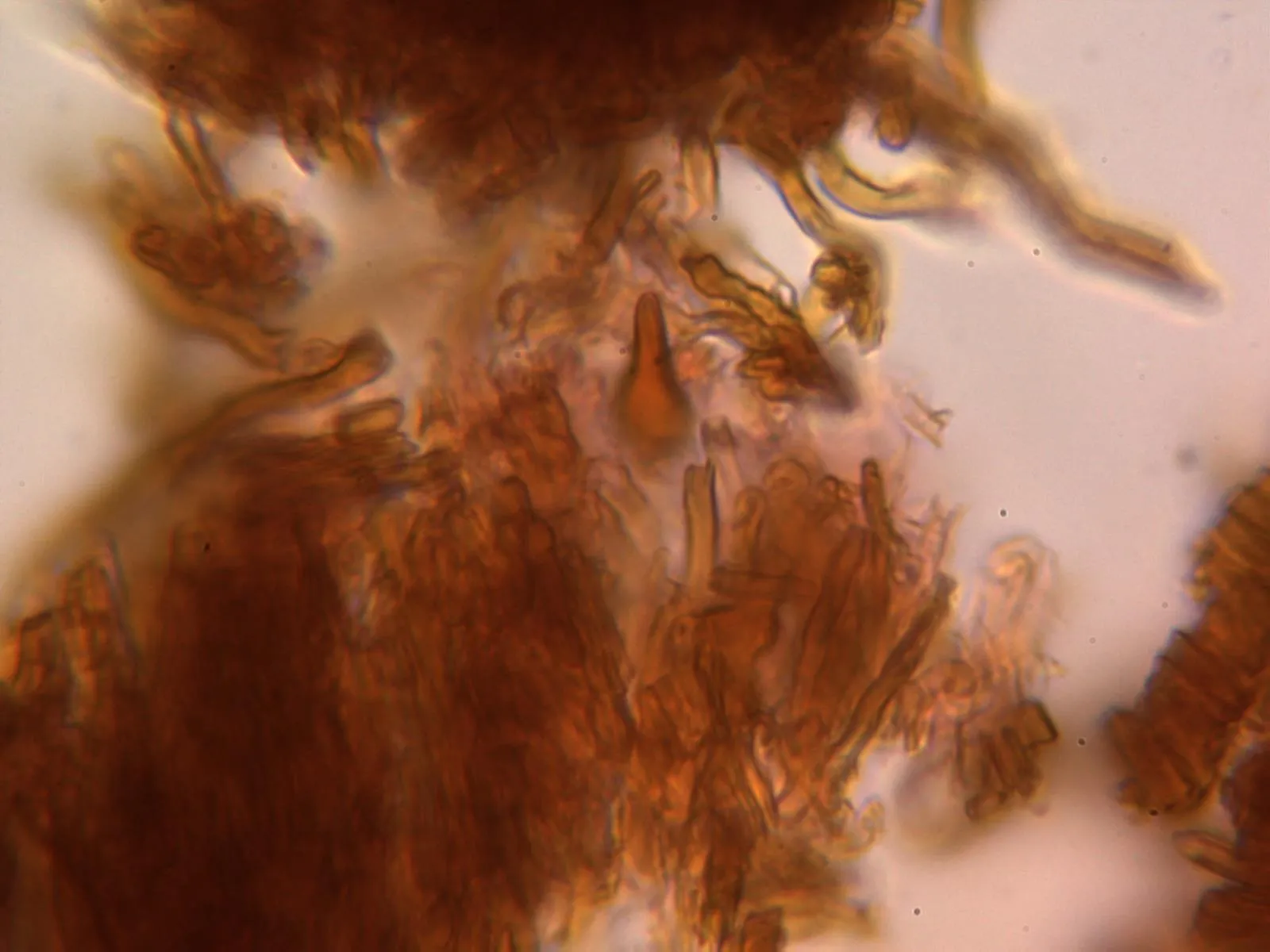
Hymenial setae thick-walled, subulate to ventricose, brown, 13 to 18 µm long and 4.5 to 6 µm wide.
Basidia clavate, 9 to 13 µm long, 6 to 7 µm wide, simple-septate at the base, 4-spored.
Spores subglobose to ovoid, smooth, hyaline, slightly thick-walled, 5 to 6.5 µm long, 4 to 5 µm wide, with a slightly pointed apicular end, inamyloid and indextrinoid in Melzer's reagent.
Geographic references
Map generated from global occurrence data from GBIF. GBIF.
Study measurements
Values in Microns (µm)Macroscopic gallery
Microscopic gallery