Phanerochaete sordida
(P.Karst.) J.Erikss. & Ryvarden
Study description
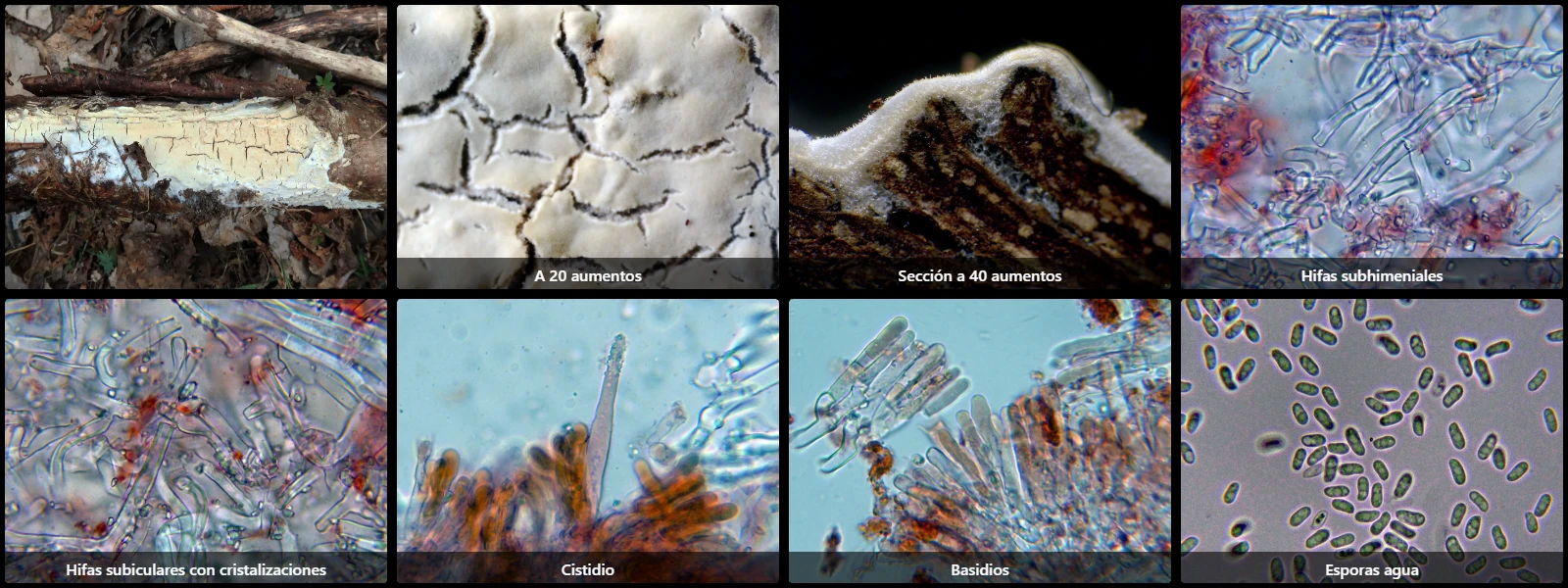
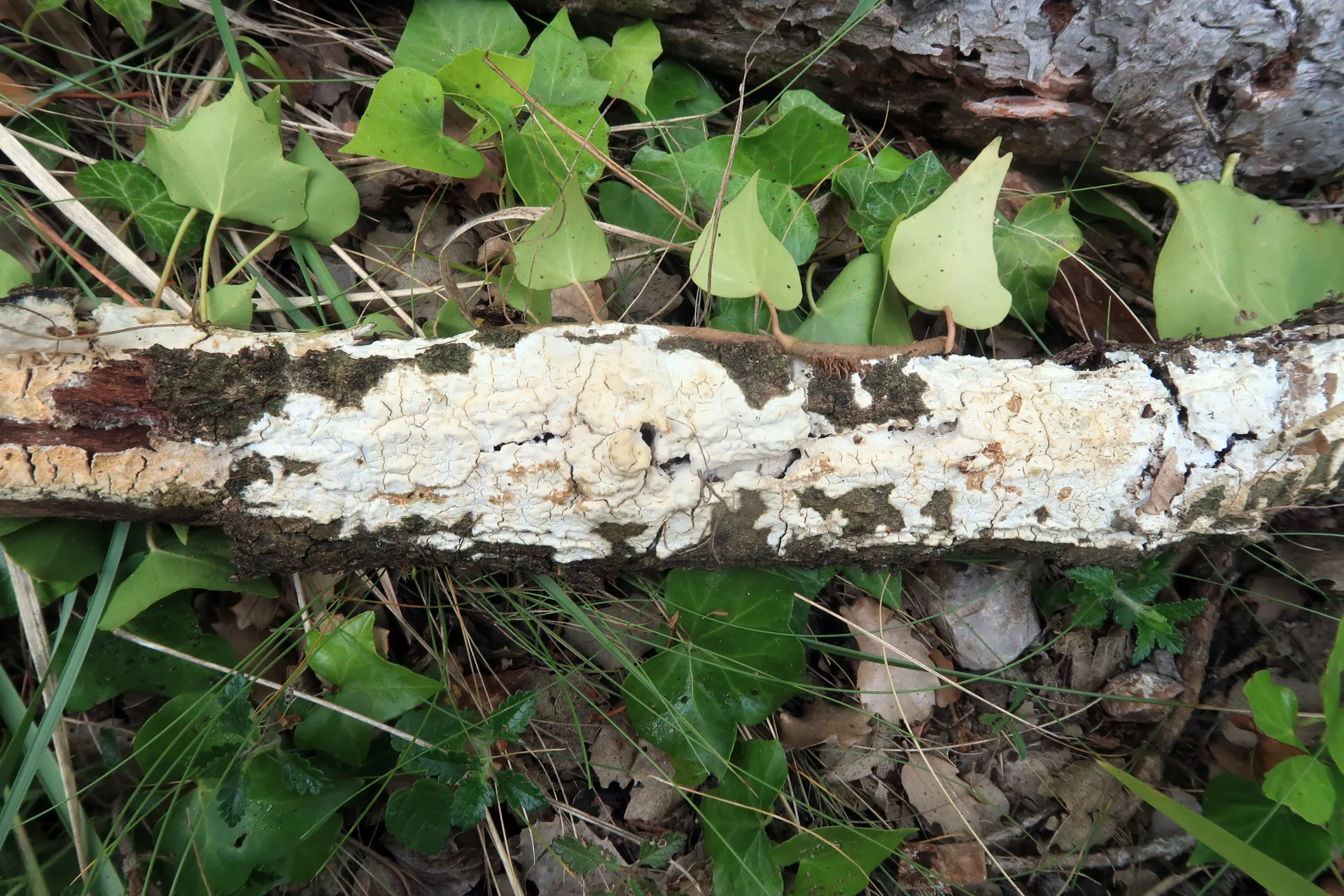
A fairly common species growing on dead wood of broadleaved trees, occasionally also on conifers, with resupinate basidiomata, smooth surface, whitish to cream with ochraceous tinges, becoming cracked upon drying, and an indistinct, fibrillose white margin.
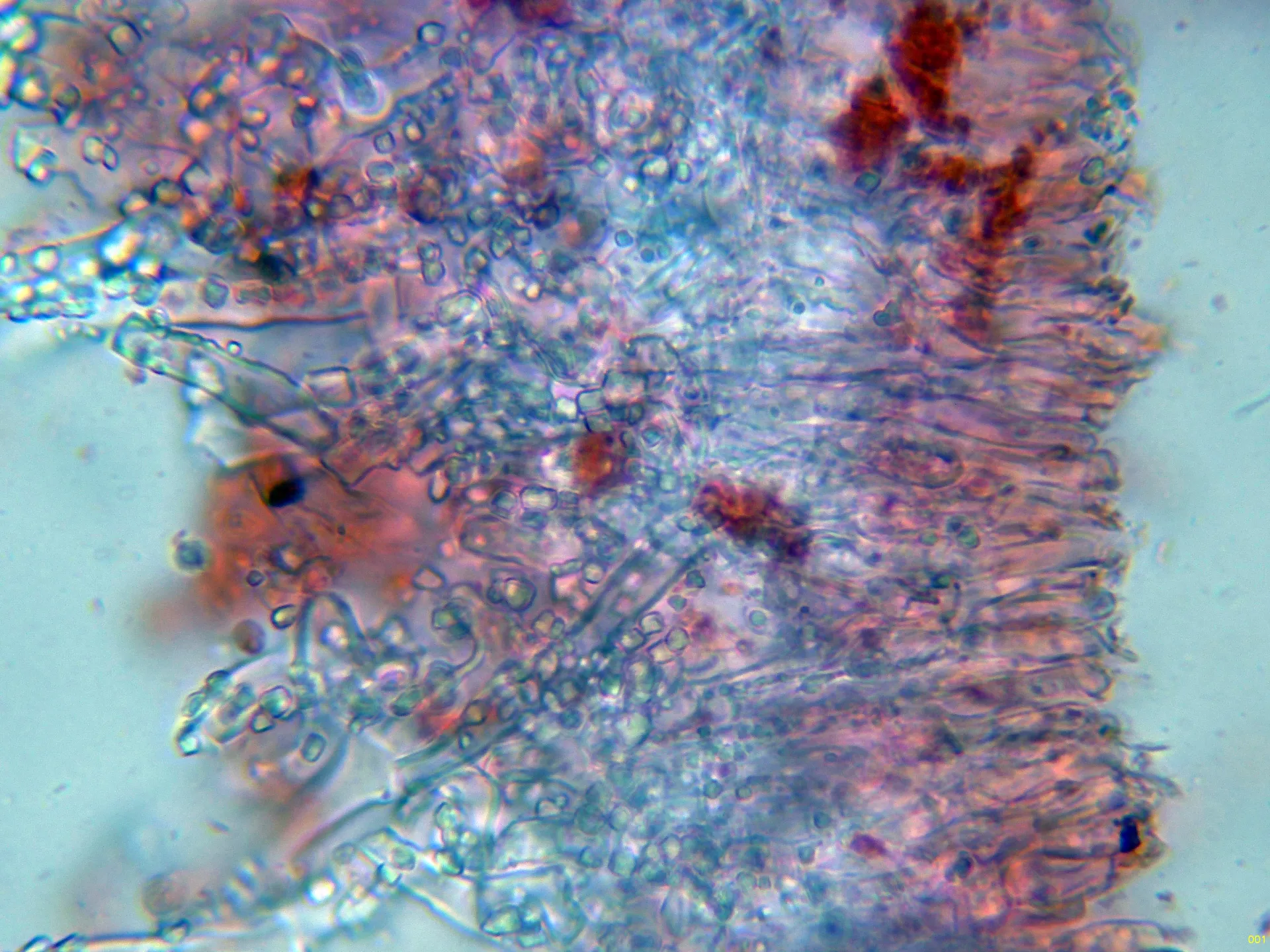
Hyphal system monomitic; subicular hyphae hyaline, thick-walled, 3 to 6 µm wide, branched, frequently encrusted with fine crystals, septate with simple septa (lacking clamp connections).
Cystidia cylindrical to fusiform, thin-walled, 45 to 75 µm long, 5.5 to 10 µm wide, occasionally bearing loose apical encrustations.
Basidia cylindrical-clavate, 16 to 28 µm long, 3.5 to 5 µm wide, simple-septate at the base, 4-spored.
Spores ellipsoidal, smooth, hyaline, thin-walled, 6 to 8 µm long, 2.9 to 3.7 µm wide, with a slightly pointed end bearing a lateral apiculus, containing granular oil contents, inamyloid in Melzer's reagent.
Herbarium material available: JTP2171/24.
Geographic references
Map generated from global occurrence data from GBIF. GBIF.
Study measurements
Values in Microns (µm)Macroscopic gallery
Microscopic gallery