Phanerochaete laevis
(Fr.) J.Erikss. & Ryvarden
Study description
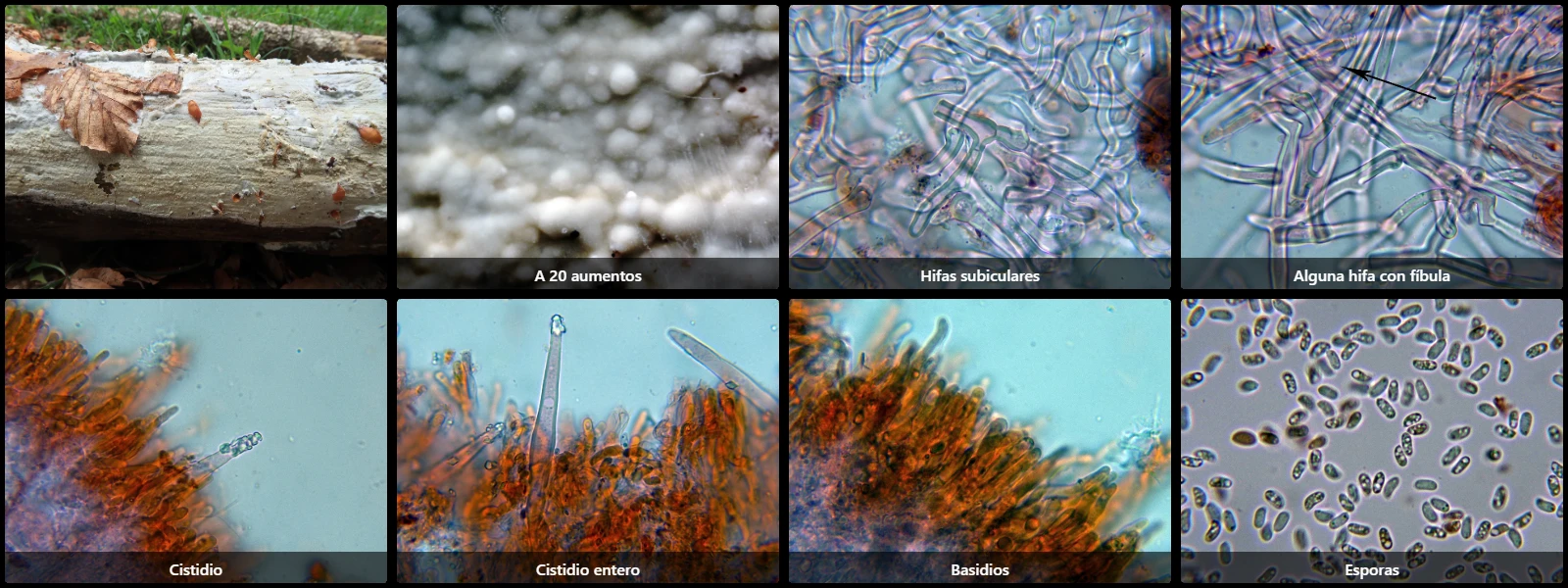
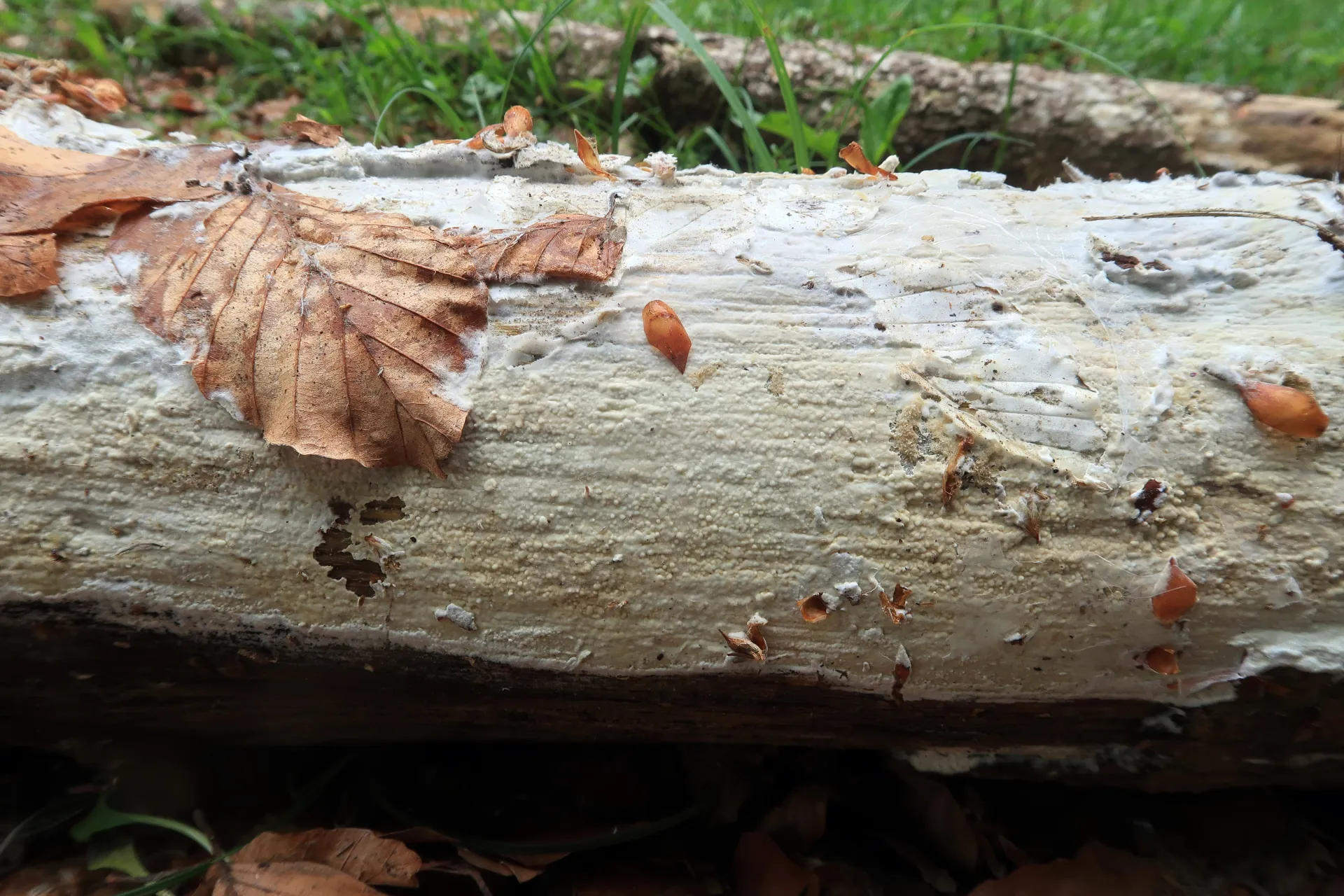
On decaying fallen wood on the ground, especially beech (Fagus), with completely resupinate basidiomata tightly adnate to the substrate, granulose surface, very thin (up to 0.5 mm), whitish to ochraceous, with a distinct white growth margin.
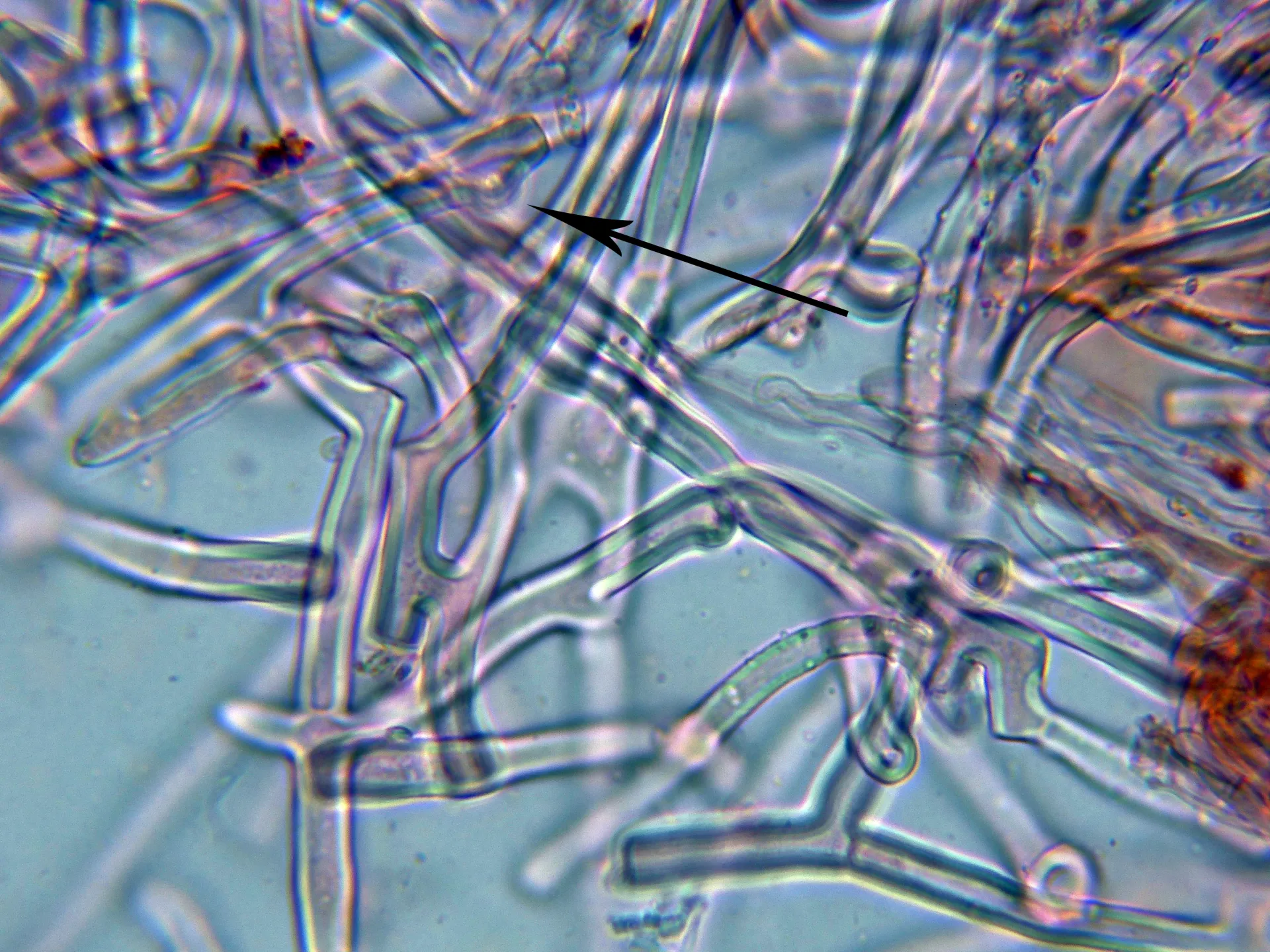
Hyphal system monomitic, with hyaline thick-walled hyphae 3 to 6 µm wide, septate, branched, predominantly simple-septate, although occasional clamp connections can be observed in the subiculum.
Lamprocystidia subcylindrical to fusiform, thick-walled, 55 to 85 µm long, 5 to 7.5 µm wide, with apical encrustations in their upper third, projecting considerably beyond the basidia.
Basidia cylindrical-clavate, 30 to 40 µm long, 4 to 5 µm wide, simple-septate at the base, 4-spored.
Spores cylindrical-ellipsoidal, smooth, hyaline, thin-walled, 6 to 7 µm long, 2.5 to 3.5 µm wide, with a pointed apicular end, containing small oil guttules inside, inamyloid in Melzer's reagent.
Herbarium material available: JTP1949/23.
Geographic references
Map generated from global occurrence data from GBIF. GBIF.
Study measurements
Values in Microns (µm)Macroscopic gallery
Microscopic gallery