Phaeomarasmius erinaceus
(Fr.) Scherff. ex Romagn.
Study description
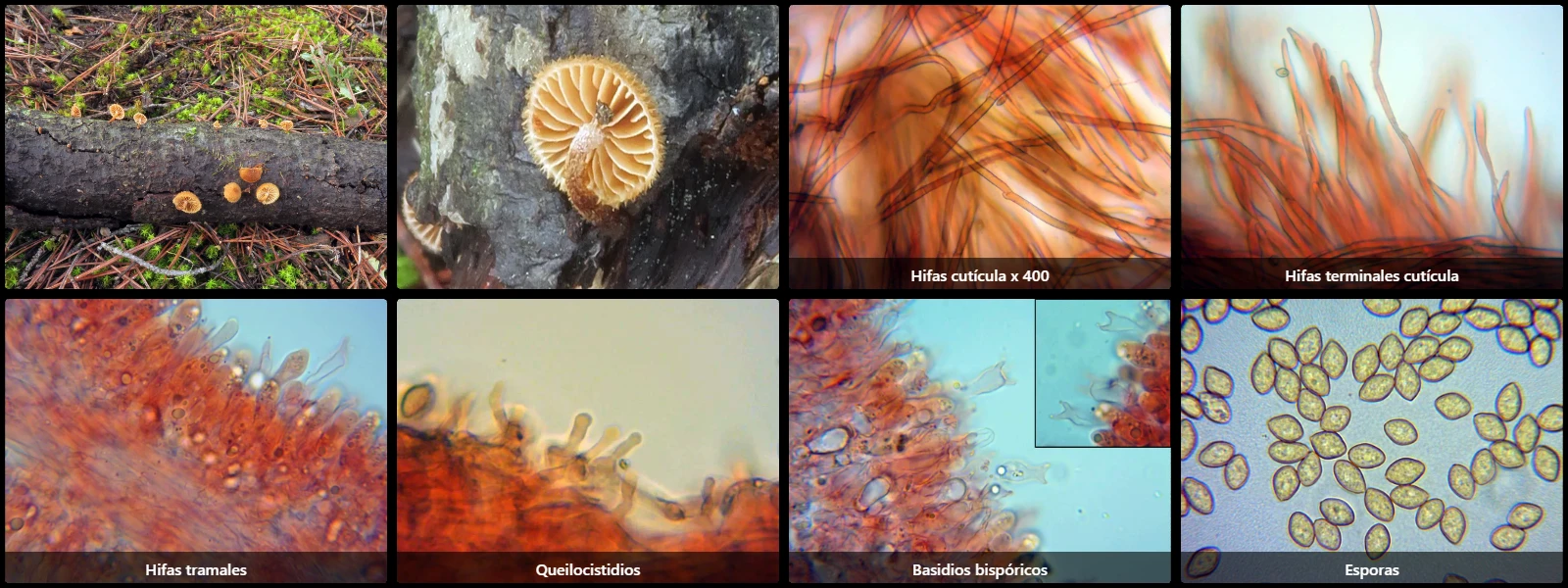
Saprophytic species on decaying fallen twigs and branches, always found by me in holm oak woods (Quercus ilex), although literature records it also on Salix or Betula, with a tiny pileus only 0.5 to 1.5 cm across, reddish-brown, densely squamose/spiny, adnate lamellae, and a cylindrical reddish-brown stipe similarly squamose.
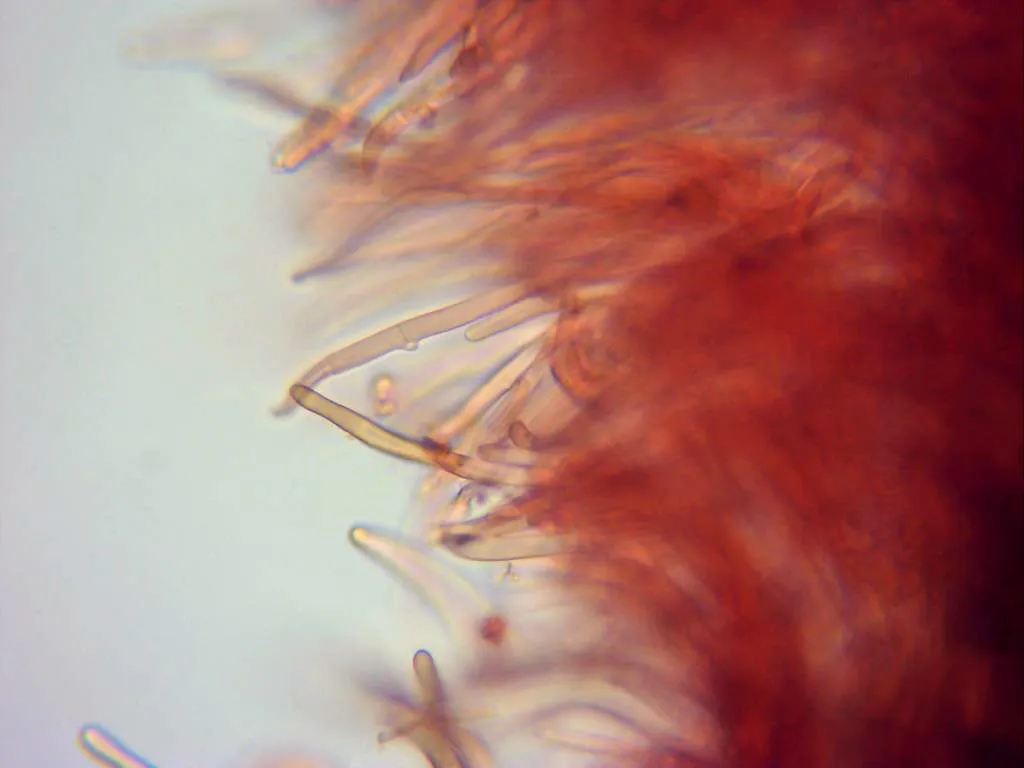
Pileipellis hyphae filamentous, thick-walled, 5 to 9 µm wide, with intense brown intracellular pigment, bearing abundant emergent terminal cells with rounded apices grouped in bundles/fascicles that form the squamules, septate with clamp connections.
Stipitipellis hyphae with morphology and measurements identical to those of the pileipellis.
Cheilocystidia cylindrical to slightly lageniform, somewhat flexuous, 30 to 45 µm long and 6 to 8 µm wide.
Pleurocystidia absent.
Basidia cylindrical-clavate, 30 to 38 µm long, 6 to 8 µm wide, clamped at the base, 2-spored.
Spores ellipsoidal to slightly rhomboidal, smooth- and slightly thick-walled, yellow under the microscope, 10 to 12 µm long, 6.5 to 8.5 µm wide, with a very slightly tapered end bearing a tiny more or less central hyaline apiculus, inamyloid in Melzer's reagent.
Herbarium material available: JTP2713/25.
Geographic references
Map generated from global occurrence data from GBIF. GBIF.
Study measurements
Values in Microns (µm)Macroscopic gallery
Microscopic gallery