Peziza saniosa
Schrad.
Study description
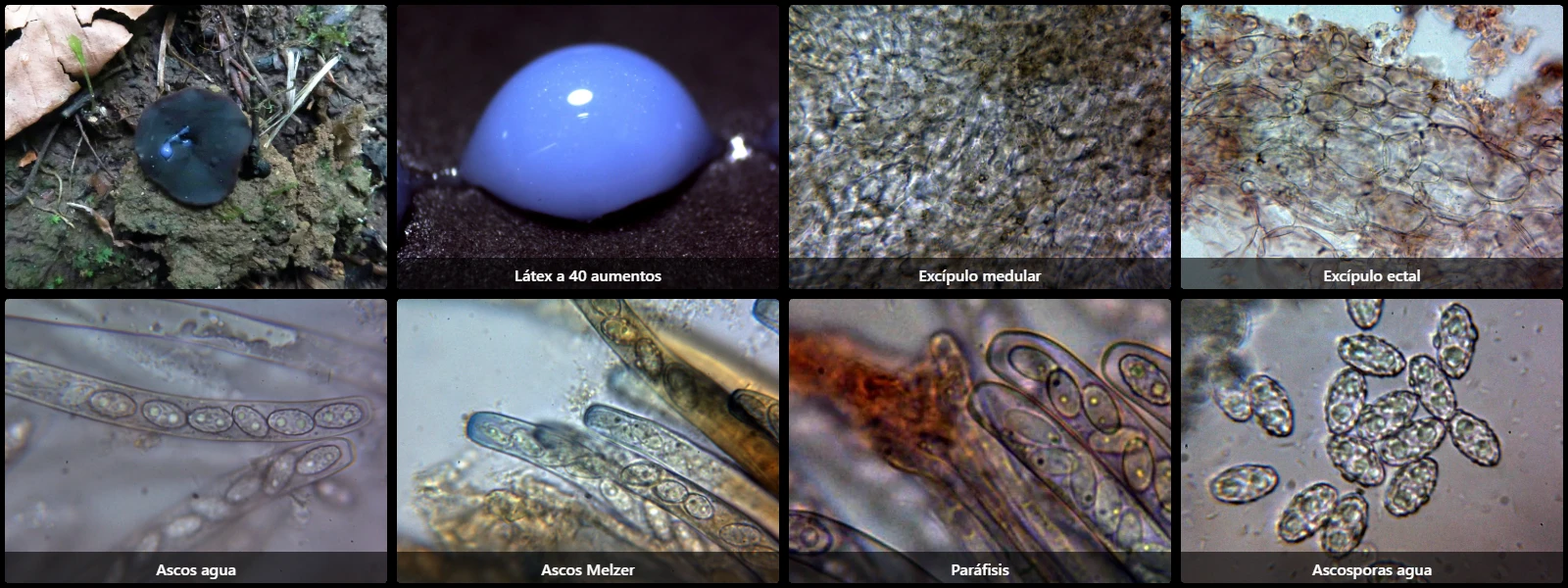
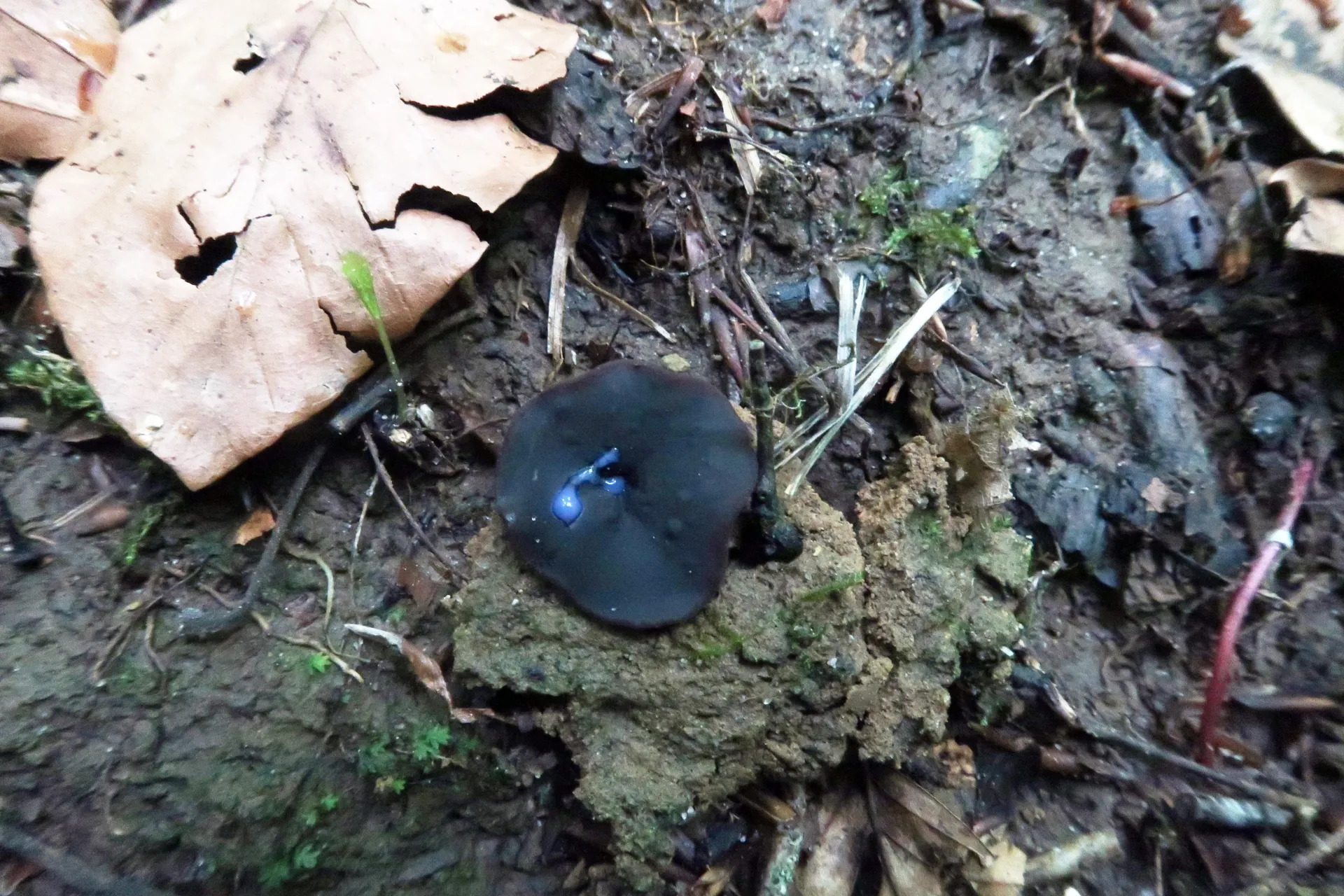
Saprophytic species on litter and plant debris on soil among mosses, with cup-shaped apothecia that become flattened-discoid with an undulating margin during development, 1.5 to 3.5 cm in diameter, blackish-blue with violaceous tints, exuding an intense blue watery latex when cut.
Medullary excipulum composed of globose hyphae interconnected by numerous intricate, densely interwoven filamentous hyphae containing brown intracellular pigment.
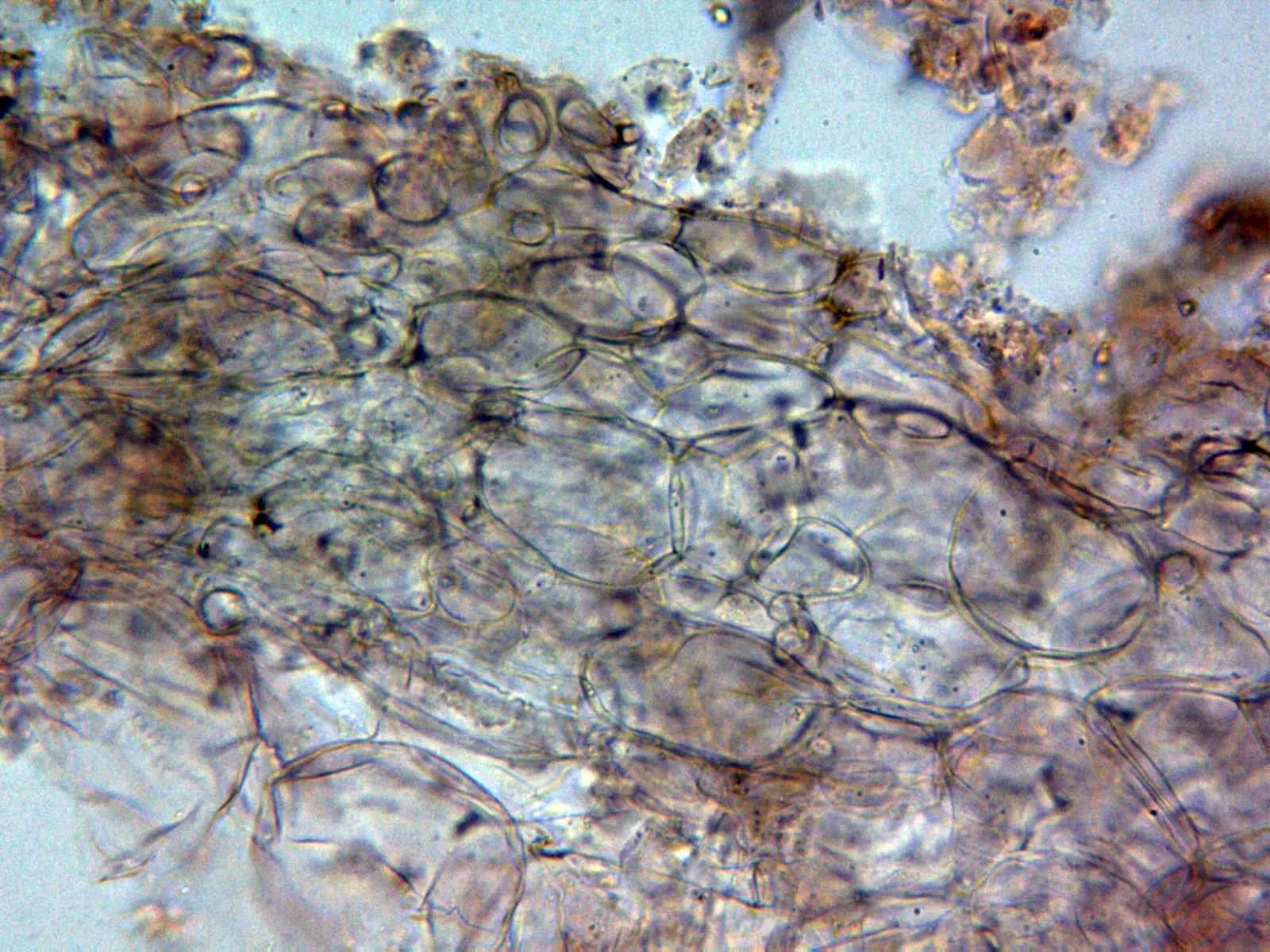
Ectal excipulum with globose hyphae, hyaline, 30 to 60 µm in diameter, from which clusters of short, septate hyphae emerge on the outside, imparting a furfuraceous appearance.
Asci cylindrical, 8-spored, operculate, 270 to 310 µm long, 12 to 16 µm wide, uniseriate, showing an amyloid reaction in Melzer's reagent.
Paraphyses cylindrical, septate, branched at the base, 3 to 4.5 µm wide, with apical enlargements 6 to 8 µm wide, containing abundant brown intracellular pigment.
Ascospores ellipsoidal, hyaline, with a verrucose wall, 13 to 16 µm long, 6.5 to 9.5 µm wide, and predominantly biguttulate (with two large oil droplets inside).
Geographic references
Map generated from global occurrence data from GBIF. GBIF.
Study measurements
Values in Microns (µm)Macroscopic gallery
Microscopic gallery