Peziza ammophila
Durieu & Lév.
Study description
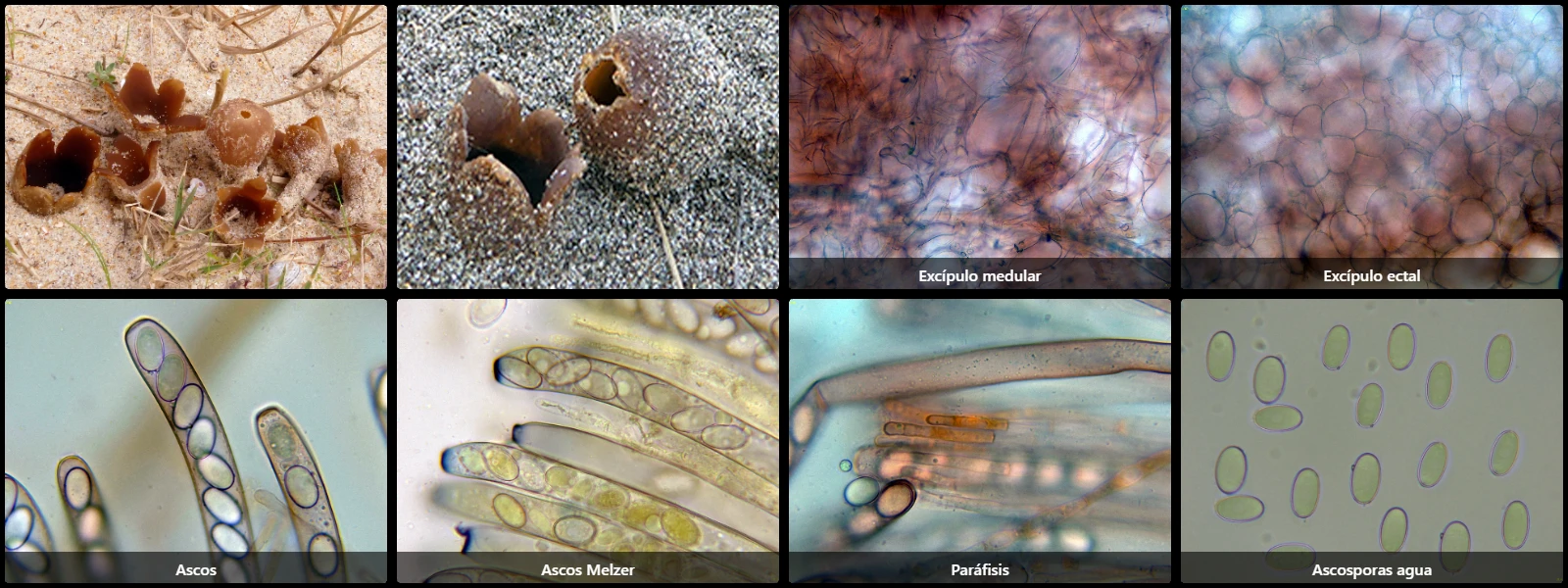
An ascomycete typical of coastal dune systems, with semi-hypogeous ascomata, initially globose, later emerging and opening in a cup shape with a torn margin (star-shaped/stellate), 2 to 4 cm in diameter, with ochraceous to brown tones, and fragile, brittle flesh.
Special thanks to Antonio Couceiro (Necho) for sending the material for study and providing the photographs, as the specimens received arrived heavily degraded.
Medullary or transitional excipulum composed of cylindrical hyphae with swellings, of textura intricata, interwoven, hyaline, and thin-walled.
Ectal excipulum composed of subglobose to slightly angular hyphae due to mutual compression, hyaline, 30 to 60 µm in diameter.
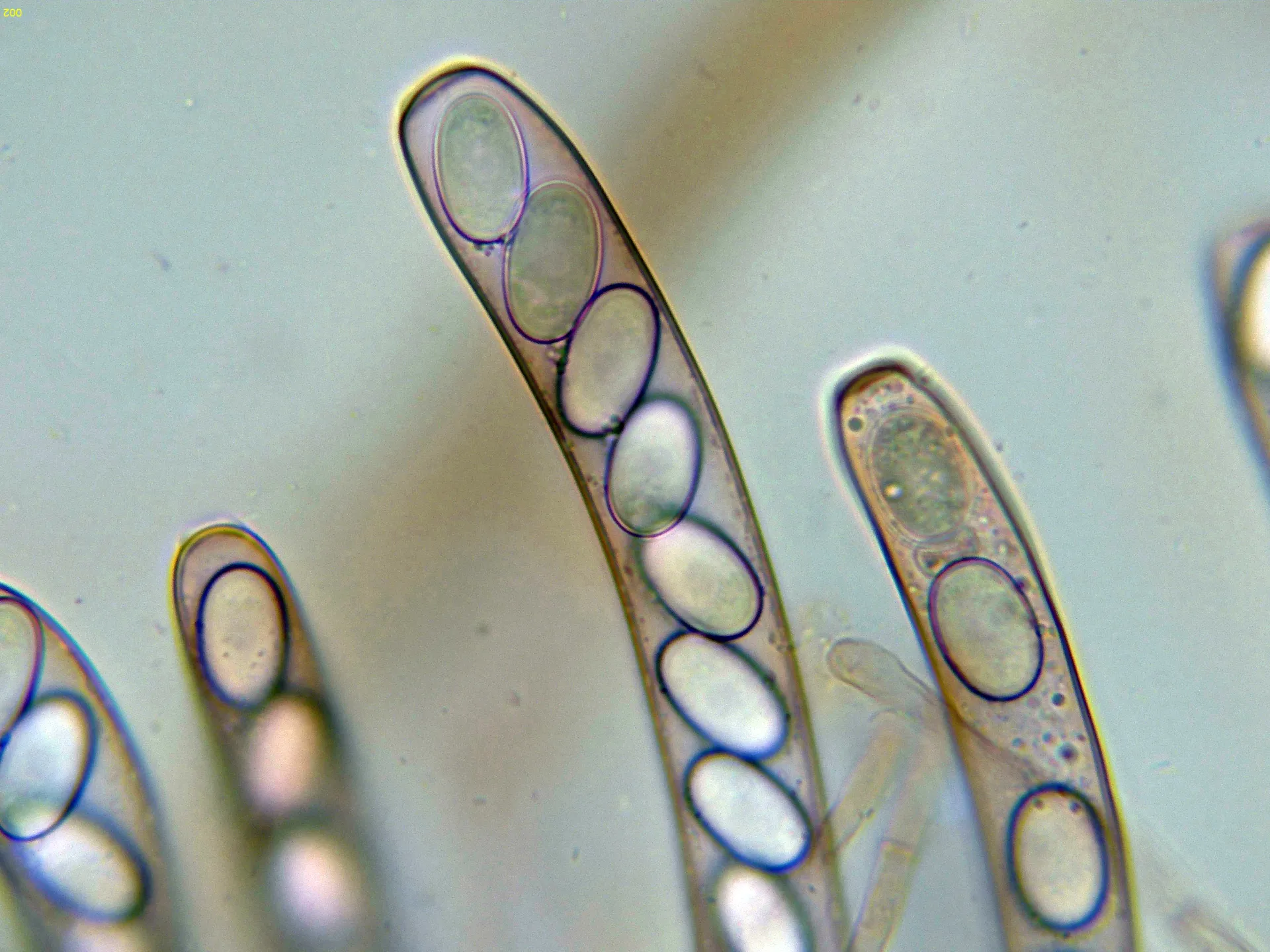
Asci cylindrical, 8-spored, operculate, 130 to 250 µm long, 10 to 20 µm wide, uniseriate, with basal croziers, and with an amyloid reaction in Melzer's reagent on both the apical apparatus and the ascus walls.
Paraphyses filiform, septate, 3 to 4.5 µm wide at the base, with slight apical enlargements of 4 to 6 µm and brownish-orange intracellular pigment inside.
Ascospores ellipsoidal, smooth-walled, hyaline, showing a double-contour optical effect under the light microscope due to cell wall thickness, 16.5 to 19 µm long, 9 to 11.5 µm wide, with a smooth, homogeneous interior lacking guttules or vacuoles.
Herbarium material available: JTP2031/24.
Geographic references
Map generated from global occurrence data from GBIF. GBIF.
Study measurements
Values in Microns (µm)Macroscopic gallery

Microscopic gallery