Perrotia flammea
(Alb. & Schwein.) Boud.
Study description
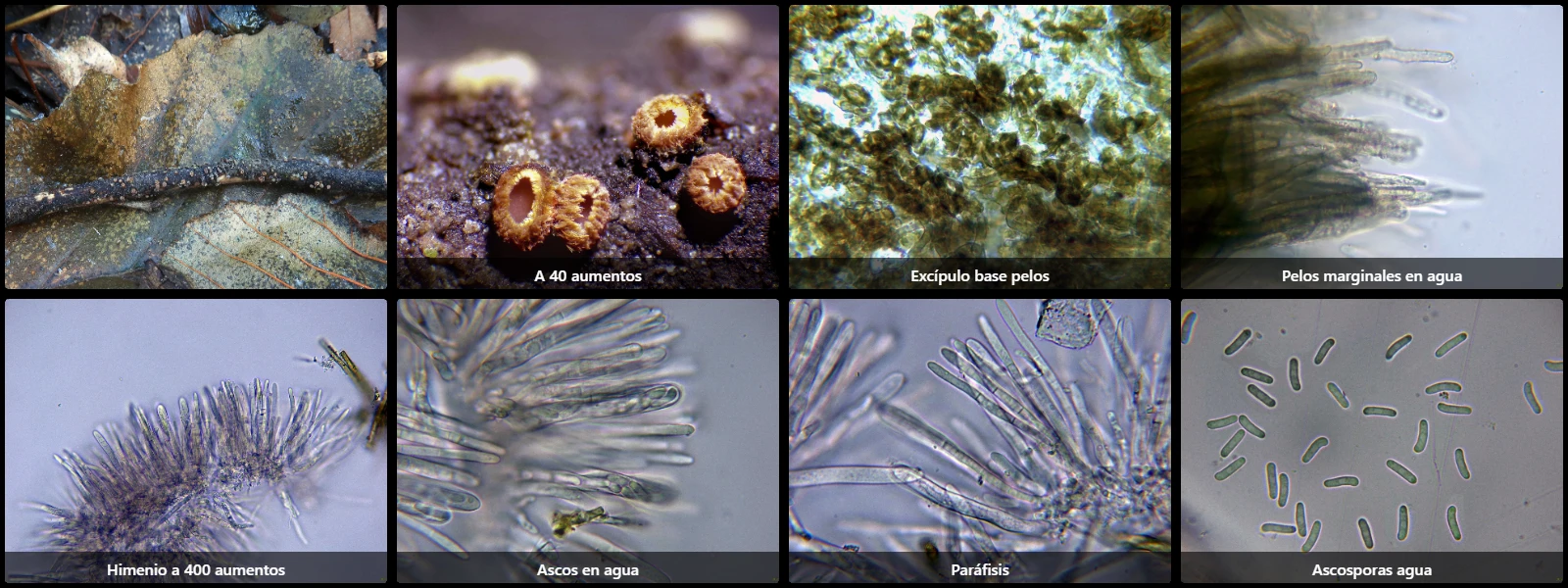
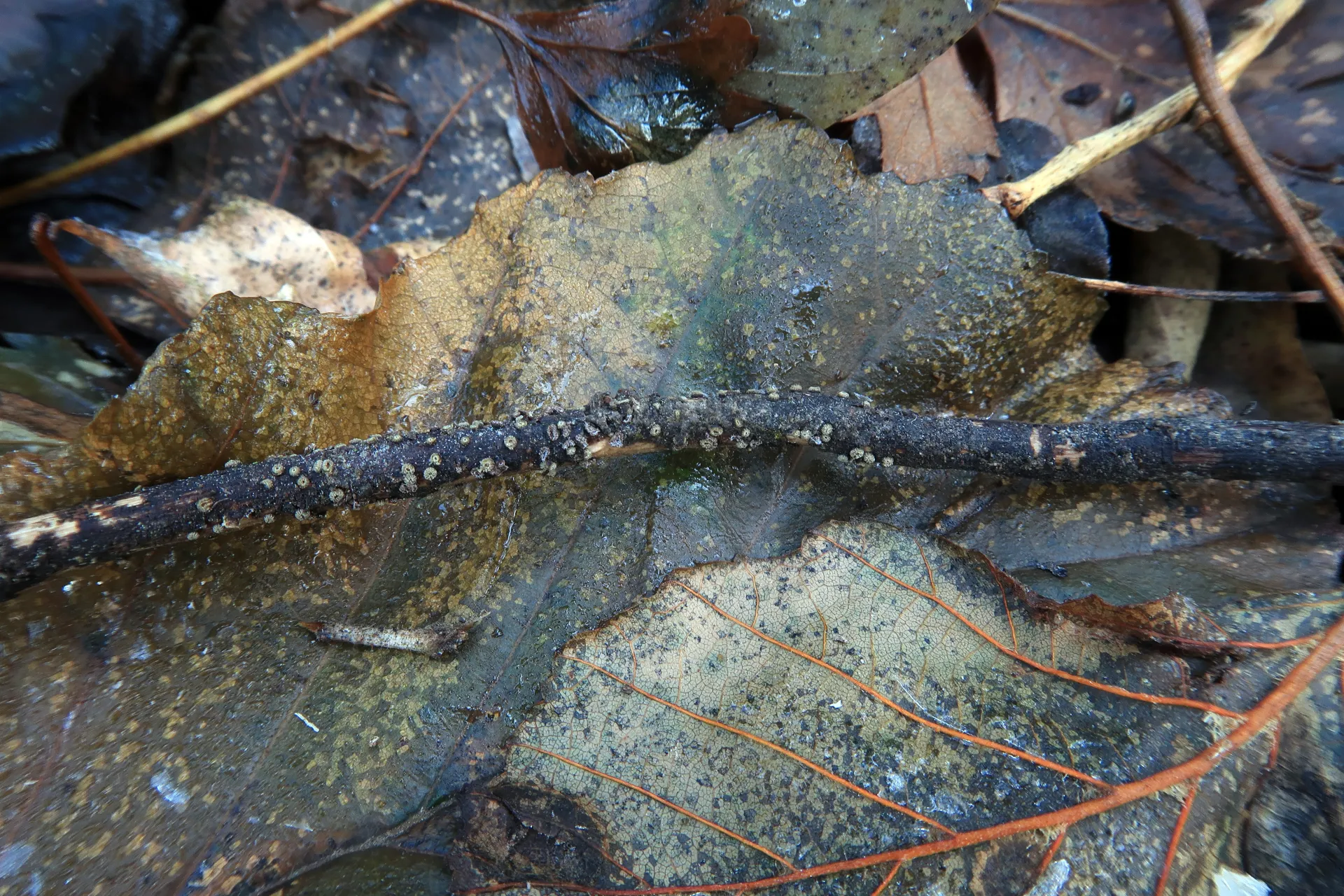
Uncommon species that affects small decomposing twigs on the ground, cup-shaped, with a diameter of only 1 to 3 mm, with a pinkish hymenium and reddish external hairs.
Marginal external hairs cylindrical, multiseptate, thick-walled, up to 250 µm long, 4 to 7 µm wide, with their surface covered by fine yellowish granulations, with a hyaline, rounded apex and the base containing abundant brown intracellular pigment.
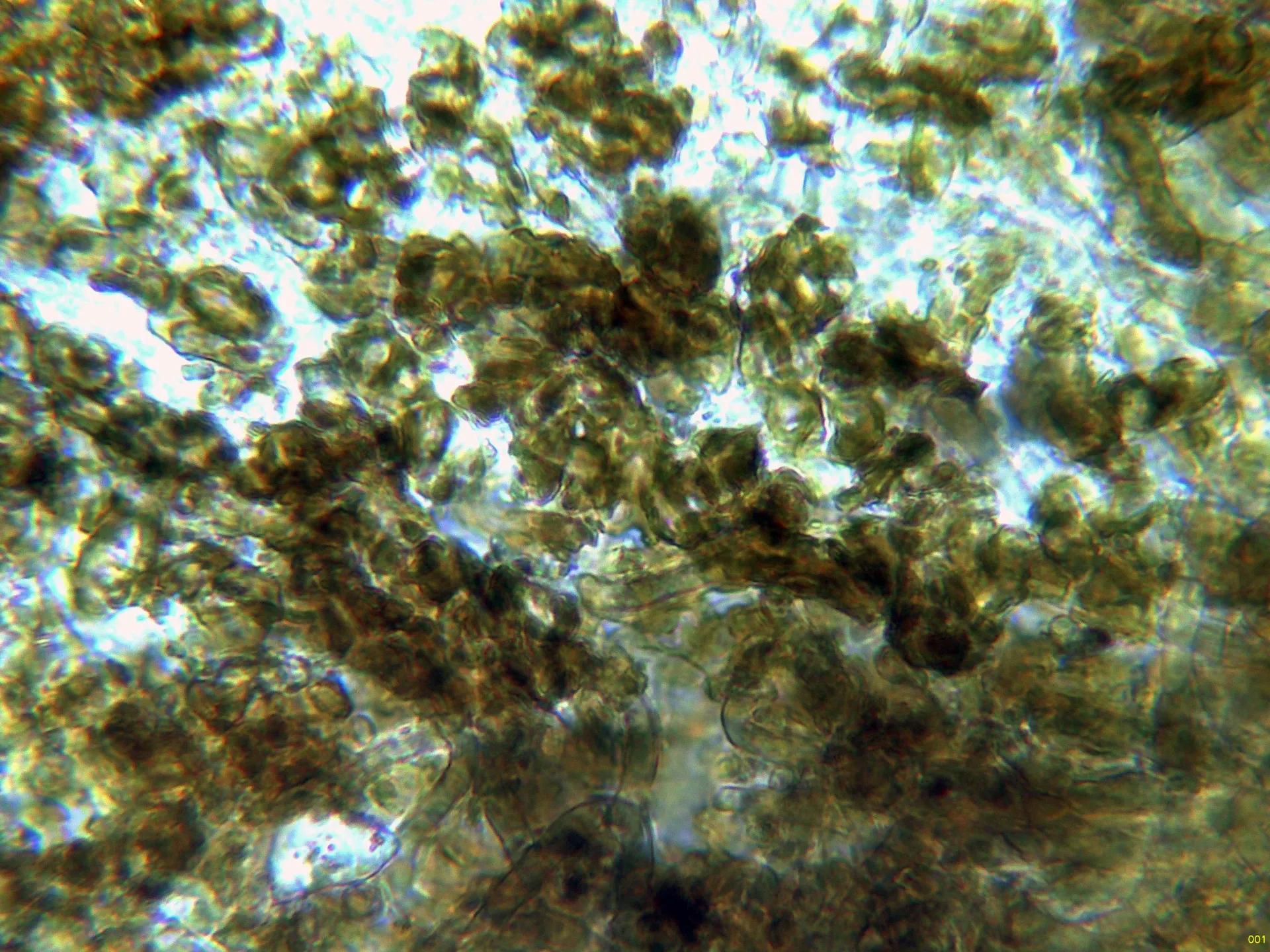
Medullary/ectal excipular hyphae at the base of the hairs of textura globulosa-angularis, with abundant brown encrusting intracellular pigment.
Asci cylindrical-clavate, 8-spored, 90 to 110 µm long, 8 to 10 µm wide, with biseriate to irregular spore arrangement occupying the upper part of the ascus, with basal croziers (uncinuli), and inamyloid in Melzer's reagent or Lugol's.
Paraphyses filiform, septate, 2.5 to 4 µm wide, with a slight enlargement of the terminal cell, exceeding the level of the asci.
Ascospores cylindrical to slightly allantoid, smooth, hyaline, thin-walled, 11 to 15 µm long, 3 to 4 µm wide, initially unicellular, developing a median septum at maturity.
Herbarium material available: JTP2013/23.
Geographic references
Map generated from global occurrence data from GBIF. GBIF.
Study measurements
Values in Microns (µm)Macroscopic gallery
Microscopic gallery